
This page has carried a warning about antibiotic resistance since 2012. The warning held up. What changed is that we stopped guessing. There are counted deaths now, surveillance from 104 countries, and forecasts out to 2050, and none of it argues for handing antibiotics out more freely.
I practice family medicine and obesity medicine entirely by telemedicine, so antibiotic requests reach me on video and in message threads, usually from someone who feels awful and wants this settled today. The request makes sense from where you sit. The refusal makes sense from where I sit. This post closes that gap with numbers instead of a lecture.
The global count, briefly
In 2021, bacterial antimicrobial resistance was associated with 4.71 million deaths worldwide, and 1.14 million of those were directly attributable to resistant organisms (1)(2). The forecast for 2050 is 1.91 million attributable and 8.22 million associated deaths in that year, with 39.1 million attributable deaths cumulatively between 2025 and 2050 (2).
The shape of the burden shifted in a way that rarely makes headlines. Attributable deaths in children under five fell 60.4% between 1990 and 2021, while deaths in adults 70 and older rose 89.5% (2). Vaccines and better newborn care did the first part. The second is what happens when more people live long enough to pick up a bloodstream infection in a hospital. MRSA alone went from 57,200 attributable deaths in 1990 to 130,000 in 2021 (2).
One in six
WHO’s 2025 surveillance report found that roughly one in six laboratory-confirmed bacterial infections worldwide in 2023 was resistant to the antibiotic meant to treat it (1)(3). Between 2018 and 2023, resistance rose in more than 40% of the pathogen-antibiotic combinations under surveillance, at 5% to 15% a year (3).
Two organisms carry much of that. More than 40% of E. coli and more than 55% of Klebsiella pneumoniae are now resistant to third-generation cephalosporins, which are first-choice treatment for those bloodstream infections (3). In the African Region the Klebsiella figure passes 70% (3). WHO’s 2024 priority list puts carbapenem-resistant Acinetobacter baumannii and carbapenem-resistant Enterobacterales in the critical tier, next to rifampicin-resistant tuberculosis (4).
One caveat. In 2023, 104 countries reported, up from 25 in 2016, and 48% still reported nothing (3). Some of the rise is real. Some of it is us finally looking.
What an antibiotic does to your own bacteria
Here is the part that gets skipped when resistance is framed as a planetary problem. A meta-analysis of 24 studies found that people given an antibiotic in primary care carry resistant bacteria afterward. Among urinary organisms, the pooled odds ratio for resistance was 2.5 within two months and still 1.33 at twelve months. Among respiratory organisms, 2.4 at both points (5).
Your bacteria. Your next urinary tract infection. That is the honest reason a just-in-case prescription is not free, and you are the first person who pays, months later, when the cheap oral drug is likelier to fail. The global statistic is a sum of small personal debts.
If you are the one asking for a Z-Pak
A study of 15.5 million outpatient antibiotic fills in 2016, among 19.2 million privately insured Americans, found azithromycin was the most commonly filled antibiotic in that group, at 19.0% of fills. Only 12.8% of fills were classified as appropriate. Another 23.2% were inappropriate, and 28.5% carried no diagnosis code at all in the three days beforehand (6). Nearly a third of prescriptions, no recorded reason.
Azithromycin is also not a neutral molecule. In a Tennessee Medicaid cohort, a five-day course carried an estimated 47 additional cardiovascular deaths per million courses compared with amoxicillin, rising to 245 per million in the highest decile of cardiovascular risk (7).
When a patient asks me for a Z-Pak and it is not appropriate for what they have, I tell them that plainly. Then we go through the side effects: nausea, diarrhea, a yeast infection, a rash. The last piece is the one worth the time. I explain what azithromycin is actually good for, and what it is not good for, and a sinus infection sits on the second list.
Notes for clinicians, particularly those of us working by video
Telemedicine earned an early bad reputation here. In 2015 to 2016 claims data, children seen for acute respiratory infection at direct-to-consumer telemedicine visits got antibiotics 52% of the time, against 42% at urgent care and 31% in the primary care office. Guideline-concordant management ran 59% for those video visits and 78% at the office (8).
That finding is seven years old and it has not simply replicated. An Australian study of 2,392 general practice registrars covering 21,384 respiratory infection diagnoses from 2020 to 2023 found telehealth carried lower odds of an antibiotic for sore throat (OR 0.69, 95% CI 0.55 to 0.86) and for upper respiratory infection (OR 0.64, 0.51 to 0.81). Otitis media, 0.47. No difference for bronchitis or sinusitis (9). The authors found no damage to stewardship.
My read is that the modality is not the variable. What matters is whether the visit sits inside a relationship where a callback is possible, and whether you are paid the same for a no as for a prescription. Get those right and video is fine. Leave them broken and a bricks-and-mortar clinic will overprescribe just as fast, with the added problem that the patient drove there and wants something for the trip.
The respiratory complaint I would actually write an antibiotic for is a sinus infection, and the conversation that goes with the prescription is where the cost stops being abstract. I tell the patient what to watch for. Diarrhea, which can turn bloody, and bloody is the one that points at Clostridioides difficile. A yeast infection. Rashes. Swollen lips, which is the allergic signal, the angioedema end of it. And symptoms that get worse, or that simply have not changed, at 48 hours.
That list is the whole argument in miniature. A patient who needed the drug is accepting those risks in exchange for something. A patient who did not need it accepts every one of them in exchange for nothing.
Where the alarm runs ahead of the data
Overselling this teaches patients to discount all of it, so here are the weak spots. Attributable deaths did not explode over three decades. They moved from 1.06 million in 1990 to 1.14 million in 2021, and associated deaths drifted down slightly, from 4.78 million to 4.71 million (2). The 2050 figures are models. The azithromycin cardiac signal looks real in high-risk patients, but a Danish cohort of more than a million treatment episodes in adults aged 18 to 64 found no increase in cardiovascular death against penicillin V (10). ECDC puts the EU and EEA toll above 35,000 deaths a year and ties more than 70% of that health impact to healthcare-associated infections (11), so your outpatient azithromycin is not what drives the worst resistant infections in intensive care.
It still counts, the way a single vote counts, and mostly it counts against you.
The Bottom Line
One in six bacterial infections worldwide already resists the drug meant to treat it (1). Third-generation cephalosporins now fail against more than 40% of E. coli (3). Those figures were assembled out of individual prescriptions, nearly all of which felt reasonable to somebody at the time. When I decline an antibiotic for what is clearly a virus, I am not rationing your care and I am not doubting how bad you feel. I am declining to raise the odds that your own bacteria stop listening, and that bill arrives at your address, not the world’s. Ask me what should happen if you get worse. That answer is worth more than the prescription.
Sources
1. WHO. Antimicrobial resistance fact sheet, updated 16 July 2026. https://www.who.int/news-room/fact-sheets/detail/antimicrobial-resistance
2. GBD 2021 AMR Collaborators. Global burden of bacterial AMR 1990-2021, with forecasts to 2050. Lancet, 2024. https://pmc.ncbi.nlm.nih.gov/articles/PMC11718157/
3. WHO. Warning of widespread resistance to common antibiotics, 13 October 2025. https://www.who.int/news/item/13-10-2025-who-warns-of-widespread-resistance-to-common-antibiotics-worldwide
4. WHO. Bacterial Priority Pathogens List, 17 May 2024. https://www.who.int/news/item/17-05-2024-who-updates-list-of-drug-resistant-bacteria-most-threatening-to-human-health
5. Costelloe C, et al. Antibiotic prescribing in primary care and resistance in individual patients. BMJ, 2010. https://pubmed.ncbi.nlm.nih.gov/20483949/
6. Chua KP, et al. Appropriateness of outpatient antibiotic prescribing, insured US patients. BMJ, 2019. https://pubmed.ncbi.nlm.nih.gov/30651273/
7. Ray WA, et al. Azithromycin and the risk of cardiovascular death. NEJM, 2012. https://pubmed.ncbi.nlm.nih.gov/22591294/
8. Ray KN, et al. Antibiotic prescribing during pediatric direct-to-consumer telemedicine. Pediatrics, 2019. https://pubmed.ncbi.nlm.nih.gov/30962253/
9. Antibiotic prescribing for respiratory infection, telehealth versus face-to-face. J Med Internet Res, 2025. https://pmc.ncbi.nlm.nih.gov/articles/PMC11950701/
10. Svanstrom H, et al. Azithromycin and death from cardiovascular causes. NEJM, 2013. https://pubmed.ncbi.nlm.nih.gov/23635050/
11. ECDC. Health burden of antibiotic resistance, key messages. https://antibiotic.ecdc.europa.eu/en/get-informed/key-messages/health-burden-antibiotic-resistance
Related Reading
Why Won’t Antibiotics Cure a Viral Infection? Doctor Explains
I hear it almost every day now. “I think I just need a Z-Pak.”
Antibiotic Superbugs CRKP and MRSA: Who Is at Risk?
Tuberculosis in 2025: Kansas Outbreak, Vaccines, and Staying Safe
Scott Rennie, D.O.
Board Certified in Obesity Medicine and Family Medicine
This blog is for educational purposes only and does not constitute individual medical advice. Always consult your own physician before making changes to your health, medications, or treatment plan.


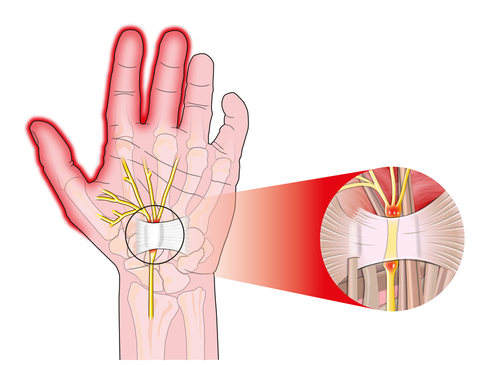 Many patients come to the Urgent or their primary care office with complaints of hand/wrist pain, numbness, tingling or a combination of these symptoms. They often wonder if it could be due to carpal tunnel syndrome.
Carpal Tunnel Syndrome: characterized by pain and numbness in the fingers and hands, and sometimes in the arms. It happens when the median nerve in the wrist becomes pinched or squeezed. The median nerve travels through a small “tunnel” in the wrist that is formed by bones and a ligament. It’s a setup for this nerve to become pinched due to our normal anatomy, but may be worse in some people or due to certain conditions. There is some thought that the nerve gets pinched possibly due to one or more of the following:
1) Tissues that surround the surrounding tends in the tunnel harden
2) Tendons that go through the tunnel get swollen
3) People hold their hands in a position that causes the tunnel to get smaller.
Parts of the hand affected by the median nerve:
1) Thumb
2) Index finger
3) Middle finger
4) Half of the ring finger
5) The parts of the palm closest to the thumb
Symptoms: Pain, and tingling in the thumb, index, middle and ring fingers. These symptoms may be present in one or both hands. Rarely, the pain can travel up the wrist and forearm and even cause tingling past the elbow to the shoulder.
The symptoms are usually worse at night. Activities that may trigger carpal tunnel syndrome include:
1) Typing
2) Reading
3) Driving
4) Holding a phone
5) Sleeping at night – many people bend their wrist while sleeping
Testing: Nerve conduction studies or Electromyography can measure the speed of the electrical nerve conduction of the median nerve or show whether muscles of the hand and wrist are responding appropriately to the electrical signals. Most of the time the surgeons want these tests to be performed before they will consider surgical treatments for carpal tunnel syndrome.
Treatment: they are tailored to the individual patient and may include:
1) Wrist splints keep the hands in a neutral position, where the wrists are not bent forward to backward
2) Surgery is offered to patients who have severe symptoms and that involves cutting the ligament that stretches across the wrist to form the carpal tunnel.
3) Steroid shots or pills: The steroid medications that we use short-term are a group of medications that control inflammation and swelling. Sometimes we will inject a steroid directly into the carpal tunnel, but this is usually done by a hand specialist because of the risks of getting the steroid directly into the median nerve.
4) Osteopathic manipulation: There are techniques that an Osteopathic Physician (D.O.) may perform that can actually help increase the space inside the carpal tunnel ie. “carpal bone mobilization.”
I hope that you have found this information useful. Wishing you the best of health,
Many patients come to the Urgent or their primary care office with complaints of hand/wrist pain, numbness, tingling or a combination of these symptoms. They often wonder if it could be due to carpal tunnel syndrome.
Carpal Tunnel Syndrome: characterized by pain and numbness in the fingers and hands, and sometimes in the arms. It happens when the median nerve in the wrist becomes pinched or squeezed. The median nerve travels through a small “tunnel” in the wrist that is formed by bones and a ligament. It’s a setup for this nerve to become pinched due to our normal anatomy, but may be worse in some people or due to certain conditions. There is some thought that the nerve gets pinched possibly due to one or more of the following:
1) Tissues that surround the surrounding tends in the tunnel harden
2) Tendons that go through the tunnel get swollen
3) People hold their hands in a position that causes the tunnel to get smaller.
Parts of the hand affected by the median nerve:
1) Thumb
2) Index finger
3) Middle finger
4) Half of the ring finger
5) The parts of the palm closest to the thumb
Symptoms: Pain, and tingling in the thumb, index, middle and ring fingers. These symptoms may be present in one or both hands. Rarely, the pain can travel up the wrist and forearm and even cause tingling past the elbow to the shoulder.
The symptoms are usually worse at night. Activities that may trigger carpal tunnel syndrome include:
1) Typing
2) Reading
3) Driving
4) Holding a phone
5) Sleeping at night – many people bend their wrist while sleeping
Testing: Nerve conduction studies or Electromyography can measure the speed of the electrical nerve conduction of the median nerve or show whether muscles of the hand and wrist are responding appropriately to the electrical signals. Most of the time the surgeons want these tests to be performed before they will consider surgical treatments for carpal tunnel syndrome.
Treatment: they are tailored to the individual patient and may include:
1) Wrist splints keep the hands in a neutral position, where the wrists are not bent forward to backward
2) Surgery is offered to patients who have severe symptoms and that involves cutting the ligament that stretches across the wrist to form the carpal tunnel.
3) Steroid shots or pills: The steroid medications that we use short-term are a group of medications that control inflammation and swelling. Sometimes we will inject a steroid directly into the carpal tunnel, but this is usually done by a hand specialist because of the risks of getting the steroid directly into the median nerve.
4) Osteopathic manipulation: There are techniques that an Osteopathic Physician (D.O.) may perform that can actually help increase the space inside the carpal tunnel ie. “carpal bone mobilization.”
I hope that you have found this information useful. Wishing you the best of health,














 Doctor Rennie's Blog