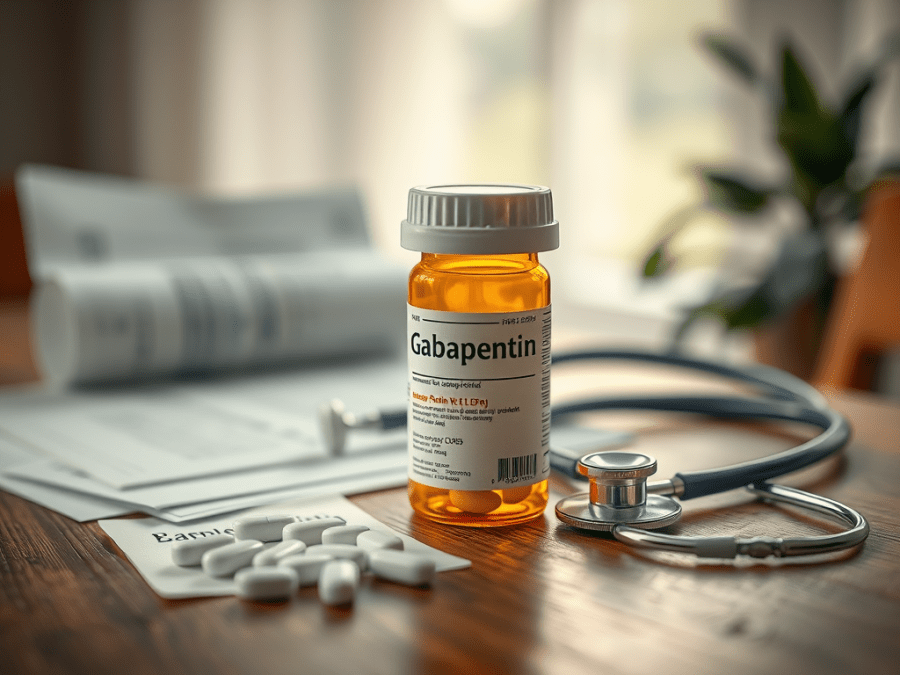
Gabapentin and Dementia Risk: What Patients and Colleagues Should Know

Gabapentin is one of the most commonly prescribed drugs in the U.S., used for nerve pain, seizure disorders, and sometimes off-label for sleep or anxiety. I don’t prescribe it myself. It’s generally not a medication that gets started over telemedicine, but many of the patients I see are already on it, sometimes for years, by the time it comes up in our visit. Dizziness, fatigue, and the risk of misuse are the usual concerns. Now there’s new research raising concern about a possible link to dementia.

A study published in July 2025 in Regional Anesthesia & Pain Medicine looked at prescription records and medical outcomes for thousands of adults. This was a retrospective cohort study. In other words, the researchers didn’t assign patients to groups or give some people placebo pills. They looked back at existing data and compared outcomes between people who had taken gabapentin and those who had not (Lin et al., 2025).

That design matters. The gold standard in medical research is a randomized, double-blind, placebo-controlled trial, where patients are randomly assigned to receive either the medication or a placebo and neither patients nor researchers know who is in which group until the study ends. This approach minimizes bias and helps establish cause and effect. An observational study like this one, by contrast, can only show association. It tells us that patients on gabapentin had higher rates of dementia, but it can’t prove gabapentin caused it. Other factors, such as the underlying conditions that led to prescribing gabapentin, may have influenced the outcome.

Even with that limitation, the findings are striking. Adults aged 35 to 49 who filled six or more prescriptions were more than twice as likely to develop dementia and more than three times as likely to develop mild cognitive impairment compared to non-users. Adults aged 50 to 64 had a 29 percent higher risk of dementia and an 85 percent higher risk of mild cognitive impairment.

I tell patients not to stop gabapentin suddenly. For someone with a seizure disorder or severe neuropathic pain, stopping without a plan can be unsafe. But it may be time to review why a patient is on it and whether the benefit is still there. The pattern I run into is people staying on it. It gets started for something like restless legs, it helps at first, and then it just stays on the list long after symptoms have settled, because nobody goes back and revisits the prescription. Now there’s another reason to ask whether it still belongs there.

For families, this means paying attention too. If a parent or older relative is taking gabapentin, bring it up at their next appointment. Long-term prescriptions sometimes get renewed automatically. I don’t taper gabapentin myself. When it comes up in a visit, I tell the patient to bring it to their primary care provider, or whoever prescribes it for them, and talk through together whether it still makes sense.

Scott Rennie, D.O.
Board Certified in Obesity Medicine and Family Medicine

This blog is for educational purposes only and does not constitute individual medical advice. Always consult your own physician before making changes to your health, medications, or treatment plan.

Sources:

Lin S, et al. “Gabapentin exposure and risk of cognitive decline and dementia.” Regional Anesthesia & Pain Medicine. July 2025.

Fisher Center for Alzheimer’s Research Foundation. “Pain Reliever Tied to Higher Dementia Risk.” alzinfo.org.
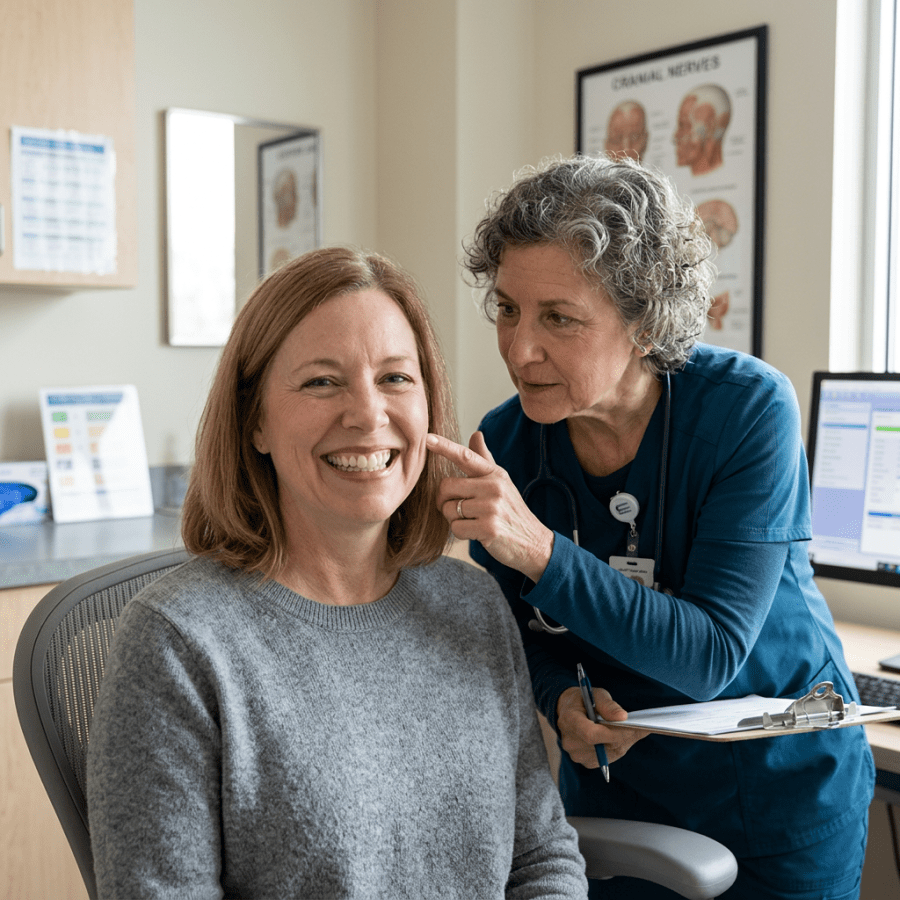

Clinician examining the side of a patient’s face during a clinic visit

Why is the Side of My face Drooping? All about Bell’s Palsy

shutterstock_142857034A few weeks ago a family brought their son in to the clinic because one side of his face including his eye and lips were not moving symmetrically with the other side.  Of course they were worried about the possibility of him having a stroke.  He’d had an upper respiratory infection that started about one week before and had a slight fever with runny nose.  He’d never had any neurological problems before.  He had a condition called Bell’s Palsy. Bell’s Palsy is a problem with the nerves on one side of the face and it causes the muscles of the face to have decreased ability to move.  The muscles of the face can become weak or even paralyzed.  Patients often complain that one of their eyelids starts drooping or they drool out one side of their mouth.  When they smile, one half of the mouth doesn’t seem to move. Most people who get Bell’s palsy recover entirely but a small number of patients have symptoms for the rest of their life. Causes:  Inflammation of the facial nerve on one side of the face is the cause of Bell’s palsy.  A virus is the cause and there is some evidence that it’s the virus that causes cold sores (Herpes Simplex Virus – HSV) that causes the condition.  Other viruses may cause Bell’s palsy however including the viruses that cause Chicken Pox and Mononucleosis. Symptoms:  When the facial nerve because inflamed from the virus, and the nerve may swell and get pinched as it travel’s through some tight spaces in the face.  If this happens it can cause weakness and even paralysis of the muscles of the face so you may see: 1)   Drooping of one eyelid 2)   Eyebrow that sags 3)   Corner of the mouth that does not move or sags 4)   One eye might not close completely 5)   Loss of taste in the front of the tongue 6)   Loud noises may cause pain on the side of the dysfunction If your eye is not able to fully close, this can lead to dryness of the eye, so it’s important to seek treatment to prevent eye damage. Treatment:  We don’t have any specific treatments for Bell’s palsy, but seeing a medical provider may be helpful to: 1)   Ensure the proper diagnosis, because the symptoms may be confused with a stroke or other neurological problems which can be dangerous if not treated appropriately 2)   Prevent damage to the cornea of your eye from dryness 3)   Steroids such as prednisone may be given to reduce the swelling of the affected facial nerve – this works better when started within the first 2-3 days of symptoms 4)   Antiviral medications such as acyclovir are sometimes given in hopes that they will help the body overcome the virus more quickly, however studies have not found any added benefits from using antiviral medications for Bell’s palsy Recovery/Prognosis:  People who have less severe symptoms seem to recover more rapidly and have a better chance of full recovery.  If you are getting better within the first three weeks, the chances are better that you will totally recover.  A small group of people however have permanent moderate to severe muscle weakness in their face from Bell’s palsy. Rare effects:  If there is severe damage to the facial nerve, it may heal in a disorganized fashion.  I have one patient who was bothered by tears coming from their eye when they salivate (before eating).   I’ve also had a patient whose eye would close whenever he smiled.  Fortunately this is not common with Bell’s palsy.   I hope that you have found this information useful.  Wishing you the best of health,

Scott Rennie, D.O.
Board Certified in Obesity Medicine and Family Medicine

This blog is for educational purposes only and does not constitute individual medical advice. Always consult your own physician before making changes to your health, medications, or treatment plan.

Nurse guiding older woman through a balance assessment

Stroke Warning Signs: What to Know About CVA and TIA

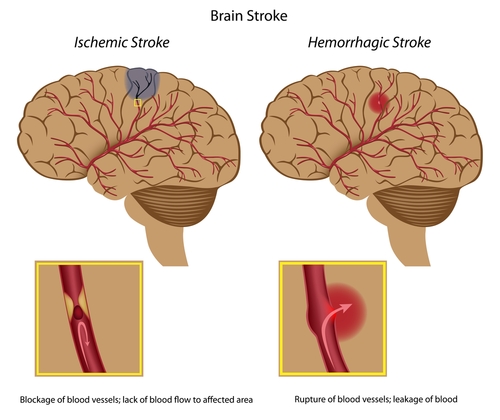
shutterstock_78690082I saw a patient the other day who was in her 30’s and was brought in the other day because she suddenly stopped speaking (we call this aphasia) and became weak and confused.  Patient’s sometimes come to the urgent care with symptoms of stroke or meningitis and these symptoms can be extremely anxiety provoking. Stroke or CVA (Cerebral Vascular Accident) is the term that medical providers use to describe an event where part of the brain goes without blood for too long.  There may be permanent damage to the brain as a result.  The blood supply to the brain can get cut off if an artery in the brain or neck gets clogged or closes off or if there is an artery in the brain that starts bleeding. Sometimes a patient may have a stroke and there are no permanent effects, while other people may lose important functions in their brain permanently.  The individual that I saw the other day became unable to speak and it was unclear if she was able to understand what was being said. Symptoms:  The symptoms of a stroke depend on which area of the brain is affected.  Some symptoms of stroke may be recognized by the acronym FAST – Face – Does the person’s face look uneven or droop on one side? Arm – Does the person have weakness or numbness in one or both arms?  Does one arm drift down if the person tries to hold both arms out? Speech – Is the person having trouble speaking?  Does his or her speech sound strange? Time – If you notice ANY of these signs of stroke, call 9-1-1.  You need to act FAST because the sooner the treatment begins, the better the chances of recovery Diagnosis:  Stroke is usually diagnosed based on the patient’s symptoms and specialized studies such as a CT scan (Cat Scan) of the brain, or perhaps an MRI of the brain.  Other tests might include ultrasound of the arteries in the neck and echocardiogram (ultrasound of the heart). Treatment:  The type of treatment depends on the cause of the stroke.  For patients who are having a stroke due to clogged arteries to the brain, they might receive medication to break up the clot or have a procedure to remove the blood clot.  They might also start medications to prevent future clogged blood vessels such as aspirin, Coumadin or Plavix.  Patients who have damage in the brain that make it difficult for them to walk might be treated with physical therapy to help them regain mobility. Sometimes it’s necessary for these patients to spend some time in an assisted care facility where there are nurses, physical therapists, occupational therapists and speech therapists available to help in the recovery process.  An assessment may be done at the patient’s house to look for possible safety problem areas and give the patient devices and tools to help the patient be able to retain independence in their home. Prevention:  You can lower your risk of stroke by: 1)   If you have high blood pressure, keep your blood pressure in the normal range 2)   If you have diabetes, keep your blood sugar under good control 3)   Check your cholesterol and make sure your bad cholesterol and triglycerides are not elevated 4)   Avoid smoking 5)   Exercise for 30 minutes a day or longer on most days 6)   If you are overweight – work on weight loss 7)   Do not drink more than one alcoholic drink/day if you are female or more than two if you are a male 8)   Make sure you take your medications as directed by your physician   I hope that you have found this information useful.  Wishing you the best of health,

Scott Rennie, D.O.
Board Certified in Obesity Medicine and Family Medicine

This blog is for educational purposes only and does not constitute individual medical advice. Always consult your own physician before making changes to your health, medications, or treatment plan.

Sports trainer examining a seated football player on the sideline

Head Injury: Is It a Concussion or Something More Serious?

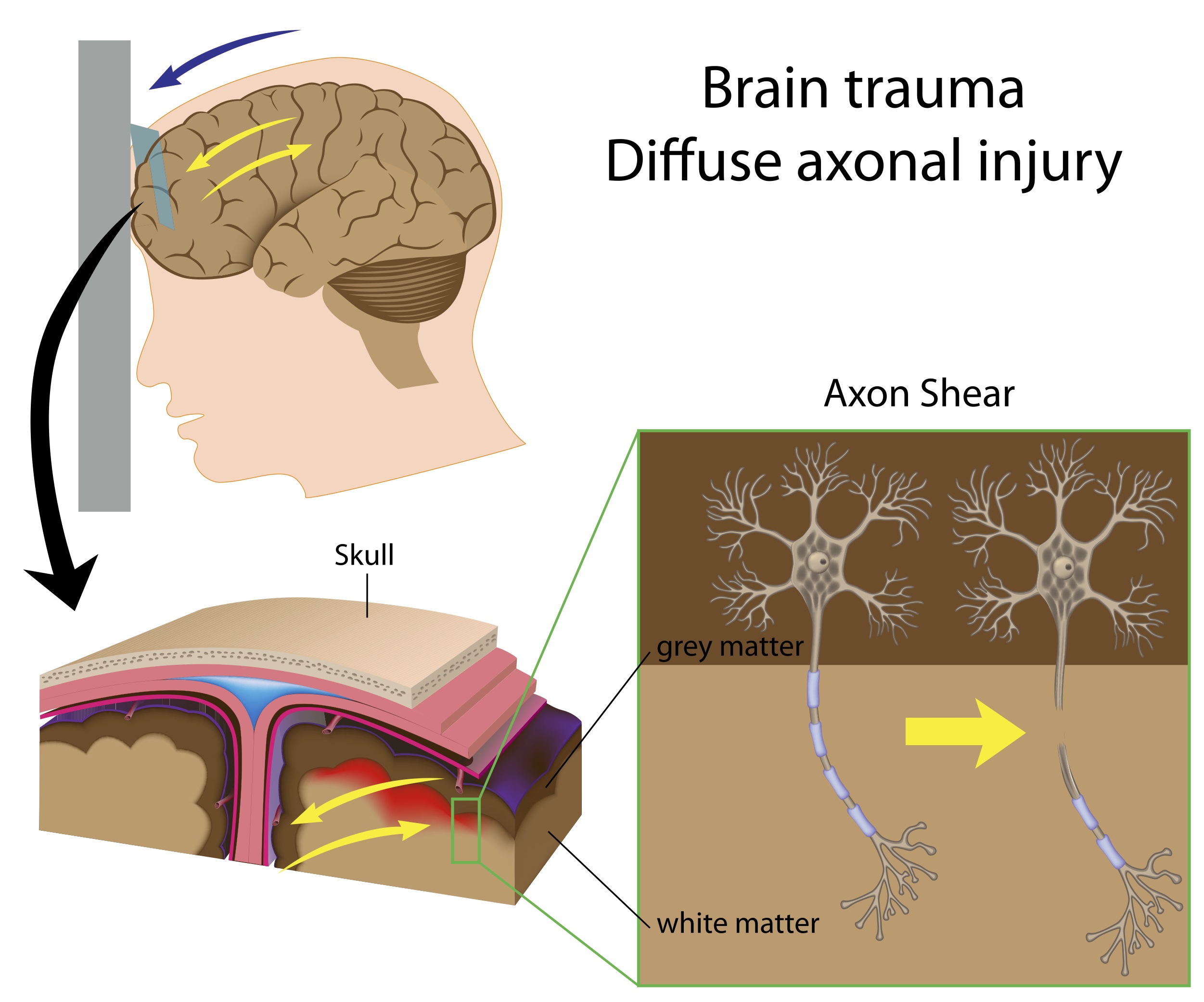
shutterstock_89651788 Head injuries are common all year long in the urgent care setting.  In the winter months, skiing or snowboarding is one of the leading causes of head injuries.  In the summer months, more sports injuries occur with the improved weather in the Seattle area. Most head injuries are not associated with brain injury or longer-term complications.  Rarely, however more significant injuries may develop which could be due to bleeding around the brain. Causes of head injuries:  Most of the time falls are the cause, but motor vehicle accidents, pedestrian or bicycle accidents and sports-related trauma also cause head injuries.  In the medical setting, we also have to be alert for signs of child abuse as well.  The risk of brain injury depend on the type of trauma and the age of the patient. Higher risk injuries: 1)   High speed motor vehicle accidents 2)   Fall from a great height 3)   Being hit by a high speed, a heavy or sharp object 4)   Inflicted injury such as abuse Symptoms of head injuries: 1)   Scalp swelling 2)   Loss of consciousness/passing out – Happens only 5% of the time and usually lasts less than 60 seconds 3)   Headache – Occurs in 20% of patients.  In children who are too young to speak, they may become irritable. 4)   Vomiting – occurs in about 10% of patients.  Children who have a head injury and vomit, do not necessarily have a serious brain injury. 5)   Seizures – Less than 1% of patients have a seizure right after a head injury.  A few of these patients will have a serious head injury.  We will usually do a CT scan of the head if  the patient has a seizure. 6)   Concussion – common symptoms include confusion or inability to remember events around the time of the injury, headache, vomiting, and dizziness. When to seek help: 1)   The patient has recurrent vomiting 2)   The patient has a seizure (convulsion) 3)   The patient loses consciousness after the injury 4)   Severe headache after the injury, or it worsens with time 5)   Head injury in a child with behavior change (lethargic, difficulty to wake, extremely irritable, other abnormal behaviors). 6)   Difficulty walking, is clumsy or has lack of coordination 7)   Slurred speech or confusion 8)   Dizziness that is not resolving 9)   Blood or watery fluid comes from ears 10)  The patient is a child less than 6 months of age 11)  There is a cut that will not stop bleeding after pressure is applied for 10 minutes 12)  The patient fell from a height greater than 5 feet, or was hit with a high speed object or with great force 13)  Patient’s friends/family are concerned about how the patient is acting When do I need a Cat Scan/CT Scan of the brain?  A CT scan is a special X-ray that expose children/adults to radiation and should be avoided if possible.  Sometimes, however a Cat scan will be recommended to diagnose more severe injuries.  Some possible symptoms which may prompt your medical provider to order a CT scan are: 1)   Prolonged loss of consciousness 2)   Persistent or severe memory loss/confusion 3)   Persistent vomiting 4)   Seizure 5)   Severe, persistent or worsening headache 6)   Suspicion of intentional injury (abuse) 7)   Behavioral changes (lethargy, decreased alertness, extreme irritability) 8)   Signs of skull fracture such as a bulging fontanel or skull deformity 9)   Abnormal neurological exam 10)  Severe scalp bruising or swelling in a very young child Why not an MRI?  We use CT scanning instead of an MRI to look for brain injury in most head injuries because it is available at most hospitals, and CT is relatively quick compared to MRI.  MRI requires patients – including children to be completely still for at least 30 minutes and that can be challenging. Head injury treatment at home: 1)   Rest – lie down or participate in quiet activities 2)   If the head is bleeding, clean the area with soap and water and apply pressure with gauze.  If bleeding does not stop, the child should be evaluated 3)   Tylenol may be given in most cases for pain/headache.  If the headache worsens, please have the child evaluated (see above). Monitoring after head injury:  The patient should be observed for signs of worsening injury.  Please call your healthcare provider if any of the following are noted: 1)   Vomiting more than once or vomiting continues for 4-6 hrs after the injury. 2)   Severe/worsening headache 3)   Becomes more drowsy or hard to wake up. 4)   Confused or not acting normally. 5)   Has trouble walking, talking or seeing 6)   Develops stiff neck. 7)   Has a seizure (convulsion) or any abnormal movements or behaviors. 8)   Cannot stop crying – children 9)   Has weakness or numbness involving one side of the body. Return to normal activities:  Patients who have sustained a concussion are at a risk for serious or even fatal complications of they have a second injury within a short time after the first injury – this is called second impact syndrome.  It important not to participate in high impact sports or risky activities for 6 weeks. Post-concussion syndrome:  Sometimes the patient who has sustained a head injury may develop a group of symptoms in the first few days after the injury called “post concussion syndrome.”  These symptoms can include headaches, anxiety, irritability, dizziness, or impaired memory or concentration.  In 85-90% of patients, this resolves within a few weeks-few months after the injury.  There isn’t any specific treatment for post-concussion syndrome. Head injury prevention: 1)   Wear a bicycle helmet when riding bikes, skating , sledding or participating in activities where you may hit your head 2)   Install car seats/booster seats correctly.  At least a booster seat is needed until the child is at least 4 feet 9” tall.  Individual states may have additional regulations about the use of booster/car seats. 3)   Use gates on stairways to prevent injuries in infants/young children 4)   Install window guards on all windows above the first floor 5)   Do not use wheeled baby walkers 6)   Teach kids to safely cross the street.  Young children should never cross the street alone. 7)   Discuss sports safety with your healthcare provider.  Be sure that a child has appropriate protective equipment.   I hope that you have found this information useful.  Wishing you the best of health,

Scott Rennie, D.O.
Board Certified in Obesity Medicine and Family Medicine

This blog is for educational purposes only and does not constitute individual medical advice. Always consult your own physician before making changes to your health, medications, or treatment plan.

Wooden nightstand with a glass of water, rolled towel on a plate, clock, lamp, and book beside a sleeping person in bed

Headaches: Migraine, Cluster, Tension and Chronic Daily Pain

shutterstock_142814494We see patients with headaches in the medical clinic almost everyday. Although they are usually not life threatening they can be quite debilitating. Several different types of headaches have been described in the literature including: 1)   Tension/Muscle contraction type headache 2)   Migraine headache 3)   Chronic daily headache 4)   Cluster headache Muscle contraction/Tension headache symptoms:  pressure or tightness around both sides of head or neck, mild to moderate pain that is steady and usually does not throb, pain is generally not made worse with activity, pain can increase or decrease in severity, there is often tenderness in the muscles of the head, neck or shoulders. Migraine headache symptoms:  migraines are a type of headache that seems to get worse with light, noise or motion.  Some people have nausea and vomiting with this type of headache.  Migraines can last for a few hours to up to 3 days. Migraine triggers:  Some possibilities include:  Stress, anxiety, worry, menstral periods, birth control pills, fatigue, lack of sleep, hunger, certain foods or drinks (wine, any alcohol, aged cheeses, nutrasweet, MSG, nuts), etc. Cluster headache symptoms:  Cluster headache are more rare.  They begin quickly without any warning and reach their peak within just a few minutes.  The headache is usually deep, excruciating, continuous and feels explosive, although can be pulsatile and throbbing.  The attack may happen up to 8x/day but usually only lasts for a short time (between 15 minutes – 3 hours).  The pain usually is around the eyes or temples and rarely starts in the face, neck, hear or side of the head.  It’s always on one side, and never on both sides of the head.  Most people who get this type of headache are very uncomfortable and can be restless and pace or rock back and forth when the attack occurs.  Cluster headaches can be associated with tear production, eye redness and runny nose, sweating and pale skin.  These types of headaches can begin at any age but have a genetic component. Chronic daily headache/Medication overuse headache:  Headaches that occur as frequently as every day or present more than 15 days per month or at least three months are considered chronic daily headaches.  Most people with this type of headache have migraine or muscle contracture type headaches as the underlying type.  If you use medications frequently to treat headaches, a vicious cycle can occur where the frequent headache cause the patient to take medication frequently (non-prescription or prescription) and then a rebound headache occurs as the medication wears off.  Some types of medication that can cause these rebound headaches are: 1)   Narcotic medications such as vicodin or Percocet 2)   Butalbital medications such as Fiorinal or Fioricet 3)   NSAIDS such as Advil, Motrin, Aspirin 4)   Triptans (such as Imitrex) 5)   Excedrine (aspirin, caffeine and acetaminophen combo) Other types of headaches:  Sinus headache or post-trauma headache Danger signs of headache:  Seek medical attention of you have any of the following: 1)   Headache is the worst headache of your life 2)   Headache comes on suddenly and becomes severe within seconds or minutes 3)   Occurs with a seizure, personality change, confusion or passing out 4)   Beings right after vigorous exercise or a minor injury 5)   New headache and is accompanied by numbness, weakness or vision changes. Do I have a brain tumor?  Headaches do occur in approximately 50% of people with brain tumors.  However, headaches are common and tumors are rarely found in people who are being evaluated for headaches.  If you are concerned about the possibility of brain tumor, please see a medical provider. Treatment of headache:  The treatment is tailored to the individual patient.  Treating the underlying cause of the headache is the most efficient way to reduce the pain and frequency of headaches.  Sometimes  a headache diary can be helpful for people who have frequent and severe headache in order to help determine what might be triggering the headache. For migraines, we break the treatment into two groups: acute management of the headache (medication you can take immediately for relief), and preventive management which include medications you can take on a regular basis to reduce the frequency of headaches that occur in the future. Some medications which might be used to treat and acute headache are pain relievers such as aspirin, Tylenol, Toradol,  Excedrine, Triptans(such as Imitrex) for migraine, anti-nausea agents such as Reglan or Phenergan, Ergotamines, and sometimes narcotic pain medications. For migraine prevention, commonly prescribed medications include beta blockers (propranolol is an example), tri-cyclic antidepressant medications such as amitriptyline, anti-seizure medications such as Depakote, Neurontin or Topamax, calcium channel blockers such as Verapamil. Neurologists are doctors that specialize in the diagnosis and treatment of headaches.  To find a neurologist near you check out the American Academy of Neurology website at:  http://patients.aan.com/findaneurologist/   I hope that you have found this information useful.  Wishing you the best of health,

Scott Rennie, D.O.
Board Certified in Obesity Medicine and Family Medicine

This blog is for educational purposes only and does not constitute individual medical advice. Always consult your own physician before making changes to your health, medications, or treatment plan.

Graph showing increasing percentages linked to a glowing brain symbol representing mental capacity and strategic thinking.

Why Are Strokes Rising in Young and Middle-Aged Adults?

Licensed from AP Strokes are rising dramatically among young and middle-aged Americans while dropping in older people, a sign that the obesity epidemic may be starting to shift the age burden of the disease. The numbers, reported Wednesday at an American Stroke Association conference, come from the first large nationwide study of stroke hospitalizations by age. Government researchers compared hospitalizations in 1994 and 1995 with ones in 2006 and 2007. The sharpest increase — 51 percent — was among men 15 through 34. Strokes rose among women in this age group, too, but not as fast — 17 percent. “It’s definitely alarming,” said Dr. Ralph Sacco, American Heart Association president and a neurologist at the University of Miami. “We have worried for a while that the increased prevalence of obesity in children and young adults may take its toll in cardiovascular disease and stroke,” and that appears to be happening, he said. Stroke still takes its highest toll on older people. For those over 65, there were nearly 300 stroke cases among 10,000 hospitalizations in the more recent period studied. For males 15 to 34, there were about 15 stroke cases per 10,000, and for girls and women in that age group there were about 4 per 10,000. Several small studies had recently suggested an ominous rise among the young and among middle-aged women. “We were interested in whether we could pick that up in a much larger, nationwide dataset,” said Dr. Mary George, a stroke researcher at the U.S. Centers for Disease Control and Prevention. The researchers examined federal records from a sample of hospitals in 41 states, covering about 8 million cases each year. They looked at the percentage of all hospitalizations for stroke by gender and in six age groups. For every 10,000 hospitalizations in 1994-95 compared with 2006-07, strokes rose: _51 percent, from 9.8 to 14.8, among males 15 to 34 years old _17 percent, from 3.6 to 4.2, in females 15 to 34 _47 percent, from 36 to 52.9, in males 35 to 44 _36 percent, from 21.9 to 30, in females 35 to 44 “The increases seen in children are very modest, but they are more so in the young adult age groups, and we feel that deserves further study,” George said. Better awareness of stroke symptoms and better imaging methods for detecting strokes in young people could account for some of that change, but there is no way to know, she said. Trends went the opposite way in older people. Strokes dropped 25 percent among men 65 and older (from 404 to 303 per 10,000 hospitalizations), and 28 percent among women in this age group (from 379 to 274). Doctors think better prevention and treatment of risk factors such as high blood pressure in older people may be contributing to the decline. At the University of California at Los Angeles, doctors are seeing more strokes related to high blood pressure and clogged arteries in younger people, said Dr. Jeffrey Saver, director of the stroke center at UCLA. Early estimates from 2007 death certificates suggest that stroke is now the nation’s fourth leading cause of death instead of the third, partly because of better treatments and prevention among the elderly. “But at the same time we’re seeing this worrisome rise in mid-life,” Saver said. Allison Hooker, a nurse who coordinates stroke care at Forsyth Medical Center in Winston-Salem, N.C., said her hospital also is seeing more strokes in younger people with risk factors such as smoking, obesity, high blood pressure, alcohol overuse and diabetes. “I’d say at least half of our population (of stroke patients) is in their 40s or early 50s,” she said, “and devastating strokes, too.” Also at the conference: _A preliminary study raised concern about diet soda and stroke risk. Researchers surveyed about 2,500 adults in the New York City area at the start of the study and followed their health for nearly 10 years afterward. Researchers found that people who said they drank diet soda every day had a 48 percent higher risk of stroke or heart attack than people who drank no soda of any kind. Researchers adjusted for differences in other risk factors, such as smoking and high blood pressure. Lead researcher Hannah Gardener of the University of Miami had no explanation for the findings but said that for those trying to cut calories, “diet soft drinks may not be an optimal substitute for sugar-sweetened beverages.” _The same study also found higher risks for people consuming more than 1,500 milligrams of salt a day — the limit the American Heart Association recommends. Researchers found that stroke risk rose 16 percent for every 500 milligrams of salt consumed each day. Those who took in at least 4,000 milligrams had a more than 2.5 times higher risk of stroke than those who limited themselves to 1,500 milligrams. A teaspoon of salt contains about 2,300 milligrams of sodium. About three-fourths of the salt we eat, though, comes from processed foods, especially tomato sauce, soups, condiments and canned foods. ___ Online: Stroke conference: http://www.strokeconference.org

Scott Rennie, D.O.
Board Certified in Obesity Medicine and Family Medicine

This blog is for educational purposes only and does not constitute individual medical advice. Always consult your own physician before making changes to your health, medications, or treatment plan.

Glass of ice-filled soda with heartbeat and heart graphics on table

Does Diet Soda Raise Stroke and Heart Attack Risk?

By Linda Carroll
msnbc.com contributor
Just as you were starting to feel virtuous for having switched from sugary sodas to low- or no-calorie substitutes, a new study comes along suggesting that diet sodas might be bad for your head and your heart. The study, which followed more than 2,500 New Yorkers for nine or more years, found that people who drank diet soda every day had a 61 percent higher risk of vascular events, including stroke and heart attack, than those who completely eschewed the diet drinks, according to researchers who presented their results today at the American Stroke Association’s International Stroke Conference in Los Angeles. Still, the researchers aren’t ready to tell consumers to skip diet sodas. More studies need to be done before that happens, said the report’s lead author Hannah Gardener, an epidemiologist at the University of Miami Miller School of Medicine. “I think diet soda drinkers need to stay tuned,” Gardener said. “I don’t think that anyone should be changing their behaviors based on one study. Hopefully this will motivate other researchers to do more studies.” That advice may not stop some from skipping their diet drinks. “This is pretty scary,” said Denise Gainey, a 49-year-old administrative assistant from Amelia, Va. Worried that she might have inherited a higher risk of heart disease, Gainey wants to be careful. “I guess I’ll just be drinking a lot more water,” she said. For the new study, researchers surveyed 2,564 north Manhattan residents about their eating behaviors, exercise habits, as well as cigarette and alcohol consumption. The study volunteers were also given physical check-ups that included blood pressure measurements and blood tests for cholesterol and other factors that might affect the risk for heart attack and stroke. The increased likelihood of vascular events remained even after Gardener and her colleagues accounted for risk factors, such as smoking, high blood pressure and high cholesterol levels. Pointing the finger more squarely at diet drinks, the researchers found no increased risk among people who drank regular soda.
Does this mean there’s something in diet sodas that hurts our blood vessels? Nobody knows the answer to that question, yet, Gardener said. There could be something else that people who drink diet sodas have in common, she explained. For example, it’s possible that people who drink diet sodas are replacing those saved sugar calories with other unhealthy choices, Gardener said. That explanation makes a lot of sense to Dr. Nehal N. Mehta, director of inflammatory risk cardiology at the University of Pennsylvania. Although the researchers know the total calories study volunteers were consuming, they weren’t able to account for unhealthy eating habits, Mehta said. “Maybe along with the diet soda, people are grabbing a Big Mac and a large fries,” Mehta said. “Soda may not be the villain. It may be the other things people consume in association with diet soda. After all, what goes better with pizza or fries than a soda?” That said, it is always possible that there is something about diet soda that leads to vascular problems, Mehta said, adding that this is the second study to associate diet soda with health issues. An earlier study found that diet soda consumption was linked to an increased risk of metabolic syndrome, which is also a risk factor for heart problems and stroke. Caramel coloring linked to vascular issues Further, Mehta said, there are animal studies suggesting a link between vascular problems and caramel-containing products. Among other things, caramel is the ingredient that gives the dark color to sodas like Coke and Pepsi, he explained. Despite all of that, you probably don’t want to give up diet soda until — and if — larger studies confirm the results of this one, Mehta said. That is, unless you’re someone with a lot of risk factors for stroke or heart disease, said Dr. Tudor Jovin, an associate professor of neurology and medicine and director of the Stroke Institute at the University of Pittsburgh Medical Center. “People with a lot of risk factors for vascular disease, might want to reduce the amount of diet soda they consume,” Jovin said. “Those risk factors would include high blood pressure, diabetes, high cholesterol, smoking, a family history of cardiovascular disease, metabolic syndrome and a history of cardiovascular events.”

Scott Rennie, D.O.
Board Certified in Obesity Medicine and Family Medicine

This blog is for educational purposes only and does not constitute individual medical advice. Always consult your own physician before making changes to your health, medications, or treatment plan.