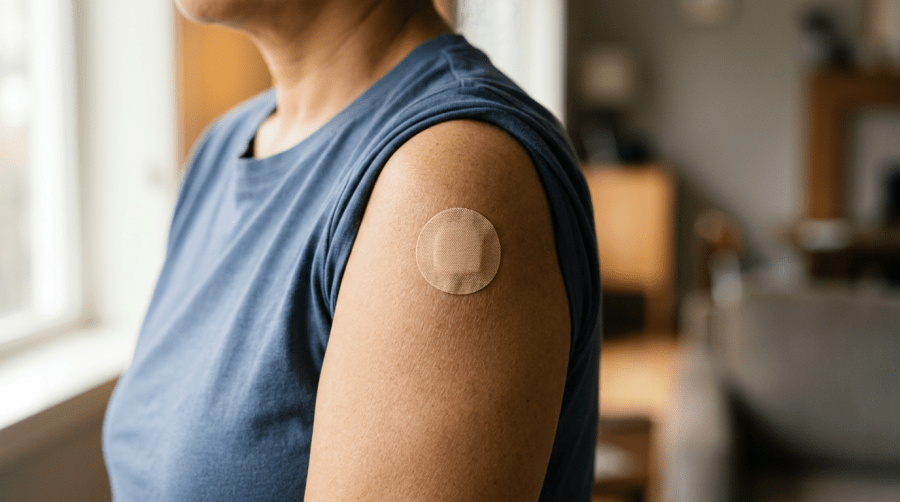
Round beige adhesive bandage on an adult's upper arm after a vaccination

2026-2027 COVID Vaccine: Who Qualifies, and Do You Need a Doctor’s Note?

The updated COVID-19 shots were approved on August 27 and 28, 2026, and they started shipping the same week. If you went looking for one last fall and got turned around at the pharmacy counter, or told to come back with something in writing from your physician, this post is mostly for you.

Here is what is out, who can get it, what counts as high risk, and what the virus is doing right now.

What was approved, and when you can actually get it

FDA cleared XFG-adapted formulas from all three manufacturers. Pfizer-BioNTech’s Comirnaty was approved August 27 (1). Moderna’s Spikevax and mNexspike followed (2). Novavax announced its Nuvaxovid approval on August 28, alongside clearances in the EU and Japan (3). XFG is a recombinant in the JN.1 family, and it replaces last season’s LP.8.1 formula (4).

Now the part I get asked about most, and the part I cannot give you: there is no state-by-state rollout calendar. No health department publishes a date on which residents of that state become eligible, because distribution is commercial rather than federally allocated. Manufacturers ship to distributors, distributors ship to chains and clinics, and stock arrives store by store over days to a few weeks. Your pharmacy may have doses Tuesday while the one four miles down the road is waiting on Thursday’s truck.

So do not wait for an announcement. Set an alert on your pharmacy’s scheduling page, or call and ask when their first shipment lands.

Where the virus is right now

I want to be careful here, because the headlines and the data are telling slightly different stories.

CDC’s wastewater program is the most reliable read we have. For the week ending August 22, 2026, the national wastewater viral activity level for SARS-CoV-2 was 2.14, which CDC classifies as Very Low (5). That same number sat at 1.00 through most of July. It has roughly doubled in six weeks while staying inside the lowest category. So yes, transmission is climbing on the usual back-to-school schedule. No, we are not in a surge yet.

The regional picture is lopsided. The South is currently the highest region at 3.34. Texas is the real outlier at 11.76 across 40 reporting sites, the only state sitting in the Very High band. Mississippi reads 8.92 and South Carolina 7.47, but both are flagged for limited coverage, with two and three reporting sites respectively, so treat those as a signal rather than a measurement. Hawaii is at 7.26 across ten sites. Then Nevada 6.01, California 5.87 across 79 sites, West Virginia 5.61, Louisiana 5.31, and Florida 5.30 (6).

The variant names have shuffled again. Over the four weeks ending August 1, 2026, the two most common in CDC’s sequencing were SW.2 at about 21 percent and XFG.1.1 at about 16 percent (7). XFG.1.1 belongs to a family. Count its close relatives together and the XFG group accounts for roughly 35 percent of what is going around, which is why FDA picked XFG as this year’s vaccine target. NB.1.8.1, the one the press nicknamed Nimbus last summer, has faded to about 4 percent. BA.3.2 sits near 2 percent.

Here is the caveat, and most coverage skips it. Those percentages rest on a very small number of samples. CDC flags all eighteen of the lineages it reported for that period as based on fewer than ten sequenced specimens, or unreliable for other statistical reasons (7). In February the agency could name more than two hundred lineages circulating in the country. This month it could name eighteen. Genetic sequencing of the virus has dropped off sharply, so the variant list is a rough sketch rather than a headcount.

Which is why I put more weight on the wastewater curve than on the variant percentages right now. Genomics tells you the flavor. Wastewater tells you the size.

The page to bookmark

CDC posts wastewater viral activity by state here, and it is updated every Friday with the previous week’s numbers:

https://www.cdc.gov/wastewater/respiratory-viruses/state.html

It covers influenza A, SARS-CoV-2 b (Covid-19), and RSV on the same page, so you can see which of the three is actually moving in your area before you decide whether that sore throat needs a test. If you want the county-level view alongside emergency department visit data, CDC’s Respiratory Illnesses Data Channel has a search box for your state or county:

https://www.cdc.gov/respiratory-viruses/data/index.html

Bookmark the first one. It answers the question patients are really asking, which is not “how bad is COVID nationally” but “is there anything going around here.”

Who the FDA says can get it

The licensed indications are narrower than they were before 2025, and they differ slightly by product:

  • Comirnaty (Pfizer-BioNTech), mRNA: ages 65 and older, or ages 5 through 64 with at least one condition that raises the risk of severe COVID-19 (1)
  • Spikevax (Moderna), mRNA: ages 65 and older, or 6 months through 64 with at least one such condition (2)
  • mNexspike (Moderna), mRNA: ages 65 and older, or 12 through 64 with at least one such condition (2)
  • Nuvaxovid (Novavax), protein-based rather than mRNA: ages 65 and older, or 12 through 64 with at least one such condition (3)

CDC’s own recommendation, unchanged since the September 2025 ACIP vote, covers everyone 6 months and older under individual-based decision-making (8). So the federal recommendation is broader than the federal license. That gap is exactly where the confusion at the pharmacy counter lives, and nobody at either agency has resolved it for you.

The high-risk list is longer than you think

Most people badly underestimate how wide this list is. CDC’s conditions, in alphabetical order rather than order of risk: cancer, cerebrovascular disease, chronic kidney disease at any stage, chronic liver disease, chronic lung disease including asthma, cystic fibrosis, dementia and other neurologic conditions, type 1 or type 2 diabetes, disabilities, heart conditions, hemoglobin blood disorders, HIV, an immunocompromising condition, mental health conditions, overweight and obesity, physical inactivity, pregnancy, current or former smoking, solid organ or stem cell transplant, substance use disorders, and tuberculosis (9).

Read the back half of that again. Overweight is defined as a BMI of 25 or higher (9). About 72 percent of American adults age 20 and over fall at or above that line, combining the 31.7 percent who are overweight with the 40.3 percent who have obesity (10). Current smoking counts, and so does former smoking. So does physical inactivity. So does depression.

Here is my opinion, and I hold it firmly. A criteria list that broad is not functioning as a clinical gate. It is functioning as paperwork. If you are an adult in the United States, the odds are strong that you already qualify under a criterion you would not have thought to claim, and the honest thing for the system to do would be to say so out loud instead of making each person audit themselves at a kiosk.

Do you need a note from your doctor?

Short answer: almost certainly not, and you should not assume you do.

On September 19, 2025, ACIP voted to recommend COVID-19 vaccination for everyone 6 months and older through individual-based decision-making. In the same meeting it took up a proposal that would have let jurisdictions require a prescription, and that proposal failed on a tiebreaker cast by the committee chair (8, 11). CDC’s position is that the required conversation can happen with a pharmacist, a nurse practitioner, or a PA standing right there at the counter. No written order from your physician.

What tripped people up last fall was state law rather than federal policy. Several states had written pharmacist vaccination authority so that it tracked ACIP’s recommendation language directly, and when that language narrowed, pharmacists in those states abruptly lost standing authority to vaccinate without a prescription. By late September 2025, 26 states had issued standing orders or executive actions restoring broader access (12). The rest had not, and store-level policy varied inside states that had.

Two phone calls save you an afternoon. Call the pharmacy, ask whether they need a prescription for someone your age and situation, and ask whether the 2026-2027 formula is physically on their shelf yet. Then call the number on the back of your insurance card and ask what your plan covers this season. Your state health department’s immunization page is worth two minutes as well, since that is where a new standing order would appear first.

And if a pharmacy does turn you away for want of an order, that is a five-minute problem for your physician to solve, not a reason to abandon the shot. Call the office. Do not walk out and let it go until spring.

Why I think the restrictions backfire

Because the numbers are already bad, and friction is the best explanation for them.

Only 17.5 percent of American adults received the 2025-2026 COVID vaccine, measured at the close of the season in February 2026 across a survey sample of roughly 197,000 people (13). Among adults 65 and older, the group with the clearest, least-debatable benefit, coverage reached 33.5 percent (13). Two-thirds of the highest-risk group in the country did not get vaccinated.

I do not believe most of that gap is ideological. Some of it is. Most of it is drag. Every additional step you insert between a mildly willing person and a needle removes some of them, and the removal is silent. An eligibility attestation form removes a few. A phone call to confirm the pharmacy will actually do it removes a few more. An uncertain bill removes more still. None of those people write a letter explaining why they gave up. They just do not come.

There is a second cost that gets less attention. When the government tells healthy adults they no longer qualify, the message the public hears is that the shot is not worth much. That message does not stay inside its intended audience. It reaches the 68-year-old with COPD who did qualify, who now assumes the whole thing has been downgraded, and who skips it.

If you decided back in 2021 or 2022 that two doses were enough and you have not thought about it since, I would ask you to reconsider on narrow, unromantic grounds. Not because the pandemic is back. Because protection fades, this year’s formula is matched to what is circulating now, and the downside of a sore arm for two days is very small next to a week of illness you did not need to have.

Has the virus changed?

Not in the way people fear. Severity has not meaningfully increased. WHO and ECDC have continued to rate the currently circulating variants as low risk for severe outcomes, and the mutations driving the current lineages are the immune-evasion kind rather than the tissue-damage kind. Laboratory work on XFG published in 2025 found roughly a two-fold drop in neutralizing antibody effectiveness compared with the then-dominant lineage, which explains reinfection without implying worse disease (14).

Symptoms are the familiar Omicron picture. Sore throat, often genuinely severe. Hoarseness. Congestion, cough, fatigue, headache, body aches, and sometimes nausea or loose stools. Loss of smell is far less common than it was in 2020. The “razor blade throat” description that attached itself to NB.1.8.1 in 2025 has stuck around in press coverage, and it is a real complaint, though it is also just a bad Omicron sore throat rather than a diagnostic sign.

What to monitor: shortness of breath at rest or on minimal exertion, chest pain, confusion or unusual difficulty staying awake, bluish lips, and an inability to keep fluids down. Watch for the pattern where someone improves for several days and then clearly worsens around day seven to ten. If you own a fingertip pulse oximeter, a resting reading that keeps coming back at 94 percent or below deserves a same-day call, not a wait-and-see.

Treatment still exists and is still underused. Nirmatrelvir-ritonavir has to be started within five days of symptom onset in adults at high risk of progression, which as we established covers a very large share of adults (15). Day six is too late. If you are in a risk category, know before you are sick how you would reach a clinician quickly.

How long do you stay home?

CDC no longer has a five-day isolation rule, and has not since 2024. The current guidance is symptom-based. Stay home and away from others while you are sick. You can return to normal activities once both of the following have been true for at least 24 hours: your symptoms are improving overall, and you have had no fever without using fever-reducing medication (16).

Then take added precautions for the next five days. Mask well, keep some distance, improve ventilation, and test before you spend time around anyone vulnerable. If a fever returns or you get worse after going back out, go home again and restart the same clock (16).

On work: CDC does not recommend a fixed number of days off, and there is no federal number for your employer to enforce. Your workplace policy is its own creature, and so is your child’s school district. If HR asks for a return-to-work note, that is a workplace requirement rather than a public health one, and it is worth saying so plainly when you ask your physician for it. Healthcare workers and staff in long-term care facilities are the exception and should follow their facility’s occupational health rules instead.

What else lowers your risk

The vaccine is the biggest lever. Metabolic health is the second one, and it is the one you have some control over between now and January.

CDC’s own analysis of 148,494 adults treated at 238 US hospitals found risk of COVID-19 hospitalization was lowest at a BMI of 24.2, ICU admission lowest at 25.9, and death lowest at 23.7, with risk climbing sharply above those points (17). That is a dose-response curve, not a threshold effect, which means movement in the right direction counts even if you do not reach a target number.

Two other findings are worth putting side by side, because together they say something more useful than either does alone.

In a Scottish study of 3.6 million people, vaccinated adults with a BMI over 40 were 76 percent more likely to be hospitalized or die from COVID-19 than vaccinated adults at a normal BMI (adjusted rate ratio 1.76, 95% CI 1.60 to 1.94). In the prospective arm of the same work, 55 percent of people with severe obesity had unquantifiable neutralizing antibody titers six months after their second dose, compared with 12 percent of people at a normal BMI. A third dose restored neutralizing capacity, and then it declined faster again (18).

Meanwhile, in a cohort of 9.17 million adults in England, protection against hospitalization two weeks after the second dose was essentially identical across BMI categories, with an odds ratio of 0.32 in people with obesity against 0.34 in people at a healthy weight. Protection against death was actually stronger in the obesity group, 0.26 against 0.39 (19).

Put those together and the conclusion is not the one people expect. The vaccine works in people with obesity. Its protection simply fades faster. That is an argument for getting the seasonal dose rather than skipping it, and it is the single clearest reason I push seasonal vaccination hardest in my obesity medicine patients.

If you are working on weight for metabolic reasons, this belongs on the list of reasons alongside the ones you already know. I have written about the current medication options in New Weight Loss Pills Foundayo and Wegovy Explained, and about what sustains loss over years in Doctor Supervised Weight Loss: What Works Long Term. For the version of this discussion from last season, including how the eligibility fight started, see 2025 COVID-19 Vaccine: Eligibility, Prescriptions, and Debate.

Two smaller things. You can get the COVID vaccine and the flu vaccine at the same visit, one in each arm, and doing so is the single easiest way to make sure both actually happen (20). And CDC’s risk list includes physical inactivity as its own line item, which is a quiet reminder that the walk you keep meaning to start is doing more than one job.

For patients

Check the wastewater page for your state before you decide how careful to be this month. Call your pharmacy, ask about stock and about whether they need a prescription where you live, and book the appointment while you are on the phone. If you are 65 or older, or you have any condition on that list, do not let a form at the counter end the attempt. If you have been waiting since your first two doses in 2021, this is a reasonable year to restart.

For colleagues

Three practical notes. First, expect the FDA-license-versus-CDC-recommendation gap to generate pharmacy callbacks again this fall, and consider building a standing message your staff can send rather than routing each one to you. Second, screen for eligibility criteria your patients will not volunteer: former smoking status, physical inactivity, and a documented mental health condition all qualify under the CDC list and are all commonly missing from problem lists. Third, if you practice by video as I do, the eligibility conversation is straightforward to complete in a visit that is already happening for something else, and it takes about ninety seconds.

The Bottom Line

The 2026-2027 vaccines are approved, matched to XFG, and shipping now. There is no statewide rollout date to wait for, so call your pharmacy. You very likely qualify under criteria broader than you assume, and you almost certainly do not need a note from me or anyone else, though it is worth one phone call to confirm before you drive over. COVID activity is low nationally and rising, with Texas and the South well ahead of everyone else. And if you stopped after your first two doses because the emergency ended, the case for one more is quiet and practical rather than dramatic: your protection has faded, this formula matches what is going around, and the shot is easier to get than the illness is to sit through.

Scott Rennie, D.O.
Board Certified in Obesity Medicine and Family Medicine

This blog is for educational purposes only and does not constitute individual medical advice. Always consult your own physician before making changes to your health, medications, or treatment plan.

Sources

  1. Pfizer and BioNTech Receive U.S. FDA Approval for XFG-adapted COVID-19 Vaccine. August 27, 2026. https://www.pfizer.com/news/press-release/press-release-detail/pfizer-and-biontech-receive-us-fda-approval-xfg-adapted
  2. Moderna Receives U.S. FDA Approval for Updated 2026-2027 COVID-19 Vaccines. August 2026. https://www.biospace.com/press-releases/moderna-receives-u-s-fda-approval-for-updated-2026-2027-covid-19-vaccines
  3. Novavax’s Partnership Strategy Continues to Deliver with XFG-adapted Nuvaxovid Approvals in the U.S., EU and Japan for the 2026-2027 Vaccination Season. August 28, 2026. https://www.biospace.com/press-releases/novavaxs-partnership-strategy-continues-to-deliver-with-xfg-adapted-nuvaxovid-approvals-in-the-u-s-eu-and-japan-for-2026-2027-vaccination-season
  4. U.S. Food and Drug Administration. COVID-19 Vaccines (2026-2027 Formula) for Use in the United States Beginning in Fall 2026. https://www.fda.gov/vaccines-blood-biologics/industry-biologics/covid-19-vaccines-2026-2027-formula-use-united-states-beginning-fall-2026
  5. CDC. National Wastewater Data for Respiratory Viruses. Data for the week ending August 22, 2026; updated August 27, 2026. https://www.cdc.gov/wastewater/respiratory-viruses/national.html
  6. CDC. State and Territory Wastewater Data for Respiratory Viruses. Data for the week ending August 22, 2026. https://www.cdc.gov/wastewater/respiratory-viruses/state.html
  7. CDC. SARS-CoV-2 Variant Proportions. National estimates, four-week period ending August 1, 2026; published August 28, 2026. https://data.cdc.gov/Laboratory-Surveillance/SARS-CoV-2-Variant-Proportions/jr58-6ysp
  8. U.S. Department of Health and Human Services. ACIP Recommends COVID-19 Immunization Based on Individual Decision-making. September 19, 2025. https://www.hhs.gov/press-room/acip-recommends-covid19-vaccination-individual-decision-making.html
  9. CDC. People with Certain Medical Conditions and COVID-19 Risk Factors. https://www.cdc.gov/covid/risk-factors/index.html
  10. National Center for Health Statistics. Prevalence of Overweight, Obesity, and Severe Obesity Among Adults Age 20 and Older: United States, 1960-1962 Through August 2021-August 2023. https://www.ncbi.nlm.nih.gov/books/NBK621182/
  11. CDC advisers vote that patients must consult a health care provider for Covid-19 vaccination, but no prescription required. CNN, September 19, 2025. https://www.cnn.com/2025/09/19/health/cdc-acip-hepatitis-mmrv-covid-vaccine
  12. Kates J, Bell C, Michaud J, Williams E, Tolbert J. Tracking State Actions on Vaccine Policy and Access. KFF, September 24, 2025. https://www.kff.org/state-health-policy-data/tracking-state-actions-on-vaccine-policy-and-access/
  13. CDC. COVID-19 Vaccination Coverage, Overall and by Selected Demographics and Jurisdiction, Among Adults 18 Years and Older, by Season. National Immunization Survey-Fall Respiratory Virus Module, week ending February 21, 2026. https://data.cdc.gov/d/ksfb-ug5d
  14. Gavi. Eight things you need to know about the new “Nimbus” and “Stratus” COVID-19 variants. June 16, 2025. https://www.gavi.org/vaccineswork/eight-things-you-need-know-about-new-nimbus-and-stratus-covid-variants
  15. U.S. Food and Drug Administration. PAXLOVID Patient Eligibility Screening Checklist Tool for Prescribers. https://www.fda.gov/media/158165/download
  16. CDC. Preventing Spread of Respiratory Viruses When You’re Sick. https://www.cdc.gov/respiratory-viruses/prevention/precautions-when-sick.html
  17. Kompaniyets L, Goodman AB, Belay B, et al. Body Mass Index and Risk for COVID-19-Related Hospitalization, Intensive Care Unit Admission, Invasive Mechanical Ventilation, and Death, United States, March-December 2020. MMWR Morb Mortal Wkly Rep. 2021;70(10):355-361. PMID 33705371. https://pubmed.ncbi.nlm.nih.gov/33705371/
  18. van der Klaauw AA, Horner EC, Pereyra-Gerber P, et al. Accelerated waning of the humoral response to COVID-19 vaccines in obesity. Nat Med. 2023;29(5):1146-1154. PMID 37169862. https://www.nature.com/articles/s41591-023-02343-2
  19. Piernas C, Patone M, Astbury NM, et al. Associations of BMI with COVID-19 vaccine uptake, vaccine effectiveness, and risk of severe COVID-19 outcomes after vaccination in England: a population-based cohort study. Lancet Diabetes Endocrinol. 2022;10(8):571-580. PMID 35780805. https://doi.org/10.1016/S2213-8587(22)00158-9
  20. CDC. Staying Up to Date with COVID-19 Vaccines. https://www.cdc.gov/covid/vaccines/stay-up-to-date.html

Mouse on wooden table in rustic cabin with oats, mug, and lantern

What Is Hantavirus? What You Need to Know Right Now

If you’ve been following the news lately, you’ve probably seen hantavirus come up more than once. First it was the tragic death of Betsy Arakawa, the wife of actor Gene Hackman, in Santa Fe in February 2025. Then, just days ago, a cruise ship in the Atlantic became the center of an international health response involving the WHO, multiple governments, and passengers scattered across more than a dozen countries. So let’s talk about what hantavirus actually is, where the risk really comes from, and why one particular strain of this virus is changing how we think about transmission.

The Basics: A Rodent-Borne Illness

Hantavirus isn’t new. In the United States, it first grabbed serious attention in 1993 when healthy young adults in the Four Corners region of the American Southwest started dying of a mysterious respiratory illness. The culprit turned out to be a newly identified pathogen called Sin Nombre virus, spread by the deer mouse. That outbreak gave us a new diagnosis, hantavirus pulmonary syndrome, or HPS, and it launched decades of surveillance that continues today. According to the CDC, from 1993 through the end of 2023, the United States recorded 890 total cases. (1)

In the U.S. strain, the virus spreads from rodents to humans, not from person to person. People get infected when they breathe in aerosolized particles from the urine, feces, or saliva of infected animals. You don’t have to be bitten. You don’t have to handle a dead mouse. You can be sweeping out a shed or a cabin that sat empty all winter, and if infected rodents were living in there, you’re at risk the moment those dried particles become airborne. That’s how Betsy Arakawa most likely got sick. She was found deceased at her Santa Fe home in late February 2025, and the New Mexico Office of the Medical Investigator confirmed she died of hantavirus pulmonary syndrome. (2) Her husband, Gene Hackman, tested negative for the virus and died of heart disease. (2)

That case was a painful reminder. Hantavirus doesn’t make headlines often, but it doesn’t disappear either. New Mexico, Colorado, Arizona, and the broader Southwest are endemic areas. We see cases here. Our patients are at risk.

What the Disease Actually Looks Like

The illness comes in stages. The early phase looks frustratingly like the flu: fever, muscle aches, headache, fatigue, sometimes nausea, vomiting, and diarrhea. (3) That prodromal period can last several days. Then comes the part that kills people. The lungs fill with fluid. Patients develop acute respiratory distress syndrome. Blood pressure drops. The heart begins to fail. According to the WHO, the case fatality rate for hantavirus in the Americas reaches up to 50%. (4) The CDC and other sources put HPS mortality in the 30 to 40 percent range, depending on the strain. (5)

There’s no specific antiviral treatment that works for HPS. Ribavirin, a drug that works for some other viral hemorrhagic fevers, was tested and didn’t show benefit. (6) What we have is supportive care: ICU management, mechanical ventilation when respiratory failure sets in, careful fluid management to avoid making pulmonary edema worse. The CDC is clear that if you suspect HPS, get the patient to the ICU immediately, before you even have lab confirmation. (6) Without early aggressive care, most deaths occur within 24 to 48 hours of the cardiopulmonary phase onset. (6)

This is a disease where the clock moves fast once it turns.

Andes Virus: A Different Transmission Pattern

Here’s where things get more complicated. Most hantaviruses, including Sin Nombre, the strain we deal with in the U.S., don’t spread person to person. A patient with HPS from Sin Nombre is, for practical purposes, a dead end for transmission. Standard precautions are appropriate. That’s reassuring.

The Andes virus is different.

Andes virus is found in South America, primarily Argentina and Chile, and it’s carried mainly by the pygmy rice rat. (7) It’s the only hantavirus known to be capable of human-to-human transmission. (8) That capacity was first documented in a 1996 outbreak in southern Argentina, where 18 cases occurred in and around the towns of El Bolson, Bariloche, and Esquel. Notably, five of the patients were physicians, three of whom had directly cared for infected patients. (9) Two additional people who had contact with the patients but hadn’t visited the affected area also got sick, which strongly suggested person-to-person spread. That outbreak was significant. It forced a rethinking of how we approach Andes virus cases in clinical settings.

The transmission appears to happen through close, sustained contact with an infected person, likely through respiratory secretions. It isn’t casual. It’s not the kind of spread you get from being in the same room briefly. But it happens, and it happens enough that the WHO has classified hantaviruses as emerging priority pathogens with high potential to spark international public health emergencies. (10)

The Cruise Ship: A Real-Time Case Study

What’s unfolding right now on the MV Hondius, a Dutch-flagged expedition cruise ship, is the most visible illustration of Andes virus transmission risk in years.

The ship departed Ushuaia, Argentina on April 1, 2026, carrying 147 passengers and crew from 23 countries. The leading theory, according to Argentine health officials, is that a Dutch passenger couple contracted the Andes virus during a bird-watching trip in Ushuaia before boarding. Investigators believe the couple may have been exposed at a landfill during that outing, where infected rodents were present. (11) They had been traveling through Argentina, Chile, and Uruguay for months prior, passing through areas where Andes virus is endemic. (11)

Two people got sick. What makes this case significant is what happened next. By the time the WHO was notified on May 2, 2026, there were already multiple cases on board. As of today, May 8, 2026, there are nine suspected cases, six confirmed, and three deaths. (12) Patients are hospitalized in South Africa, Germany, the Netherlands, Switzerland, and Saint Helena. (12) The WHO has acknowledged that some cases among close contacts, including cabin-sharing passengers, may represent person-to-person transmission. (13) That distinction is critical. The initial infections almost certainly happened on land in South America. But the chain didn’t stop there.

A WHO epidemiologist noted at a briefing that “we do believe that there may be some human-to-human transmission happening among really close contacts, the husband and wife, people who’ve shared cabins.” (14) This is how Andes virus behaves when it gets into a confined space with sustained close contact. It doesn’t spread like a respiratory virus through casual exposure. But it can move.

The infected passengers came from multiple countries, disembarked at multiple ports before the outbreak was understood, and are now dispersed globally. Health authorities in the U.S. are monitoring former passengers in at least five states. (15) No Americans have shown symptoms as of this writing. The WHO’s assessment is that the global public health risk remains low, and WHO Director-General Tedros has stated that a large epidemic similar to COVID-19 is not anticipated. (15) That assessment reflects what we know about Andes virus: its person-to-person transmission is real but limited, and typically tied to close, prolonged contact rather than broad community spread.

The Argentina Context: Cases Are Rising

This is happening against a backdrop of a significant increase in hantavirus cases in South America. Argentina has recorded 101 confirmed hantavirus cases since June 2025, roughly double the 57 cases recorded in the same period the year before. (16) The mortality rate in Argentina’s current season has been approaching one-third of confirmed cases. (17) Chile has confirmed 39 cases through May 2026, already approaching its full-year 2025 total, with a fatality rate around 33%. (18)

Researchers and health officials point to climate change as a contributing factor. Warming temperatures and shifting rainfall patterns are expanding the habitat of infected rodents, allowing them to move into areas that weren’t previously endemic. (17) More rodents in more places means more exposure risk for more people.

This isn’t a fluke uptick. It’s a trend that warrants attention.

What This Means for Clinicians and Patients

In my practice here in Colorado, I haven’t had a hantavirus case this season. None yet. For patients in the American Southwest generally, the risk remains what it has been: don’t disturb rodent habitats without protection. If you’re cleaning out a garage, barn, cabin, or shed that may have had rodent activity, wet the area down with a disinfectant before sweeping. Don’t dry-sweep. Use gloves and, ideally, an N95 mask. Ventilate the space well before working in it. Those measures aren’t complicated, but they genuinely matter. (19)

For clinicians, the Andes virus situation is a reminder: take travel history seriously. Ask about travel. Every time. A patient presenting with a febrile illness and early respiratory symptoms who recently traveled to Argentina, Chile, or Uruguay deserves a careful look, and the incubation period for hantavirus is one to six weeks after exposure (3), so someone who bird-watched in Ushuaia in early April might not get sick until May. If a patient’s rapid flu test is negative, their COVID test is negative, and they look like they’re heading toward respiratory compromise, hantavirus should be in your differential.

If you’re dealing with a confirmed or suspected Andes virus case, talk to your infection control team. The evidence for person-to-person transmission isn’t theoretical. The 1996 Argentine outbreak included healthcare workers. The WHO and CDC guidance is clear that for Andes virus, standard precautions aren’t sufficient. Enhanced droplet and contact precautions are appropriate. (8)

There’s no vaccine. There’s no proven antiviral. Early ICU admission genuinely changes outcomes. A study using convalescent plasma from HPS survivors showed a reduction in mortality from 32% to 14% in one analysis. (20) That approach isn’t widely available, but it’s worth knowing exists.

The Bottom Line

Hantavirus isn’t new, but the Andes outbreak is a reminder that a rare disease still deserves a place in the differential.

For our patients here in Colorado, the message is straightforward: rodent exposure is the primary risk, and it’s avoidable with the right precautions. For those traveling to South America, know that the Andes virus is endemic there and that the current season has been severe. For clinicians seeing febrile illness with respiratory symptoms, keep a broad differential and ask about travel.

This week, if you’re clearing out a shed, barn, or cabin that sat closed over the winter, wet it down before you touch it. Wear a mask. Don’t dry-sweep.

Scott Rennie, D.O.

Sources:

CDC. Reported Cases of Hantavirus Disease. https://www.cdc.gov/hantavirus/data-research/cases/index.html

Source New Mexico. NMDOH reports first hantavirus death of 2025: Betsy Arakawa. March 7, 2025. https://sourcenm.com/briefs/nm-health-department-reports-first-hantavirus-death-of-2025-betsy-arakawa-gene-hackmans-wife/

Mayo Clinic. Hantavirus pulmonary syndrome: Symptoms and causes. https://www.mayoclinic.org/diseases-conditions/hantavirus-pulmonary-syndrome/symptoms-causes/syc-20351838

WHO. Hantavirus cluster linked to cruise ship travel, Multi-country. May 4, 2026. https://www.who.int/emergencies/disease-outbreak-news/item/2026-DON599

StatPearls. Hantavirus Pulmonary Syndrome. NCBI Bookshelf. https://www.ncbi.nlm.nih.gov/books/NBK513243/

CDC. Clinician Brief: Hantavirus Pulmonary Syndrome. https://www.cdc.gov/hantavirus/hcp/clinical-overview/hps.html

NBC News. How hantavirus spreads: What to know about rare person-to-person transmission. May 6, 2026. https://www.nbcnews.com/health/health-news/hantavirus-outbreak-mv-hondius-cruise-ship-who-expert-explains-rcna343467

CDC. About Hantavirus. https://www.cdc.gov/hantavirus/about/index.html

Wells RM et al. An unusual hantavirus outbreak in southern Argentina: person-to-person transmission? Emerging Infectious Diseases. 1997;3(2). https://www.ncbi.nlm.nih.gov/pmc/articles/PMC2627608/

CNN. What doctors know about how the Andes hantavirus spreads. May 6, 2026. https://www.cnn.com/2026/05/06/health/andes-strain-hantavirus-explained

CNN. Hantavirus cruise ship heads for Spain’s Canary Islands. May 5, 2026. https://www.cnn.com/2026/05/05/africa/cruise-ship-hantavirus-who-intl

Wikipedia. MV Hondius hantavirus outbreak. Updated May 8, 2026. https://en.wikipedia.org/wiki/MV_Hondius_hantavirus_outbreak

WHO. WHO’s response to hantavirus cases linked to a cruise ship. May 7, 2026. https://www.who.int/news/item/07-05-2026-who-s-response-to-hantavirus-cases-linked-to-a-cruise-ship

NBC News. How hantavirus spreads. Op. cit.

Time. What Countries Are Linked to the Hantavirus Outbreak? May 7, 2026. https://time.com/article/2026/05/07/countries-hantavirus-hondius-cruise-ship/

Time. What Countries Are Linked to the Hantavirus Outbreak? Op. cit.

University of Nebraska Medical Center, The Transmission. Hantavirus is on the rise in Argentina. May 6, 2026. https://www.unmc.edu/healthsecurity/transmission/2026/05/06/hantavirus-is-on-the-rise-in-argentina-where-a-stricken-cruise-ship-began-its-journey/

UPI. Chile, Argentina report rise in deadly hantavirus cases. May 7, 2026. https://www.upi.com/Top_News/World-News/2026/05/07/latam-hantavirus-rising-cases-Argentina-Chile/3071778180123/

CDC. About Hantavirus. Op. cit.

StatPearls. Hantavirus Pulmonary Syndrome. Op. cit.

Board Certified in Obesity Medicine and Family Medicine

This blog is for educational purposes only and does not constitute individual medical advice. Always consult your own physician before making changes to your health, medications, or treatment plan.

Glass of water and digital thermometer on a bedside table

Measles Is Back: What Urgent Care and Telemedicine Clinicians Need to Watch For

Measles is back in our daily practice in a way many of us have never seen in our careers. In just the first weeks of 2026, the United States has already recorded more than 900 confirmed measles cases, with most linked to active outbreaks rather than isolated travel related infections. Those numbers are not abstract. They reflect real patients who often first appear with what looks like an ordinary viral upper respiratory infection.

In Virginia, where some of my colleagues practice, the health department has already confirmed 10 measles cases this year, the majority in young children in the Northern region. Public exposure sites in that region now include grocery stores, urgent care centers, emergency departments, churches, and big box retailers, with symptom watch dates stretching into early March. That list reads like a map of daily life, which is exactly the point. Measles is circulating in the same spaces our patients and our own families move through every day.

Clinically, we know this pattern. Early measles often looks like influenza or another common respiratory virus, with fever, cough, coryza, and conjunctivitis. The rash, when it appears, typically starts on the face or hairline and then spreads down the body over several days. The catch is timing. Patients are contagious for about four days before the rash and about four days after it appears, which means they have already spent several days at work, school, religious services, or stores while shedding virus. On a virtual visit, we are often meeting them right in the middle of that window.

On a 24/7 virtual care platform, measles usually does not present with a red flag label in the chief complaint. Instead, it shows up as “fever and cough,” “pink eye,” or “rash on face” typed into a symptom field at 10 p.m. A typical encounter might start with a parent worried about a toddler who has had three days of high fever, a worsening dry cough, a streaming nose, and eyes that are red and watery. The parent may have tried acetaminophen and fluids at home and is now concerned because the child just looks wiped out. At that point there may be no rash, or the parent might mention a few faint spots on the forehead that they are not sure about.

The current outbreaks highlight just how contagious measles is. The virus lives in the nose and throat and is released into the air when an infected person breathes, coughs, or sneezes. It can remain viable in the air or on surfaces for up to two hours after the person leaves. This is why unannounced walk ins to clinics or emergency departments are so risky and why strict infection control and coordination with public health are not optional. One infectious patient who sits in a crowded waiting room can trigger a long chain of secondary cases.

From an epidemiologic standpoint, the current U.S. numbers are sobering. As of mid to late February 2026, national case counts have passed 900 and are now over 1,100, with infections documented in more than two dozen states. A large share of these cases are tied to ongoing outbreaks that began in 2025 and spilled into this year. The vast majority of patients are unvaccinated or have unknown vaccination status, often children and adolescents. Hospitalization rates vary by age, but recent CDC data show that even in 2024, several percent of cases required inpatient care, with higher risk among young children and adults. Measles can lead to pneumonia, encephalitis, and death, even in high resource settings.

On the Virginia Department of Health dashboard, six of the ten cases reported in 2026 have occurred in children under five years old, a group that cannot always be fully immunized yet and that we worry about the most. That number is the one I keep coming back to. Exposure notifications list locations like a grocery store in Lorton, multiple retail sites and restaurants in Manassas, a church, and an office building in Alexandria, each with specific time windows and follow up symptom watch dates 21 days out. It is easy to imagine the scenarios. A preschooler with early measles sitting in a shopping cart. A young adult with mild symptoms walking into an urgent care center after work. These are ordinary moments that turn into public health events.

For virtual care clinicians, the practical question is what to do when that next “simple viral illness” consult pops up in the queue. First, we cannot afford to ignore vaccination status. Every patient with upper respiratory symptoms, especially in outbreak regions, should be asked directly about MMR doses and prior measles infection. This includes adults who vaguely recall “getting shots as a kid” but are not sure which ones. Second, we need to look closely at risk factors: unvaccinated or incompletely vaccinated patients, infants who are too young for full immunization, immunocompromised individuals, pregnant patients, and anyone with recent travel to areas with known outbreaks or exposure to crowded settings.

When clinical suspicion is high, escalation needs to happen quickly and in a structured way. Patients should be referred for immediate in person evaluation and diagnostic testing in a setting that is prepared to implement airborne precautions. Instead of showing up unannounced at a clinic or emergency department, patients should call ahead, so infection prevention teams can arrange safe arrival and isolation. Coordination with local health departments is key. I haven’t hit real friction getting a family to follow that plan, since I haven’t had a suspected measles case reach that point yet. What I do run into, often, is patients, mostly kids, who are unvaccinated because a parent made that choice on purpose and says so plainly when I ask. On the Virginia site, there is even a specific survey link for people who may have been exposed, which triggers public health follow up. Similar mechanisms exist in other states and are often underused.

Virtual clinicians also have a clear boundary here. On the Teladoc platform, for example, management of suspected or confirmed measles is explicitly prohibited, and all such cases must be referred to in-person care. That restriction exists because measles care and infection control require physical assessment, access to testing, immunoglobulin and vaccine for post-exposure prophylaxis, and the ability to initiate supportive treatment for complications, none of which can be delivered over video.

Vaccination remains the core prevention strategy. Two doses of MMR vaccine provide about 97 percent protection against measles. Breakthrough infections can occur, but they are uncommon, and most cases in the current outbreaks are in people who are unvaccinated or not fully vaccinated. The Virginia data show that over 90 percent of the state’s population, and roughly 95 percent of kindergarteners, are vaccinated against measles, yet small pockets of under vaccination have still allowed the virus to spread. In every virtual encounter, we have a chance to answer questions, correct misinformation, and nudge patients toward getting up to date on their shots.

I haven’t personally managed a confirmed measles case over telemedicine. But here’s the kind of scenario clinicians in virtual care should be watching for, a hypothetical built from the pattern these outbreaks produce, not a real patient of mine: A college student logs on late at night with a fever, sore throat, and mild cough after returning from a service trip where they worked in crowded community settings. They mention that their university recently sent out an email about a measles exposure but they “think” they had all their vaccines as a child. As the clinician, you dig a little deeper, learn there is no documentation of a second MMR dose, and find that the student has started to notice a faint rash near the hairline. In that moment, treating this as a routine viral upper respiratory infection would be a miss. Instead, you walk the student through the concern for measles, arrange urgent in person evaluation, instruct them to call ahead before arrival, and notify your internal public health liaison to coordinate with the local health department. That single decision can prevent dozens of secondary cases in a dormitory and on campus.

The current surge of measles cases is a reminder that this disease remains an ongoing threat, one that follows gaps in vaccination and public health infrastructure. For those of us working in virtual care, our role is to keep it on the differential, ask the extra questions, recognize the pattern a day or two earlier, and move swiftly when suspicion is high. The work can feel routine until it is not. Two years ago I wasn’t asking about immunization status at every visit. I do now, at any health-related visit, and especially with kids. I’ve also changed how I handle a rash over video, because video alone is generally not as good quality as a high-resolution photo. Getting a usable photo takes some coaching. The patient needs to stand back far enough, get the angle right, and hold the phone steady so it isn’t blurry. I like a distance shot to see the whole pattern and a macro shot up close if the patient can manage it.

Centers for Disease Control and Prevention. Measles Cases and Outbreaks. Updated February 26, 2026. Available at: https://www.cdc.gov/measles/data-research/index.html. Accessed February 27, 2026.

Centers for Disease Control and Prevention. Measles Vaccination. Updated December 29, 2025. Available at: https://www.cdc.gov/measles/vaccines/index.html. Accessed February 27, 2026.

Centers for Disease Control and Prevention. Measles, Mumps, and Rubella (MMR) Vaccination: Information for Healthcare Professionals. Updated January 25, 2026. Available at: https://www.cdc.gov/vaccines/hcp/by-disease/mmr.html. Accessed February 27, 2026.

Virginia Department of Health. Measles. 2026. Available at: https://www.vdh.virginia.gov/measles/. Accessed February 27, 2026.

Virginia Department of Health, Office of Emergency Preparedness. VDH OEP Weekly Situation Update. Published February 19, 2026. Available at: https://www.vdh.virginia.gov/emergency-preparedness/2026/02/20/vdh-oep-weekly-situation-update-137/. Accessed February 27, 2026.

Virginia Department of Health. Virginia Health Officials Investigating Two Confirmed Measles Cases in Northern Virginia. News release, February 18, 2026. Available at: https://www.vdh.virginia.gov/news/public-relations-contacts/2026-regional-news-releases/virginia-health-officials-investigating-two-confirmed-measles-cases-in-northern-virginia/. Accessed February 27, 2026.

Robinson A. VDH: Measles outbreak not likely in Northern Virginia despite uptick in cases. ALXnow. Published February 22, 2026. Available at: https://www.alxnow.com/2026/02/23/vdh-measles-outbreak-not-likely-in-n-va-despite-uptick-in-cases/. Accessed February 27, 2026.

WSBT / Sinclair Broadcast Group. Measles cases surpass 1,100 so far in 2026 as outbreaks continue to spread. Published February 26, 2026. Available at: https://wsbt.com/news/nation-world/us-measles-cases-surpass-1100-so-far-in-2026-health-experts-warn-centers-for-disease-control-and-prevention. Accessed February 27, 2026.

Scott Rennie, D.O.

Board Certified in Obesity Medicine and Family Medicine

This blog is for educational purposes only and does not constitute individual medical advice. Always consult your own physician before making changes to your health, medications, or treatment plan.

Unlabeled blister pack of six white oval antibiotic tablets beside a plain paper pharmacy bag on a kitchen table

I hear it almost every day now. “I think I just need a Z-Pak.”

Sometimes it’s phrased as a question. Sometimes it isn’t. In telemedicine especially, many patients request azithromycin by name within the first minute of the visit. The symptoms are familiar. Runny nose. Congestion. Post-nasal drip. Scratchy throat. Maybe a cough that started yesterday. No fever. No shortness of breath. No focal findings anyone could reasonably point to as bacterial.

But they’re convinced the Z-Pak will help them get better faster. They’ve taken it before. It worked last time. Or at least they felt better a few days later and connected the dots.

This didn’t happen by accident.

Azithromycin earned its place in outpatient medicine because it was easier to tolerate than older antibiotics like erythromycin, had fewer drug interactions than clarithromycin, and came packaged in a way that felt efficient. Six pills. Five days. Done. The Z-Pak became a symbol of modern medicine that didn’t slow you down.

Over time, it also became the antibiotic people expected.

In telemedicine, that expectation is even stronger. There’s no exam table. No stethoscope. No labs. No chest X-ray down the hall. The visit is brief by design. When a patient feels sick and wants something tangible, the Z-Pak becomes the path of least resistance. Prescribing it can shorten the encounter. It avoids a long explanation. It reduces the risk of a bad review. It keeps patient satisfaction scores high. It keeps supervisors and clinic managers happy. Everyone moves on to the next visit.

I understand why this happens. I’ve seen it from the inside.

But convenience doesn’t make a treatment safe or appropriate.

Azithromycin does not treat viral infections. It does not help the common cold. It does not clear post-nasal drip. It does not shorten the course of uncomplicated upper respiratory infections. When patients feel better after taking it, they almost always would have improved anyway.

What it does do is expose people to real risk.

Azithromycin can prolong the QT interval. That matters. QT prolongation can predispose patients to dangerous heart rhythms, including torsades de pointes and sudden cardiac death. This risk is higher in people with underlying heart disease, electrolyte abnormalities, or those taking other QT-prolonging medications, but it is not zero in otherwise healthy adults. Large observational studies have shown an increased risk of cardiovascular death during azithromycin treatment compared with other antibiotics or no antibiotics at all.

That risk is invisible to patients. They don’t feel their QT interval getting longer. They just know they want something to help them feel better.

Antibiotics also carry more familiar side effects. Nausea. Diarrhea. Abdominal cramping. Yeast infections. Rashes. Allergic reactions. These are not rare, and they are not trivial when the medication wasn’t needed in the first place.

Then there’s resistance. Every unnecessary antibiotic course applies selective pressure. Azithromycin resistance is already a growing problem in common respiratory pathogens. When we reach for it reflexively, we make it less useful for the patients who actually need it.

The harder part of these visits is the explaining.

It takes longer to walk someone through why their symptoms are viral. Why time, fluids, nasal saline, antihistamines, or intranasal steroids actually help. Why rest matters. Why antibiotics won’t fix inflammation or mucus production. Why feeling miserable does not automatically mean something dangerous is happening.

It’s much faster to send a prescription.

But faster is not better medicine.

I get patients asking for Z-Paks every day that I work in telemedicine. It’s so common that it happens at least once a day, if not three or four times a day. One example sticks with me. A patient requested a Z-Pak for congestion and sinus pressure that had been present for two days. No fever. No facial pain. No worsening course. When I explained why antibiotics wouldn’t help, they were frustrated at first. We talked through what sinus infections actually look like and when antibiotics are appropriate. We discussed symptom control instead. Two days later, they messaged to say they felt better and were glad they didn’t take an antibiotic they didn’t need.

That outcome required time. It required education. It required saying no.

Not every visit goes that smoothly. Some patients remain disappointed. Some leave poor reviews. That pressure is real, especially in high-volume telemedicine environments.

But prescribing antibiotics to keep the peace comes at a cost. It shifts risk onto the patient. It shifts harm into the future. And it reinforces the idea that medicine should always offer a pill, even when the best treatment is patience and support.

Azithromycin became dominant because it was easy. That same ease is why we need to be more careful with it now.

Scott Rennie, D.O.

Sources:

Ray WA, Murray KT, Hall K, Arbogast PG, Stein CM. Azithromycin and the risk of cardiovascular death. New England Journal of Medicine. 2012;366:1881-1890.

Sax PE. How the Z-Pak Took Over Outpatient Medicine. Substack lecture notes and essay.

Svanstrom H et al. Use of azithromycin and death from cardiovascular causes. New England Journal of Medicine. 2013;368:1704-1712.

FDA Drug Safety Communication. Azithromycin and risk of potentially fatal heart rhythms. US Food and Drug Administration. 2013.

CDC. Antibiotic use in the United States: Progress and opportunities. Centers for Disease Control and Prevention.

Board Certified in Obesity Medicine and Family Medicine

This blog is for educational purposes only and does not constitute individual medical advice. Always consult your own physician before making changes to your health, medications, or treatment plan.

Coronavirus vaccine vial with protection calendar shield icon

2025-2026 COVID Vaccine: What Patients and Providers Should Know

I’m already fielding questions about the newly approved 2025-2026 COVID-19 vaccine. The FDA has authorized the updated version. That’s step one. Step two usually comes from the Advisory Committee on Immunization Practices, ACIP, which sets the vaccine schedule for the CDC. ACIP has not yet issued its formal recommendations for this updated vaccine.

Here’s why that matters. Pharmacists’ authority to independently order and administer vaccines is tied directly to ACIP recommendations. Without those recommendations in place, pharmacists may not be able to give the shot without a prescription from a physician, nurse practitioner, or physician assistant.

So if you’re a patient hoping to get your vaccine at the pharmacy, you may be told you need a prescription first. Some pharmacies may decide to keep requiring prescriptions even after ACIP issues its guidance, especially since the FDA’s approval for those under 65 comes with labeling restrictions that pharmacists may interpret conservatively.

For prescribers, the FDA’s labeling does not stop us from prescribing the vaccine to patients we feel will benefit. Even with some limitations around pharmacy authority, the clinical judgment of a licensed provider still stands.

In practice, this means you might see more prescription requests come across your desk in the next few weeks. Patients may call after being turned away at the pharmacy. Prepare for it. Have a clear plan for how you’ll respond.

Avoiding unnecessary delays in vaccination is the goal. DC Health has said it is working to minimize the paperwork and make access smoother for patients. In my own practice these calls tend to start around September, and patients most often ask about Walmart or Costco, both of which are efficient most of the time. As more updates come from ACIP, and as pharmacies adjust their policies, the process should get easier.

For patients, the takeaway is simple. If you’re under 65 and planning to get the updated vaccine at a pharmacy, check ahead to see if they’ll require a prescription. If they do, call your provider’s office first so you don’t make an extra trip.

For colleagues, expect to step in more actively during this transition period. We’ve been through similar rollouts before. The logistics are frustrating. Florida in particular tends to be conservative when it comes to vaccines, in my experience. Patients still need timely protection, and that’s what matters most.

Scott Rennie, D.O.
Board Certified in Obesity Medicine and Family Medicine

This blog is for educational purposes only and does not constitute individual medical advice. Always consult your own physician before making changes to your health, medications, or treatment plan.

Sources:

U.S. Food and Drug Administration (FDA). COVID-19 Vaccines. www.fda.gov

Centers for Disease Control and Prevention (CDC). Advisory Committee on Immunization Practices (ACIP). www.cdc.gov

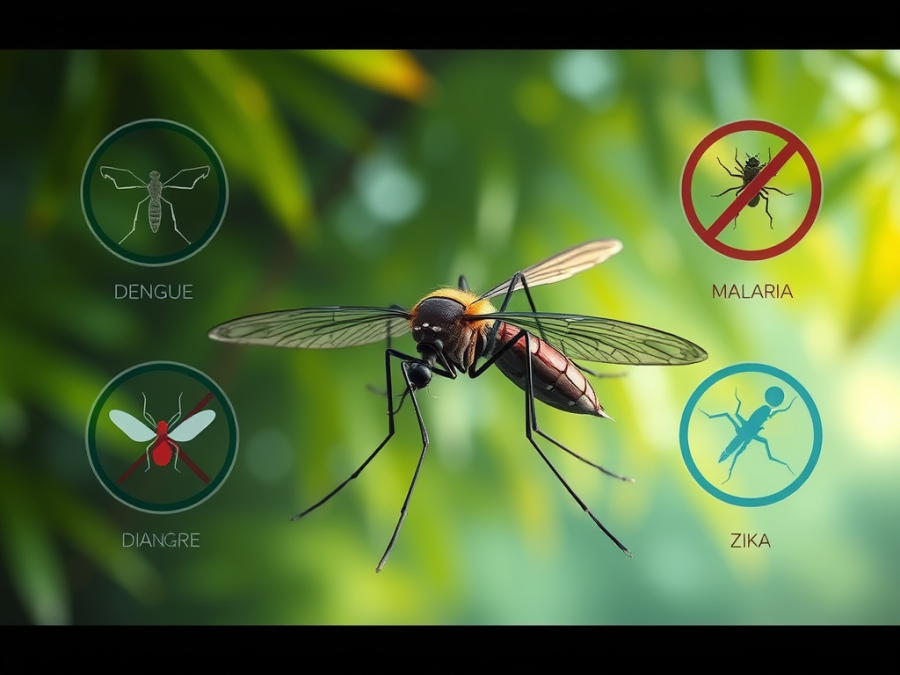
Mosquitoes Are More Than a Nuisance to Your Health

For a long time, malaria, dengue, and Zika were filed under “somewhere else.” In the U.S. and Europe most people encountered them in a textbook or a travel clinic and nowhere else. That is changing.

Climate shifts, international travel, and the sheer resilience of mosquitoes like Aedes aegypti have pushed these infections north. They are turning up in the southern U.S. and in parts of Europe now. Calling them tropical diseases is starting to be inaccurate.

Sanjay Gupta and Timothy Winegard made the scale of it plain in a CNN interview: mosquitoes kill more people than any other animal, and more than 700,000 people die each year from what they carry. That number is difficult to sit with.

The viral illnesses get most of the attention. Dengue, Zika, chikungunya, and West Nile are the familiar names. Dengue was once almost entirely tropical and now appears in Florida and Europe. Zika made headlines for the birth defects it caused. Chikungunya is remembered by anyone who has had it for the joint pain. West Nile is simply established across much of the U.S. at this point.

Malaria is a different animal, caused by protozoa rather than a virus. Most people still think of it as an African disease. Yet there have been locally acquired cases in the U.S. recently. Warm temperatures and standing water are all the transmission cycle really needs.

Parasitic worms belong in the conversation too. Lymphatic filariasis is still overwhelmingly tropical, but the movement of people and goods makes expansion more plausible than it used to be.

Prevention is unglamorous and effective. Emptying standing water around a house does more than people expect. Repellent, intact window screens, and long sleeves cut exposure. For travelers, treated bed nets and the right vaccines, yellow fever among them, still carry the load.

Clinicians need to reframe how we think about these illnesses. They are not filed under travel medicine anymore. With malaria reappearing in Florida and Texas, recognizing early symptoms and pushing prevention falls to us. I have had patients look genuinely surprised when I brought up insect repellent on a video visit for something unrelated. It struck them as beside the point. That reaction is the thing that has to change.

Mosquitoes are not slowing down, and the illnesses they carry keep moving closer to where our patients actually live. The questions are coming. We should have answers ready.

Scott Rennie, D.O.

References

Gupta S, Winegard T. CNN interview on mosquito-borne disease, 2023.

Centers for Disease Control and Prevention. Malaria in the United States, 2023.

World Health Organization. Mosquito-borne diseases fact sheet, 2023.

Watch: Dr. Sanjay Gupta & Timothy Winegard discuss how to avoid mosquito bites and the diseases they carry.

Board Certified in Obesity Medicine and Family Medicine

This blog is for educational purposes only and does not constitute individual medical advice. Always consult your own physician before making changes to your health, medications, or treatment plan.

COVID Variant NB.1.8.1: What Patients and Clinicians Know

We all hoped COVID would fade into background noise by 2025. The virus did not agree. A new Omicron subvariant, NB.1.8.1, has been identified, and while it is not labeled a Variant of Concern, it is moving quickly enough in several countries to be worth paying attention to.

It was first identified in China earlier this year, then appeared in Australia, India, and the United States. Local outbreaks are being reported in dense areas including parts of California and New York. Genomic surveillance shows it spreading independently of travel patterns, which suggests it does not need help.

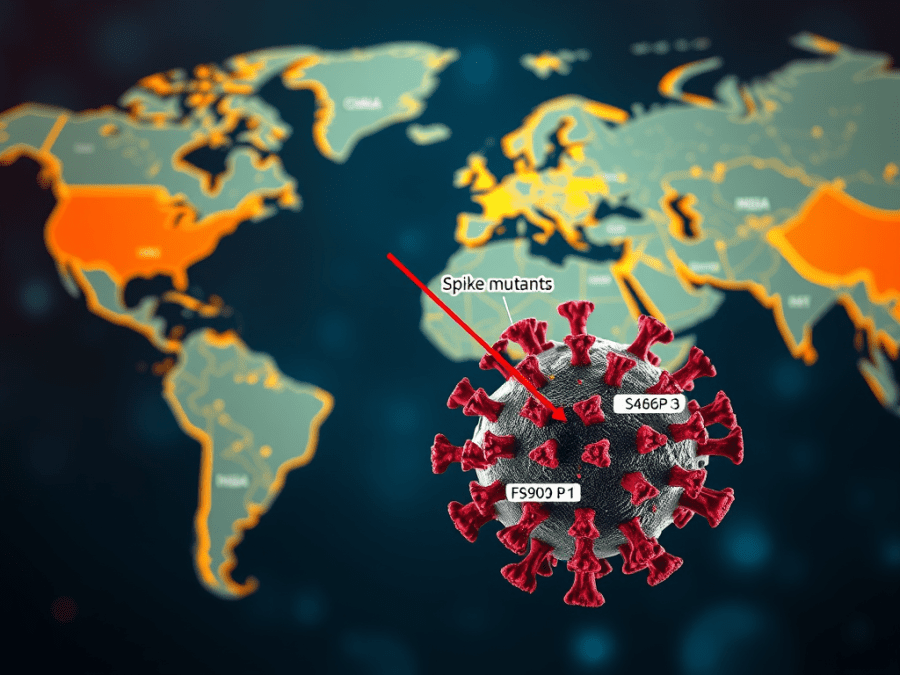
The subvariant carries several spike protein mutations: T22N, F59S, G184S, A435S, V445H, and T478I. These may improve binding to ACE2 receptors and blunt neutralizing antibodies. The pattern resembles BA.5, though NB.1.8.1 looks more efficient at evading immunity.

Laboratory data suggest moderate to significant immune escape. Antibodies from people who received current boosters show reduced neutralizing activity. The T-cell response, which is what keeps people out of the ICU, appears largely intact. That distinction is the reason boosters still matter, particularly for older adults and immunocompromised patients, and manufacturers are already adjusting formulations.

Early modeling puts NB.1.8.1 at 20 to 30 percent more transmissible than subvariants circulating in late 2024 such as JN.1, with possibly higher viral loads in the first two days. The practical translation is to test early and isolate immediately rather than waiting to see how it develops.

Symptoms are the ones we already know: sore throat, congestion, fatigue, dry cough, headache, fever. Some reports add hoarseness and mild GI upset such as nausea or abdominal discomfort, especially early on. That is not definitive yet, but on a video visit those two together are worth a second look, since I cannot examine a throat the way an in-person clinician can.

So far NB.1.8.1 has not been tied to more severe illness, and hospitalizations remain stable in vaccinated populations. The risk here is volume rather than severity. A variant that makes no one sicker can still overwhelm a health system if enough people get it at once, and places with fewer beds or lower booster uptake will feel it first.

What to do about it is not complicated. Prioritize updated boosters for high-risk groups. Consider masking indoors in long-term care settings when cases climb. Improve ventilation where you can. Test early, isolate early. Wastewater monitoring and sequencing give useful warning. Staffing, protective equipment, and telehealth capacity should all be ready to scale.

This is not 2020 again. It is the ordinary business of a virus that keeps evolving, and the response is the same as it has been: stay current, give patients clear guidance, and adjust when the data does.

Scott Rennie, D.O.

Board Certified in Obesity Medicine and Family Medicine

This blog is for educational purposes only and does not constitute individual medical advice. Always consult your own physician before making changes to your health, medications, or treatment plan.

Measles in 2025: What Patients and Providers Need to Know

The 2025 measles outbreak was one of the most concerning we’d seen in more than a decade. As of March 2025, Texas alone had reported almost 200 confirmed cases, the highest in years. Other states, including New Mexico, Georgia, Kentucky, New Jersey, New York, Pennsylvania, Rhode Island, Washington, California, and Florida, were seeing rising numbers too. Most of those infected were younger than 19, and 95 percent had either not been vaccinated or had an unknown vaccine status. Roughly one in five patients had needed hospitalization by that point. Tragically, one unvaccinated child in Texas had died.

Lower vaccination rates in some communities made it easier for the virus to spread at the time. Clinicians need to stay alert regardless: a cough, fever, and rash in an area with known cases should still raise immediate suspicion for measles.

What Measles Is

Measles is caused by the measles virus, part of the Morbillivirus family. It’s a single-stranded RNA virus that first infects the respiratory tract, then spreads throughout the body.

How It Spreads

The virus is extremely contagious. When someone coughs or sneezes, droplets can hang in the air for up to two hours, and touching a contaminated surface, then your eyes, nose, or mouth, can spread it just as easily.

If someone is exposed and not immune, nine out of ten will get sick. People with measles can spread the virus four days before the rash starts and four days after. That’s one reason outbreaks move so quickly.

The infectiousness of a virus is often measured by R0. For measles, in an unvaccinated community, R0 runs between 12 and 18, meaning one person can spread it to 12 to 18 others, a transmission rate high enough that public health teams treat a single confirmed case as urgent rather than waiting to see if it spreads further. Get 95 percent of a community vaccinated and R0 drops to about 1, which usually stops an outbreak in its tracks.

Symptoms

The illness follows a predictable pattern. Fever first. Then the rash.

About 7 to 21 days after exposure, early symptoms show up: high fever, cough, runny nose, red and watery eyes. Two or three days later, tiny white spots called Koplik spots can appear inside the mouth. By days 3 to 5 of illness, a red rash spreads from the face and hairline down the body, sometimes raised in the center, often with the fever spiking again at the same time.

Why It’s Serious

Complications are common. Pneumonia is the leading cause of death from measles. About one in a thousand people develops encephalitis, or brain inflammation, which can cause seizures or permanent damage. Severe diarrhea can cause dehydration. In rare cases, blindness or hearing loss occur.

There’s also a delayed complication called subacute sclerosing panencephalitis, a chronic infection of the central nervous system that shows up 6 to 8 years after measles. Symptoms include weakness, tremors, difficulty walking, and eventually coma. It is progressive and untreatable.

Infants, pregnant patients, and people with weak immune systems are at highest risk.

Diagnosis and Treatment

Diagnosis is usually confirmed by blood testing for IgM antibodies, which indicate recent infection. Respiratory swabs from the nose and throat can also detect measles RNA by PCR testing. Sometimes urine is tested as well.

There is no direct antiviral therapy. Treatment is supportive: keeping patients hydrated, managing fever and discomfort with acetaminophen or ibuprofen, and in children, supplementing with vitamin A. The virus lowers vitamin A levels in the body, and supplementing helps reduce the risk of severe complications.

What To Do if Someone Gets Measles

Isolation is critical. A patient should stay isolated for at least four days after the rash appears. Family and close contacts should be alerted. Post-exposure prophylaxis is an option for people who are unvaccinated or whose immunity is uncertain. The MMR vaccine may help if given within 72 hours of exposure. If that’s not possible, immune globulin (IVIG) within 6 days is another option, though the two should not be given together.

Complications need close monitoring. Breathing trouble, high fever that does not improve, or neurological symptoms should trigger immediate medical evaluation.

Prevention

The MMR vaccine is the most effective protection we have. Two doses run about 97 percent effective. Children should get their first dose at 12 to 15 months and the second between ages 4 and 6. Adults without immunity should receive at least one dose, and during outbreaks, infants as young as 6 months may be vaccinated early.

Vaccination protects the person who gets it. It also protects those who can’t get vaccinated themselves, including babies too young for the series and patients with immune conditions that rule out live vaccines. Stopping an outbreak for good takes at least 95 percent community coverage.

Closing

The 2025 measles outbreak showed how quickly this virus can return when vaccination coverage drops. Recognizing symptoms early, isolating cases, and vaccinating remain the keys to controlling it. As healthcare providers, we need to keep talking with patients about the value of the MMR vaccine and stay proactive about reporting and diagnosing cases.

For more information, visit the CDC’s measles page.

Scott Rennie, D.O.
Board Certified in Obesity Medicine and Family Medicine

This blog is for educational purposes only and does not constitute individual medical advice. Always consult your own physician before making changes to your health, medications, or treatment plan.

Sources

Tuberculosis in 2025: Kansas Outbreak, Vaccines, and Staying Safe

Tuberculosis is still very much with us. Kansas dealt with a large outbreak in 2025, a reminder of how persistent this disease can be. As of January 2025, more than 67 active cases had been confirmed, mostly in Wyandotte and Johnson counties. There were fatalities, and the number of latent infections was rising at the time. Public health teams worked hard to contain it. It’s a reminder that TB remains a threat in both high-risk groups and the general population.

What TB Is

TB is caused by Mycobacterium tuberculosis. It usually attacks the lungs, but it doesn’t stop there: it can affect the brain, kidneys, spine, and other organs. It spreads through the air when someone with active TB coughs, sneezes, or even talks, and people nearby can breathe in the bacteria without realizing it.

Symptoms and Progression

The first signs can be subtle. A cough that won’t go away, maybe three weeks or more. Some patients cough up blood or sputum. Chest pain, fatigue, fever, night sweats, loss of appetite, and unexplained weight loss are common. Left untreated, TB can destroy lung tissue and spread further, causing meningitis, bone infection, or failure of multiple organs.

Latent vs Active

It’s important to separate latent TB from active disease. Latent TB means the bacteria are present but not causing illness. The person has no symptoms and is not contagious. But the bacteria can “wake up,” especially if the immune system gets weaker, and turn into active TB.

Active TB means the bacteria are multiplying, symptoms are present, and the patient can spread it to others. That’s the form that requires urgent treatment.

How It’s Detected

Testing matters. The skin test (the PPD or tuberculin test) is still used. A small injection under the skin, and the site is checked in 48 to 72 hours. Blood tests like QuantiFERON-TB Gold or T-SPOT.TB are often preferred, especially for people who got the BCG vaccine, since it can interfere with skin test results.

If TB is suspected, chest imaging can show lung changes, and sputum culture confirms the presence of M. tuberculosis. That culture is the gold standard for diagnosis in someone with symptoms.

The Role of the BCG Vaccine

The only vaccine we have is BCG. It’s mostly given to infants in countries where TB is widespread. It helps protect children from the most severe forms of TB, like meningitis, but it’s less effective at preventing pulmonary TB in adults. In the United States, it’s not routinely used because of its limited impact on adult disease and the way it interferes with skin testing.

Some healthcare workers in high-risk settings or people with repeated exposure may still receive it.

Protecting Against TB

Vaccination isn’t the whole answer for TB. Early detection and treatment carry just as much weight, maybe more. People at higher risk should be screened regularly, and treating latent TB is critical, because it stops progression to active disease.

Simple steps help too: masks in healthcare settings, good airflow in crowded places, covering your mouth when you cough, washing your hands regularly. During outbreaks, N95 or P100 respirators are the masks that actually filter TB bacteria from the air. Surgical masks don’t provide the same protection.

Treatment and Why It Has to Be Completed

TB can be treated, but it takes time. Standard therapy is multiple antibiotics for six to nine months. Isoniazid, rifampin, ethambutol, and pyrazinamide are the most commonly used.

Stopping treatment too soon is dangerous, because that’s exactly how drug-resistant TB develops, and multidrug-resistant TB is much harder to treat, far more expensive, and comes with worse outcomes across the board. An incompletely treated patient is also still contagious. Public health departments often use directly observed therapy, or DOT, where someone watches patients take their medications. It might sound strict, but it works. It prevents resistance and saves lives.

Public Health and What’s Next

TB is a problem here at home, and the outbreak in Kansas proves it. It spreads any time we let our guard down. Healthcare providers need to push for routine testing in high-risk groups, make sure patients complete treatment, and support public health efforts.

Patients and communities have a role too: stay informed, recognize symptoms, seek evaluation early. And we need continued research into better vaccines and treatments.

Scott Rennie, D.O.
Board Certified in Obesity Medicine and Family Medicine

This blog is for educational purposes only and does not constitute individual medical advice. Always consult your own physician before making changes to your health, medications, or treatment plan.

Sources

Norovirus Illness: What Patients and Doctors Need to Know

Every winter we brace for an uptick in norovirus, often dismissed as the “stomach flu.” For many, it’s just a miserable few days of vomiting and diarrhea. In reality, norovirus is a major public health issue: it spreads quickly, it’s hard to kill, and outbreaks can overwhelm entire communities.

Norovirus is part of the Caliciviridae family and is the leading cause of acute gastroenteritis worldwide. A single infected person can trigger dozens of cases. It doesn’t take much. Just 10 to 20 viral particles. The virus survives on surfaces for days, resists alcohol-based sanitizers, and tolerates a wide range of temperatures, which is why schools, nursing homes, cruise ships, and restaurants are common hotspots.

Symptoms and Impact

Illness usually starts suddenly. Patients may complain of nausea, stomach cramping, watery diarrhea, or repeated vomiting. Children often vomit more, adults tend to have more diarrhea, and fever, fatigue, and body aches can happen but aren’t always present.

For most people, symptoms last 1 to 3 days. But dehydration can become serious, especially in infants, older adults, or those with weakened immune systems. Years ago, in hospital-based practice, I admitted patients who couldn’t keep fluids down and needed IV hydration after only 24 hours of illness.

How It Spreads

Norovirus has been called the “perfect pathogen” because it finds so many ways to move from person to person. Direct contact with someone sick, eating contaminated food like undercooked shellfish, drinking contaminated water, or simply touching a door handle can all spread infection, and even vomiting can aerosolize tiny droplets of virus into the air, which is why outbreaks in crowded dining halls or cruise ships often expand so rapidly.

The incubation period is short: just 12 to 48 hours. That means someone can be exposed at a group gathering and have symptoms by the next day. Diagnosis is usually clinical during outbreaks, though lab confirmation with RT-PCR testing is reserved for severe cases or public health investigations.

Treatment

There is no antiviral medication for norovirus. Management is entirely supportive. Oral rehydration is the first step, with IV fluids for those who can’t keep liquids down, and ondansetron can help control vomiting in children and adults, though it doesn’t shorten the course of illness. A bland diet and gradual return to regular foods is usually recommended. Antibiotics don’t help, since this is viral.

Prevention

Preventing norovirus is about breaking the chain of transmission, and handwashing with soap and water works better than alcohol-based sanitizers. Surfaces contaminated with vomit or stool should be cleaned with bleach-based disinfectants, because many common cleaners aren’t effective. Shellfish should be cooked thoroughly and produce rinsed before eating.

Infected people should stay home for at least 48 hours after symptoms end, since viral shedding can continue. During outbreaks in schools or long-term care facilities, early recognition and strict cleaning protocols are what actually stop the spread, not treatment after the fact.

Why It Matters

Norovirus keeps proving how disruptive a “simple” virus can be. Cruise ships diverted from ports, schools shutting down for deep cleaning, long-term care facilities under quarantine, these are all real-world consequences. Each outbreak is a reminder that prevention matters as much as treatment.

For patients, the focus is on hygiene, hydration, and staying home when sick. For healthcare providers, it’s about rapid recognition, supportive care, and education, and for public health officials, the job is surveillance and outbreak response. Together these steps limit how far norovirus reaches.

Scott Rennie, D.O.
Board Certified in Obesity Medicine and Family Medicine

This blog is for educational purposes only and does not constitute individual medical advice. Always consult your own physician before making changes to your health, medications, or treatment plan.

Sources

  • Centers for Disease Control and Prevention. Norovirus. https://www.cdc.gov/norovirus
  • Hall AJ, et al. Norovirus disease in the United States. Emerg Infect Dis. 2013;19(8):1198-1205. PMID 23876403.
  • Glass RI, Parashar UD, Estes MK. Norovirus gastroenteritis. N Engl J Med. 2009;361:1776-1785. PMID 19864676.
  • Atmar RL, Estes MK. The epidemiologic and clinical importance of norovirus infection. Gastroenterol Clin North Am. 2006;35(2):275-290. PMID 16880066.