
Round beige adhesive bandage on an adult's upper arm after a vaccination

2026-2027 COVID Vaccine: Who Qualifies, and Do You Need a Doctor’s Note?

The updated COVID-19 shots were approved on August 27 and 28, 2026, and they started shipping the same week. If you went looking for one last fall and got turned around at the pharmacy counter, or told to come back with something in writing from your physician, this post is mostly for you.

Here is what is out, who can get it, what counts as high risk, and what the virus is doing right now.

What was approved, and when you can actually get it

FDA cleared XFG-adapted formulas from all three manufacturers. Pfizer-BioNTech’s Comirnaty was approved August 27 (1). Moderna’s Spikevax and mNexspike followed (2). Novavax announced its Nuvaxovid approval on August 28, alongside clearances in the EU and Japan (3). XFG is a recombinant in the JN.1 family, and it replaces last season’s LP.8.1 formula (4).

Now the part I get asked about most, and the part I cannot give you: there is no state-by-state rollout calendar. No health department publishes a date on which residents of that state become eligible, because distribution is commercial rather than federally allocated. Manufacturers ship to distributors, distributors ship to chains and clinics, and stock arrives store by store over days to a few weeks. Your pharmacy may have doses Tuesday while the one four miles down the road is waiting on Thursday’s truck.

So do not wait for an announcement. Set an alert on your pharmacy’s scheduling page, or call and ask when their first shipment lands.

Where the virus is right now

I want to be careful here, because the headlines and the data are telling slightly different stories.

CDC’s wastewater program is the most reliable read we have. For the week ending August 22, 2026, the national wastewater viral activity level for SARS-CoV-2 was 2.14, which CDC classifies as Very Low (5). That same number sat at 1.00 through most of July. It has roughly doubled in six weeks while staying inside the lowest category. So yes, transmission is climbing on the usual back-to-school schedule. No, we are not in a surge yet.

The regional picture is lopsided. The South is currently the highest region at 3.34. Texas is the real outlier at 11.76 across 40 reporting sites, the only state sitting in the Very High band. Mississippi reads 8.92 and South Carolina 7.47, but both are flagged for limited coverage, with two and three reporting sites respectively, so treat those as a signal rather than a measurement. Hawaii is at 7.26 across ten sites. Then Nevada 6.01, California 5.87 across 79 sites, West Virginia 5.61, Louisiana 5.31, and Florida 5.30 (6).

The variant names have shuffled again. Over the four weeks ending August 1, 2026, the two most common in CDC’s sequencing were SW.2 at about 21 percent and XFG.1.1 at about 16 percent (7). XFG.1.1 belongs to a family. Count its close relatives together and the XFG group accounts for roughly 35 percent of what is going around, which is why FDA picked XFG as this year’s vaccine target. NB.1.8.1, the one the press nicknamed Nimbus last summer, has faded to about 4 percent. BA.3.2 sits near 2 percent.

Here is the caveat, and most coverage skips it. Those percentages rest on a very small number of samples. CDC flags all eighteen of the lineages it reported for that period as based on fewer than ten sequenced specimens, or unreliable for other statistical reasons (7). In February the agency could name more than two hundred lineages circulating in the country. This month it could name eighteen. Genetic sequencing of the virus has dropped off sharply, so the variant list is a rough sketch rather than a headcount.

Which is why I put more weight on the wastewater curve than on the variant percentages right now. Genomics tells you the flavor. Wastewater tells you the size.

The page to bookmark

CDC posts wastewater viral activity by state here, and it is updated every Friday with the previous week’s numbers:

https://www.cdc.gov/wastewater/respiratory-viruses/state.html

It covers influenza A, SARS-CoV-2 b (Covid-19), and RSV on the same page, so you can see which of the three is actually moving in your area before you decide whether that sore throat needs a test. If you want the county-level view alongside emergency department visit data, CDC’s Respiratory Illnesses Data Channel has a search box for your state or county:

https://www.cdc.gov/respiratory-viruses/data/index.html

Bookmark the first one. It answers the question patients are really asking, which is not “how bad is COVID nationally” but “is there anything going around here.”

Who the FDA says can get it

The licensed indications are narrower than they were before 2025, and they differ slightly by product:

  • Comirnaty (Pfizer-BioNTech), mRNA: ages 65 and older, or ages 5 through 64 with at least one condition that raises the risk of severe COVID-19 (1)
  • Spikevax (Moderna), mRNA: ages 65 and older, or 6 months through 64 with at least one such condition (2)
  • mNexspike (Moderna), mRNA: ages 65 and older, or 12 through 64 with at least one such condition (2)
  • Nuvaxovid (Novavax), protein-based rather than mRNA: ages 65 and older, or 12 through 64 with at least one such condition (3)

CDC’s own recommendation, unchanged since the September 2025 ACIP vote, covers everyone 6 months and older under individual-based decision-making (8). So the federal recommendation is broader than the federal license. That gap is exactly where the confusion at the pharmacy counter lives, and nobody at either agency has resolved it for you.

The high-risk list is longer than you think

Most people badly underestimate how wide this list is. CDC’s conditions, in alphabetical order rather than order of risk: cancer, cerebrovascular disease, chronic kidney disease at any stage, chronic liver disease, chronic lung disease including asthma, cystic fibrosis, dementia and other neurologic conditions, type 1 or type 2 diabetes, disabilities, heart conditions, hemoglobin blood disorders, HIV, an immunocompromising condition, mental health conditions, overweight and obesity, physical inactivity, pregnancy, current or former smoking, solid organ or stem cell transplant, substance use disorders, and tuberculosis (9).

Read the back half of that again. Overweight is defined as a BMI of 25 or higher (9). About 72 percent of American adults age 20 and over fall at or above that line, combining the 31.7 percent who are overweight with the 40.3 percent who have obesity (10). Current smoking counts, and so does former smoking. So does physical inactivity. So does depression.

Here is my opinion, and I hold it firmly. A criteria list that broad is not functioning as a clinical gate. It is functioning as paperwork. If you are an adult in the United States, the odds are strong that you already qualify under a criterion you would not have thought to claim, and the honest thing for the system to do would be to say so out loud instead of making each person audit themselves at a kiosk.

Do you need a note from your doctor?

Short answer: almost certainly not, and you should not assume you do.

On September 19, 2025, ACIP voted to recommend COVID-19 vaccination for everyone 6 months and older through individual-based decision-making. In the same meeting it took up a proposal that would have let jurisdictions require a prescription, and that proposal failed on a tiebreaker cast by the committee chair (8, 11). CDC’s position is that the required conversation can happen with a pharmacist, a nurse practitioner, or a PA standing right there at the counter. No written order from your physician.

What tripped people up last fall was state law rather than federal policy. Several states had written pharmacist vaccination authority so that it tracked ACIP’s recommendation language directly, and when that language narrowed, pharmacists in those states abruptly lost standing authority to vaccinate without a prescription. By late September 2025, 26 states had issued standing orders or executive actions restoring broader access (12). The rest had not, and store-level policy varied inside states that had.

Two phone calls save you an afternoon. Call the pharmacy, ask whether they need a prescription for someone your age and situation, and ask whether the 2026-2027 formula is physically on their shelf yet. Then call the number on the back of your insurance card and ask what your plan covers this season. Your state health department’s immunization page is worth two minutes as well, since that is where a new standing order would appear first.

And if a pharmacy does turn you away for want of an order, that is a five-minute problem for your physician to solve, not a reason to abandon the shot. Call the office. Do not walk out and let it go until spring.

Why I think the restrictions backfire

Because the numbers are already bad, and friction is the best explanation for them.

Only 17.5 percent of American adults received the 2025-2026 COVID vaccine, measured at the close of the season in February 2026 across a survey sample of roughly 197,000 people (13). Among adults 65 and older, the group with the clearest, least-debatable benefit, coverage reached 33.5 percent (13). Two-thirds of the highest-risk group in the country did not get vaccinated.

I do not believe most of that gap is ideological. Some of it is. Most of it is drag. Every additional step you insert between a mildly willing person and a needle removes some of them, and the removal is silent. An eligibility attestation form removes a few. A phone call to confirm the pharmacy will actually do it removes a few more. An uncertain bill removes more still. None of those people write a letter explaining why they gave up. They just do not come.

There is a second cost that gets less attention. When the government tells healthy adults they no longer qualify, the message the public hears is that the shot is not worth much. That message does not stay inside its intended audience. It reaches the 68-year-old with COPD who did qualify, who now assumes the whole thing has been downgraded, and who skips it.

If you decided back in 2021 or 2022 that two doses were enough and you have not thought about it since, I would ask you to reconsider on narrow, unromantic grounds. Not because the pandemic is back. Because protection fades, this year’s formula is matched to what is circulating now, and the downside of a sore arm for two days is very small next to a week of illness you did not need to have.

Has the virus changed?

Not in the way people fear. Severity has not meaningfully increased. WHO and ECDC have continued to rate the currently circulating variants as low risk for severe outcomes, and the mutations driving the current lineages are the immune-evasion kind rather than the tissue-damage kind. Laboratory work on XFG published in 2025 found roughly a two-fold drop in neutralizing antibody effectiveness compared with the then-dominant lineage, which explains reinfection without implying worse disease (14).

Symptoms are the familiar Omicron picture. Sore throat, often genuinely severe. Hoarseness. Congestion, cough, fatigue, headache, body aches, and sometimes nausea or loose stools. Loss of smell is far less common than it was in 2020. The “razor blade throat” description that attached itself to NB.1.8.1 in 2025 has stuck around in press coverage, and it is a real complaint, though it is also just a bad Omicron sore throat rather than a diagnostic sign.

What to monitor: shortness of breath at rest or on minimal exertion, chest pain, confusion or unusual difficulty staying awake, bluish lips, and an inability to keep fluids down. Watch for the pattern where someone improves for several days and then clearly worsens around day seven to ten. If you own a fingertip pulse oximeter, a resting reading that keeps coming back at 94 percent or below deserves a same-day call, not a wait-and-see.

Treatment still exists and is still underused. Nirmatrelvir-ritonavir has to be started within five days of symptom onset in adults at high risk of progression, which as we established covers a very large share of adults (15). Day six is too late. If you are in a risk category, know before you are sick how you would reach a clinician quickly.

How long do you stay home?

CDC no longer has a five-day isolation rule, and has not since 2024. The current guidance is symptom-based. Stay home and away from others while you are sick. You can return to normal activities once both of the following have been true for at least 24 hours: your symptoms are improving overall, and you have had no fever without using fever-reducing medication (16).

Then take added precautions for the next five days. Mask well, keep some distance, improve ventilation, and test before you spend time around anyone vulnerable. If a fever returns or you get worse after going back out, go home again and restart the same clock (16).

On work: CDC does not recommend a fixed number of days off, and there is no federal number for your employer to enforce. Your workplace policy is its own creature, and so is your child’s school district. If HR asks for a return-to-work note, that is a workplace requirement rather than a public health one, and it is worth saying so plainly when you ask your physician for it. Healthcare workers and staff in long-term care facilities are the exception and should follow their facility’s occupational health rules instead.

What else lowers your risk

The vaccine is the biggest lever. Metabolic health is the second one, and it is the one you have some control over between now and January.

CDC’s own analysis of 148,494 adults treated at 238 US hospitals found risk of COVID-19 hospitalization was lowest at a BMI of 24.2, ICU admission lowest at 25.9, and death lowest at 23.7, with risk climbing sharply above those points (17). That is a dose-response curve, not a threshold effect, which means movement in the right direction counts even if you do not reach a target number.

Two other findings are worth putting side by side, because together they say something more useful than either does alone.

In a Scottish study of 3.6 million people, vaccinated adults with a BMI over 40 were 76 percent more likely to be hospitalized or die from COVID-19 than vaccinated adults at a normal BMI (adjusted rate ratio 1.76, 95% CI 1.60 to 1.94). In the prospective arm of the same work, 55 percent of people with severe obesity had unquantifiable neutralizing antibody titers six months after their second dose, compared with 12 percent of people at a normal BMI. A third dose restored neutralizing capacity, and then it declined faster again (18).

Meanwhile, in a cohort of 9.17 million adults in England, protection against hospitalization two weeks after the second dose was essentially identical across BMI categories, with an odds ratio of 0.32 in people with obesity against 0.34 in people at a healthy weight. Protection against death was actually stronger in the obesity group, 0.26 against 0.39 (19).

Put those together and the conclusion is not the one people expect. The vaccine works in people with obesity. Its protection simply fades faster. That is an argument for getting the seasonal dose rather than skipping it, and it is the single clearest reason I push seasonal vaccination hardest in my obesity medicine patients.

If you are working on weight for metabolic reasons, this belongs on the list of reasons alongside the ones you already know. I have written about the current medication options in New Weight Loss Pills Foundayo and Wegovy Explained, and about what sustains loss over years in Doctor Supervised Weight Loss: What Works Long Term. For the version of this discussion from last season, including how the eligibility fight started, see 2025 COVID-19 Vaccine: Eligibility, Prescriptions, and Debate.

Two smaller things. You can get the COVID vaccine and the flu vaccine at the same visit, one in each arm, and doing so is the single easiest way to make sure both actually happen (20). And CDC’s risk list includes physical inactivity as its own line item, which is a quiet reminder that the walk you keep meaning to start is doing more than one job.

For patients

Check the wastewater page for your state before you decide how careful to be this month. Call your pharmacy, ask about stock and about whether they need a prescription where you live, and book the appointment while you are on the phone. If you are 65 or older, or you have any condition on that list, do not let a form at the counter end the attempt. If you have been waiting since your first two doses in 2021, this is a reasonable year to restart.

For colleagues

Three practical notes. First, expect the FDA-license-versus-CDC-recommendation gap to generate pharmacy callbacks again this fall, and consider building a standing message your staff can send rather than routing each one to you. Second, screen for eligibility criteria your patients will not volunteer: former smoking status, physical inactivity, and a documented mental health condition all qualify under the CDC list and are all commonly missing from problem lists. Third, if you practice by video as I do, the eligibility conversation is straightforward to complete in a visit that is already happening for something else, and it takes about ninety seconds.

The Bottom Line

The 2026-2027 vaccines are approved, matched to XFG, and shipping now. There is no statewide rollout date to wait for, so call your pharmacy. You very likely qualify under criteria broader than you assume, and you almost certainly do not need a note from me or anyone else, though it is worth one phone call to confirm before you drive over. COVID activity is low nationally and rising, with Texas and the South well ahead of everyone else. And if you stopped after your first two doses because the emergency ended, the case for one more is quiet and practical rather than dramatic: your protection has faded, this formula matches what is going around, and the shot is easier to get than the illness is to sit through.

Scott Rennie, D.O.
Board Certified in Obesity Medicine and Family Medicine

This blog is for educational purposes only and does not constitute individual medical advice. Always consult your own physician before making changes to your health, medications, or treatment plan.

Sources

  1. Pfizer and BioNTech Receive U.S. FDA Approval for XFG-adapted COVID-19 Vaccine. August 27, 2026. https://www.pfizer.com/news/press-release/press-release-detail/pfizer-and-biontech-receive-us-fda-approval-xfg-adapted
  2. Moderna Receives U.S. FDA Approval for Updated 2026-2027 COVID-19 Vaccines. August 2026. https://www.biospace.com/press-releases/moderna-receives-u-s-fda-approval-for-updated-2026-2027-covid-19-vaccines
  3. Novavax’s Partnership Strategy Continues to Deliver with XFG-adapted Nuvaxovid Approvals in the U.S., EU and Japan for the 2026-2027 Vaccination Season. August 28, 2026. https://www.biospace.com/press-releases/novavaxs-partnership-strategy-continues-to-deliver-with-xfg-adapted-nuvaxovid-approvals-in-the-u-s-eu-and-japan-for-2026-2027-vaccination-season
  4. U.S. Food and Drug Administration. COVID-19 Vaccines (2026-2027 Formula) for Use in the United States Beginning in Fall 2026. https://www.fda.gov/vaccines-blood-biologics/industry-biologics/covid-19-vaccines-2026-2027-formula-use-united-states-beginning-fall-2026
  5. CDC. National Wastewater Data for Respiratory Viruses. Data for the week ending August 22, 2026; updated August 27, 2026. https://www.cdc.gov/wastewater/respiratory-viruses/national.html
  6. CDC. State and Territory Wastewater Data for Respiratory Viruses. Data for the week ending August 22, 2026. https://www.cdc.gov/wastewater/respiratory-viruses/state.html
  7. CDC. SARS-CoV-2 Variant Proportions. National estimates, four-week period ending August 1, 2026; published August 28, 2026. https://data.cdc.gov/Laboratory-Surveillance/SARS-CoV-2-Variant-Proportions/jr58-6ysp
  8. U.S. Department of Health and Human Services. ACIP Recommends COVID-19 Immunization Based on Individual Decision-making. September 19, 2025. https://www.hhs.gov/press-room/acip-recommends-covid19-vaccination-individual-decision-making.html
  9. CDC. People with Certain Medical Conditions and COVID-19 Risk Factors. https://www.cdc.gov/covid/risk-factors/index.html
  10. National Center for Health Statistics. Prevalence of Overweight, Obesity, and Severe Obesity Among Adults Age 20 and Older: United States, 1960-1962 Through August 2021-August 2023. https://www.ncbi.nlm.nih.gov/books/NBK621182/
  11. CDC advisers vote that patients must consult a health care provider for Covid-19 vaccination, but no prescription required. CNN, September 19, 2025. https://www.cnn.com/2025/09/19/health/cdc-acip-hepatitis-mmrv-covid-vaccine
  12. Kates J, Bell C, Michaud J, Williams E, Tolbert J. Tracking State Actions on Vaccine Policy and Access. KFF, September 24, 2025. https://www.kff.org/state-health-policy-data/tracking-state-actions-on-vaccine-policy-and-access/
  13. CDC. COVID-19 Vaccination Coverage, Overall and by Selected Demographics and Jurisdiction, Among Adults 18 Years and Older, by Season. National Immunization Survey-Fall Respiratory Virus Module, week ending February 21, 2026. https://data.cdc.gov/d/ksfb-ug5d
  14. Gavi. Eight things you need to know about the new “Nimbus” and “Stratus” COVID-19 variants. June 16, 2025. https://www.gavi.org/vaccineswork/eight-things-you-need-know-about-new-nimbus-and-stratus-covid-variants
  15. U.S. Food and Drug Administration. PAXLOVID Patient Eligibility Screening Checklist Tool for Prescribers. https://www.fda.gov/media/158165/download
  16. CDC. Preventing Spread of Respiratory Viruses When You’re Sick. https://www.cdc.gov/respiratory-viruses/prevention/precautions-when-sick.html
  17. Kompaniyets L, Goodman AB, Belay B, et al. Body Mass Index and Risk for COVID-19-Related Hospitalization, Intensive Care Unit Admission, Invasive Mechanical Ventilation, and Death, United States, March-December 2020. MMWR Morb Mortal Wkly Rep. 2021;70(10):355-361. PMID 33705371. https://pubmed.ncbi.nlm.nih.gov/33705371/
  18. van der Klaauw AA, Horner EC, Pereyra-Gerber P, et al. Accelerated waning of the humoral response to COVID-19 vaccines in obesity. Nat Med. 2023;29(5):1146-1154. PMID 37169862. https://www.nature.com/articles/s41591-023-02343-2
  19. Piernas C, Patone M, Astbury NM, et al. Associations of BMI with COVID-19 vaccine uptake, vaccine effectiveness, and risk of severe COVID-19 outcomes after vaccination in England: a population-based cohort study. Lancet Diabetes Endocrinol. 2022;10(8):571-580. PMID 35780805. https://doi.org/10.1016/S2213-8587(22)00158-9
  20. CDC. Staying Up to Date with COVID-19 Vaccines. https://www.cdc.gov/covid/vaccines/stay-up-to-date.html

Physical therapist examining a patient's knee on a treatment table

Deep Vein Thrombosis (DVT): Blood Clot in the Leg Explained

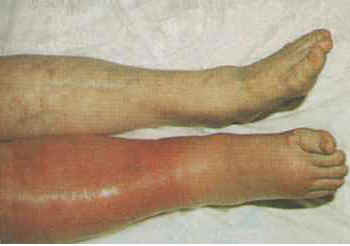
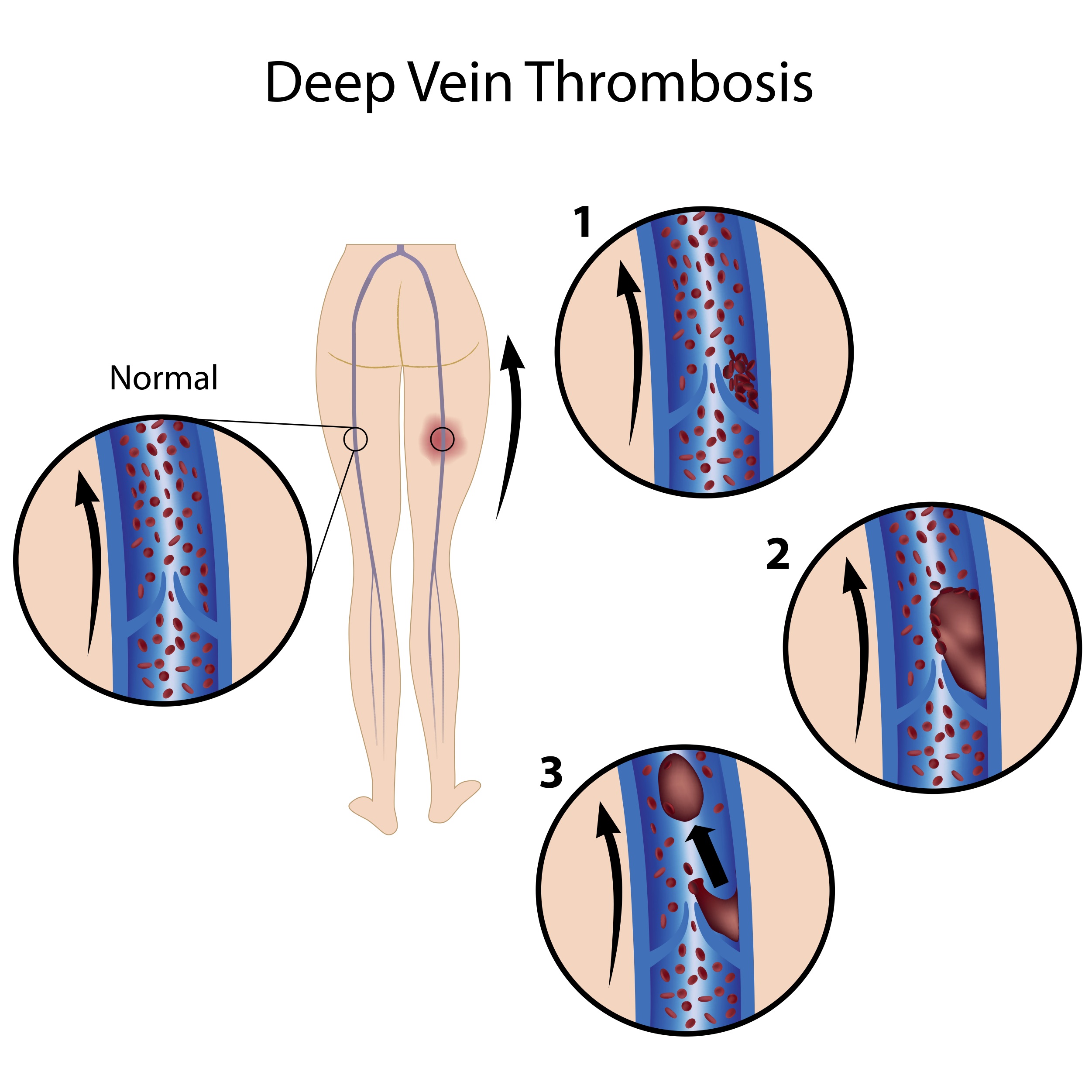
shutterstock_89651743http://www.dvtforum.com/index.asp?action=start A few days ago a patient came into the clinic with complaints of pain in the back of his knee after spending hours driving his car back to Washington from the east coast.  He didn’t recall injuring his leg or knee and told me that the pain was worse when he starts walking.  He also noted some swelling in the leg and ankle.  I became concerned about the possibility of a blood clot (also called a deep vein thrombosis or DVT) in his leg after hearing about his long journey because sitting for extended periods of time in a car or on an airplane are big risk factors for a deep vein thrombosis.  After the ultrasound confirmed a blood clot in his left leg, we started him on the treatment and he is doing great today. A blood clot (also called a thrombus) can be very serious and even life threatening if it breaks and travels through the circulatory system.  If that happens, the blot clot (now called an embolis to indicate that it broke off from the main clot and is traveling through the veins of the body) can lodge in the lung and cause a pulmonary embolism (PE) which is a serious condition that causes over 50,000 deaths a year in the U.S.A. A deep vein thrombosis (DVT) is a problem where a blood clot is created inappropriately within the vein.  Most commonly these veins are in the “deep veins” of the leg, pelvis, or thigh.  The thrombus can block or partially block the blood flowing through the vein and cause pain and swelling. Symptoms:  These may or may not all be present: 1)      Pain – usually in one leg, or knee 2)     Swelling in that leg or knee 3)     Warmth and redness in the leg or knee area Diagnosis:  If a medical provider suspects that you might have a DVT, there are certain tests that can be done to look for this including: 1)      Compression ultrasonography (ultrasound) which uses sound waves to allow the visualization of the blood flow through the veins of the leg. 2)     D-dimer is a blood test that is often elevated in people who have a blood clot.  It can also be elevated for other reasons, so an elevated D-dimer does not tell us that a patient has a blood clot, but if the D-dimer is not elevated and  the risk factors are low, there is less chance of the patient having a blood clot. 3)     MRI uses a very strong magnet to create photos inside the leg and is expensive so it’s not the first choice the diagnose blood clots. 4)     Contrast venography is when a small tube (called a catheter) is inserted into the vein and a liquid that shows up on x-ray (we call this contrast) is injected through the tube while xray is used to visualize the blood flow of the contrast through the vein.  We usually prefer to use ultrasound, but this test can be helpful when ultrasound is not available. Risk factors for DVT: 1)      Some people have a genetic problem called thrombophilia which causes blood to clot more easily than it should 2)     Cancer 3)     Smoking 4)     Heart failure 5)     Pregnancy 6)     Being overweight or obese 7)     Increased age 8)     Having had a DVT or PE in the past 9)     Certain kidney problems 10)  Medications such as birth control pills or hormone replacement therapy 11)  Recent surgery – especially involving the knee, hip or pelvis 12)  Trauma – such as a fall or deep bruise where the blood vessels may have become injured 13)  Sitting for long periods of time such on a long flight or a long drive in a vehicle.  We also think about this for elderly patients who don’t move around very much Treatment:  The goal in treating a DVT is to prevent the blood clot from dislodging or breaking off and becoming an embolism that could lodge into the lung (pulmonary embolism).  We also want to prevent the clot from getting larger or new clots from forming. Medications can be used to prevent new blood clots from forming(anticoagulants), and other medications can be used to dissolve a blood clot (thrombolytic).  Most people might think that the primary treatment would be to dissolve the clot using thrombolytic therapy, however this is usually not the case.  The body has natural substances to dissolve blood clots that are formed inappropriately in blood vessels and we usually prefer the body to do this naturally while assisting by giving medications to prevent new blood clots from forming.  Anticoagulant medications such as warfarin or heparin are the most common agents used to treat patients with DVTs at this time.  For patients who continually develop blood clots despite being on medications or who cannot take the recommended medications, a filter might be inserted into one of the largest veins in the body (the inferior vena cava) to block the circulation of blood clots.  We strategically place the filter so that if a blood clot forms, it is not allowed to reach the lungs. Prevention:  For patients at high risk of developing a blood clot such as a patient who just had surgery, or someone who has cancer, they might be started on anticoagulant medications to decrease the risk of a blood clot.  Some patients are fitted with inflatable compression devices that are worn on the legs and periodically fill with air and put compression on the legs and work similar to how an electronic blood pressure cuff inflates. If you or someone you know is having symptoms that you think might be related to a blood clot or DVT, I recommend that you have them evaluated immediately.   I hope that you have found this information useful.  Wishing you the best of health,

Scott Rennie, D.O.
Board Certified in Obesity Medicine and Family Medicine

This blog is for educational purposes only and does not constitute individual medical advice. Always consult your own physician before making changes to your health, medications, or treatment plan.

Clinician reviewing a chest CT scan on a computer monitor

Blood Clot in the Lung: What Is a Pulmonary Embolism?

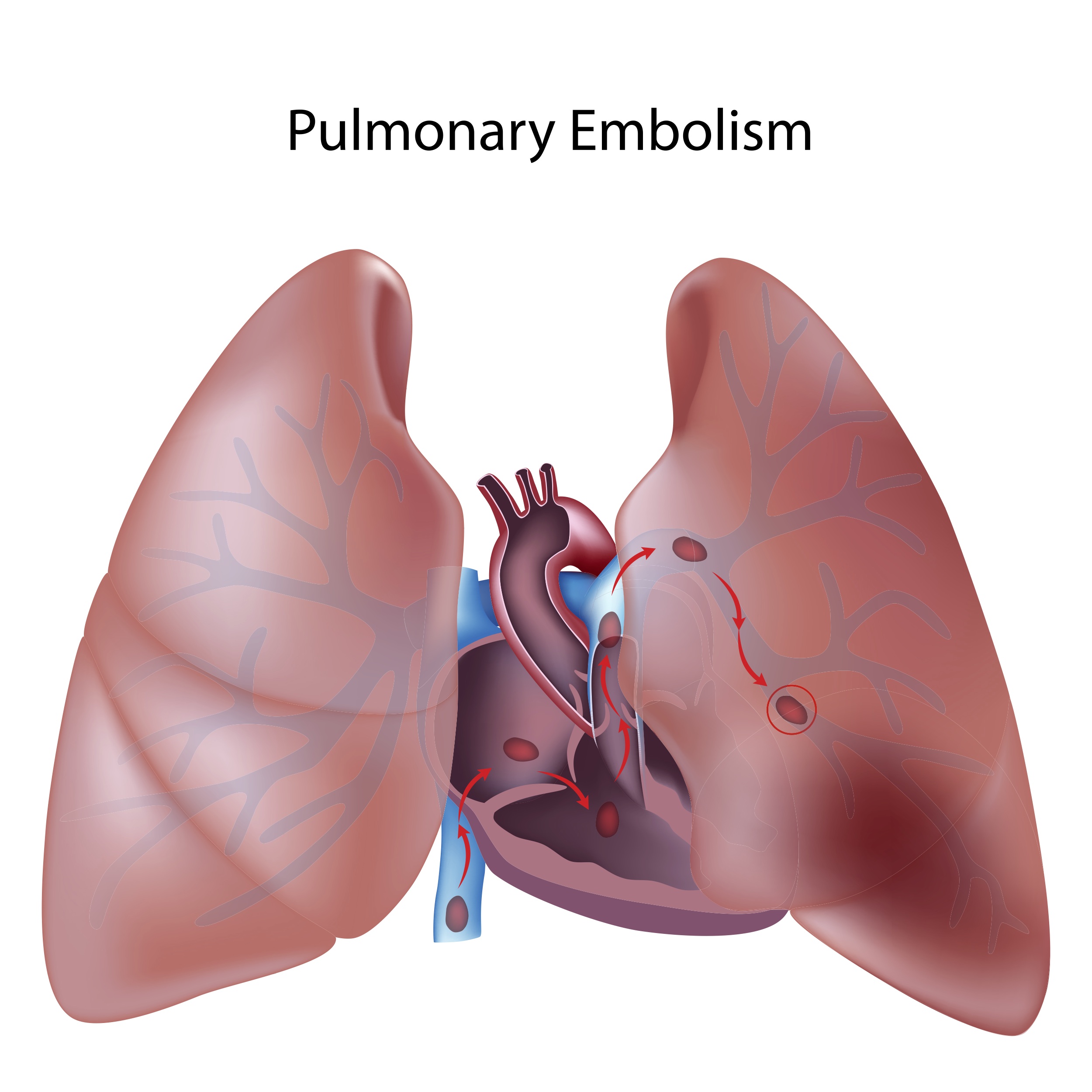
shutterstock_94626226A patient who regularly competes in Iron Man Triathlons came into the clinic tonight with complaints of pain with taking a deep breath.  She had coughed up some blood once today and complained that it hurts when she takes a big breath in.  She is an athlete and remembered running in a race about three weeks ago and developed pain in the right calf and behind the right knee.  That pain has been improving over the last few weeks.  As you can probably guess by the title of this blog entry, she had a blood clot in her lungs.  Actually she had large blood clots called pulmonary emboli in both lungs.  She required transport emergently to the hospital for treatment. Definition:  A pulmonary embolism (PE) is a blockage of one of the blood vessels to the lungs.  These are usually caused by a blood clot that travels from somewhere else in the body, most commonly from the legs.  Other causes of blockages to the blood vessels in the lungs are air bubbles, or from tiny pieces of fat. A pulmonary embolism is a serious condition that is a medical emergency.  A blocked artery or vein in the lung can make it hard to breath and can lead to damage to the lungs and can even cause death. Most of the time the blood clots start in the legs, or in the pelvic area and then move along the veins and travel to the lungs. Symptoms:  People who have blood clots in the lungs might complain of: 1)   Sharp, stabbing pain when they take a breath in 2)   Coughing up blood 3)   Rapid heart rate 4)   Trouble breathing or feeling short of breath If you have any of these symptoms, it is important to call 9-1-1 and be evaluated in the hospital.  Do not try to drive yourself to the urgent care or to the hospital yourself. Risk Factors:  There are some factors that can increase the chance of having a blood clot in your lungs including: 1)   Having a family history of blood clots or blood clotting disorders 2)   Having recent surgery – especially on the knees, lower legs or pelvis 3)   Smoking 4)   Taking birth control pills or estrogen replacement 5)   Having a previous history of DVT (Deep Venous Thrombosis) or PE 6)   Having a history of heart failure 7)   Patients with cancer 8)   History of kidney problems such as nephrotic syndrome 9)   Having a recent trauma or injury with a large clot (hematoma) – more likely to cause DVT if it’s in the legs Diagnosis:  To diagnose a pulmonary embolism, special tests such as a special x-ray called a CT scan (Cat-Scan) with contrast.  During this test, the patient has special a detailed x-ray of the lungs while contrast (a solution of medication that can be seen under x-ray) is put into a vein (usually in the arm) and circulates through the lungs and rest of the body.  The CT scan is used to see the blood vessels and determine if a blood clot is present.  There are other tests to determine if a pulmonary embolism is present as well such as a ventilation/perfusion lung scan, but we usually use CT scan instead because it is easier and less time consuming.  If we suspect that there might be a blood clot in a patient’s leg, we can perform a vascular ultrasound to look for blood clots in the vessels of the legs. Treatment:  We start treatment of a pulmonary embolism without delay to prevent a new blood clot from forming and to reduce the chance of enlargement of the existing clot.  Usually your own body’s enzymes dissolve the clot.  We treat patients by anticoagulation.  That means that we give medications to reduce the body’s abilities to form new blood clots – this is also sometimes called using “blood thinners.”  It isn’t actually thinning the blood however.  For patients who are at high risk for forming new blood clots, we sometimes put small screens or “filters” in a major blood vessel such as the inferior vena cava to prevent a new blood clot from reaching the lungs. Most of the time we use a combination of oral anticoagulation medications such as Coumdin and also use an injectable medication such as heparin.  Patients who have pulmonary embolisms often stay in the hospital for a few days and receive intravenous heparin to prevent more blood clots from forming.  It takes a few days for the medication that is taken orally to become effective, so during this time the patient is giving the heparin either through an IV or the heparin is injected under the patients skin. Patients who have had a PE usually take the Coumadin (also called Warfarin) for a minimum of three months.  Some doctors recommend that patients with a PE take Coumadin or something similar for the rest of their lives.  Other medications to prevent blood clots might be used if the patient is pregnant or cannot tolerate Coumadin. Prevention:  Patients who are in the hospital and confined to the bed for extended periods of time are usually started on a prophylactic dose of heparin each day or special compression devices on their legs to prevent blood clots.  People who are on long air plane flights, car, bus or train rides should get up regularly and stretch their legs to help prevent the development of the blood clot in their legs (DVT).  Patients who have had recent surgery often use heparin injections even at home for a few days to help prevent the development of a blood clot in their leg. If you or someone you know if having symptoms of a pulmonary embolism (PE), they should dial 9-1-1 and go to the hospital immediately.  They should not attempt to drive to the hospital or urgent care.   I hope that you have found this information useful.  Wishing you the best of health,

Scott Rennie, D.O.
Board Certified in Obesity Medicine and Family Medicine

This blog is for educational purposes only and does not constitute individual medical advice. Always consult your own physician before making changes to your health, medications, or treatment plan.

Person holding a blue inhaler attached to an AeroChamber spacer

Proper Use of Asthma/Reactive Airway Inhalers

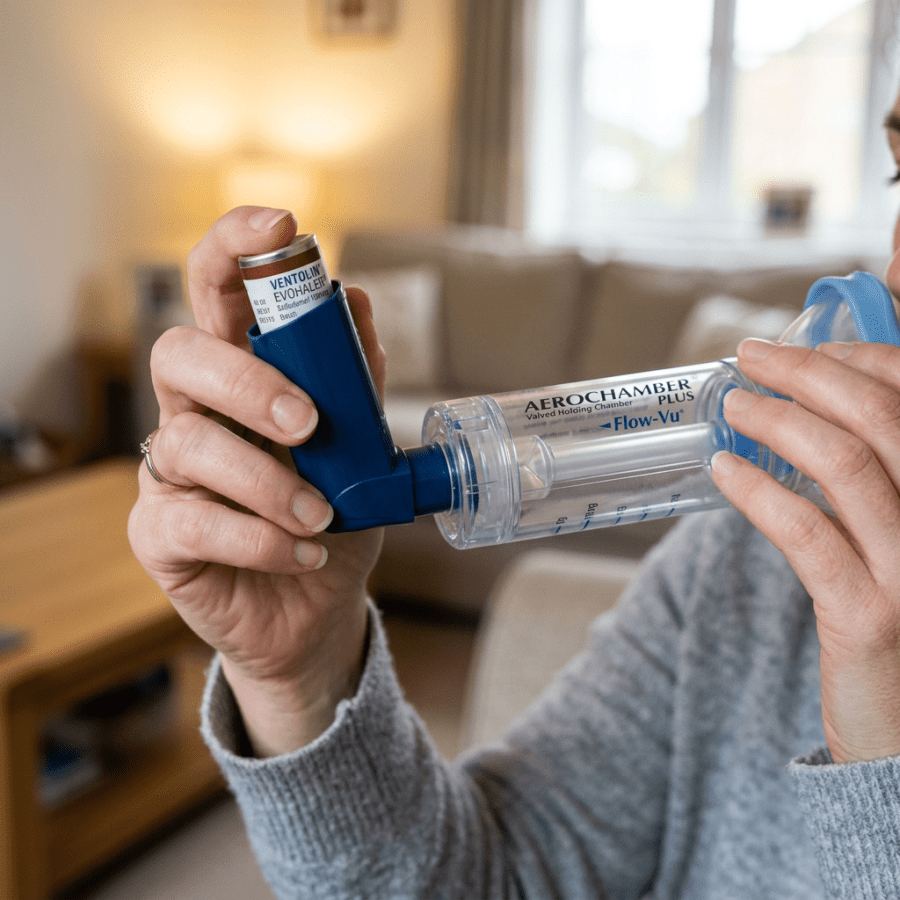
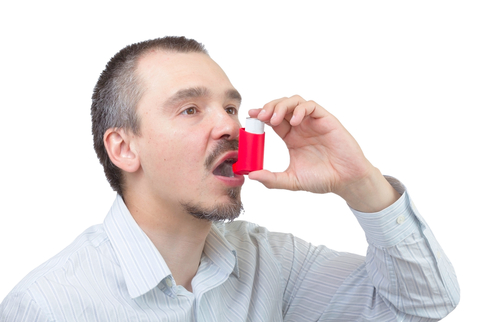
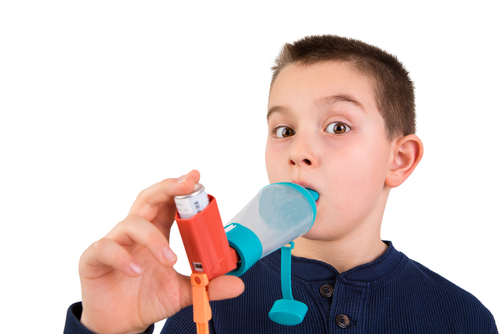
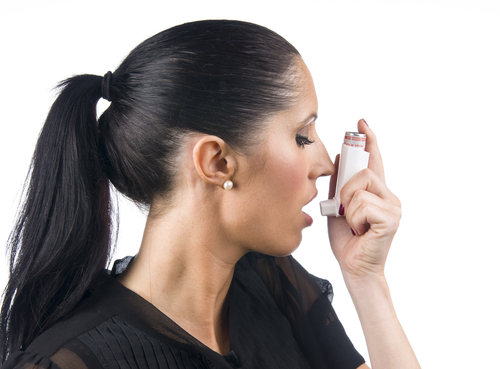
shutterstock_139782763shutterstock_163394081                       Today a patient came into the clinic and said that his asthma inhaler wasn’t working.  He’d been diagnosed with mild asthma last week and his primary care physician gave him an albuterol inhaler to use when his asthma flairs and he starts coughing.  He had his inhaler with him, so I asked him to demonstrate how he uses it.  He promptly put the inhaler to his lips and sprayed the inhaler into his mouth and then took a big breath in.  I was able to see that he wasn’t getting the medication into his lungs efficiently, and since this is a common problem when using inhaled medication, I decided that the subject needed some attention. Using an inhaler can actually be quite challenging, and I find that most patients medications are only effective if they are used properly.  If you use the inhaler correctly the medication is delivered to the lungs where it works to control your symptoms.  If you are not using your inhaler correctly, little or no medication reaches your lungs and your asthma or reactive airway symptoms will not be adequately treated. Asthma inhaler types:  Most asthma inhalers are meter dose inhalers (MDI’s) and deliver a small spray of liquid medication such as albuterol (aka Proventil or Ventolin).  Since 2008, new inhaler canisters have come out that use a propellant that does not damage the ozone layer.  They are known as HFA inhalers and have a different taste compared to the previous inhalers and are also more expensive. The spray is also softer, but works just as well as the older inhalers. The other type of asthma inhaler is called a dry powder inhaler (DPI).  This type of inhaler has a small amount of powder that you breath in.  It has less taste, but the powder can fall out if you tip the device down towards to ground.  This type of inhaler is used commonly with medications such as the Advair diskus. Spacer devices:  A spacer is a device that is basically a small tube that allows the medicine to have a little extra time and space to get down into your lungs rather than be deposited in the back of your mouth or on your tongue.  It is not required to use a spacer, but it is highly recommended.  If you don’t have a spacer to use with your inhaler, you can make one using an empty cardboard toilet paper roll.  You put the spacer over the mouthpiece of the MDI and then put the other end of the spacer in your lips and inhale the medication from the metered dose inhaler through the spacer and into your lungs. Before using a metered dose inhaler MDI for the first time: 1)   Prepare the inhaler by shaking it for 5 seconds 2)   Prime the inhaler by pressing down on the canister with the index finger to release the medication.  Hold the inhaler away from your face to prevent the medication getting into your eyes.  Press the canister down again 3 more times 3)   After using for the first time, it does not need to be primed again unless you don’t use it for more than 2 weeks. Technique for using a metered dose inhaler (MDI): 1)   Shake the canister for 5 seconds 2)   If you have a spacer (recommended), insert the MDI into the spacer and hold the MDI upright with the index finger on the top of the medication canister and the thumb supporting the bottom of the inhaler.  Some people find that using the other hand to hold the spacer is easiest. 3)   Breathe out normally 4)   Close your lips around the spacer.  If your spacer has a mask, hold the mask tightly to the face.  If you do not have a spacer, close lips around mouthpiece or hold at a position about 4cm from your mouth. 5)   Keep your tongue away from the spacer opening/mouthpiece area 6)   Press down on the top of the medication canister with the index finger to release the medication 7)   At the same time as the canister is pressed, inhale deeply and slowly through your mouth until your lungs are completely filled – this should take about 4-6 seconds 8)   Hold your breath in for as long as possible – 10 seconds is recommended before breathing out. 9)   If a second puff of medication is recommended, wait about 15-30 seconds before repeating the procedure for the second puff. Remember to shake the canister before each puff 10)  Recap the mouthpiece 11)  Rinse your mouth with water rather than swallowing after the treatment.  This is recommended especially after using an inhaled cortisone medication to prevent developing thrush *Tip:  If you’re having difficulty timing your breath while spraying the medication, there are inhalers that automatically release the medication when you take a breath.  An alternative is to use a spacer or a dry powder inhaler (DPI). Cleaning your MDI:  Your inhaler must be cleaned at least once a week to prevent blockages.  The manufactures recommend cleaning the mouthpiece at least once per week. 1)   Remove the canister but do not wash the canister or put it in the water 2)   Run warm water through the top and bottom of the plastic mouthpiece for 60 seconds 3)   Shake off the excess water and allow the mouthpiece to dry completely overnight 4)   If you need to use your inhaler before it is dry, shake off all the water, replace the canister and test spray (away from your face) two times before using 5)   Remember to clean your spacer How to determine when your inhaler is empty:  You can’t always know when your inhaler is empty by shaking it because some propellant remains in the canister when all the medication is gone.  Some inhalers have a dose counter (Ventolin-HFA and Proventil) to track how much is used.  If your inhaler doesn’t have a counter but you use it regularly (2 puffs twice per day), you will need a refill in 30 days.  Write the date you will need a refill on the canister with a permanent maker to remind yourself. If you don’t use your inhaler very often, write the date you start using it on the canister in permanent maker and consider getting a refill in 3-4 months. Dry powder inhalers (DPIs):  These types of inhalers have a small dose of dry powdered medication in them.  They deliver a very fine powder to the lungs when you breathe in.  The advantage of using a DPI, is that you do not need to coordinate the squeezing of the canister with your breathing.  You must be able to breath in more forcefully with a DPI than with a spray type inhaler to ensure that the powder gets into the lungs.  These types of inhalers might be more difficult for patients who cannot breath in very deeply.  It’s also important not to exhale into the device before breathing in so that you don’t scatter the powdered medicine before it’s inhaled. How to use a DPI: 1)   For single use devices, load a capsule into the device as directed 2)   Breathe out slowly and completely (but not into the mouthpiece or you will scatter the powdered medication before you have a chance to breathe it in). 3)   Place the mouthpiece between your lips 4)   Breath in through the mouth quickly and deeply over 2-3 seconds 5)   Remove the inhaler from your mouth and hold your breath as long as possible – 10 seconds is recommended 6)   Breathe out slowly Cleaning a DPI:  Do not use soap and water.  The mouthpiece can be cleaned with a dry cloth. For more information about asthma, here is a list of resources: Center for disease control and Prevention  American Academy of Allergy, Asthma and Immunology American Lung Association   I hope that you have found this information useful.  Wishing you the best of health,

Updated for 2026: The Rescue Inhaler Rule Has Been Turned Around

If you read only one update on this site, make it this one. What I wrote in 2012 described the standard of the time, and that standard has since been reversed. The old model was simple and everybody knew it. Albuterol is your rescue inhaler, you carry it, you puff it when you are tight. A steroid inhaler is the controller, added later if things get bad enough. That is no longer what the global asthma guidance recommends for adults and adolescents. GINA now says plainly that adults and adolescents should not be treated with a short acting reliever alone (1). The reason is that albuterol relieves the symptom without touching the inflammation causing it. You feel better, the underlying disease keeps going, and the pattern of leaning harder on the reliever while the airways get angrier is exactly what precedes the attacks that put people in hospital.

What Replaced It

A combination inhaler containing both a steroid and formoterol, used as the reliever. Formoterol is a long acting bronchodilator that happens to work fast, so the same puff that opens you up also delivers an anti inflammatory dose. Treating the symptom and the cause in one action. At the milder end that inhaler is used only when needed, no daily maintenance at all. Further up, the same inhaler is used both on a schedule and as the reliever, which goes by maintenance and reliever therapy, or MART (1). The effect on serious attacks is large, roughly a sixty percent reduction in severe exacerbations compared with reliever-only treatment. Different analyses land slightly differently within that range, but the direction and the size are consistent (1). There is a second track for people who cannot get a steroid and formoterol combination. In that case you may still use albuterol as your reliever, but never on its own. It must be paired with a separate steroid inhaler taken regularly. If you are an adult carrying only an albuterol inhaler and nothing else, that is worth raising at your next visit. It was correct advice once. It is not the current advice.

Technique, Which Is Still Where Most of the Benefit Is Lost

None of the above matters if the medicine ends up on the back of your throat. Use a spacer with a metered dose inhaler. Not sometimes, routinely. Shake the suspension inhalers before every puff, which includes albuterol and the budesonide-formoterol and fluticasone-salmeterol combinations. One slow steady breath in, then hold it. If you are too breathless for that, five or six normal tidal breaths through the spacer will do instead. Children under three need a mask, three to five a mouthpiece (1).

What a Video Visit Is Actually Good For Here

This one surprises people. Inhaler technique is better assessed on video than almost anything else I do. I can watch you use it. In a clinic room I would ask you to demonstrate with a placebo device in an unfamiliar setting. On video you are holding your own inhaler and your own spacer, in your own kitchen, doing what you actually do every morning. I catch more real errors that way, and I have changed more outcomes by fixing a grip and a breath than by changing a drug. I can also count your reliever use, review your action plan, and check whether your prescription still matches current guidance. What I cannot do from here is listen to your chest or measure your lung function. Spirometry and peak flow need equipment.

Get Emergency Care If

You cannot finish a sentence. You are using neck and shoulder muscles to breathe. Peak flow under half your personal best. Lips or fingertips turning blue. Repeated reliever doses are not touching it, or you have gone past the maximum daily dose of a steroid and formoterol reliever. That last one is a genuine emergency signal rather than a dosing footnote. Blowing through the daily maximum means the attack is winning.

The Bottom Line

Albuterol alone is no longer the answer for adults and adolescents. If that is all you carry, ask about a steroid and formoterol combination. And use a spacer, because the best inhaler in the world does nothing from the back of your throat.

Sources

1. Update on Asthma Management Guidelines. Missouri Medicine. 2024 Sep-Oct;121(5):364-367. https://pmc.ncbi.nlm.nih.gov/articles/PMC11482852/ 2. Global Initiative for Asthma. GINA 2025 Report and Summary Guide. https://ginasthma.org/

Related Reading

When to Use Telemedicine vs. Urgent Care: How I Spot the Sick One Scott Rennie, D.O.

Board Certified in Obesity Medicine and Family Medicine

This blog is for educational purposes only and does not constitute individual medical advice. Always consult your own physician before making changes to your health, medications, or treatment plan.

Healthcare professional examining a baby with a stethoscope

Whooping Cough Epidemic Spreads Across Washington State

shutterstock_163366394From:  Washington Department of Health Pertussis (whooping cough) spreads easily by coughing and sneezing. The number of reported whooping cough cases continue to rise in our state. On April 3, 2012, the Secretary of Health declared a statewide epidemic of pertussis.

Symptoms of pertussis vary depending on age.

Infants: Infants with pertussis may have trouble feeding and breathing and may turn bluish. Many infants are unable to even cough. The disease is most serious in infants, especially those not fully protected or too young to get the vaccine. Babies and young kids: Babies older than six months and kids with pertussis can have severe coughing spells that make it hard to eat, drink, breathe, or sleep. At this age, the cough is often followed by a “whooping” sound, which is how the disease got its common name. Kids may also vomit after a long coughing spell. Whooping cough can cause pneumonia, seizures, brain damage, and death. Babies with whooping cough are often hospitalized. Older kids and adults: With older kids and adults, the disease can be quite mild or can cause several weeks of exhausting coughing. Babies usually get whooping cough from caregivers or family members who don’t realize they have the disease, like older brothers and sisters, parents, and grandparents. Research shows that it’s most common for moms to pass on the disease to babies. How to protect infants and young kids: Anyone with a persistent cough, especially if it includes fits of coughing or causes vomiting, should seek medical care. There is a vaccine to prevent pertussis in older kids and adults called Tdap. All pre-teens, teens, and adults should get the vaccine, especially those in contact with babies. The vaccine can help stop the spread of the disease to babies. Anyone with a cough should avoid being around infants. Not all coughs are whooping cough, but without testing, it’s better to avoid the possible spread. If it’s not possible to avoid being around infants, cough into a tissue, then wash your hands thoroughly, or wear a surgical mask to prevent the spread of bacteria. Age Groups at Risk:  All Fact Sheets: 
Vaccine Information:
    • Kids should be immunized in the first 18 months of life with a four-shot series of the combination vaccine, DTaP. It includes diphtheria, tetanus, and pertussis. Kids who get all four doses before their fourth birthday should get a fifth dose before starting kindergarten or elementary school. The fifth dose isn’t necessary if the fourth dose was given on or after the fourth birthday. This combination vaccine is not given to people over age seven.
DT vaccine is available for kids under seven who can’t tolerate the pertussis (whooping cough) component. Ages 7-10: Tdap Vaccine
  • Kids aged 7-10 years who aren’t fully immunized against pertussis (such as, those who didn’t complete a series of pertussis-containing vaccine before their seventh birthday) should get a one-time dose of Tdap vaccine.
Ages 10 and up: Tdap or Td Vaccine
  • One dose of Tdap vaccine is recommended for adolescents aged 11 or 12 years in place of one Td booster. Kids at least 11 years old are required to show proof of Tdap vaccination. One dose of Tdap vaccine is also recommended for older adolescents aged 13-18 years and adults aged 19 through 64 years.
Vaccine Information Statements:  There is no separate Vaccine Information Statement for combination vaccines.
Related Information from the Department of Health:
Centers for Disease Control and Prevention: Sounds of Pertussis For the latest information on infectious disease, I recommend checking out the website for the Centers of Disease Control: http://www.cdc.gov/

Scott Rennie, D.O.
Board Certified in Obesity Medicine and Family Medicine

This blog is for educational purposes only and does not constitute individual medical advice. Always consult your own physician before making changes to your health, medications, or treatment plan.

Woman resting in bed and checking her temperature with tea and tissues nearby

Do I Have the Flu? Common Influenza Symptoms Explained

shutterstock_153866126I’ve seen quite a few patients this year who have tested positive for influenza.  Many people have questions about whether they should get the flu shot, or how to treat the infection. Influenza is also called the flu, and is highly contagious.  It occurs in both children and adults.  It is more common in the winter during “Flu Season” which is generally from about November through March but in 2012 we have seen many flu cases in April. Spread: Flu is spread from person to person by coughing, sneezing or touching things that an infected person has previously touched. More than 200,000 people are hospitalized each year in the United States due to influenza.  Serious illness is more likely in the very young and in older adults, pregnant women or individuals who have chronic medical problems. Symptoms:  These vary from person to person but some common characteristics are: 1)   Temperature higher than 100 degrees F 2)   Fatigue 3)   Cough and sore throat 4)   Headache and/or muscle aches The fever usually lasts from 2-5 days.  In most other respiratory infections that cause fever, the fever resolves within 24-48 hours.  Most people who get the flu feel worse than when they have a common cold although the symptoms can be similar.  Usually the fever and aches/chills are the symptoms that cause the most discomfort. Complications of flu:  Pneumonia is the most common complication.  This is a serious infection of the lungs as is more likely in people over age 65 or individuals who live in long term care facilities (nursing homes) or those with other illnesses such as diabetes or chronic lung or heart problems. Diagnosis:  We can usually diagnose the influenza in the office by a special Q-tip (swab) that it inserted into the nose and then tests for influenza virus. Treatment:  Influenza is a virus and the body is able to fight off the virus even without medications in the majority of cases.  The symptoms can be miserable however and many patients are given medications for fever, sore throat, cough or nausea.  Sometimes antiviral medications such as Tamiflu, Relenza, Flumadine or Amantadine can be effective, but this medicine is not very helpful if the symptoms have been present for more than 48 hours.  Antibiotics are not useful for treating influenza because they only work against bacteria. H1N1 (Swine flu):  A new strain of H1N1 influenza that contains parts of swine, avian and human influenza viruses was first noted in humans in March of 2009 in Mexico.  There were human infections noted around the world until August 2010 and the symptoms of the Swine H1N1 flu virus and treatment for it were generally similar to those of seasonal flu. Avian (Bird flu):  A strain of influenza virus that originally infected birds such as chickens, ducks and geese has spread to humans and caused several deaths to date, mostly in Asia.  Avian flu has mostly been spread from bird-to-bird and much less from bird-to-human.  Human-to-Human transmission of the bird flu has only rarely occurred.  Most people who have been infected with bird flu have had direct contact with sick or dead birds or recently visited a live poultry market.  No human cases of avian influenza have been found in the US or anywhere else in North America to date. A great resource for more information on influenza, and about up to date flu activity and surveillance is the Centers for Disease Control: http://www.cdc.gov/flu/index.htm   I hope that you have found this information useful.  Wishing you the best of health,

Scott Rennie, D.O.
Board Certified in Obesity Medicine and Family Medicine

This blog is for educational purposes only and does not constitute individual medical advice. Always consult your own physician before making changes to your health, medications, or treatment plan.

Man coughing into his elbow while holding a mug on a sofa

What Causes a Cough and What Are the Treatment Options?

shutterstock_137335274 Cough is actually the body response to help clear particles and secretions from the lungs and help prevent infection.   A cough everyone once in awhile is normal, however if it continues it can be due to an infection (viral or bacteria), allergic reaction, acid reflux, a medication reaction or asthma. A cough where there is no production of mucus is sometimes called a “dry” cough as opposed to a “wet” or “productive” cough that is associated with mucus production. Possible causes of cough include: 1)   An infection of the airways or lungs 2)   Postnasal drip – mucus from the nose drips down or flows along the back of the throat and drain into the bronchioles of the upper airway and can cause irritation and cough 3)   Asthma or COPD (emphysema) can create cough and make it hard to breathe 4)   Acid reflux is when acid that is normally in your stomach backs up into the esophagus (the tube that carries food from your mouth to your stomach) 5)   Medication reaction – this happens with about 10% people who take ACE inhibitors for blood pressure 6)   Smoking cigarettes 7)   Cancers – A cancer of the lung or upper airway can cause a cough, but cancer is a less common cause than those other possibilities listed above Testing:  There are some tests that can be done in addition to a medical provider performing a thorough examination. 1)   Chest X-ray 2)   Breathing tests – these are also called pulmonary function tests and can be helpful to diagnose asthma or chronic lung disease such as emphysema 3)   Allergy skin test – these tests are helpful to find out if there is an environmental allergic that could be causing symptoms including cough 4)   CT or Cat scan of the chest or sinuses – this is sometimes done to get a detailed view of the structures inside the chest and can be more useful if there are abnormalities that are seen on chest x-ray that are difficult to visualize.  The sinuses are also examined using a CT scan and for individuals with sinus pressure/pain and cough it may help determine whether surgery may be helpful 5)   Bacterial culture – sometimes a culture of the mucus (sputum) is done to determine the type of bacteria that are present within the lungs 6)   Bronchoscopy – a test where a physician inserts a special scope with camera down the throat and into the upper airways of the lungs to look for abnormalities 7)   Nasopharyngoscopy – a test where the ear/nose/throat physician inserts a scope with camera through the nose and down into the throat to examine the areas of the nose, throat and larynx, trachea and vocal chords to look for abnormalities 8)   pH probe – a test that involves putting a tube in the mouth and down into the esophagus to look for acid entering the esophagus and causing cough Cough treatments:  There are many treatments for cough and we usually tailor the treatment to the individual patient depending on the cause of the cough.  Possible treatments might include antibiotics if the cause is a bacterial infection, a bronchodilator, if the cause is asthma, an acid reducer if the cause is stomach acid, or antihistamines if the cause is excess mucus production from allergies.  If the cause is an allergic reaction or side effect, that medicine or substance is avoided.   I hope that you have found this information useful.  Wishing you the best of health,

Scott Rennie, D.O.
Board Certified in Obesity Medicine and Family Medicine

This blog is for educational purposes only and does not constitute individual medical advice. Always consult your own physician before making changes to your health, medications, or treatment plan.

Misty forest trail winding among towering evergreen trees and ferns

Deadly Airborne Fungus Reaches the Pacific Northwest

    by WAYNE HAVRELLY / KGW – King 5 News Posted on April 23, 2010 at 9:12 AM Updated Friday, Apr 23 at 7:32 PM
Health care professionals in Oregon and Washington are being asked to watch out for a deadly new strain of airborne fungus. This new type of fungus is infecting otherwise healthy people. Typically, fungal diseases strike people with weak immune systems, but this strain is different.
Researchers at Duke University are analyzing 21 recent cases of the disease and they all broke out right here in the Northwest. The fungus is called Cryptococcus gattii and these recent cases are a new more deadly strain. Out of the 21 cases, 6 of the patients died. “It can simulate some other common type of pneumonia’s,” said Providence Portland MD John Heffner. “Instead of anti-biotics you need to treat this with anti-fungal therapy that we usually never use for pneumonia.” The fungus can be treated, but not prevented. Right now there is no vaccine. Symptoms of the fungal disease include a chronic cough, sharp chest pain, shortness of breath, headache, fever and weight loss. Scientists say the disease has also struck dozens of dogs and cats in Oregon and Washington. Cryptococcus gattii has also been spotted in bottle nose dolphins off the coast of California. “The animals are at risk for getting it, but it comes somewhere from the environment and we haven’t been able to chase down where it comes from,” said Dr. Heffner. It doesn’t appear to be very infectious from animals to humans. Public health officials are on watch. Researchers say overall it’s still a low threat, however as the number of cases increase, so will the interest.

Scott Rennie, D.O.
Board Certified in Obesity Medicine and Family Medicine

This blog is for educational purposes only and does not constitute individual medical advice. Always consult your own physician before making changes to your health, medications, or treatment plan.

Mother comforting a child in bed beside a running humidifier

My Child Has a Barking Seal-like Cough: Is It Croup?

shutterstock_109784702A variety of respiratory illness in children can cause what we cause croup.  We see children with croup in the urgent care frequently, mostly during the winter months.  It occurs mostly in infants and young children between 6 months and 3 years of age.  We don’t see it often in kids that are older than 6 years of age.  Most of the time croup is mild and can be treated at home, but sometimes it can become serious and need immediate medical care. When to seek help:  A child with severe or worsening croup should be evaluated immediately because croup can be a life-threatening illness .  Some features of worsening or severe croup include: 1)   Drooling or difficulty swallowing 2)   Difficulty breathing 3)   Inability to speak or cry due to difficulty taking a breath 4)   A whistling sound when breathing, or noisy-high pitched breathing while sitting or resting 5)   Sucking in of the skin around the ribs or abdomen with breathing 6)   Pale or blue-tinged skin It’s important for parents not to attempt to drive their children to their medical provider if they are struggling to breath or are having severe croup symptoms.  Instead, calling 911 and having emergency medical care assist in the treatment on the scene where the child is located and help with transport is critical in this potentially life-threatening situation. Causes:  A viral infection with influenza or para-influenza are the most frequent causes although most of the time these viruses people with these viruses don’t get croup.  The infection can lead to swelling of the voice box and windpipe and as the infection progresses, this can cause the windpipe to become swollen and narrow. Bacterial infection can also cause croup or trachiitis but this is usually more severe and requires a different treatment than a viral infection. Symptoms:  Usually it starts with congestion and runny nose and then can progress to a characteristic “barking cough,” and hoarseness.  Symptoms seem to be worse at night in most children.  Fever can develop in patients as well as a rash and redness to the eyes.  Swollen lymph nodes are common.  As the upper airway narrows due to swelling from the infection, high-pitched, noisy breathing (called stridor) can develop.  If the child becomes anxious, the breathing often becomes more difficult because the agitation can increase the narrowing.  The effort to breathe faster and harder is tiring and some children become exhausted and in severe cases, they might not be able to breath on their own. A blue-tinge to the skin (called cyanosis) can develop if airflow to the lungs is restricted.  Cyanosis may first be noticed in the fingers and toenail, ear lobes, tip of the nose, lips and tongue.  This is uncommon in croup, but can happen in severe cases. Severity:  Croup is often graded in terms of severity as mild, moderate or severe.  A brief description of these grades is listed below: 1)   Mild:  Child is alert and may have a barking cough.  Stridor (high-pitched noisy breathing) is not present at rest, but may be notable as the child coughs or cries.  There are not retractions (severe abdominal or chest movements with breathing) 2)   Moderate:  Children with moderate croup may have stridor at rest.  They may also have retractions (severe abdominal or chest movement as they breath).  They may look uncomfortable. 3)   Severe:  Child with this grade of croup has stridor and chest/abdominal retractions at rest.  The child struggles to take each breath and may appear anxious, agitated or fatigued.  A patient with severe croup should generally not be seen in the primary care or urgent care and be seen in the emergency room.  These patients may be transported to the hospital by ambulance. Diagnosis:  Usually the diagnosis is made clinically and is based on the child’s symptoms including barking cough, and stridor.  X-ray or other laboratory work is rarely needed. Treatment:  The type of treatment generally depends on the severity of symptoms.  Generally moderate to severe symptoms suggest the child should be seen by a healthcare provider. Mild croup: most often is able to be treated at home without difficulty.  Use of a mist humidifier or sitting in the bathroom with parents with the shower running (to produce steam) may be helpful.  Other treatments such as allowing the child to breathe cold air during the night by opening a window or door, treatment of fever with Tylenol or Ibuprofen, and elevating the child’s head slightly may also be helpful. Moderate to severe croup:  Usually moderate to severe croup should be evaluated by a healthcare provider who is able to handle an urgent respiratory illness.  Severe croup can be life-threatening, and treatment should not be delayed.   We will use humidified air or oxygen as needed, intravenous fluids if there are signs of dehydration, and even place a breathing tube or assist in oxygenation by applying a non-rebreather mask over the child’s mouth so the oxygen is delivered in a higher concentration.  We also monitor the child’s oxygen levels, breathing rate, heart rate, skin color and the alertness of the child closely. Medications for croup:  In the clinic, we often prescribe a single to multiple doses of dexamethasone which is a steroid medication that decreases the inflammation of the airway (windpipe and voice box area).  If there is stridor or the croup is severe, we will sometimes give nebulized treatments of racemic epinephrine (aka adrenaline).  This also reduces swelling in the airway and actually starts working faster than dexamethasone.  Racemic epinephrine works for a short period of time (two hours or less) and may be given every 15-20 minutes for severe symptoms.   I hope that you have found this information useful.  Wishing you the best of health,

Scott Rennie, D.O.
Board Certified in Obesity Medicine and Family Medicine

This blog is for educational purposes only and does not constitute individual medical advice. Always consult your own physician before making changes to your health, medications, or treatment plan.

Woman using an inhaler while seated in a bright living room

Wheezing and Possible Asthma: What Should You Do Next?

shutterstock_137805167Millions of people suffer from asthma worldwide.  The cause is due to narrowing of the airways (small tubes) in the lungs which is partially or completely reversible. Symptoms of asthma: 1)   Coughing 2)   Wheezing 3)   Chest tightness 4)   Shortness of breath Asthma symptoms tend to come and go and are affected by the amount of inflammation or narrowing of the airways are present.  Things that can cause the airways to narrow may include: 1)   Viruses that increase the production of mucus 2)   Allergens 3)   Exercise 4)   Certain foods 5)   Environmental conditions Asthma Triggers:  We call factors that set off or worsen asthma symptoms “triggers.”  One of our goals is to identify factors that cause asthma flare-ups so we can reduce or prevent asthma attacks.  Some of these asthma triggers in most patients are: 1)   Smoke or chemical irritants 2)   Allergens such as dust, pollen or pet fur 3)   Respiratory infections 4)   Emotional stress 5)   Physical activity 6)   Menstrual cycle in some women 7)   Certain medications such as aspirin, ibuprofen or Aleve have caused asthma symptoms in a small number of patients.  This is rare however. Categories of asthma:  We categorize asthma according to the severity and adjust the treatment plan depending on the patient’s age, level of control and severity of symptoms. 1)   Intermittent asthma:  These patients usually have symptoms that occur two or fever times per week, the asthma does not interfere with their daily activities and nighttime symptoms awaken the patient two or fever nights per month and oral steroid medication is needed no more than once per year to treat symptoms. 2)   Persistent asthma:  These patients have symptoms more frequently, and there may be days that activities are limited due to symptoms.  Symptoms tend to awaken to patient from sleep more often need to be treated more regularly than for intermittent asthma to keep symptoms from returning. Treatment:  Asthma treatments tend to be separated into two catergories: 1)   Short acting bronchodilator medications to treat an acute asthma flare.  These medicines work by temporarily relaxing the muscles around the narrowed airways.  Albuterol (also called Ventolin, Proventil and Proair) is the most commonly used inhaled bronchodilator used in the US There is no benefit to just using short-acting short acting bronchodilators on a regular basis.  If symptoms are occurring more than twice a week, other medications for asthma may be more helpful. 2)   Asthma controller medications:  For patients with more persistent symptoms, inhaled glucocorticoids, long acting bronchodilators, leukotriene modifiers, or oral glucocorticoids may be used. The benefit of regularly using a inhaled glucocorticoid medication is that it will reduce of frequency of symptoms so that the need for the short acting inhaled bronchodilator (albuterol) is not needed as often and improves quality of life and decreases serious attacks. Patients who present to the medical clinic or urgent care generally have progressed beyond treating a mild episode of asthma and usually require a medication in addition to a short acting bronchodilator such as albuterol.  We usually use an oral steroid medicine such as prednisone or dexamethasone. In patients who use an inhaler, it is important to understand how to use it properly.  Most inhalers work best if you hold the mouthpiece of the inhaler 1 to 2 inches in front of your mouth when you activate it.  If you close your mouth on the mouthpiece of the inhaler, less medicine generally reaches the lungs.  A spacer can be very helpful because it allows you to breathe in slowly and fully to inhale more of the asthma medication. Exercise induced asthma:  In patients who get asthma symptoms with exercise, we usually recommend an extra dose of albuterol before exercise to prevent the asthma symptoms.  Sometimes a leukotriene modifier (such as Singulair) or cromolyn may be used on a daily basis to prevent flares in these patients.   I hope that you have found this information useful.  Wishing you the best of health,

Scott Rennie, D.O.
Board Certified in Obesity Medicine and Family Medicine

This blog is for educational purposes only and does not constitute individual medical advice. Always consult your own physician before making changes to your health, medications, or treatment plan.