Woman resting in bed and checking her temperature with tea and tissues nearby

Do I Have the Flu? Common Influenza Symptoms Explained

shutterstock_153866126I’ve seen quite a few patients this year who have tested positive for influenza.  Many people have questions about whether they should get the flu shot, or how to treat the infection. Influenza is also called the flu, and is highly contagious.  It occurs in both children and adults.  It is more common in the winter during “Flu Season” which is generally from about November through March but in 2012 we have seen many flu cases in April. Spread: Flu is spread from person to person by coughing, sneezing or touching things that an infected person has previously touched. More than 200,000 people are hospitalized each year in the United States due to influenza.  Serious illness is more likely in the very young and in older adults, pregnant women or individuals who have chronic medical problems. Symptoms:  These vary from person to person but some common characteristics are: 1)   Temperature higher than 100 degrees F 2)   Fatigue 3)   Cough and sore throat 4)   Headache and/or muscle aches The fever usually lasts from 2-5 days.  In most other respiratory infections that cause fever, the fever resolves within 24-48 hours.  Most people who get the flu feel worse than when they have a common cold although the symptoms can be similar.  Usually the fever and aches/chills are the symptoms that cause the most discomfort. Complications of flu:  Pneumonia is the most common complication.  This is a serious infection of the lungs as is more likely in people over age 65 or individuals who live in long term care facilities (nursing homes) or those with other illnesses such as diabetes or chronic lung or heart problems. Diagnosis:  We can usually diagnose the influenza in the office by a special Q-tip (swab) that it inserted into the nose and then tests for influenza virus. Treatment:  Influenza is a virus and the body is able to fight off the virus even without medications in the majority of cases.  The symptoms can be miserable however and many patients are given medications for fever, sore throat, cough or nausea.  Sometimes antiviral medications such as Tamiflu or Relenza can be effective, but they are not very helpful if the symptoms have been present for more than 48 hours.  Antibiotics are not useful for treating influenza because they only work against bacteria. H1N1 (Swine flu):  A new strain of H1N1 influenza that contains parts of swine, avian and human influenza viruses was first noted in humans in March of 2009 in Mexico.  There were human infections noted around the world until August 2010 and the symptoms of the Swine H1N1 flu virus and treatment for it were generally similar to those of seasonal flu. Avian (Bird flu):  A strain of influenza virus that originally infected birds such as chickens, ducks and geese has spread to humans and caused several deaths to date, mostly in Asia.  Avian flu has mostly been spread from bird-to-bird and much less from bird-to-human.  Human-to-Human transmission of the bird flu has only rarely occurred.  Most people who have been infected with bird flu have had direct contact with sick or dead birds or recently visited a live poultry market.  No human cases of avian influenza have been found in the US or anywhere else in North America to date. A great resource for more information on influenza, and about up to date flu activity and surveillance is the Centers for Disease Control: http://www.cdc.gov/flu/index.htm   I hope that you have found this information useful.  Wishing you the best of health,

Related Reading

Flu Prevention: Vaccines, Symptoms, and Treatment Options Human Metapneumovirus (hMPV): What You Need to Know Why Won’t Antibiotics Cure a Viral Infection? Doctor Explains Norovirus Illness: What Patients and Doctors Need to Know

Scott Rennie, D.O.
Board Certified in Obesity Medicine and Family Medicine

This blog is for educational purposes only and does not constitute individual medical advice. Always consult your own physician before making changes to your health, medications, or treatment plan.


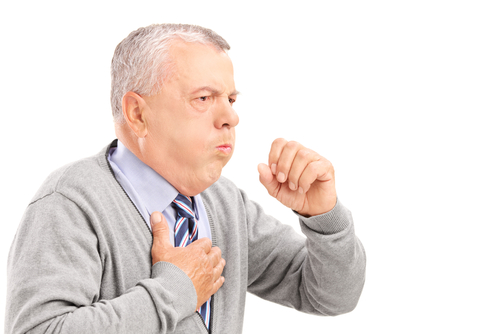
Man coughing into his elbow while holding a mug on a sofa

What Causes a Cough and What Are the Treatment Options?

shutterstock_137335274 Cough is actually the body response to help clear particles and secretions from the lungs and help prevent infection.   A cough everyone once in awhile is normal, however if it continues it can be due to an infection (viral or bacteria), allergic reaction, acid reflux, a medication reaction or asthma. A cough where there is no production of mucus is sometimes called a “dry” cough as opposed to a “wet” or “productive” cough that is associated with mucus production. Possible causes of cough include: 1)   An infection of the airways or lungs 2)   Postnasal drip – mucus from the nose drips down or flows along the back of the throat and drain into the bronchioles of the upper airway and can cause irritation and cough 3)   Asthma or COPD (emphysema) can create cough and make it hard to breathe 4)   Acid reflux is when acid that is normally in your stomach backs up into the esophagus (the tube that carries food from your mouth to your stomach) 5)   Medication reaction – this happens with about 10% people who take ACE inhibitors for blood pressure 6)   Smoking cigarettes 7)   Cancers – A cancer of the lung or upper airway can cause a cough, but cancer is a less common cause than those other possibilities listed above Testing:  There are some tests that can be done in addition to a medical provider performing a thorough examination. 1)   Chest X-ray 2)   Breathing tests – these are also called pulmonary function tests and can be helpful to diagnose asthma or chronic lung disease such as emphysema 3)   Allergy skin test – these tests are helpful to find out if there is an environmental allergic that could be causing symptoms including cough 4)   CT or Cat scan of the chest or sinuses – this is sometimes done to get a detailed view of the structures inside the chest and can be more useful if there are abnormalities that are seen on chest x-ray that are difficult to visualize.  The sinuses are also examined using a CT scan and for individuals with sinus pressure/pain and cough it may help determine whether surgery may be helpful 5)   Bacterial culture – sometimes a culture of the mucus (sputum) is done to determine the type of bacteria that are present within the lungs 6)   Bronchoscopy – a test where a physician inserts a special scope with camera down the throat and into the upper airways of the lungs to look for abnormalities 7)   Nasopharyngoscopy – a test where the ear/nose/throat physician inserts a scope with camera through the nose and down into the throat to examine the areas of the nose, throat and larynx, trachea and vocal chords to look for abnormalities 8)   pH probe – a test that involves putting a tube in the mouth and down into the esophagus to look for acid entering the esophagus and causing cough Cough treatments:  There are many treatments for cough and we usually tailor the treatment to the individual patient depending on the cause of the cough.  Possible treatments might include antibiotics if the cause is a bacterial infection, a bronchodilator, if the cause is asthma, an acid reducer if the cause is stomach acid, or antihistamines if the cause is excess mucus production from allergies.  If the cause is an allergic reaction or side effect, that medicine or substance is avoided.   I hope that you have found this information useful.  Wishing you the best of health,

Scott Rennie, D.O.
Board Certified in Obesity Medicine and Family Medicine

This blog is for educational purposes only and does not constitute individual medical advice. Always consult your own physician before making changes to your health, medications, or treatment plan.

Man clutching his chest as two women assist him at home

Chest Pain: Could It Be a Warning Sign of a Heart Attack?

shutterstock_82528666Patients sometimes come to the urgent care or go to their family medicine clinic when they have chest pain.  Usually, they should be evaluated in the hospital emergency department where more advanced testing can be performed and quick treatments can be delivered in the event the pain is related to the heart. The cause of the pain is sometimes difficult to determine but it generally originates from an organ in the chest area such as the heart, lung, esophagus or from the chest wall (skin, muscle or bone).  Sometimes the gallbladder or stomach may cause referred pain that radiates to the chest. Angina:  pain related to the heart not getting enough oxygen.  In people with clogged arteries of the heart, there are deposits that are called plaques deposited into these vessels that narrow them and prevent a normal amount of oxygen-rich blood to reach the heart muscle.  Angina is the term used to describe this phenomenon of chest pain that is related to the decrease in blood flow to the heart (called ischemia). Heart attack: pain due to cardiac ischemia is more serious when a blockage in a cardiac vessel occurs as a result of the surface covering of a fatty plaque rupturing.  If a blood clot (also called a thrombus) forms on the plaque, it can partially or completely block the artery of the heart and slow or block the flow of blood to the heart.  If that occurs for more than 15 minutes the muscle may become damaged or cause death of that area of the heart that the blood vessel supports.  During a heart attack (also called a myocardial infarction) the patient may experience a sensation of chest pain that may be a sharp, dull or burning pain  that is usually located in either the middle or upper chest (possibly the left side), and sometimes this pain may radiate to the back, arms, jaw or neck.  The pain may get better or worse with activity or rest and there may be other symptoms such as sweating, nausea, rapid heart rate or shortness of breath. Risk factors for heart attack:  We know that there are some factors that may increase the risk of a person having chest pain that may be related to the heart.  Some of those can be:  previous heart attack, previously diagnosed stroke, history of smoking (especially recent), high blood pressure, diabetes, high cholesterol or family history of heart attacks. Other heart related reasons of chest pain:  Even though a heart attack is the diagnosis that is most classic to think about when we think about heart related chest pain, there are other heart related problems that can cause chest pain, such as: 1)   Angina variants – caused by temporary spasms of the arteries of the heart. 2)   Pericarditis – or inflammation of the membranes of the heart 3)   Mycocarditis – which is inflammation of the heart muscle itself.  This is most commonly causes by a viral infection 4)   Hypertrophic cardiomyopathy – problems related to the heart valves 5)   Aortic dissection:  the aorta is a main artery of the body that supplies blood to the body and lungs and is composed of layers of muscle cells similar to the layers of an onion.  Rarely, there can be separation of these layers of muscle in the aorta which can cause breakage of the blood vessel and that can cause severe pain that comes on suddenly and is often felt in the chest or back between the shoulder blades.  It is a serious life threatening condition and needs to be corrected by surgery right away. Chest pain related to the chest wall:  There are various conditions that can cause the muscles, bones, skin and soft tissues of the chest wall to become painful. 1)   Physical activity that is more strenuous than usual can cause muscle soreness.  This type of pain is usually made better or worse by a particular position.  Taking a deep breath or pressing on the chest wall may also worsen the pain 2)   Costochondritis is pain coming from the cartilage that connect the ribs to the breastbone 3)   Shingles, a viral infection of the skin (that may occur on the chest) can be very painful but is usually present with even light touch to the skin on the chest or even clothes moving against the skin.  There may be a rash present at the time of the pain or it can actually occur before a rash is present 4)   Trauma or injury to the chest from sports or even from a recent surgery can product pain in the chest wall Chest pain related to the esophagus:  The tube that connects the mouth and throat to the stomach is called the esophagus.  A group of the same nerves connect to the heart and also to the esophagus so pain coming from the esophagus can be confused with heart related chest pain.  To be even more confusing, in some patients nitroglycerine (often used to treat heart related chest pain) can also relieve the pain from esophageal spasms. Chest pain related to the gastrointestinal tract:  Problems related to the stomach, intestines, gallbladder, or pancreas can spread or even begin with pain in the chest. Chest pain related to the lungs:  Problems related to the lungs may also cause chest pain and usually the pain gets worse with breathing: 1)   Pulmonary embolism:  A blood vessel of the lung can become plugged from a blood clot.  These are more common in people who have had recent surgery, are pregnant or had a long airplane flight or been in bed for a long time.  Pulmonary embolisms (PEs) can be life threatening and need immediate attention 2)   Pneumonia:  An infection or inflammation of the lungs is usually associated with fever, and cough.  Chest pain related to pneumonia is common 3)   Pleurisy or pleuritis:  results from inflammation of the lining of the lungs and can happen as a result of injury or viral illness but is also seen with a pulmonary embolism (blood clot in the lung) 4)   Pneumothorax:  this is also called a collapsed lung and happens when air gets between the chest wall and the lung.  This can be due to trauma or even occur spontaneously As you have learned, there are many possible causes of chest pain and many of these could be life threatening and need immediate attention.  Rapid attention and treatment is most efficient in the hospital, and therefore we recommend that patients who experience chest pain be evaluated in the emergency department of the hospital rather than an outpatient urgent care center. In the event that you go to the urgent care or to your local primary care provider with chest pain, it might very well be recommended that you be urgently rushed to the hospital for evaluation of the pain because of the serious life threatening conditions that can cause chest pain related symptoms and the more advanced testing options available at the hospital.  In the event that you should need surgery or cardiac catheterization to treat the pain related to heart attack or heart muscle injury you will have rapid access to these treatments at the hospital. If you or someone that you know is experiencing chest pain, please have them evaluated by a medical provider.  If you are concerned about the possibility of pain related to your heart, you should get to your nearest hospital immediately.  Please don’t try to drive yourself to the hospital in this case – call 911 and have your local ambulance company bring you for evaluation.   I hope that you have found this information useful.  Wishing you the best of health,

Scott Rennie, D.O.
Board Certified in Obesity Medicine and Family Medicine

This blog is for educational purposes only and does not constitute individual medical advice. Always consult your own physician before making changes to your health, medications, or treatment plan.

Woman cradling her elbow and forearm with her opposite hand at a table

Elbow Pain: Several Common Causes and Treatment Options

shutterstock_56557723Pain in the elbow is a common musculoskeletal complaint seen in the urgent care.  It can happen as a result of sports injury or trauma or can be symptoms of underlying infection, gout or bursitis.  Several causes are listed below: Elbow tendinopathy:  This is usually called golf or tennis elbow and is caused when then tendon, or strong band of tissue that connects muscles to bones is injured or inflamed.  The symptoms are pain, swelling and even weakness in the elbow. Olecranon bursitis:  A “bursa” is a small fluid-filled sac that sits near a bone.  Bursitis happens when the bursa gets irritated and swollen and can happen when a joint is moved over and over again in the same way over a short period of time.  It may also happen if the elbow sits on a hard surface or stays in a position that presses on the bursa for a long time. Nerve entrapment: The ulnar, median and radial nerves course in close proximity to the elbow.  Ulnar neuropathy is the most common compression neuropathy and it can cause sensory loss, pain and paresthesias over the ring and small fingers. Osteoarthritis:  Degenerative processes of the elbow are rare because it is non-weight bearing.  When present however osteoarthritis is usually related to prior fractures that involve the joint.  If there is an elbow deformity, we often think about underlying inflammatory arthritis. Radial head fracture:  Fracture of the radial head of the elbow most often occurs when the patient falls on an outstretched hand.  The radial head and neck make up the proximal portion of the radius.  Pain and swelling over the lateral elbow can be a sign of this type of fracture. Elbow dislocation:  Posterior elbow dislocation is the most common dislocation in children younger than 10 years of age and the second most common in adults, after shoulder dislocation.  Posterior elbow dislocations usually occur after a fall or a twisting injury to the elbow. Radial head subluxation (nursemaid’s elbow):  This is a common elbow injury in young children typically between 1-4 years old.  The mechanism of injury is sudden traction on the distal arm with the forearm pronated and the elbow extended.  A portion of the annular ligament of the patient’s elbow slips over the head of the radius and slides into the radiohumeral joint where it becomes trapped and causes pain.   The treatment is generally fairly easy by an experienced healthcare provider and the patient has immediate relief of pain when it is done properly. Gout:  Usually characterized by the sudden onset of severe elbow pain often with redness, swelling and tenderness.  There is no history of trauma.  It is caused from the uric acid crystals that develop in the joint (usually a single joint) and is less common in the elbow than the big toe. Treatment of elbow pain:  Identifying the cause of the patients elbow pain and treating that is the most efficient way to treat the patient’s pain.  Treatment may involve manipulation of the joint, using a shoulder sling and ice, or medication such as anti-inflammatories, and pain relievers, and possibly antibiotics.   I hope that you have found this information useful.  Wishing you the best of health,
Scott Rennie, D.O.
Board Certified in Obesity Medicine and Family Medicine

This blog is for educational purposes only and does not constitute individual medical advice. Always consult your own physician before making changes to your health, medications, or treatment plan.

Woman seated in armchair holding her sore shoulder

Shoulder Pain: Common Causes and Treatment Options

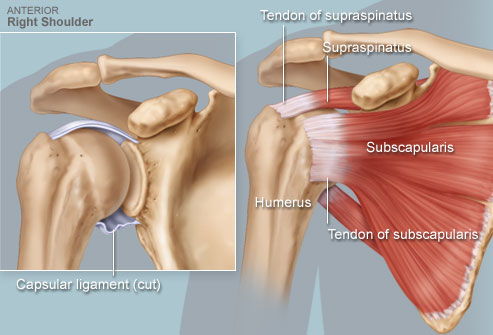
Photo credit:  http://leitnerphysicaltherapy.com/what-is-rotator-cuff-syndrome/ One of the most common injuries that bring patients into the urgent care is related to the shoulder. The shoulder is an inherently unstable joint.  The glenoid is shallow, allowing for a wide range of motion, with only a small portion of the humeral head articulating with the glenoid in any position.  The anatomy of the shoulder allow for increased mobility, but also predispose the shoulder to increased risk of injury. There can be numerous causes for shoulder pain, some of which are presented here. Shoulder Impingement Syndrome:  This occurs when the tendons of the rotator cuff and the subacromial bursa (a fluid-filled sac that separates the bones of the shoulder joint) are compressed between the bones of the shoulder.  Doing work with the arms outstretched overhead can cause shoulder soreness but does not necessarily lead to impingement.  Shoulder impingement is only diagnosed when symptoms continue and interfere with normal daily activity.  Chronic impingement can lead to bursitis, rotator cuff tendinopathy, and if left untreated, thinning or tearing of the rotator cuff tendons. Separated Shoulder:  A separated shoulder is a condition that causes shoulder pain and swelling.  It happens when certain ligaments in the shoulder joint tear or get stretched too much.  Ligaments are strong bands of tissue that connect bones to other bones.  The shoulder joint is made up of 3 bones:  The collar bone, the shoulder blade, and the upper arm bone.  The most common cause of a separated shoulder are falling on the shoulder or getting hit in the shoulder. Biceps Tendonitis:  Tendons are tough bands of tissue that connect muscles to bones.  Repetitive activities and overuse can injur tendons leading to pain and impaired function.  The biceps muscle is located in the front of the upper arms, and is used when lifting, bending the elbow, and reaching up over the head.  The upper portion of the biceps muscle attaches to the front of the shoulder in two places and the lower portion attaches to the bone in the forearm.  Lifting, pulling, reaching or throwing repeatedly can lead to biceps tendinopathy or even tears of the upper biceps tendon. Frozen Shoulder:  The term used to describe a stuff shoulder joint that has temporarily lost the ability to move freely; most people with frozen shoulder have difficulty reaching overhead and reaching to the low back.  The stiffening is the body’s natural response to inflammation that develops in or near the shoulder.  Stiffening is a protective reflex that protects the shoulder from further injury. Rotator Cuff Injury:  The rotator cuff is made up of 4 shoulder muscles and their tendons.  One common injury is tendinopathy, and that is when people have a problem with 1 of their tendons.  In most people with tendinopathy, the tendons are not inflamed or swollen.  If they do get inflamed or swollen, doctors call it “tendonitis”.  Another type of rotator cuff injury is a tear in a tendon.  Tears can happen if a person falls on the shoulder or moves the shoulder too fast and with too much force.  Tears can also happen as a tendon wears out over time. Shoulder Arthritis:  Fortunately, arthritis of the shoulder progresses slowly and is an uncommon problem.  In almost every case, the shoulder has been injured months or years earlier, leading to an abnormal wearing down of the cartilage. Shoulder Dislocation:  Anterior dislocation of the shoulder is a painful condition that is usually caused by a blow to the abducted, externally rotated and extended arm (eg, blocking a basketball shot).  Less commonly, a blow to the posterior humerus or fall on an outstretched arm can cause an anterior dislocation.  Posterior shoulder dislocations are rare and are only about 2% of shoulder dislocations caused from a blow to the anterior portion of the shoulder. Shoulder pain treatments are tailored specifically towards the cause of the patient’s pain.  Shoulder dislocations are usually treated by re-locating the shoulder joint after x-ray examination to rule out fracture of any of the bones of the shoulder.  Dysfunction of the tendons or ligaments of the shoulder are often treated with physical therapy, anti-inflammatory and pain medications and sometimes surgery. Immobilization:  Depending on the type of injury, a shoulder sling may be recommended to help reduce pain and help with healing.  The patient should be careful not to remain in the sling for too long because the risks of frozen shoulder (ie. adhesive capsulitis) increase with shoulder immobilization.   I hope that you have found this information useful.  Wishing you the best of health,

Scott Rennie, D.O.
Board Certified in Obesity Medicine and Family Medicine

This blog is for educational purposes only and does not constitute individual medical advice. Always consult your own physician before making changes to your health, medications, or treatment plan.

Misty forest trail winding among towering evergreen trees and ferns

Cryptococcus gattii in the Pacific Northwest, Explained

There is a fungus living in the soil and trees of the Pacific Northwest that can cause serious pneumonia and meningitis in people who were perfectly healthy before they inhaled it. All true. In any given year it is also close to a non-event, because Washington reported three cases in 2024 and zero in both 2022 and 2023 (1).

Both facts belong together. They almost never land that way. That is how a region collects years of alarming headlines about an organism most physicians here will never diagnose.

What it actually is

Cryptococcus gattii is an environmental yeast. Isolated from native trees, soil, air, and water across the Pacific Northwest (2). You breathe it in. That is the only route. It does not pass between people, and you cannot catch it from an infected dog or cat (2)(3). It surfaced in 1999, in people and animals on Vancouver Island. Oregon’s first human case came in December 2004 (4). Washington’s came in 2006 (2).

Then there is the incubation period, the strangest feature of this organism: the average interval between inhaling the spores and falling ill runs six to seven months, the documented range stretches from two months out to 13, and it can be years, which is why investigators frequently cannot say where a person picked it up (2)(4). Not weeks. Months.

The numbers, in full

Washington publishes its counts by year. From 2016 through 2024, in order: five cases, one, four, two, three, three, zero, zero, three (1). Twenty one cases in nine years statewide. Two deaths across that whole span, and an annual rate that never rose above 0.1 per 100,000 (1). From the first Washington case in 2006 through December 2019, the state total was 58 cases and nine deaths (2).

Oregon makes the same point from another angle. In 2022, Oregon residents accounted for 69 reported cryptococcal infections of all species combined. Two were C. gattii (4).

Even at the epicenter, at the peak, the risk stayed small. Vancouver Island, the hardest hit place on the continent, ran roughly 25 cases per million residents per year from 1999 through 2007 (5). Per million. Per year.

The claim that it attacks healthy people deserves tightening

This is the line that powered the old news coverage. It also needs a second look. C. gattii does differ from C. neoformans, which typically infects people who are already immunocompromised (2). C. gattii can infect people with intact immune systems. It does.

Then look at who actually got sick. Among Oregon and Washington patients from 2004 to 2011, 51 percent had a documented immunocompromising condition. Median age 54 (6). Washington’s guidance names the groups more likely to develop disease: immunocompromise, existing lung conditions, age over 50, tobacco use (2). Oregon puts it flatly: healthy persons appear to be at low risk, and most infections occur among immunocompromised or chronically ill people (4). So my read is that immunocompetence fails to protect you the way it does against C. neoformans, while age, lungs and immune status still move you up or down the list, and that second half almost never got printed. Both halves matter.

When it does happen, it is serious. Very. Published mortality runs 13 to 33 percent (2)(7), and in the Pacific Northwest cohort 13 of 70 patients, 19 percent, died within three months of diagnosis (6). Untreated cryptococcal meningitis kills within weeks to months (2). The rarity is what makes this a poor thing to worry about, and the severity is what makes it a good thing to remember.

If you live here and this worries you

I will be direct. There is no screening test worth doing and no vaccine. No avoidance strategy works either, and Washington’s guidance states that outright (2)(4). You cannot stay away from trees and soil here. You should not try.

Duration is what you can pay attention to. The presentation that matters is a cough measured in weeks to months rather than days, often with shortness of breath, fever, night sweats, or loss of appetite (2). Outlasted one course of antibiotics, then a second? Push for a chest image instead of a third prescription. The other pattern is neurological. Headache that will not quit, neck pain, light sensitivity, or a change in thinking that people around you notice before you do (2).

None of that is specific to C. gattii. A two month cough in Seattle is far more likely to be asthma, reflux, or post-viral airway irritation. Which is my point. The right response to a long cough is identical whether or not this organism exists. So you need not carry it around.

This stays a clinician-facing subject. Patients do not, for the most part, bring the organism to me by name, and given the numbers above there is no reason they should.

When a clinician should genuinely think of it

Two situations, both narrow.

The first is a pulmonary infiltrate or nodule that will not respond to antibacterials in someone with Pacific Northwest exposure. Cryptococcomas, mass lesions in lung or brain, sometimes surface on imaging ordered for something else (2)(4). The second is unexplained central nervous system disease. A subacute meningitis in someone who does not fit the usual profile. In the Oregon and Washington series, 47 percent of infections were pulmonary and 43 percent involved the CNS (6).

Ask about the past two years of travel and outdoor activity. Not the past two weeks (2). With an incubation that can exceed a year, a recent exposure history tells you nothing.

The diagnostic trap is worth spelling out. Cryptococcal antigen testing on serum or CSF is fast and useful for establishing that cryptococcal disease is present. It will not give you the species (2)(3). Identifying C. gattii requires an isolate, speciated on canavanine-glycine-bromothymol blue agar or by MALDI-TOF, with genotyping at CDC (2)(3), which is why Oregon’s public health division says outright that the shift from culture toward antigen testing has made it impossible to advance knowledge of C. gattii epidemiology (4). So submit the isolate. Reporting is required either way. Three business days in Washington, one working day in Oregon (2)(3).

Treatment follows standard cryptococcal principles. Fluconazole for asymptomatic through moderate pulmonary infection, amphotericin B with flucytosine for severe pulmonary or CNS disease, continued at least six months (2).

Routing matters here, because a video visit produces neither of the two things this diagnosis needs. No image. No isolate. Suspected pneumonia, fungal or otherwise, goes one of three ways from me: primary care first in principle and least often in practice, because getting an appointment there is hard, then urgent care, which is where most of it actually lands. Where there is no urgent care within reach, that leaves the emergency department.

The Bottom Line

Cryptococcus gattii is real. It lives here, and it can hurt someone with a normal immune system. It is also rare enough that Washington logged zero cases in two consecutive recent years (1). If you have a cough in the Northwest, this is almost certainly not it, and the reason to get a persistent cough evaluated has nothing to do with fungus; if you are a clinician holding a lung lesion or a meningitis that antibacterials are not touching, put it on the differential and hang onto the isolate.

The 2010 coverage framed this as a menace creeping toward your city. Two decades of surveillance data say something quieter. Small numbers. Serious illness when it happens. A narrow set of reasons to suspect it at all.

Sources

1. Washington State Department of Health. Communicable Disease Annual Report 2024 (published December 2025), Cryptococcosis (by Cryptococcus gattii) narrative and data table. https://doh.wa.gov/sites/default/files/2025-12/420-004-CDAnnualReport2024.pdf

2. Washington State Department of Health. Cryptococcus gattii Reporting and Surveillance Guidelines, DOH 420-050 (updates through June 2024). https://doh.wa.gov/sites/default/files/2025-08/420-050-Guideline-Cgattii.pdf

3. Oregon Health Authority, Public Health Division, Acute and Communicable Disease Prevention. Cryptococcosis Investigative Guidelines 2026 (updated May 2026). https://www.oregon.gov/oha/PH/DISEASESCONDITIONS/COMMUNICABLEDISEASE/REPORTINGCOMMUNICABLEDISEASE/REPORTINGGUIDELINES/Documents/cryptococcus.pdf

4. Oregon Health Authority. Oregon’s 2022 Selected Reportable Communicable Disease Summary, Cryptococcosis section. https://www.oregon.gov/oha/PH/DISEASESCONDITIONS/COMMUNICABLEDISEASE/DISEASESURVEILLANCEDATA/ANNUALREPORTS/Documents/2022-Annual-Communicable-Disease-Report.pdf

5. Epidemiology of Cryptococcus gattii, British Columbia, Canada, 1999–2007. Emerging Infectious Diseases 2010;16(2). https://pmc.ncbi.nlm.nih.gov/articles/PMC2958008/

6. Treatment and Outcomes among Patients with Cryptococcus gattii Infections in the United States Pacific Northwest. PLOS ONE 2014;9(2):e88875. https://pmc.ncbi.nlm.nih.gov/articles/PMC3929541/

7. CDC (archived page, last reviewed May 26, 2020). C. gattii Infection Statistics. Current cdc.gov fungal disease pages were unreachable at the time of writing, so the CDC archive is cited. https://archive.cdc.gov/www_cdc_gov/fungal/diseases/cryptococcosis-gattii/statistics.html

Related Reading

What Is Hantavirus? What You Need to Know Right Now Tuberculosis in 2025: Kansas Outbreak, Vaccines, and Staying Safe What Causes a Cough and What Are the Treatment Options?

Scott Rennie, D.O.
Board Certified in Obesity Medicine and Family Medicine

This blog is for educational purposes only and does not constitute individual medical advice. Always consult your own physician before making changes to your health, medications, or treatment plan.

Healthcare professional in scrubs walking through a clinic hallway with tablet

How iPads Improve the Patient Experience in Clinics

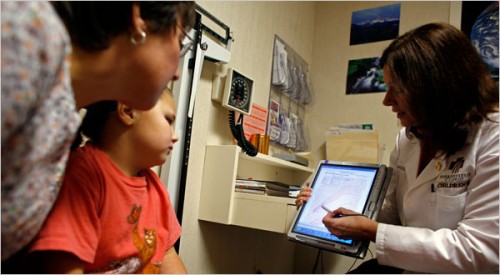
  Marianne Aiello, for HealthLeaders Media, April 11, 2012 Since the first-generation iPad hit the market in 2010, physicians have embraced the gadget and its apps, many of which enhance or expedite clinical care. But until recently, the patient experience has not been directly influenced by Apple’s hit device, other than by way of the patient being impressed with their physician’s technological prowess. Lately, app developers and hospitals have been rethinking the iPad’s potential in the patient experience and have been using the tablet in creative ways. iPads as Patient Guides Mayo Clinic has begun using content- and app-loaded iPads to help guide patients through their hospital experience. Earlier this month the health system posted a video depicting iPad use on its YouTube page. Each heart surgery patient is given an iPad to help them visualize and prepare for their plan of care. “The iPad is a nice way to navigate through some of those resources and keep track on a daily basis that you’re doing the things you need to do to make sure you’re doing the things that you should be,” heart patient Randy Sterner said in the video. From what we can see in the video, the tailored app includes the patient’s daily schedule, information about the hospital stay, patient education information, and notes about planning for recovery. It also allows patients to report on levels of pain they are experiencing or exercises they have completed. The reports are instantly transmitted to the patient’s care team. Verdict: Though most hospitals are not currently able to afford this extent of patient iPad use, it gives us a hopeful glimpse at the future of using technology to inform and educate patients. Of course, even in the future this technology is only supplemental to hands-on caregiver interaction. iPads to Customize the MRI A new app called the Caring MR Suite allows patients to customize MRI settings, to  creating a more positive experience. The app lets patients select lighting, music, images, and video to be available during their scan. Patients can even dock their own iPhones or iPods to listen to their own music or watch their own videos, which are displayed on a screen in the ceiling. Special LED light fixtures and high-resolution displays are embedded in the walls and ceilings of the suite and controlled by the iPad. There is a video depicting the suite on the YouTube page for GE Healthcare, which manufactures the model. Verdict: While I imagine this is a substantial investment, it’s one of the best ways I’ve seen of making what is often a intimidating and scary experience more bearable. Allowing the patient to tailor the MRI experience, it gives them some sense of control back. iPads Replacing Check-in Forms An HR platform called Drchrono markets an iPad app called OnPatient, which allows hospitals to check patients in via iPad instead of paper forms and clipboards. Healthcare providers can create a customized check-in form. Then when patients fill out the for the first time, they input their personal, demographic, and insurance information, take a profile photo, review their medications and allergies, and their records are saved for future use. The app integrates with Drchrono’s full suite of iPad EHR services aimed at helping caregivers modernize their record keeping processs. “The OnPatient check-in app digitizes the waiting room and eliminates significant barriers to mass adoption of patient check-in technology by leveraging sophisticated iPad technology,” Michael Nusimow, co-founder and CEO of Drchrono, told Mashable. “We designed the OnPatient app to be intuitive for both physicians and patient users to create a better patient check-in experience.” Verdict: This process is not ideal for all patients, especially the elderly and the technologically unfamiliar, but would be a hit with Gen-X and Gen-Y. It may be an asset for hospitals reaching out to younger demographics. iPads for Virtual Physician-Patient Communication By simply using the iPad’s Facetime feature, physicians and patients can video chat about the patient’s recovery progress. Henry Ford Hospital has been using this feature, which also comes on the newer iPhone and the latest generation iPod touch, to conduct a new initiative called “telerounding.” “Using the iPad to communicate really appeals to the type of patients that are seeking state-of-the-art, minimally invasive robotic surgery at Henry Ford,” Dr. Craig Rogers, MD, director of Renal Surgery and director of Urologic Oncology at Henry Ford, told Detroit’s HomeTownLife.com. “Patients are looking for us to use current technology in a way that improves their care, and ‘telerounding’ with the iPad really fits that need in enhancing the communication and care following surgery.” Replacing some phone calls with video chats, patients can have a more personal and informative conversation with their physician. Henry Ford physicians have said they benefit by being able to physically see their patients to get a sense of their post-op condition. Verdict: This is the most cost-effective, efficient, and flexible use of the iPad to improve the patient experience. Not only does this practice help physicians on the clinical side, it gives patients the positive feeling of personalized care even when they are miles away from the hospital.

Scott Rennie, D.O.
Board Certified in Obesity Medicine and Family Medicine

This blog is for educational purposes only and does not constitute individual medical advice. Always consult your own physician before making changes to your health, medications, or treatment plan.

Hiker drinking water and cooling forehead with a blue cloth

Heat Illness: How to Stay Safe in the Outdoor Summer Heat

shutterstock_149986745Each year there are many people who get sick or die due to overexposure to heat.  In 2001, a professional football player Korey Stringer died of heat stroke during a Minnesota Vikings training camp, and Steve Bechler major league baseball player for the Baltimore Oriels also died for heat stroke. The heat wave that hit Europe in 2003 caused more than 70,000 deaths. Patients often present to the urgent care for heat related illness, and with the rising temperatures of summer approaching I think it’s important to discuss the topic of heat illness. Heat exhaustion is common and most of us have experienced this at least once in our lives.  It can occur when the core body temperature rises greater than 98.6 degrees the patient may have some or all of the symptoms including:
  1. Rapid heart rate
  2. Sweating
  3. Nausea and vomiting
  4. Headache
  5. Dizziness
  6. Fainting with rapid return of normal mental status
  7. Severe thirst
  8. Signs of mild to moderate dehydration
Not all of these signs need to be present to diagnose heat exhaustion. Understanding the signs and symptoms of heat stroke (note this is different from heat exhaustion described above) is important to help prevent this potentially life threatening illness.  When the patient’s core temperature reaches 104 degrees F or higher, then may begin to have an altered mental status and have symptoms of confusion.  They may or may not have sweating (the lack of sweating is a late sign of heat stroke – DO NOT WAIT FOR LACK OF SWEATING TO TREAT FOR HEAT ILLNESS).  They might also complain of flu-like symptoms and have a rapid heart rate and low blood pressure. Heat illness patients may have have difficulty with balance, confusion and the late signs of heat illness may be seizures, coma or an abnormal heart rate called ventricular fibrillation.  Heat stroke is more common in environments with high temperatures and when the patient is exercising out in the heat without drinking enough fluids.  It may be worse in a humid climate. Studies done on runners have shown that dehydration alone is capable of elevating body temperatures, so preventing dehydration is very important in reducing risks of heat related illness. **Heat exhaustion and heat stroke are probably a continuum of heat disorders rather than distinct pathophysiologic entities. In the setting of heat illness, patients with dizziness, decreased mental status, confusion, headache, or balance problems  should be treated for heat stroke. Prevention of heat stroke:  If the patient is an athlete or will be doing vigorous physical activity, it is important to acclimatize for 8-12 days prior to exercise.  The military uses this technique with soldiers prior to sending them to Iraq where the cycle on exercise bikes in a sauna.  With acclimatization, sweating will start earlier and there will be an increased rate of sweating and decreased loss of salts. 97% of cooling occurs at the skin/air interface which functions similar to the radiator of your car.  Dilation of blood vessels at the surface of the skin allows more heat loss and evaporation on the skin also increases the rate of heat loss. It’s also important to help decrease temperatures earlier if you develop symptoms of heat exhaustion so that this does not progress to heat stroke.  Getting out of the direct sunlight, increasing fluid intake, and increasing evaporative cooling can all be helpful.  Since vasoconstriction happens when spraying the skin with cold water, it may be more efficient to help with evaporative cooling by spraying room temperature water on the skin to help prevent the blood vessels in the skin from constricting and keeping the process of vasoconstriction from occurring. Risk factors for heat exhaustion or heat stroke may include:
  1. Elderly patients because they may have decreased heart function.  To maintain their blood pressure, than may actually constrict their blood vessels (rather than dilate their blood vessels) which may worsen heat illness.
  2. Medications such as beta-blockers because they do not allow the heart rate to increase.  Also anticholinergic medications that decrease sweating can make it harder to sweat and thus lead to increased temperatures. Diuretics may predispose to dehydration
  3. Exercising in very hot/humid temperatures
  4. People who are not acclimatized to hot temperatures
  5. The use of illicit drugs such as methamphetamines may decrease the ability to sweat and increase the generation of heat production.
  6. Neonates lack thermoregulatory and sweating capabilities
  7. Obese individuals have more insulation and less surface-area-to volume ration with which to dissipate heat
  8. Hyperthyroidism increases metabolic rate and that can lead to increase heat production
  9. Dermatology disorders over large skin areas such as burns can decrease the ability to sweat and lead to decreased cooling abilities
Treatment of Heat Stroke:  Rapid cooling is the most important treatment.  Get the heat stroke victim out of direct sunlight and to a cool area if possible.  Using ice bags in the arm pits, groin and against the skin of the neck can be helpful for cooling.  The goal should not be to cause the victim to shiver because shivering actually causes warming. IV fluids may also be helpful but are secondary to rapid cooling.   I hope that you have found this information useful.  Wishing you the best of health,

Scott Rennie, D.O.
Board Certified in Obesity Medicine and Family Medicine

This blog is for educational purposes only and does not constitute individual medical advice. Always consult your own physician before making changes to your health, medications, or treatment plan.

Traveler studying a map on a historic Italian street

9 Travel Tips Every Solo Female Traveler Should Know

 -  HuffingPost
The most frequently asked question I get is how I afford to travel. The second? My tips for solo female travel. I reluctantly did my first solo trip in 2007 to Zacatecas, Mexico.  I had just moved to Monterrey, Mexico to start a new teaching job the month before, and was already anxious to begin exploring the rest of the country. Zacatecas, a five-hour bus journey away, was the perfect weekend trip and a great opportunity to get myself better acquainted with the country. After searching for a travel partner and coming up empty-handed, I did something I never imagined I would do: I booked a ticket… for one. I haven’t looked back No longer a slave to others’ schedules, finances and indecision about just whether they wanted to travel with me or not, what’s followed since are a slew of solo journeys that have taken me to the literal and figurative hot spots of Central and South America, through Europe, and down to Australia. I have learned that I enjoy travelling by myself and that, more importantly, I am confident travelling by myself — though I never compromise my safety. What’s more, you are not a “loser”for rolling solo; quite the contrary in fact. Being able to travel alone signals a certain self-assuredness and a desire do to more and see more on one’s own terms. Travelling solo is freeing and helps you to become more aware, both of yourself and of your surroundings. Here are my 9 tips for solo travel if you’re a girl:
     1. Be Prepared – A well-considered itinerary helps me feel secure and keeps me occupied. I do a lot of research and planning before I get on the bus or plane or train. At the very least, as a female travelling alone, you should book your first night of accomodation before your arrival at your destination.
     2. Look Purposeful – Being prepared and knowing where you’re going helps immensely with this. Don’t show your ignorance, fear, and vulnerability while on the road — it may encourage unwanted attention and invite others to take advantage of you. Try not to idle on the sidewalk looking lost; instead approach someone who looks knowledgeable right away and confidently ask where you need to go. Bring a book to restaurants so you’re not staring off into oblivion, uncomfortably waiting for your food to come.
     3. Take Walking Tours – Kill two birds with one stone: Learn about your destination and battle loneliness at the same time. Walking tours are a great way to orient yourself, as well as meet other adventure-seekers discovering the same place as yourself.  I met to see Riverdance with a some Australians I met on a walking tour of Dublin.  I went to eat kebabs with folks I met on the free walking tour in Budapest and had fish and chips with an American couple I met on the walking tour inEdinburgh.
In the Chilean desert, I booked three days of excursions with a local operator and spending the three days touring with the same group of travellers. In all cases, strangers, became friends, at least for a little while.
     4. Stay In Hostel And Be Sociable – Most hostels have common rooms and host community building events. I’ve met tons of people in my hostel who I’ve shared precious moments with abroad.  If sharing a room with strangers creeps you out, you can always stay in a private room — many hostels have them. Prefer to stay in a hotel? No problem. Many hostels post events on their websites, and you don’t necessarily have to be a guest to attend. Don’t miss out on a prime opportunity to meet other travellers!
     5. Dress Appropriately – Yes, I know we should be able to dress any way we want. Yes, I know that no state of undress provides a valid excuse to get harassed. But let’s get real: dressing a certain way in certain places will net you attention, some of which may be negative.  I like short shorts more than anyone, but I don’t enjoy catcalls or having unsavoury people touch or follow me because three-quarters of my legs are on display. I like to remain as “below the radar”as possible when I travel, and try to blend in with the locals as much as I can.  This makes my trip much more enjoyable. I thus try to conform, at least with my clothing, to cultural norms, and dress conservatively in countries (and/or tourist sites) where it is expected.
     6. Be In Touch– Always have an emergency contact number at hand, and let people at home know your whereabouts.
I suffered an extreme bout of food poisoning last September while by myself in Guatemala and couldn’t leave my hotel room for 36 hours. Stupidly, I couldn’t even contact my boyfriend (who was at home in Germany) at the time, as I didn’t have his phone number memorized and was too sick to go to the internet cafe to look up the number online. A simple but good idea would be to take a few index cards and write down all pertinent contact information that can be used by yourself and/or others in case tragedy strikes.  Keep them on your person and distribute in case of emergency.
     7. Avoid Negative Attention – Sometimes negative attention, in particular from males, cannot be helped. My simple rule is to not engage: I ignore, I deflect, I keep it moving.  I don’t respond to taunts or negativity.  I remove myself quickly from situations where I am a target.
     8. Find A Sister In Crime – Who better to understand your plight, your fears, and your concerns than another female travelling on her own? I seek out those like myself before and during my travels, both to get the skinny on what its like to go it alone as a female in certain places, as well as to potentially buddy up on day trips and the like once I’m there. A few summers ago while travelling solo around Eastern Europe, I made friends with an American on our severely delayed train from Vienna, Austria to Krakow, Poland. By the time we got off the train, we were fast friends, and we shared our travel experiences over dinner.
Our conversation about what it’s like to travel as a girl was probably one of the most enlightening I’d had all that year, and we were shocked at how much our travel styles complimented each other.
     9. Let your hair down and enjoy! – This goes without saying. Live in the moment. Embrace the experience. Act every bit the fun, fearless, female traveller you are. And learn to relish in the luxury of your own company.

Scott Rennie, D.O.
Board Certified in Obesity Medicine and Family Medicine

This blog is for educational purposes only and does not constitute individual medical advice. Always consult your own physician before making changes to your health, medications, or treatment plan.

Patient seated in clinic waiting room wearing a blue arm sling

Wrist Fracture or Colles Fracture: What Is a FOOSH Injury?

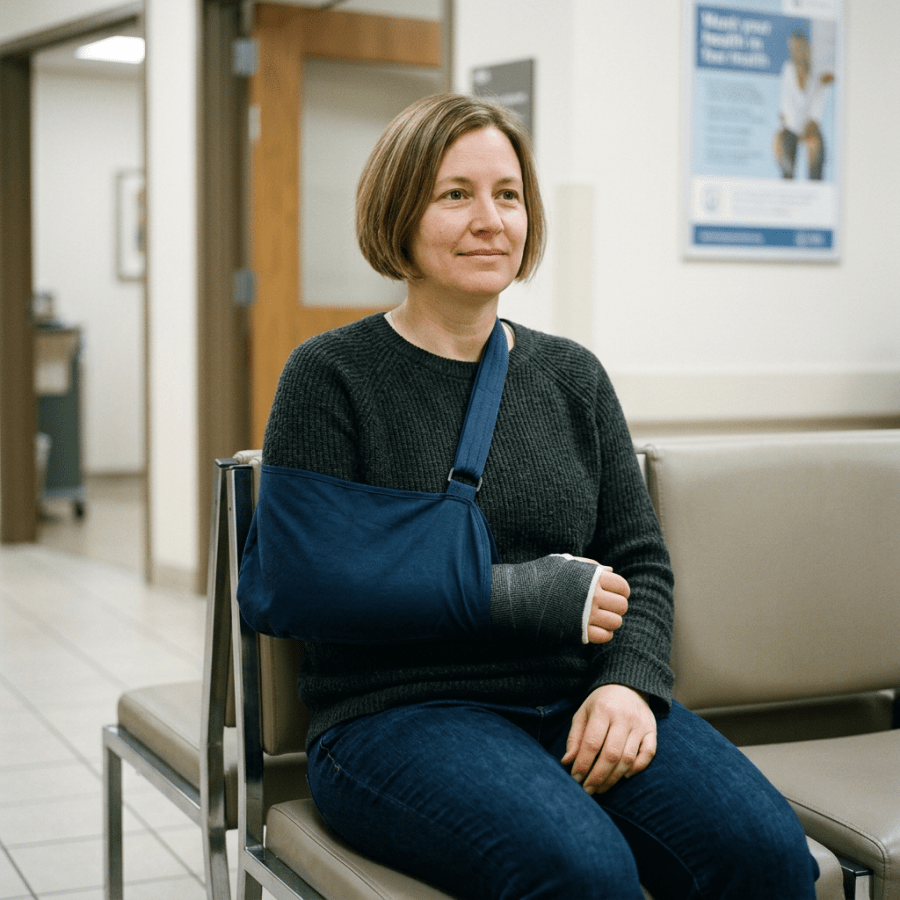
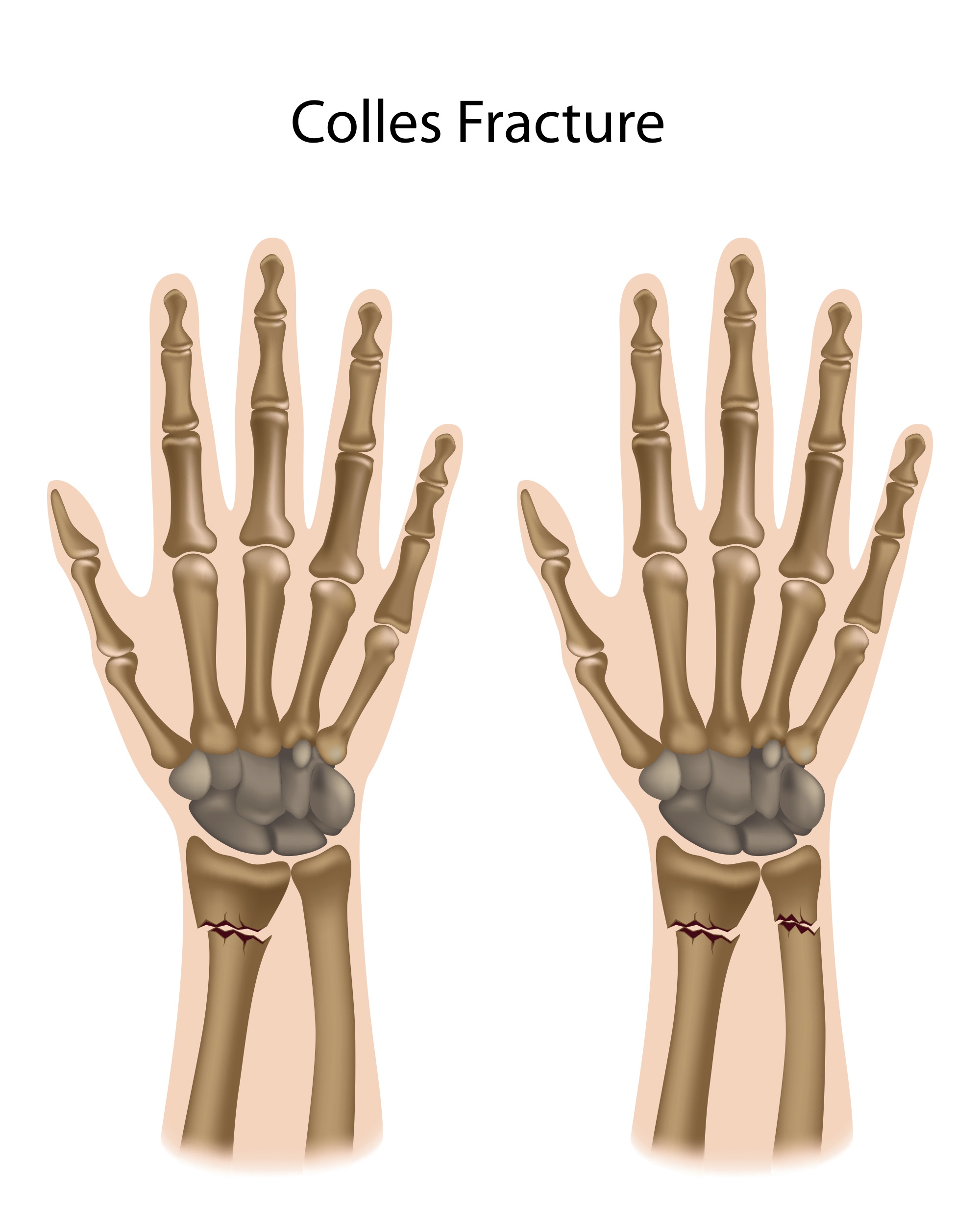
shutterstock_121363495 Fracture of the distal radius (arm) is one of the most common fractures. The majority of these fractures are in two distinct populations:  youth who are involved in sports and sustain a relatively high-energy fall, and seniors with osteoporosis who fall with low energy. How the injury occurs:  The most common mechanism is Falling On an Out-Stretched Hand (FOOSH), with extension of the wrist (backward bending). Indications for referral to surgeon:  Most of the time distal radius fractures can be managed by your primary care physician.  There are some circumstances however which require referral to a surgeon such as: 1)   Open fractures – ie. Fractures with laceration of skin above the bone 2)   Fractures where there is pressure building up in the soft tissues of the wrist due to ongoing bleeding 3)   Fractures where the nerves of the hand/wrist are damaged 4)   Other fractures that are unstable Treatment:  We usually don’t put a cast on immediately after the injury because of the swelling, and risk of decreased blood flow due the injured area that can occur inside the cast.  For non-displaced extra-articular fractures, we usually treat with a well-molded sugar tone, reverse sugar tong or double sugar tong splint.   The elbow is usually flexed to 90 degrees and the arm is in a neutral position.  The arm is kept in a splint for a few days following the injury and should do the following: 1)   Elevate the arm 2)   Apply ice to the fracture frequently (while keeping the splint dry) 3)   Begin active range of motion to the shoulder and fingers 4)   Use pain medication as needed Patients are seen 3-5 days after the injury to evaluate, remove the splint and assess neurovascular status.  We often repeat x-rays at this time with the arm out of the splint.  If the fracture still looks non or minimally displaced, the healthcare provider then applies a short arm cast.  The cast will extend from the distal palmar crease to within 5cm of the antecubital fossa.  The patient is by their healthcare provider every 2-3 weeks until the healing is complete.  Patients should remain in the cast until there is evidence of radiographic healing or the fracture is non-tender and that is generally for 6 weeks.  At this point, a wrist brace can be used instead of the cast.  Complete healing can require 6-8 weeks. If there is initial displacement of the bones on x-ray, the splint is usually kept in place for 2-3 weeks, then changed to a short arm cast with immobilization for another 4-5 weeks.  Healing of these displaced fractures usually takes 8-12 weeks. Possible complications:  Injury to the medial nerve or compartment syndrome are the most important and early complications of a distal radius fracture.  Acute Carpal Tunnel Syndrome (ACTS) is a nerve injury to the medial nerve that sometimes occurs with a traumatic fracture.  Signs of compartment syndrome include increasing or constant severe pain or pain elicited by passive extension of the fingers.  These symptoms usually start within 12-54 hours after the injury, so it is important for the patient to tell their physician if their pain is worsening during this time. Injury to other bones within the hand/wrist can accompany a distal radius fracture, but they are rare.  They are suspected in patients with persistent wrist pain despite acceptable alignment. Return to work:  Patients with more sedentary jobs may return to work immediately.  Physical laborers may return to full duty of after they have regained near-normal wrist motion and strength.  It is reasonable for participants in contact sports also to delay return to play until they have achieved near-normal motion and strength, and to wear a protective palmar splint during the first few weeks of play. Splint Care:  a cast or splint will help protect the injured bone or tendons and reduce pain as you heal.  It is important to take care of the splint to minimize risk of possible problems such as a skin infection. Splint care instructions: 1)   Swelling is common and can make your splint feel tight initially.  To reduce the swelling we recommend keeping the splint above the level of your heart for 24-48 hours.  Resting the splint on pillows or having your arm or leg in a sling that keeps the extremity elevated is important. 2)   Gently move your fingers or toes (where the splint is located) frequently. 3)   Ice can help keep the swelling down.  Apply ice or a frozen bag of vegetables to the injured area.  Do not apply blue ice (mostly used for camping) directly to the skin because this can cause freezer burn. 4)   Do not get the splint wet.  Bathe with the splint covered in a plastic bag and tape the opening shut to prevent damaging it.  Hang the splint outside of the bathtub if possible. 5)   If the splint becomes wet, dry it with a hair dryer on the cool setting.  Using a hot setting can burn the skin. 6)   Keep the splint clean and avoid getting dirt or sand into it.  Do not apply powder or lotion on or near the splint and cover the splint when eating. 7)   Don’t place anything inside the splint, even for areas the itch.  Sticking things inside the splint can injure the skin and lead to infection.  Do not pull the padding out from inside the splint. When to seek help for your splint: 1)   Your fingers or toes get cold or blue, hurt, get numb, tingle or throb – this may indicate the splint is too tight 2)   There are sore areas or a foul odor from the splint 3)   If the splint breaks or is damaged 4)   If you develop severe pain in or near the splinted arm or leg 5)   If the splint becomes soaking wet or does not dry with a hair dryer or vacuum.   I hope that you have found this information useful.  Wishing you the best of health,

Scott Rennie, D.O.
Board Certified in Obesity Medicine and Family Medicine

This blog is for educational purposes only and does not constitute individual medical advice. Always consult your own physician before making changes to your health, medications, or treatment plan.