
Large red EMERGENCY sign on the exterior of a hospital emergency department

Nurse Practitioners vs. Doctors in the ER: What the Research Actually Shows

A paper landed in the American Economic Review this month that is going to get quoted badly by almost everyone who quotes it. Physician groups will pull three numbers out of it. Nursing organizations will pull a different three. Both sets are in there, which is exactly why the paper is worth an hour of your attention instead of a headline.

David Chan and Yiqun Chen looked at 1.1 million emergency department visits across 44 Veterans Health Administration sites, involving 156 nurse practitioners and 1,348 physicians (1)(2). What makes it different from the usual scope-of-practice study is the design. VA provider schedules are set months in advance. Patients show up when they show up. That mismatch means the question of whether you got an NP or a physician on a given night was close to a coin flip rather than a reflection of how sick you looked, and it lets the authors claim causation instead of the correlation that plagues most of this literature.

What the numbers say

Patients seen by NPs had emergency stays 11 percent longer and cost about 7 percent more, roughly 66 dollars per visit (1)(3). Thirty-day preventable hospitalizations ran 20 percent higher. The AMA ran the arithmetic forward and estimated that routing a quarter of VA emergency patients to NPs adds about 129 million dollars a year net, after accounting for the salary difference between the two groups (3).

Thirty-day mortality showed no statistically significant difference (2).

Hold onto both of those. People are going to publish articles this fall that mention one and not the other.

The number everyone is going to skip

Here is the finding I think actually matters, and it is the one I expect to see least in the press coverage. It needs a slow walk, because it is the part that gets garbled every time.

Everything in the section above compares two averages. Add up all 156 NPs and take the mean. Do the same for the 1,348 physicians. Compare the two. Physicians win that comparison, and I am not waving that away.

Now throw the other profession out and look at physicians alone. We are not all the same. Some of us order a great deal of testing and some order very little. Look at length of stay instead, or at thirty-day bouncebacks, and the same wide scatter turns up. The NP group has an equally wide scatter inside it.

What Chan and Chen found is that the spread inside each profession is larger than the distance between the two averages. The gap between a low-resource physician and a high-resource physician is wider than the gap between the typical physician and the typical NP.

Put those two facts together and the distributions overlap most of the way. The strongest NPs sit well inside the physician range. The physicians at the expensive end sit well inside the NP range.

So the authors ran the obvious test. Pull one NP at random. Pull one physician at random. Compare what each of them actually did, and repeat that many times over. The NP is the better performer in 38 out of every 100 draws (1)(2).

That is not a rounding error, and the number is worth calibrating against the two ends it could have landed on. If the professions were genuinely separate tiers, with the weakest physician still ahead of the strongest NP, you would expect something near zero. If they were interchangeable you would expect 50. Thirty-eight sits far closer to interchangeable than to separate.

Two things it does not say. It does not say NPs are 38 percent as good. It does not say that 38 percent of NPs outperform physicians across the board. It describes random one-to-one matchups and nothing wider than that.

And physicians still take 62 of those 100 draws. The average difference did not evaporate. Both of those are true at the same time, and holding both at once is the whole trick with this paper.

The gap also moved around depending on what walked in the door. For the least complicated cases, the extra cost attached to NP care fell by roughly 80 percent compared with the average case (2). It narrowed further as NPs accumulated years, and narrowed again as they accumulated reps with a specific condition. Chan framed the takeaway as a question of “which patients they should see” rather than whether NPs should practice at all, and I think that is the honest reading of his own data.

The mechanism looks like uncertainty, not carelessness. NPs ordered more diagnostic testing and more specialist consults. For sepsis, stroke, and heart failure they were substantially more likely to admit. They wrote fewer opioid prescriptions and more antibiotic prescriptions (2). Read that list as a set and a pattern shows up: when the picture was ambiguous, the threshold to spend a resource dropped. Anyone who has been six months out of residency recognizes that behavior in themselves, because we all did it, and the thing that fixed it was not a different diploma but two thousand more patients.

An aside, because the word keeps getting misused. “Productivity” here is an economics term. It means outputs relative to inputs consumed, not effort expended and not how hard someone works. Nothing in this paper says NPs work less hard. It says a given clinical result cost more to produce.

Where I think it is weakest

One health system. One care setting. One hundred fifty-six NPs, against a national workforce of more than 461,000 licensed NPs (4)(5). The AANP’s objection that you cannot generalize from that sample to every emergency department in the country is fair, and I would make the same objection if the finding had gone the other way.

The VA population is also not America. Older, more male, more comorbidity, and enrolled in an integrated system with a shared record. The VA also grants full practice authority, which means these NPs were working without the collaborative arrangement most of my colleagues in private systems actually have. What the paper cannot see is the physician who glanced at a chart, said one sentence in passing, and quietly changed a plan. That interaction leaves no data trail and it happens constantly.

None of that makes the effect estimates wrong. It makes them local. An 11 percent length-of-stay difference in a VA emergency department is a measurement of that department, and treating it as a national verdict on a profession is a category error.

What this means for a virtual urgent care visit

Most of my work is telemedicine, so this is the setting I thought about first. Virtual urgent care now runs largely on nurse practitioners and physician assistants, and the mechanism Chan and Chen identified does not carry over to a video call cleanly. I cannot order a CBC in the middle of an encounter. I cannot walk anyone down the hall for imaging. When uncertainty rises the levers available are prescribe empirically or send the patient somewhere with hands, which happen to be the same two the study found NPs pulling more often (2).

There turned out to be more to say about that than belongs inside a piece about an economics paper. What the payment and rating structures do to the decision. Why recognizing the sick patient matters more in this setting than almost any other. What happens when the platform cannot order a test at all. I put all of it in its own article: Spotting the Sick One: The Only Decision That Really Matters in Virtual Urgent Care.

Virtual weight management is a different problem, and a more forgiving one.

Weight management is a different animal, and I think the gap mostly closes

Obesity medicine breaks almost every condition that produced the ED result. There is no undifferentiated chest pain arriving at 2 a.m. The diagnosis is usually made before the visit starts. Care is longitudinal, protocol-heavy, and forgiving of a decision revisited in four weeks. The study’s own results predict a smaller gap here, because it found the difference shrinking by about 80 percent on the least complex cases and shrinking again with condition-specific experience (2). An NP who has titrated a thousand patients through semaglutide dose escalation has more relevant pattern recognition than a physician who has titrated forty.

That said, the complexity in this field is real. It just shows up in different places than people expect. Sorting expected GLP-1 nausea from something needing imaging. Recognizing that a patient on 30 units of basal insulin and a sulfonylurea will need those doses coming down as the weight comes off, before the hypoglycemia arrives rather than after. Pancreatitis history. Family history of medullary thyroid carcinoma. Restrictive eating patterns that look like excellent adherence on a video call and are not. Secondary causes, and the long list of psychiatric medications that drive weight gain and never get revisited.

So the risk in virtual weight management is not the credential on the screen. It is the eight-minute refill visit, whoever is running it. A physician doing rushed protocol care and an NP doing thorough protocol care are not close, and I would put my patients with the second one.

The tell is what got asked. Did anyone go back through the medication list once the weight started coming off, or was the box checked and the refill sent? Did anyone ask what the patient is actually eating on the days the nausea is bad, which is the question that separates a tolerable side effect from six weeks of accidental starvation. Nothing on that list has a degree attached to it. It has time attached to it, and time is a scheduling decision made by somebody in an office who has never met the patient.

For patients

You are allowed to ask who you are seeing and what their background is, and no reasonable clinician will be offended. What you should not do is treat the letters after the name as the whole answer. This study says a randomly chosen NP outperforms a randomly chosen physician 38 times out of 100. Experience with your specific problem is the more useful question. If you are starting a GLP-1, ask how many patients they have managed on it. If you are calling a virtual urgent care with chest pain or a severe headache, understand that any competent clinician in that setting is going to send you somewhere with a CT scanner, and that is the correct answer rather than a failure of the visit.

For clinicians

Two things I would take into practice from this paper. First, the within-profession spread being wider than the between-profession spread should change how we think about quality improvement. We spend enormous political energy on scope-of-practice fights and almost none on identifying and coaching the outliers inside our own group, and the data says the second one has more room in it.

Second, the actionable finding for anyone designing care is the complexity gradient rather than the average effect. Straightforward cases should route broadly. Diagnostic ambiguity and high-acuity complaints should route to whoever has the most reps with them, assigned on individual performance data rather than on license class. That is a solvable engineering problem and almost nobody is solving it.

The Bottom Line

This is a serious paper with a genuinely strong design, and its central finding is not the one being headlined. Physicians came out ahead on average in a VA emergency department. NPs came out ahead in 38 percent of head-to-head matchups, the difference nearly disappeared on straightforward cases, and thirty-day mortality was a wash. The spread inside each profession was wider than the gap between them, which is the part worth carrying around.

For virtual weight management I expect the gap to be small, and I care far more about how much time the visit gets and how deep the protocol runs than about which degree is on the screen.

Match the case to the clinician. That is the finding.

Scott Rennie, D.O.
Board Certified in Obesity Medicine and Family Medicine

This blog is for educational purposes only and does not constitute individual medical advice. Always consult your own physician before making changes to your health, medications, or treatment plan.

Sources

  1. Chan DC Jr, Chen Y. The Productivity of Professions: Evidence from the Emergency Department. American Economic Review, August 2026. https://www.aeaweb.org/articles?id=10.1257/aer.20241007
  2. Berkeley Research. New study upends traditional thinking about doctors versus nurse practitioners. August 22, 2026. https://vcresearch.berkeley.edu/news/new-study-upends-traditional-thinking-about-doctors-versus-nurse-practitioners
  3. American Medical Association. Nurse practitioners’ care linked to 11% longer stays in the ED. https://www.ama-assn.org/practice-management/scope-practice/nurse-practitioners-care-linked-11-longer-stays-ed
  4. Clinician.com. Organizations Take Issue with Data Regarding Nurse Practitioner Care in the ED. https://www.clinician.com/articles/organizations-take-issue-with-data-regarding-nurse-practitioner-care-in-the-ed
  5. American Association of Nurse Practitioners. Nurse Practitioners in Primary Care (2025 NP count). https://www.aanp.org/advocacy/advocacy-resource/position-statements/nurse-practitioners-in-primary-care
  6. Chan DC Jr, Chen Y. The Productivity of Professions: Evidence from the Emergency Department. NBER Working Paper No. 30608, issued October 2022, revised August 2026. https://www.nber.org/papers/w30608

Man holding dumbbell and protein shake on mountain with rising fitness progress chart

Do Ozempic and Zepbound Cause Muscle Loss?

Every few months a new worry about GLP-1 therapy moves through the news cycle. Lately the one I’m fielding most on video visits is muscle. Patients read a headline about “Ozempic muscle” or see a segment warning that these drugs are quietly turning people frail, and they show up to their visit asking whether the weight they’re losing is actually fat, or whether they’re hollowing out their strength along with it. Most just phrase it in terms of what they saw online: GLP or Ozempic muscle loss. Truth is, most of my patients aren’t that worried about it at first. They’re focused on getting the fat off. But some have seen the scare ads on Facebook and other social media railing against GLP-1 medications in general, touting muscle loss as the reason to avoid them. It’s a fair question, and it deserves a real answer.

What the data actually shows

Here’s the uncomfortable part first: the concern isn’t manufactured. Across GLP-1 and dual-agonist trials, roughly 25 to 40 percent of total weight lost is lean mass rather than fat mass, and that share climbs with higher doses and greater total weight loss. In patients losing more than 15 percent of body weight on high-dose therapy, average lean mass decline runs in the range of 10 to 15 percent. That’s not trivial, and it’s higher than what we’d want to see if the sole measuring stick were “weight coming off.”

Lean mass loss and clinically meaningful muscle loss aren’t the same thing, though, and this is where I think the public conversation gets sloppy. Lean mass includes water, organ tissue, and connective tissue alongside contractile muscle. Some degree of lean mass loss happens with any significant weight reduction, including bariatric surgery and aggressive caloric restriction without any medication at all. The relevant clinical question is whether strength and function held up, and whether frailty risk moved. On that narrower and more important question, the current evidence is reassuring for most patients: there’s no consistent signal that GLP-1-induced weight loss causes outright sarcopenia or functional decline in the general obesity population studied so far.

Where the concern sharpens is in specific subgroups: adults over 65, patients with baseline sarcopenia or frailty, and anyone starting from a lower muscle reserve. That’s the population where I’m paying closer attention now, more than the healthy 40-year-old with obesity and good baseline strength.

What’s changing in how we prescribe

A few practical shifts have made their way into how I approach this with patients this year. When muscle preservation is a priority, I start low and titrate slower. This isn’t new advice for tolerability, but it applies here too: aggressive, fast weight loss appears to pull proportionally more from lean mass than a slower trajectory toward the same endpoint.

Protein intake is no longer an aside I mention on the way out the door. Current guidance points to 1.2 to 1.6 g/kg of body weight per day for patients on GLP-1 therapy, meaningfully higher than general population recommendations, and given how much these medications suppress appetite, hitting that number takes real intention. I’ve started asking patients to walk me through a typical day’s protein intake rather than assuming they’re getting enough just because they’re eating less overall.

Resistance training is now part of the treatment plan itself, prescribed with the same specificity as the medication. Two or more sessions a week of resistance work is the most consistent lever we have for preserving lean mass during GLP-1-driven weight loss. For patients who’ve never lifted weights, even bodyweight or band-based resistance work at home is a reasonable starting point, and it’s worth a specific referral to physical therapy or a trainer rather than a general nudge.

And I’m tracking more than the scale. For patients on higher doses, losing significant weight, or starting from a place of reduced muscle reserve, I’m now discussing body composition tracking, whether that’s a DEXA scan, bioelectrical impedance, or simply following functional measures like grip strength and chair-stand time, rather than relying on weight alone to judge how treatment is going. I’ll say plainly: I don’t yet fully trust the consumer-grade body composition numbers patients bring me on their phones. Grip strength and chair-stand time are the measures I put the most weight on. Over video I’m relying on what a patient can demonstrate on camera and tell me, rather than testing it myself, which is a real limitation of doing this work remotely.

Muscle is not the only tissue worth watching on these drugs. Nerve complaints turn up too, from skin that hurts to the touch through to the more serious neuropathies, and the risk of both rises with dose and with how fast the weight comes off. I cover that separately in GLP-1 skin and nerve pain.

What’s coming that may change this conversation further

Drug development is moving on this too, well past prescribing technique. At the American Diabetes Association’s 85th Scientific Sessions this year, early data from the BELIEVE study looked at bimagrumab, an antibody that blocks activin receptor signaling, paired with semaglutide, specifically to see whether it could preserve lean mass during GLP-1 weight loss without blunting fat loss. Separately, researchers at Stanford published mouse data in June showing that a muscle-repair-targeted compound improved muscle regeneration and strength recovery alongside GLP-1 treatment, again without compromising fat loss. Neither approach is available for patients today, but they reflect where the field is heading: toward combination approaches that decouple fat loss from lean mass loss more deliberately.

Where the newer agents in the pipeline land on this question is also worth watching. Retatrutide, the triple GIP/GLP-1/glucagon agonist from Lilly, posted strong topline results across its TRIUMPH program this year, with weight loss in the 20 to 28 percent range depending on the trial population, and a BLA submission is planned for early 2027. Amgen’s MariTide, a monthly injectable combining a GLP-1 agonist with an amylin antibody, showed roughly 20 percent weight loss in Phase 2 with a safety profile consistent with the existing GLP-1 class. Body composition data from both programs will matter as much as the topline weight-loss numbers once they mature.

The bottom line

Muscle loss with GLP-1 therapy is real, but it’s manageable, not a reason to avoid treatment or panic mid-course. Older adults and anyone with baseline frailty need the closest attention, and so does anyone pursuing rapid, high-percentage weight loss on a higher dose. I order a DEXA when I actually need an answer to how much of that weight is fat, and it’s an easier call in a patient who might also have osteoporosis, since the same scan answers both questions. Insurance makes this harder than it should be, and plenty of patients who already know they’re overweight don’t want to pay out of pocket just to confirm it. Protein intake and resistance training aren’t optional add-ons anymore. They’re as much a part of the standard prescription as the injection itself.

Scott Rennie, D.O.
Board Certified in Obesity Medicine and Family Medicine

This blog is for educational purposes only and does not constitute individual medical advice. Always consult your own physician before making changes to your health, medications, or treatment plan.

Sources:

GLP-1 Therapies in 2026: Beyond Blood Sugar and the Scale, AJMC: https://www.ajmc.com/view/glp-1-therapies-in-2026-beyond-blood-sugar-and-the-scale

Should We Be Concerned About Muscle Loss With GLP-1s?, Medscape: https://www.medscape.com/viewarticle/should-we-be-concerned-about-muscle-loss-glp-1s-2026a1000p67

Increasing GLP-1 Use Raises Muscle Loss Concerns, Medscape: https://www.medscape.com/viewarticle/increasing-glp-1-use-raises-muscle-loss-concerns-2026a1000p4h

Deep Dive: GLP-1, Muscle Loss and What It Means, Medscape: https://www.medscape.com/c99/p10/are-concerns-glp-1s-and-muscle-loss-real-or-overblown-2026a1000gdz

New GLP-1 Therapies Enhance Quality of Weight Loss by Improving Muscle Preservation, American Diabetes Association: https://diabetes.org/newsroom/press-releases/new-glp-1-therapies-enhance-quality-weight-loss-improving-muscle-0

Drug enhances muscle repair during GLP-1 weight-loss treatment in mice, Stanford Medicine: https://med.stanford.edu/news/all-news/2026/06/muscle-glp-1.html

Retatrutide FDA Approval Status 2026, freemedicaljournals.com: https://freemedicaljournals.com/blog/retatrutide-fda-approval-status-2026/

Results From Amgen’s Phase 2 Obesity Study of Monthly MariTide, Amgen: https://www.amgen.com/newsroom/press-releases/2025/06/results-from-amgens-phase-2-obesity-study-of-monthly-maritide-presented-at-the-american-diabetes-association-85th-scientific-sessions

Spiral staircase with glowing blue arrow indicating growth percentages of +15%, +35%, +58%, +60%, culminating at 100%.

Wegovy 7.2 mg: Who Should Consider the Higher Dose?

Wegovy just got a new top rung on the ladder. In March of this year, the FDA approved a higher, 7.2 mg dose of semaglutide, marketed as Wegovy HD, for adults with obesity or overweight. This is a new ceiling on a drug we already know well. Same drug. Higher rung. I think it’s worth walking through what the data actually shows before deciding who in your practice, or mine, is a good candidate for it.

The approval leaned on two trials, STEP UP and STEP UP T2D, both 72-week phase 3 studies. In STEP UP, which enrolled adults with obesity but without type 2 diabetes, patients on 7.2 mg lost an average of 20.7% of body weight, compared with 15.6% on the standard 2.4 mg dose and 3.9% on placebo, a meaningful jump and not a marginal one. Almost a third of patients on the higher dose, 31.2%, lost a quarter or more of their starting body weight. In the companion trial, STEP UP T2D, which looked at patients with obesity and type 2 diabetes, the numbers were lower but still substantial: 14.1% average weight loss, with about a fifth of patients losing 20% or more. That gap between the diabetes and non-diabetes cohorts isn’t surprising. We see it consistently with GLP-1 therapy, and it’s a good reminder to set expectations differently for patients with T2D up front.

Here’s the part that matters most for how I’ll actually use this in practice: Wegovy HD isn’t a starting dose. The label requires that a patient have already tolerated 2.4 mg for at least four weeks before stepping up, and the escalation is meant for patients where additional weight loss is clinically indicated, meaning the 2.4 mg dose hasn’t gotten them where they need to be. So the ideal candidate is someone who’s already on semaglutide, tolerating it reasonably well, but has plateaued short of their goal or still has a lot of excess weight to lose relative to their comorbidities. Think of a patient who’s been on 2.4 mg for six months, lost maybe 10-12% of body weight, tolerates the GI side effects fine, but still has a BMI well into obesity range with sleep apnea or hypertension that hasn’t fully responded. That’s the kind of case where I’d bring up 7.2 mg. It’s not for someone just starting therapy, and it’s not for someone who’s struggling with nausea or GI symptoms at the lower dose. If they can’t tolerate 2.4 mg, going higher solves nothing.

Which brings up the safety side, because the tradeoff here is real.

Overall tolerability at the higher dose was described as similar to what’s been seen with 2.4 mg, with GI effects like nausea, vomiting, constipation, and abdominal pain remaining the most common complaints. But two numbers stood out to me. Dysesthesia, essentially altered or abnormal skin sensation, occurred in 22% of patients on 7.2 mg versus 6% on 2.4 mg and 0.3% on placebo. That’s not a side effect I’d been counting on discussing much with patients on standard-dose semaglutide, and it’s one I’ll need to specifically ask about at follow-up visits once patients move up. I’ve seen the same pattern in my own patients, the ones who dose escalate quickly on standard Wegovy dosing, well before anyone gets near 7.2 mg. The trial data and my own visit notes agree on that one. Dose reductions due to adverse events were also more common at the higher dose, 18.5% versus 12.4% on 2.4 mg, and discontinuation due to side effects ran around 5.4%. The higher dose isn’t a free upgrade. You’re trading tolerability for more weight loss, and that’s a conversation to have explicitly with the patient rather than assume they’d automatically want the escalation.

One safety finding from STEP UP deserves more attention than it got. Dysesthesia, meaning abnormal skin sensation, was reported by 22.9 percent of patients on 7.2 mg against 6.0 percent on 2.4 mg and 0.5 percent on placebo. I go through what that means and how to counsel for it in my article on GLP-1 skin and nerve pain.

From a practical standpoint, Wegovy HD is expected to be available through pharmacies and telehealth channels starting in April, delivered in a single-dose pen. I don’t think this changes how I approach a new patient starting on semaglutide at all, the same titration principles from 2.4 mg still apply. What it does is give me another option for the subset of patients who’ve done well but not well enough, and who’ve shown they can handle the medication without major GI intolerance. That’s a narrower group than “everyone on Wegovy,” and I’d resist the urge, mine or a patient’s, to jump to the higher dose just because it’s now available. The data supports it for the right patient. It doesn’t support treating it as the new default starting point.

Scott Rennie, D.O.
Board Certified in Obesity Medicine and Family Medicine

This blog is for educational purposes only and does not constitute individual medical advice. Always consult your own physician before making changes to your health, medications, or treatment plan.

Sources:

FDA approves high-dose Wegovy 7.2 mg for adults with obesity, Healio: https://www.healio.com/news/endocrinology/20260319/fda-approves-highdose-wegovy-72-mg-for-adults-with-obesity

FDA approves Novo Nordisk’s new Wegovy HD injection, delivering the highest weight loss to date for a Wegovy injection, PR Newswire: https://www.prnewswire.com/news-releases/fda-approves-novo-nordisks-new-wegovy-hd-injection-delivering-the-highest-weight-loss-to-date-for-a-wegovy-injection-adding-to-its-already-expansive-clinical-profile-302718982.html

STEP UP Trial Shows Higher Dose of Wegovy Produces Significant Weight Loss in Adults With Obesity Without Diabetes, Applied Clinical Trials Online: https://www.appliedclinicaltrialsonline.com/view/wegovy-weight-loss-obesity-diabetes

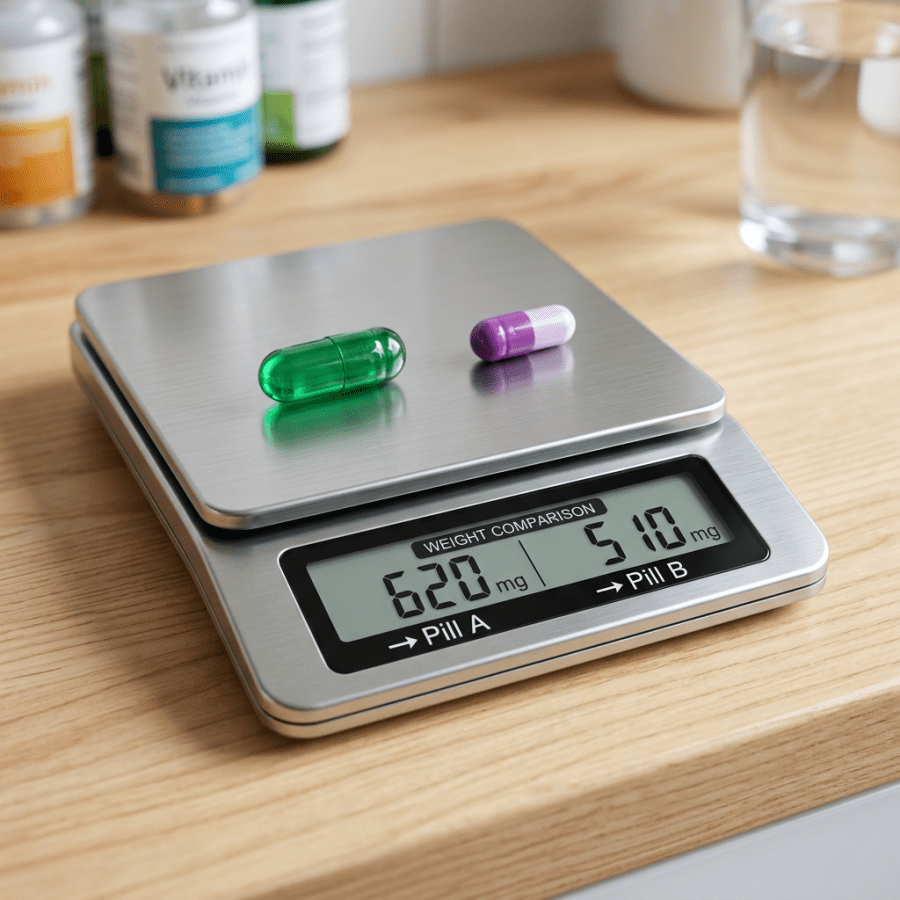
Digital scale showing weight comparison of green and purple capsules in milligrams

Foundayo vs. the Wegovy Pill: Comparing the Two New Weight Loss Pills

For years, if you asked me “is there a pill version of these weight-loss drugs?”, the honest answer was no, not really. That changed twice in the past eight months. If you haven’t been following the news closely, the options today look very different than they did just a year ago.

A quick note on names first, since patients ask me this a lot. The Lilly drug some people have heard called “Fonday-o” is actually called orforglipron. Its brand name is official now, not a guess. The FDA approved it on April 1, 2026, under the brand name Foundayo. Before that, on December 22, 2025, the FDA approved a 25 mg oral semaglutide tablet under the Wegovy name. GLP-1 medicines help control appetite and blood sugar, and this was the first pill version of one approved for long-term weight management. Both pills are real, both are approved, and both can be prescribed today.

Why the two pills work so differently in your body

Semaglutide is a peptide, which is a small chain of amino acids, the building blocks of proteins. Your stomach is very good at breaking down peptides, which is exactly why semaglutide originally had to be given as a shot instead of a pill.

Novo Nordisk’s solution was to add an ingredient called SNAC that helps the drug get absorbed before your stomach destroys it. According to a review in the medical journal Clinical Diabetes, SNAC does three things at once. It changes the local acidity around the tablet as it dissolves, it briefly protects the drug from a stomach enzyme called pepsin that would otherwise break it down, and it helps the drug pass through the stomach lining into your bloodstream. This absorption happens in the stomach itself, not the intestines, which is unusual for a pill. The drug essentially enters your body right where the tablet is sitting against your stomach wall.

That clever trick comes with a catch. You have to take oral semaglutide on an empty stomach with no more than about four ounces of plain water, and you can’t eat or drink anything else, including coffee or other medications like thyroid pills, for at least 30 minutes afterward. Taking it too close to breakfast or your other pills can reduce how much of the drug actually gets into your system. This isn’t a small detail. It can be the difference between the medicine working well and not working at all.

Orforglipron works completely differently. It’s what’s called a small molecule, meaning it’s a simple, stable chemical rather than a fragile peptide chain. It belongs to the same family of drugs as semaglutide. GLP-1 receptor agonists mimic a natural gut hormone that reduces appetite, and because orforglipron has no peptide to protect, it doesn’t need any special absorption booster and doesn’t come with a strict timing routine. Lilly describes it as the only GLP-1 weight-loss pill you can take at any time of day, with or without food or water. In real life, that means someone who works night shifts, or who already takes six other pills each morning, doesn’t need a complicated schedule to make it work.

What the study results actually show

Here’s where I want you to slow down before drawing conclusions, because it’s easy to misread these numbers.

In a 64-week study called OASIS 4, which tested the drug in 307 adults with obesity or being overweight who did not have diabetes, oral semaglutide 25 mg led to about 17% average weight loss in people who stayed on the medicine the whole time, compared with about 3% for those taking a placebo (an inactive pill used for comparison). When you count everyone in the study, including people who stopped early, the numbers were about 14% versus 2%. Seventy-six percent of people lost at least 5% of their body weight, compared with 31% on placebo.

In a separate study called ATTAIN-1, published in the New England Journal of Medicine, orforglipron was tested at three different doses (low, medium, and high) over 72 weeks. Average weight loss was 7.8%, 9.3%, and 12.4% at those doses, compared with 2.1% on placebo. At the highest dose tested in the trial, 36% of people lost 15% or more of their body weight, and 18.4% lost 20% or more, compared with 5.9% and 2.8% on placebo.

If you compare those numbers side by side, it looks like semaglutide wins, and I don’t think that comparison holds up. These are two separate studies, different patients, different lengths of time, different ways of measuring results, and nobody has run them head-to-head in the same people at the same time. What I can say confidently is that both pills produce weight loss that’s meaningful and far beyond anything we had in pill form before 2025.

One more detail worth knowing, because it can be confusing if you read news coverage of the studies. The doses of Foundayo that actually got approved are 0.8, 2.5, 5.5, 9, 14.5, and 17.2 mg, and your doctor increases your dose gradually, about every 30 days. Those numbers are different from the 6, 12, and 36 mg doses mentioned in the New England Journal of Medicine study. That’s because the trial used a different capsule formula than the one that ended up on the market. The 17.2 mg tablet you can actually get prescribed is equivalent to the 36 mg dose used in the trial. So if you notice your maximum dose sounds much smaller than what you saw in the news, that’s why.

Side effects

Both drugs work in a similar way in the body, and both come with similar side effects: nausea, vomiting, diarrhea, and constipation.

The ATTAIN-1 study reported specific numbers for orforglipron. Nausea occurred in 28.9% to 35.9% of people across the different doses, compared with 10.4% on placebo. Constipation occurred in 21.7% to 29.8%, versus 9.3% on placebo. Vomiting occurred in 13.0% to 24.0%, versus 3.5% on placebo. The number of people who stopped taking the drug because of side effects went up with higher doses, from 5.3% at the lowest dose to 10.3% at the highest, compared with 2.7% on placebo. Most side effects were mild to moderate.

Novo Nordisk reported that oral semaglutide’s side effects looked similar to what we already know from the injectable version of semaglutide, including the same warnings about pancreas inflammation, gallbladder problems, and allergic reactions. If you’ve taken injectable semaglutide before, this side effect pattern will likely feel familiar.

How I think about choosing between them

If you’re already doing well on injectable semaglutide and want to get away from needles, the oral tablet is the more natural next step. It’s the same active medicine, has a familiar side effect pattern, and carries the same approved benefit for heart health in people with existing heart disease.

If your biggest obstacle is fitting a medicine into a busy or unpredictable schedule, orforglipron tends to be more forgiving. That 30-minute waiting period for oral semaglutide sounds minor when we talk it through on a video visit, but in real life it trips people up. I’ve seen patients struggle with oral semaglutide not because it didn’t work, but because busy weekday mornings made it hard to follow the timing rules.

Cost is the third thing to consider, and it’s changing quickly. Novo Nordisk launched the 1.5 mg starting dose at $149 per month, with savings programs available. Lilly is offering self-pay pricing through its LillyDirect program, with commercially insured patients paying as little as $25 per month, and some Medicare Part D patients paying $50 starting as soon as July 1, 2026. These programs get updated often, so it’s worth checking the current terms before assuming a specific price applies to you. I haven’t run into a prior-authorization fight or a stocking problem with Foundayo yet. Most of what I prescribe goes through LillyDirect, cash pay, because it’s one of the cheaper options on the table. Patients who have insurance coverage tend to ask for injectable Wegovy or Zepbound instead.

We finally have two pill options, and each one tends to fail for a different reason, whether that’s the timing rules or something else. Figuring out which failure point matters most for your life is really the key to choosing the right one.

Scott Rennie, D.O.

Sources

FDA approves Novo Nordisk’s Wegovy pill, the first and only oral GLP-1 for weight loss in adults (PR Newswire): https://www.prnewswire.com/news-releases/fda-approves-novo-nordisks-wegovy-pill-the-first-and-only-oral-glp-1-for-weight-loss-in-adults-302648344.html
FDA Approves Oral Semaglutide as First GLP-1 Pill for Weight Loss (AJMC): https://www.ajmc.com/view/fda-approves-oral-semaglutide-as-first-glp-1-pill-for-weight-loss
Current Understanding of SNAC as an Absorption Enhancer: The Oral Semaglutide Experience (Clinical Diabetes, ADA): https://diabetesjournals.org/clinical/article/42/1/74/153538/Current-Understanding-of-Sodium-N-8-2
FDA approves Lilly’s Foundayo (orforglipron) (Eli Lilly investor release): https://investor.lilly.com/news-releases/news-release-details/fda-approves-lillys-foundayotm-orforglipron-only-glp-1-pill
FDA Approves First New Molecular Entity Under National Priority Voucher Program (FDA): https://www.fda.gov/news-events/press-announcements/fda-approves-first-new-molecular-entity-under-national-priority-voucher-program
Orforglipron, an Oral Small-Molecule GLP-1 Receptor Agonist for Obesity Treatment (New England Journal of Medicine, ATTAIN-1): https://www.nejm.org/doi/full/10.1056/NEJMoa2511774
Complete ATTAIN-1 results published in NEJM (Eli Lilly): https://lilly.gcs-web.com/news-releases/news-release-details/lillys-oral-glp-1-orforglipron-demonstrated-meaningful-weight
FOUNDAYO (orforglipron) tablets, US prescribing information (FDA): https://www.accessdata.fda.gov/drugsatfda_docs/label/2026/220934Orig1s000lbl.pdf
Approved dosing for Foundayo for weight management (Lilly Medical): https://medical.lilly.com/us/products/answers/what-is-the-approved-dosing-for-foundayo-orforglipron-for-weight-management-320858
Foundayo now available in the U.S. (Eli Lilly investor release): https://investor.lilly.com/news-releases/news-release-details/foundayotm-orforglipron-lillys-new-oral-glp-1-pill-weight-loss

Board Certified in Obesity Medicine and Family Medicine

This blog is for educational purposes only and does not constitute individual medical advice. Always consult your own physician before making changes to your health, medications, or treatment plan.

Compounded Semaglutide and Tirzepatide: What to Know Now

When patients ask me about compounded weight loss drugs like semaglutide and tirzepatide, I take a deep breath. The topic is complicated and keeps changing. I won’t just tell patients to avoid them. They’re already looking for these options, and my job is to help them navigate the risks safely.

Dr. Beverly Tchang’s “swim safely” analogy fits well. We can’t stop people from diving into the ocean of compounded products, but we can at least give them floaties: information, caution, and tools to make better decisions. (Tchang, Medscape)

Here’s how I explain it to patients and colleagues, updated with the most recent data.

Why compounded versions exist

When semaglutide and tirzepatide injections were in short supply a few years ago, patients turned to compounding pharmacies that offered custom formulations, often at a lower price. (GoodRx)

In late 2024, the FDA ended the declared shortage of tirzepatide. (Stat News) By early 2025, semaglutide (Ozempic and Wegovy) followed. Once the shortages ended, enforcement ramped up against compounded versions. (GoodRx)

Now, compounded versions are only legal in narrow circumstances, such as when a patient has a medical need that can’t be met by an approved product. (GoodRx)

In December 2024, the FDA sent warning letters to several companies selling unapproved GLP-1 drugs labeled “for research use only.” (Reuters) Some of these contained no active ingredient, incorrect salt forms, or inconsistent potency. (Verywell Health)

Key risks and what to look for

Not all compounding pharmacies operate at the same standard. A friendly local pharmacist doesn’t necessarily mean the product is safe. Dr. Tchang’s checklist gives a good framework for evaluating any compounded GLP-1 medication. A simplified version: look for a pharmacy where the medication is prescribed by a licensed provider, there are no disciplinary actions on file, the pharmacy has been in business for more than a year, only semaglutide base is used (not a salt form), and the facility is FDA-registered or FDA-inspected; it should also be able to ship sterile drugs safely to all 50 states.

If a compounding pharmacy cannot meet these criteria, that’s a red flag. Ask directly for documentation. If they can’t provide it, walk away.

Some compounders also mix in vitamins or preservatives to make their product “different” from the brand name; that may sound harmless, but combining untested additives with peptides can change how the drug behaves. (GoodRx)

A few are promoting oral or sublingual forms of semaglutide and tirzepatide. These seem attractive for patients who don’t like injections, but they haven’t been validated in clinical trials, and absorption is unpredictable. (Omada Health)

Even small changes in formulation or dosing can interrupt treatment and cause rebound weight gain or side effects.

How I approach this with patients

When a patient says, “I found a compounding pharmacy that sells it for half the price,” I acknowledge their concern. Access and cost are real issues. But I explain that the regulatory situation has changed. If an FDA-approved version is available, that’s the standard we should use first.

I encourage patients to ask the pharmacy for their certificate of analysis, sterility test results, and ingredient source; if the pharmacy hesitates or says it’s proprietary, that’s enough reason to stop.

One patient of mine was on a compounded semaglutide microdose that wasn’t commercially available, at least as she described it to me. I never could pin down what she was actually getting. The compounder wouldn’t release potency data either. We moved her to a low-dose commercial version instead. Weight loss slowed a little. Safety and consistency improved, and I knew what was in the pen.

We also reviewed manufacturer assistance programs and insurance coverage. Many patients don’t realize that drug makers often cap out-of-pocket costs for brand medications; cost confusion is one of the biggest drivers behind compounded use.

The FDA’s BeSafeRx campaign

The FDA has an ongoing public safety campaign called BeSafeRx, designed to help patients and providers verify the legitimacy of online pharmacies and compounded drug sources; it offers tools to check pharmacy licenses, identify red flags, and report suspicious products.

It’s a good resource for anyone considering buying compounded or online medications; I often share it directly with patients so they can see what trustworthy sourcing looks like.

You can find the BeSafeRx information at:

https://www.fda.gov/drugs/buying-using-medicine-safely/besaferx-your-source-online-pharmacy-information

What’s changed recently

The REDEFINE trial (NEJM, 2025) studied cagrilintide combined with semaglutide (CagriSema) and showed about 20.4 percent weight loss over 68 weeks, compared with 14.9 percent with semaglutide alone; that kind of data will shape treatment algorithms going forward. GoodRx reports that the FDA’s grace period for compounding GLP-1s has officially ended for both tirzepatide and semaglutide, though some pharmacies still market “custom” or “non-identical” formulations, and regulators are watching closely.

Approach this without judgment if you’re a clinician. Patients are trying to find affordable solutions. And they often trust what they see on social media more than official channels; we can help most by staying informed, asking questions, and documenting carefully. Patients should be cautious for a different reason. Ask your provider to review any compounded medication before you use it, make sure your pharmacy meets every item on that checklist, and use resources like the FDA’s BeSafeRx to verify safety.

Knowledge and transparency remain the best safeguards.

Scott Rennie, D.O.

Board Certified in Obesity Medicine and Family Medicine

This blog is for educational purposes only and does not constitute individual medical advice. Always consult your own physician before making changes to your health, medications, or treatment plan.

Why Weight Loss Plateaus Happen and How to Break One

Most people losing weight eventually hit a plateau. The number on the scale stops moving, sometimes for weeks, and it can feel like something has gone wrong. Nothing has. Plateaus happen because of biology: at a lower body weight the body burns fewer calories than it used to, and hormones like leptin shift in ways that increase hunger, slow resting metabolism, and make the next five pounds harder to lose than the first fifty.

Handling a plateau matters more than trying to prevent one. In my practice, we look at the medication plan, nutrition, and activity together. Sometimes the answer is moving to a higher dose of semaglutide (Wegovy) or tirzepatide (Zepbound), switching between the two, or starting orforglipron (Foundayo) if a patient hasn’t tried it yet. In my experience two patterns show up most. An early one within the first month, when patients think the medication has stopped working but it’s actually just been started low to help the body adjust rather than to drive weight loss yet. And a later one once someone’s at the highest dose they can tolerate, when exercise drops off and food choices drift back to where they started. Other times the prescription isn’t the issue at all. Small changes in nutrition, like adding more protein, cutting liquid calories, or tightening portions, can make the difference.

Physical activity plays a role too. The National Weight Control Registry has shown that people who keep weight off long term usually exercise about an hour a day. That doesn’t mean a treadmill. Brisk walking, biking, swimming, anything that raises the heart rate consistently, counts, and strength training helps by preserving lean muscle and keeping metabolism steady.

Daily habits matter. People who maintain weight loss tend to eat breakfast every day and weigh themselves regularly. They also tend to watch less television, generally under ten hours a week. None of this is a rigid rulebook. It’s structure, and structure makes it harder to drift back into old patterns.

If you hit a plateau, don’t get discouraged. Treat it as a signal to check in and adjust, not to quit. My first move is usually education, making sure the patient understands what the medication is actually doing and why the scale has stalled. If food noise is still loud after that conversation, I’ll increase the dose or add another medication, but not before we’ve gone back through lifestyle and food choices together. Whatever the starting point, there are proven strategies to get moving again.

Reference: National Weight Control Registry. www.nwcr.ws

Scott Rennie, D.O.

Board Certified in Obesity Medicine and Family Medicine

This blog is for educational purposes only and does not constitute individual medical advice. Always consult your own physician before making changes to your health, medications, or treatment plan.

Binge Eating Disorder Signs and Treatment in Adults and Kids

Binge Eating Disorder, or BED, is one of the eating disorders I screen for most often in practice. Clinicians define it as repeated episodes of eating a large amount of food in a short period of time while feeling a loss of control during the episode. BED involves episodes that feel compulsive: the person cannot stop eating even when full or uncomfortable. This goes well beyond a second helping at dinner or an indulgent dessert.

The diagnostic criteria for BED require both that large amounts of food are consumed in a discrete time frame and that there is a sense of loss of control while eating. The episodes are also linked to behaviors such as eating more rapidly than normal, eating until uncomfortably full, eating when not hungry, eating alone because of embarrassment, and feeling disgusted or guilty afterward. At least three of those behaviors must be present. The episodes need to occur at least once a week for three months, cause distress, and they are not followed by purging behaviors like in bulimia.

Here’s a hypothetical that illustrates the pattern: someone sits down in the evening and works through an entire pizza and a half-gallon of ice cream in under two hours, not from hunger but because they can’t stop. They feel physically ill afterward. Ashamed, too. The cycle repeats weekly or more often. I’ve seen a real version of this on video visits. One of my patients was managing things with intermittent fasting, and it worked in the sense that the scale moved, but every time the eating window opened back up, they took in way more calories than they needed. The fast itself was setting up the binge.

Children complicate this picture. For kids under 12, researchers have proposed a related diagnosis called Loss of Control Eating Disorder, or LOC-ED (Tanofsky-Kraff et al., 2008). The issue is that children may not consume amounts of food that adults would consider objectively large, but they still experience the same loss of control. In this group, the definition focuses on the subjective sense of being unable to stop eating. The proposed criteria mirror those of BED but apply specifically to children younger than 12. The episodes still need to happen at least once a week for three months and cause distress.

Picture a hypothetical case in pediatrics: a 10-year-old who sneaks into the kitchen at night, eats snack foods quickly, and can’t stop once started. The amount might look modest by adult standards. For a child, it’s significant. What matters is the loss of control, not the portion size. Wrappers hidden in the trash. A refusal to eat breakfast the next morning. Those are often the only clues a parent gets.

Treatment is available for both BED and LOC-ED. For adults with BED, the most evidence supports cognitive behavioral therapy, which helps patients identify triggers, restructure eating patterns, and address guilt and shame. Interpersonal therapy has also been shown to help, especially when social stress is a driver. Some patients benefit from medications. SSRIs have modest benefit for binge frequency, and lisdexamfetamine is the only medication currently approved by the FDA for BED in adults. Nutritional counseling and structured meal planning are usually part of the approach.

I should be direct about where I actually fit into this picture. I don’t manage BED treatment myself. Real treatment leans heavily on behavioral health, and in my current telemedicine positions I don’t have the coordination with a therapist or eating-disorder specialist that this really requires. What I do is screen for it on video visits: ask the direct questions, name what I’m seeing, and refer out from there.

For children with LOC-ED, treatment recommendations are less formalized since the diagnosis itself is still considered research-based. The focus is often on family-based behavioral therapy, involving parents in setting up structured eating schedules and reducing situations where loss of control is most likely to occur. Addressing mood or anxiety symptoms is important, since these are often linked to eating episodes. Nutrition support is also key, both for the child and for parents trying to guide food choices. Medications are not first-line in children.

Recognizing BED or LOC-ED is important because both conditions are linked to higher rates of obesity, depression, and medical complications if untreated. Many people don’t come forward because of shame or because they don’t realize their pattern is a diagnosable disorder. Asking direct questions about eating behaviors, especially around loss of control, can uncover these conditions and open the door to treatment.

If this description fits you or someone you know, talk with a healthcare provider. Early recognition, especially in children, can change the trajectory and reduce the risk of chronic problems.

Scott Rennie, D.O.
Board Certified in Obesity Medicine and Family Medicine

This blog is for educational purposes only and does not constitute individual medical advice. Always consult your own physician before making changes to your health, medications, or treatment plan.

References:

Allison KC, Tarves EP. Treatment of night eating syndrome. Psychiatr Clin North Am. 2011;34(4):785-796. doi:10.1016/j.psc.2011.08.002

McCuen-Wurst C, Ruggieri M, Allison KC. Disordered eating and obesity: associations between binge-eating disorder, night-eating syndrome, and weight-related comorbidities. Ann N Y Acad Sci. 2018 Jan;1411(1):96-105. doi: 10.1111/nyas.13467. PMID: 29044551; PMCID: PMC5788730

Tanofsky-Kraff M, Marcus MD, Yanovski SZ, Yanovski JA. Loss of control eating disorder in children age 12 years and younger: proposed research criteria. Eat Behav. 2008;9(3):360-365. doi:10.1016/j.eatbeh.2008.03.001

Why Do I Eat at Night? Night Eating Syndrome Explained

Night Eating Syndrome (NES) is one of those conditions that many patients, and even some clinicians, overlook. NES is a recognizable eating disorder where the timing of food intake shifts into the evening and nighttime hours, distinct from occasional snacking after dinner. Patients often feel embarrassed and dismiss it as a bad habit. It has real consequences for weight, sleep, and overall health.

The diagnosis of NES is based on established criteria. To meet the definition, at least 25 percent of daily food intake occurs after the evening meal or there are at least two episodes of nocturnal eating per week. These episodes are not explained by social or cultural norms. People with NES are aware of what they are eating at night, unlike sleep-related eating disorders where the behavior may happen without recall. The condition also needs to cause significant distress or impairment in functioning (Allison & Tarves, 2011).

In practice, this can look two different ways. Some patients skip breakfast, eat a small lunch, and end up consuming half their calories after dinner. Others wake almost every night around 1 or 2 a.m., head to the kitchen, and eat before they can fall back asleep. Over time, the pattern disrupts sleep and drives weight gain.

NES also overlaps with mood and sleep disorders. Patients often report insomnia, depression, or evening stress. Eating becomes a way to cope with anxiety or to induce sleep. That’s why treatment has to be more than calorie restriction. Cognitive behavioral therapy focused on both eating and sleep habits has shown promise, and selective serotonin reuptake inhibitors (SSRIs) have been helpful in some patients (Allison & Tarves, 2011). I prefer CBT-I, but in practice medications often end up being what gets prescribed. I don’t treat night eating syndrome myself. I screen for it before prescribing weight loss medications, then refer out.

The tie between NES and obesity is important. McCuen-Wurst and colleagues (2018) have shown that NES is associated with higher rates of metabolic problems such as type 2 diabetes and hypertension. Timing matters. Eating late into the night throws off circadian rhythms and glucose metabolism, so the impact is greater than just extra calories.

On a video visit, NES surfaces only if you ask about it directly. Within the past six months, one patient told me, “I can’t sleep unless I eat something at midnight.” That single line was the diagnosis: Night Eating Syndrome. We had her follow up with behavioral health.

Treatment is best when it’s individualized. Weight loss alone won’t fix NES if the underlying behaviors and triggers aren’t addressed. Collaboration between primary care, psychiatry, nutrition, and sleep medicine can make a real difference. For colleagues, the key is asking when patients eat as closely as how much. For patients, understanding that this is a recognized condition with treatment options can take away some of the shame and open the door to better care.

Scott Rennie, D.O.
Board Certified in Obesity Medicine and Family Medicine

This blog is for educational purposes only and does not constitute individual medical advice. Always consult your own physician before making changes to your health, medications, or treatment plan.

References:

Allison KC, Tarves EP. Treatment of night eating syndrome. Psychiatr Clin North Am. 2011;34(4):785-796. doi:10.1016/j.psc.2011.08.002

McCuen-Wurst C, Ruggieri M, Allison KC. Disordered eating and obesity: associations between binge-eating disorder, night-eating syndrome, and weight-related comorbidities. Ann N Y Acad Sci. 2018 Jan;1411(1):96-105. doi: 10.1111/nyas.13467. Epub 2017 Oct 16. PMID: 29044551; PMCID: PMC5788730

Wegovy and Zepbound Cash Pay Prices Without Insurance

Patients and colleagues ask me often about the cost of GLP-1 medications when insurance does not cover them. Wegovy and Zepbound are both FDA approved for weight management. Many patients run into the same barrier: their insurance plan excludes the drug entirely. In those cases, people end up paying cash, and the list price can be thousands of dollars a month.

Novo Nordisk now offers a cash pay path that changes the math for some patients. Through NovoCare Pharmacy, every Wegovy dose strength drops to 499 dollars for a 28 day supply, shipped directly to the patient’s home. This applies only when a patient’s insurance won’t cover Wegovy at all; if a commercial plan does cover it, a separate savings offer can drop the copay as low as 0 to 25 dollars, but the 499 dollar flat price is reserved for patients paying entirely out of pocket. Medicare and Medicaid patients don’t qualify. Sources: Novo Nordisk press release, August 5, 2025 (prnewswire.com), and the NovoCare savings program website (novocare.com).

I had a patient not long ago who had already tried to fill Wegovy at a local pharmacy. The pharmacist told her the cash price was over 1,300 dollars. She could not afford that. Under this new program, she can request her prescription be sent to NovoCare Pharmacy and receive the medication for 499 dollars a month instead. Still expensive. For some patients it is the only feasible way to continue therapy when insurance refuses to cover it.

Eli Lilly runs a comparable program for Zepbound. Both LillyDirect and NovoCare are really good in my experience. The paperwork is less than most insurance companies require, and both platforms are quick to get medications out to patients. I like them equally and don’t have a preference. Self pay patients can get Zepbound for 500 dollars a month, a 28 day supply, dispensed through a mail order pharmacy under LillyDirect, Lilly’s patient access platform, and shipped to the patient. The same coverage rule applies: this is for patients whose insurance doesn’t cover the drug, and Medicare, Medicaid, and other government insurance don’t qualify. Source: LillyDirect program site and Eli Lilly press announcement, August 2025.

These programs are designed for a narrow group: patients with no coverage at all, facing list prices that are otherwise out of reach.

If you are a patient considering these programs, the next step is to talk with your prescribing clinician. Prescriptions have to be routed to the designated mail order pharmacies to qualify for the flat cash price. Taking the prescription to a local retail pharmacy and expecting the same deal won’t work.

As a physician, I see how frustrating the access issue has become. Some patients with coverage pay very little. Others pay nothing. Then the next patient on my schedule that same day has no coverage at all and faces a price higher than their mortgage. These new programs don’t solve every problem. For patients paying entirely out of pocket, they make a real difference. Whether 499 or 500 dollars a month is enough is a fair question. It beats a price higher than a mortgage payment, and for now, that’s the trade on the table.

Sources: Novo Nordisk press release August 5, 2025, NovoCare savings program (novocare.com), Eli Lilly press materials August 2025, LillyDirect (lillydirect.com).

Scott Rennie, D.O.
Board Certified in Obesity Medicine and Family Medicine

This blog is for educational purposes only and does not constitute individual medical advice. Always consult your own physician before making changes to your health, medications, or treatment plan.

What Is an Obesity Medicine Board Certified Doctor?

More family physicians, myself included, are choosing to become certified through the American Board of Obesity Medicine. The credential looks small on paper. What sits behind it is a real change in how we handle obesity and the conditions that travel with it.

ABOM certification is open to physicians who can show advanced knowledge in preventing, evaluating, and treating obesity. There are two routes. One is 60 hours of continuing medical education credits in obesity-related topics, half of which must specifically address obesity treatment. The other is an accredited obesity medicine fellowship. Either way, candidates then sit for a 4-hour exam covering the physiology and pathophysiology of obesity, nutrition and behavioral treatment, medications, surgery, and bias in care.

Why go through all that? We are the ones patients come to first. About 40% of U.S. adults have obesity, and it is tied to diabetes, heart disease, infertility, arthritis, and worse outcomes with infections. Yet most of us had very little structured training on obesity in medical school or residency. I certainly didn’t. ABOM fills that gap with something more useful than repeating “eat less, move more.”

Patients are also asking harder questions than they used to. GLP-1 medications like semaglutide and tirzepatide changed the conversation. People have worked out that weight regulation is physiology, not character. They want to know whether medication makes sense for them, what the risks are, and what else they should be doing. Certification puts you in a better position to answer that honestly and to build a plan that lasts longer than a few months.

For me, the certification built confidence. I know how to adjust anti-obesity medications, screen for related conditions like PCOS or fatty liver, and talk about weight without stigma. Patients notice. They feel taken seriously when obesity gets treated as the chronic medical condition it is.

One case stays with me. A patient in her fifties came to me with obesity and prediabetes, worn down after years of failed diets. Using what I’d learned, I recognized she was a candidate for pharmacotherapy. We started semaglutide, and we built a plan around meal structure, activity, and sleep. Within months her A1c had come back into the normal range and her energy had returned.

Colleagues are seeing benefits too. A physician I know in rural Missouri became ABOM-certified and quickly became a regional referral point. Practices in nearby towns began sending her patients rather than having them drive hours to an urban obesity clinic. In an underserved area, that is the difference between getting treated and not.

For doctors considering it, the field is growing quickly. More than 11,500 physicians in the United States and Canada now hold the certification, up from roughly 9,800 a year earlier. Insurers are beginning to recognize obesity medicine, which means more treatments get covered when a certified physician is guiding them. You also end up connected to a national group of people working on one of the largest drivers of chronic disease we have.

So the certification is a line on a CV. It is also the reason I practice differently than I did before I sat the exam, and that is the part that reaches patients.

Scott Rennie, D.O.

Sources:

American Board of Obesity Medicine: https://www.abom.org

Johnson-Rabbett B, et al. An Update on the American Board of Obesity Medicine (ABOM): 2017-2024. Obesity. 2025. doi:10.1002/oby.70013

CDC/NCHS. Obesity and Severe Obesity Prevalence in Adults: United States, August 2021-August 2023. NCHS Data Brief No. 508: https://www.cdc.gov/nchs/products/databriefs/db508.htm

Flegal KM, Kruszon-Moran D, Carroll MD, Fryar CD, Ogden CL. Trends in Obesity Among Adults in the United States, 2005 to 2014. JAMA. 2016;315(21):2284-2291.

Board Certified in Obesity Medicine and Family Medicine

This blog is for educational purposes only and does not constitute individual medical advice. Always consult your own physician before making changes to your health, medications, or treatment plan.