
Why Do I Eat at Night? Night Eating Syndrome Explained

Night Eating Syndrome (NES) is one of those conditions that many patients, and even some clinicians, overlook. NES is a recognizable eating disorder where the timing of food intake shifts into the evening and nighttime hours, distinct from occasional snacking after dinner. Patients often feel embarrassed and dismiss it as a bad habit. It has real consequences for weight, sleep, and overall health.

The diagnosis of NES is based on established criteria. To meet the definition, at least 25 percent of daily food intake occurs after the evening meal or there are at least two episodes of nocturnal eating per week. These episodes are not explained by social or cultural norms. People with NES are aware of what they are eating at night, unlike sleep-related eating disorders where the behavior may happen without recall. The condition also needs to cause significant distress or impairment in functioning (Allison & Tarves, 2011).

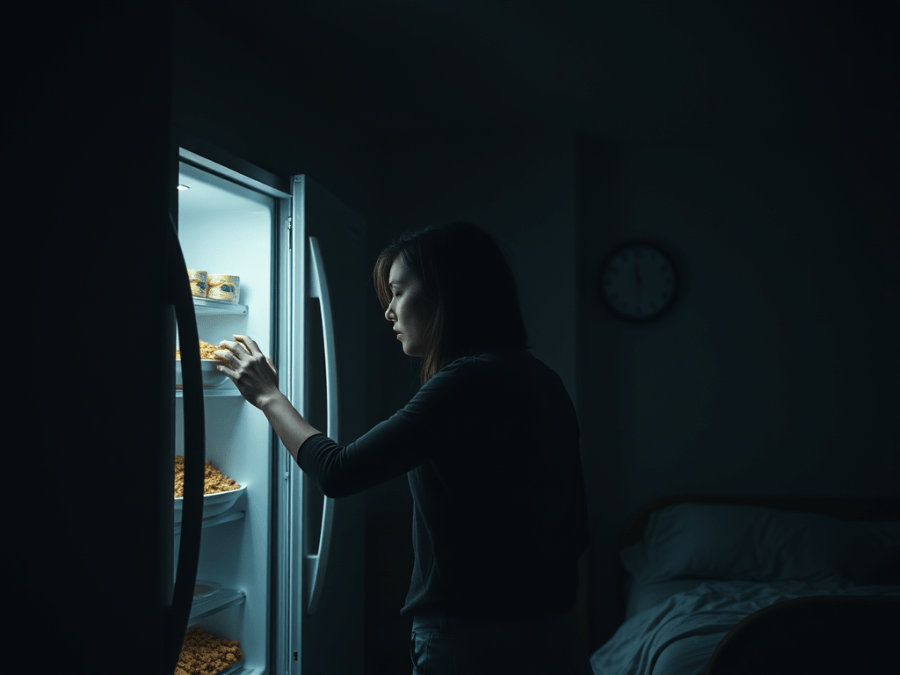
In practice, this can look two different ways. Some patients skip breakfast, eat a small lunch, and end up consuming half their calories after dinner. Others wake almost every night around 1 or 2 a.m., head to the kitchen, and eat before they can fall back asleep. Over time, the pattern disrupts sleep and drives weight gain.

NES also overlaps with mood and sleep disorders. Patients often report insomnia, depression, or evening stress. Eating becomes a way to cope with anxiety or to induce sleep. That’s why treatment has to be more than calorie restriction. Cognitive behavioral therapy focused on both eating and sleep habits has shown promise, and selective serotonin reuptake inhibitors (SSRIs) have been helpful in some patients (Allison & Tarves, 2011). I prefer CBT-I, but in practice medications often end up being what gets prescribed. I don’t treat night eating syndrome myself. I screen for it before prescribing weight loss medications, then refer out.

The tie between NES and obesity is important. McCuen-Wurst and colleagues (2018) have shown that NES is associated with higher rates of metabolic problems such as type 2 diabetes and hypertension. Timing matters. Eating late into the night throws off circadian rhythms and glucose metabolism, so the impact is greater than just extra calories.

On a video visit, NES surfaces only if you ask about it directly. Within the past six months, one patient told me, “I can’t sleep unless I eat something at midnight.” That single line was the diagnosis: Night Eating Syndrome. We had her follow up with behavioral health.

Treatment is best when it’s individualized. Weight loss alone won’t fix NES if the underlying behaviors and triggers aren’t addressed. Collaboration between primary care, psychiatry, nutrition, and sleep medicine can make a real difference. For colleagues, the key is asking when patients eat as closely as how much. For patients, understanding that this is a recognized condition with treatment options can take away some of the shame and open the door to better care.

Scott Rennie, D.O.
Board Certified in Obesity Medicine and Family Medicine

This blog is for educational purposes only and does not constitute individual medical advice. Always consult your own physician before making changes to your health, medications, or treatment plan.

References:

Allison KC, Tarves EP. Treatment of night eating syndrome. Psychiatr Clin North Am. 2011;34(4):785-796. doi:10.1016/j.psc.2011.08.002

McCuen-Wurst C, Ruggieri M, Allison KC. Disordered eating and obesity: associations between binge-eating disorder, night-eating syndrome, and weight-related comorbidities. Ann N Y Acad Sci. 2018 Jan;1411(1):96-105. doi: 10.1111/nyas.13467. Epub 2017 Oct 16. PMID: 29044551; PMCID: PMC5788730
How to Sleep Better: Practical Steps for Patients

Sleep gets a fraction of the attention we give diet and exercise, and it should not. Research from Dr. Ari Shechter at Columbia University has shown that poor sleep feeds obesity, diabetes, hypertension, and heart disease. It costs people their daily functioning, and underneath that it is quietly setting long-term disease risk. It is not a secondary problem.

When I ask patients about sleep, I keep it practical. When did this start, and is it new or has it always been like this? What is the bedroom like, too warm or too bright or too loud? Do they snore, gasp, or stop breathing, which points toward apnea? Any crawling or tingling in the legs, which points toward restless legs? I ask about weekdays versus weekends, because an irregular schedule can look exactly like insomnia. And I ask about caffeine, alcohol, nicotine, and medications, which patients rarely volunteer.

Formal tools give the conversation structure. The Epworth Sleepiness Scale is quick for daytime sleepiness. The Pittsburgh Sleep Quality Index is broader. STOP-Bang and the Berlin questionnaire flag possible apnea. The Insomnia Severity Index tracks both severity and how much it is costing someone functionally.

For objective data, in-lab polysomnography remains the standard for apnea, limb movement disorders, narcolepsy, and REM sleep behavior disorder. Wrist actigraphy at home gives a more practical picture of sleep and wake patterns over time, which is often what I actually need.

Adults should target 7 to 9 hours, and children and teenagers need more. Hours alone do not settle it. Timing, efficiency, and how someone feels the next day all matter. Patients tell me constantly that they are in bed for eight hours and wake up unrested. That is the point where efficiency and awakenings become the more useful thing to look at.

The consequences of chronic short sleep are well documented. It shifts ghrelin and leptin in the direction of more hunger and weight gain (Spiegel et al., 2004). It degrades glucose control and raises diabetes risk (Tasali et al., 2022). Hypertension, coronary disease, and stroke all track with insufficient sleep, and long-standing sleep problems are associated with cognitive decline and dementia risk (Vorster et al., 2024).

Causes are usually layered. Behavior contributes: irregular schedules, screens late, heavy meals and alcohol close to bed. So do physiologic and psychological factors: apnea, restless legs, anxiety, chronic pain.

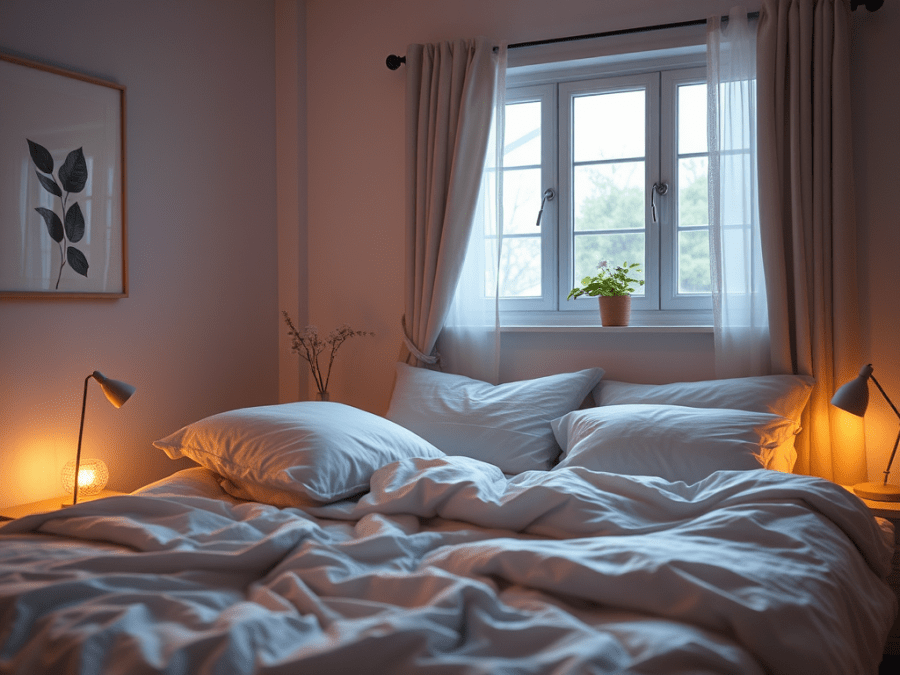
Practical work starts with sleep hygiene. A consistent schedule resets circadian rhythm. Bedrooms should be cool, dark, and quiet. Bright light late interferes with sleep onset. Evening caffeine and alcohol come down. A wind-down routine, reading or stretching or a warm shower, makes the transition easier.

Daytime habits matter more than patients expect. Morning light anchors circadian rhythm. Even ten minutes of aerobic activity improves sleep depth. And for anyone waking in the night, what they do next shapes the rest of it: awake more than twenty minutes, get up and do something quiet in dim light rather than lie there getting frustrated.

The behavioral approach I use most is stimulus control. The principle is simple, which is rebuilding the association between the bed and sleep. Go to bed only when sleepy. Use the bed for sleep. Leave it if sleep is not coming. I have watched patients with years of insomnia retrain themselves this way. One had been scrolling his phone in bed for hours every night; once he started leaving the room when sleep would not come and only returning when he felt drowsy, his sleep onset shortened within a few weeks and the nightly frustration went with it.

Sleep is a medical necessity, and it belongs in routine care alongside everything else we screen for. Taking it seriously improves rest, and it also improves cardiometabolic health, mental health, and how people feel about their days.

Scott Rennie, D.O.

References

Shechter A. Improving Sleep in Your Patients. Columbia Cornell Obesity Medicine Course, 2024.

Spiegel K et al. Ann Intern Med. 2004.

Tasali E et al. JAMA Intern Med. 2022.

Markwald RR et al. PNAS. 2013.

Vorster A et al. Clin Transl Neurosci. 2024.

Board Certified in Obesity Medicine and Family Medicine

This blog is for educational purposes only and does not constitute individual medical advice. Always consult your own physician before making changes to your health, medications, or treatment plan.