Patients ask me some version of this constantly: “Why can’t I just eat less and lose the weight?” On the surface it sounds like a fair question. Obesity is a chronic disease with a great deal of biology behind it, and the brain sits at the center of that biology. Treatment that ignores this tends to fail, and the patient usually gets blamed for the failure.
Research from Dr. Sabrina Diano at Columbia University lays out how the brain regulates weight and why it matters clinically.
The central nervous system runs energy balance through two systems. The hypothalamus handles hunger and fullness, the homeostatic side. The hedonic pathway, running on dopamine, responds to reward. That second system is why cravings and emotional eating feel as forceful as they do (Lenoir et al., 2007; Samaha et al., 2020).
Within the hypothalamus, the arcuate nucleus holds two opposing groups of neurons. NPY/AgRP neurons drive eating when energy runs low. POMC/α-MSH neurons suppress appetite when energy is adequate. Both communicate with the PVN, VMH, and LH, and the result is a negotiated balance between intake and expenditure (Diano, 2024; Gropp et al., 2005).
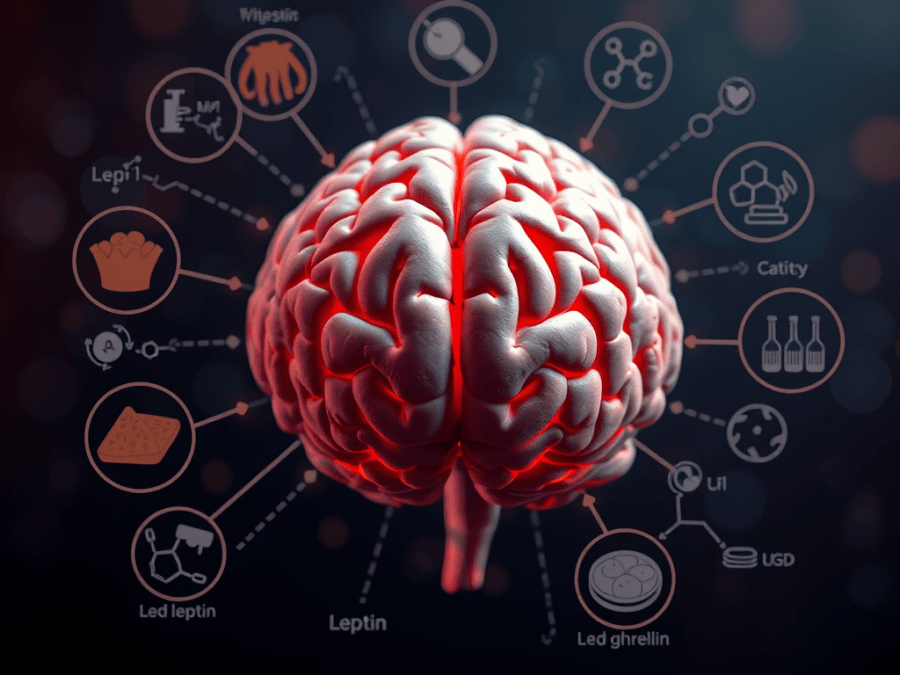
The body feeds signals into that system constantly. Fat tissue releases leptin, which should reduce appetite, except that many patients with obesity develop leptin resistance and the signal lands blunted (Zhang et al., 1994). Adiponectin helps regulate insulin and fat metabolism, and levels fall in obesity (Mahmoud, 2022). After meals, insulin, GLP-1, PYY, and amylin generate satiety. Ghrelin, made in the stomach, climbs before meals and drives hunger. In Prader-Willi syndrome it runs abnormally high (Drucker & Holst, 2023).
Diet interferes with the signaling directly. High-fat, high-sugar foods provoke inflammation in the hypothalamus that disrupts how these neurons talk to each other, through oxidative stress and breakdown of melanocortin pathways (Kim et al., 2019; Diano, 2023). Obesity also generates low-grade inflammation throughout the body, visceral fat especially, which worsens insulin resistance (Mukherjee et al., 2023).
Genetics complicates it further. A few single-gene mutations cause obesity outright, but most cases involve many genes each nudging risk slightly. Epigenetics matters too: maternal obesity during pregnancy can alter gene expression in the child and raise their risk decades later (Farooqi et al., 2003; Mahmoud, 2022; Catalano & Shankar, 2017).
The gut microbiome is another piece, with lower microbial diversity and more gut inflammation both tracking with obesity (Vezza et al., 2020). Environmental chemicals including BPA and phthalates can disrupt hormone signaling and tilt the body toward storing fat (Heindel et al., 2015).
All of this explains the part patients find most demoralizing, which is why weight loss is so hard to hold onto. The body defends a set point. Weight comes down, metabolism slows, hunger hormones rise, and regain becomes the likely outcome (Diano, 2024).
Consider what that looks like in practice. Someone loses 20 pounds through real effort, and then finds themselves hungrier than they have ever been while burning fewer calories at rest. Nothing about their discipline changed. Their body is defending the weight it had before.
Recognizing obesity as a biologically regulated condition changes the approach. Treatment has to work on several fronts at once: nutrition, behavioral strategy, medication, and sometimes surgery. GLP-1 receptor agonists like liraglutide and semaglutide, and dual agonists like tirzepatide, act on these pathways directly, which is a large part of why they work as well as they do.
Obesity is physiology, environment, and genetics interacting. Personal choice is in there somewhere, well downstream of the rest. Understanding that gives us better tools and considerably more patience.
References
Diano, S. Physiology and Pathophysiology of Obesity, Columbia University, 2024.
Zhang Y, et al. Nature, 1994;372(6505):425-32.
Gropp E, et al. Nature Neuroscience, 2005;8(10):1289-91.
Farooqi IS, et al. NEJM, 2003;349(6):570-8.
Drucker DJ, Holst JJ. Diabetologia, 2023;66(4):651-64.
Kim DW, et al. Cell Metabolism, 2019;30(1):110-122.
Mukherjee R, et al. Front Endocrinol, 2023;14:1154067.
Heindel JJ, et al. Nat Rev Endocrinol, 2015;11(11):653-61.
Mahmoud AM. Int J Mol Sci, 2022;23(3):1225.
Catalano PM, Shankar K. BMJ, 2017;356:j1.
Vezza T, et al. Antioxidants, 2020;9(7):578.
Lenoir M, et al. PLoS One, 2007;2(8):e698.
Samaha AN, et al. Neurosci Biobehav Rev, 2020;113:198-213.
Board Certified in Obesity Medicine and Family Medicine
This blog is for educational purposes only and does not constitute individual medical advice. Always consult your own physician before making changes to your health, medications, or treatment plan.
 Doctor Rennie's Blog