
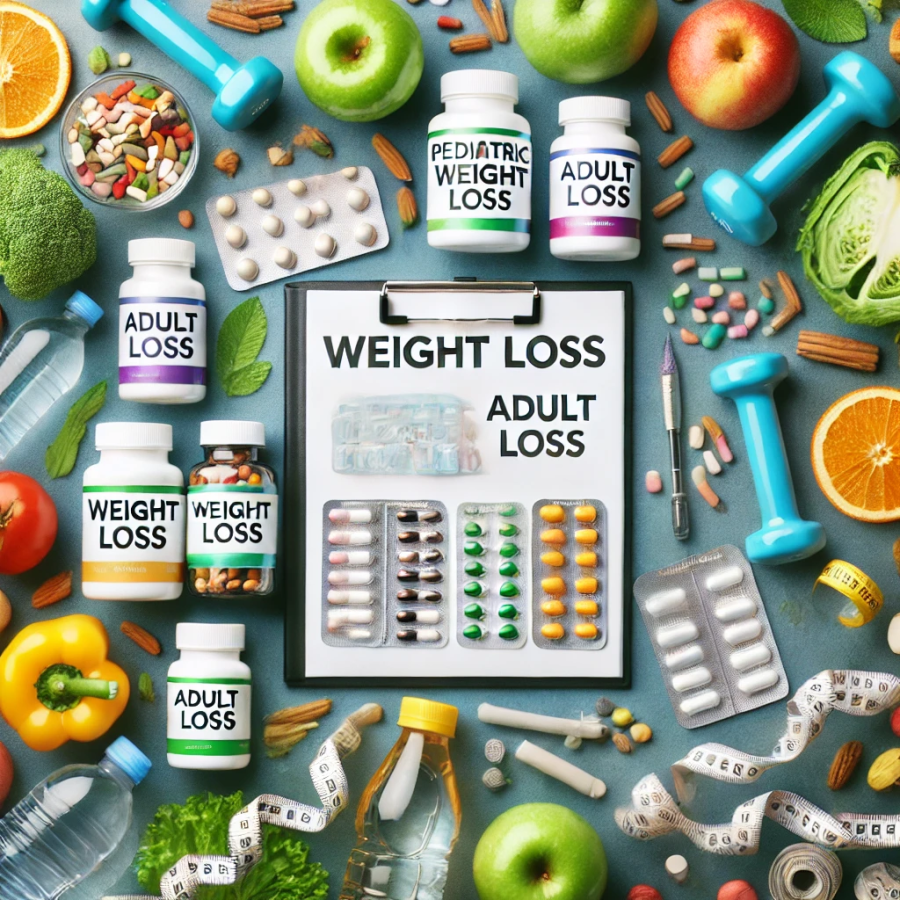
Weight Loss Medications for Kids and Adults Explained

As a physician, I know that treating obesity can be tough. Many families put in real effort with diet and exercise and still don’t see enough progress. When that happens, medication becomes worth discussing. Not for everyone. For the right patient, though, it can make a real difference.

Every price below reflects March 2025, when this was first written, and drug pricing in this class moves constantly, list price, cash price, and whatever a given insurer decides to cover can all diverge sharply, so treat every figure below as a historical marker rather than a current quote.

For children ages 12 and older, there are a few choices. Orlistat, brand name Xenical, blocks fat absorption in the gut. Because it stays in the digestive tract, it doesn’t touch appetite or the brain. The catch is side effects. Eat too much fat on this drug and a kid can get oily stools, gas, frequent bowel movements. A low-fat diet helps. It can still be uncomfortable. The price ran about $50 to $200 a month. The FDA cleared it for ages 12 and up.

Liraglutide, brand name Saxenda, is another option. It mimics a gut hormone called GLP-1, helping with appetite control and slowing stomach emptying. It’s effective, and it also helps blood sugar control, which matters if a patient has insulin resistance. But it requires daily injections, and nausea is common. Vomiting and diarrhea can happen too. Monthly cost usually fell between $1,200 and $1,500 a month. The FDA approved it for kids starting at age 12.

Phentermine combined with topiramate, sold as Qsymia, is approved for adolescents 12 and up who meet obesity criteria. Phentermine reduces appetite. Topiramate curbs cravings. Together they can produce substantial weight loss, especially in patients who struggle with binge eating. Side effects include dry mouth, dizziness, insomnia, and mood changes, and blood pressure and heart rate need regular checks. Cost averaged $200 to $300 a month.

Semaglutide, brand name Wegovy, is another GLP-1 receptor agonist, injected once weekly instead of daily. Clinical studies show it produces impressive weight loss. Side effects mirror other GLP-1 drugs: nausea, vomiting, diarrhea, abdominal pain, constipation. Out-of-pocket cost usually ran $1,300 to $1,600 a month. The FDA approved it for adolescents age 12 and up.

Setmelanotide, or Imcivree, is different from everything above. It targets rare genetic conditions that cause obesity, POMC, PCSK1, or LEPR deficiencies, by restoring hormonal signals that regulate hunger. It’s not meant for most patients, only those with a specific genetic diagnosis. For those who qualify, it can work well. The price tag was steep, though: about $16,000 a month.

For adults, the options broaden, and the prices below are again what things cost in March 2025, not today. Phentermine has been used for decades. It works on the central nervous system to suppress appetite, usually prescribed short-term and paired with diet and exercise. It can be effective, but it may cause insomnia, dry mouth, and a faster heart rate, and it isn’t safe for people with heart disease. The cost was low, around $30 to $60 a month.

Bupropion combined with naltrexone, sold as Contrave, takes a different approach. Bupropion affects brain chemistry to help with appetite and mood. Naltrexone reduces cravings. Some patients feel more energetic on it. Side effects can include nausea, dizziness, and insomnia. Mood changes are possible, so follow-up matters. Cost averaged $200 to $300 a month.

Tirzepatide, marketed as Mounjaro, is one of the newest medications. It activates both GLP-1 and GIP receptors, improving satiety and insulin sensitivity. Given as a weekly injection, it has shown striking results for weight loss. Nausea and diarrhea are the most common side effects, as with other drugs in this class. Costs ran high, around $1,000 to $1,500 a month. At publication it was FDA-approved for type 2 diabetes, not obesity, though already used off-label for weight loss.

A few points cut across all of these. Insurance coverage is unpredictable: some insurers won’t cover these drugs at all, others demand proof that lifestyle efforts were tried first. Close monitoring is essential, because side effects vary. None of these drugs replace healthy habits. They work best stacked on top of diet, activity, and behavior change.

For patients and families, the choices can feel like a lot. Knowing what’s actually available, and what each option costs and asks of you, helps match the right treatment to the right person.

Scott Rennie, D.O.

Sources:

Board Certified in Obesity Medicine and Family Medicine

This blog is for educational purposes only and does not constitute individual medical advice. Always consult your own physician before making changes to your health, medications, or treatment plan.

Intensive Lifestyle Programs for Weight Loss: How They Work

Managing obesity well takes more than one strategy. It usually means combining lifestyle changes, medication, and sometimes surgery. Among these, high intensity lifestyle treatment, or HILT, stands out. It’s evidence-based, and it works in both primary care and specialty settings.

At its core, HILT teaches patients the skills that make change last: self-monitoring, goal setting, problem solving, stimulus control. When someone learns to track what they eat, spot the triggers, and reframe the thoughts that used to derail them, the long-term outcomes improve.

Take self-monitoring as an example. A patient who writes down everything they eat, or uses an app that syncs with a fitness tracker, notices patterns fast. Eating more late at night. Eating more on stressful workdays. That kind of awareness is what makes change possible, whether someone prefers a paper journal or a smart scale synced to a phone.

Stimulus control is another powerful tool. I’ve seen families make simple adjustments like moving fruit to the front of the fridge or putting candy in a cupboard out of sight. Small changes. They reduce temptation more than people expect, and patients often notice they snack less without trying particularly hard.

Energy density comes up often in these conversations. People tend to eat a fairly consistent weight of food each day, so choosing foods with fewer calories per gram helps them feel full without overeating. A bowl of vegetable soup fills the stomach more than the same weight of fried food does. Water-rich foods and fiber shift that balance further. Patients often say they’re surprised at how satisfied they feel after increasing lean proteins and high fiber foods.

Positive reinforcement matters too. Talk about pounds lost alone and patients feel defeated fast. Recognize the behavior instead, cooking at home, walking after dinner, and motivation holds up better.

Visit frequency turns out to be critical. The evidence shows that intensity of support tracks directly with outcomes, and the sweet spot seems to sit somewhere between 14 and 26 visits in the first year, weekly at the start, tapering to every two weeks as a patient stabilizes, then to monthly once someone has lost more than three kilograms and needs mainly to hold the line rather than keep pushing. Without that ongoing support, weight regain is common.

HILT delivers well by video visit. Patients report self-monitoring data and daily routines on the call, and for most of what HILT actually does, goal setting, problem solving, stimulus control, that’s enough to tailor the plan without an office ever entering the picture.

Coverage is another consideration. Medicare and many private insurers reimburse for intensive behavioral therapy in primary care under a set cadence: weekly visits for the first month, every other week for the next five months, then monthly for six months if the patient is making progress. That cadence traces back to a national coverage determination effective in 2011, not 2015 as sometimes cited. Physicians, nurse practitioners, physician assistants, and auxiliary staff under supervision can all provide the care.

The research backing HILT holds up. Clinical trials show patients in structured programs are nearly twice as likely to lose more than 5 percent of their body weight compared with usual care. The Look AHEAD trial followed patients for years. The intensive lifestyle group averaged a 6.2 percent loss at four years, settling to 4.7 percent by eight. Combine any of this with newer medications like semaglutide or tirzepatide, and results run stronger still.

For me, HILT is the foundation. Medications and surgery can help, but without the skills to manage daily decisions, the gains don’t last. Structured, supportive, skill-based programs give patients their best shot at results that hold.

Scott Rennie, D.O.

References:

Leblanc ES, O’Connor E, Whitlock EP, Patnode CD, Kapka T. Effectiveness of Primary Care-Relevant Treatments for Obesity in Adults. Ann Intern Med. 2011;155:434-447. PMID 21969342. https://pubmed.ncbi.nlm.nih.gov/21969342/; Jensen MD, et al. 2013 AHA/ACC/TOS Guideline for the Management of Overweight and Obesity in Adults. J Am Coll Cardiol. 2014;63:2985-3023. https://doi.org/10.1016/j.jacc.2013.11.004; Wadden TA, Butryn ML, Hong PS, Tsai AG. Behavioral Treatment of Obesity in Patients Encountered in Primary Care Settings. JAMA. 2014;312:1779-1791. PMID 25369490. https://pubmed.ncbi.nlm.nih.gov/25369490/

Centers for Medicare and Medicaid Services. National Coverage Determination 210.12, Intensive Behavioral Therapy for Obesity, effective November 29, 2011. https://www.cms.gov/medicare-coverage-database/view/ncd.aspx?NCDId=353

Wing RR, et al. (Look AHEAD Research Group). Long-term effects of a lifestyle intervention on weight and cardiovascular risk factors: four-year results of the Look AHEAD trial. Arch Intern Med. 2010;170(17):1566-1575. PMID 20876408. https://pubmed.ncbi.nlm.nih.gov/20876408/ (four-year data); Look AHEAD Research Group. Eight-year weight losses with an intensive lifestyle intervention. Obesity (Silver Spring). 2014;22:5-13. PMID 24307184. https://pubmed.ncbi.nlm.nih.gov/24307184/ (eight-year data)

Wadden TA, et al. STEP 3: Effect of Subcutaneous Semaglutide vs Placebo as an Adjunct to Intensive Behavioral Therapy on Body Weight. JAMA. 2021. PMID 33625476. https://pubmed.ncbi.nlm.nih.gov/33625476/; Wilding JPH, et al. Once-Weekly Semaglutide in Adults with Overweight or Obesity. N Engl J Med. 2021;384:989-1002. PMID 33567185. https://pubmed.ncbi.nlm.nih.gov/33567185/

Board Certified in Obesity Medicine and Family Medicine

This blog is for educational purposes only and does not constitute individual medical advice. Always consult your own physician before making changes to your health, medications, or treatment plan.

Does Food Order Affect Blood Sugar? What to Eat First

One of the more practical strategies to come out of recent nutrition research is food order, also called nutrient sequencing. The order in which you eat macronutrients changes how your body responds to the meal, and starting with protein, fat, or fiber before carbohydrate can blunt the post-meal glucose spike and soften the insulin response that follows it.

In a small, tightly controlled study, Shukla and colleagues found that eating vegetables and protein before carbohydrate produced a 73 percent reduction in post-meal glucose and nearly a 50 percent reduction in insulin, compared with eating carbohydrate first (Shukla et al., 2015). Touhamy and colleagues reported something similar in patients with type 2 diabetes: when carbohydrates came last, glucose peaks were 44 percent lower and glycemic variability improved (Touhamy et al., 2025).

People with obesity often report better satiety eating this way. Those with prediabetes see improved tolerance and reductions in HbA1c. Children with type 1 diabetes show smaller post-meal glucose rises when protein and fat come before carbs (Faber et al., 2018). Women with gestational diabetes also see better glycemic control with a carbohydrate-last pattern during pregnancy (Murugesan et al., 2024).

Protein and fat slow gastric emptying. That delays carbohydrate absorption and keeps the glucose peak lower. Incretin hormones like GLP-1 and GIP get stimulated too, which improves insulin sensitivity and overall glucose regulation.

It usually comes down to small shifts: a salad or a non-starchy vegetable first, a few bites of protein, a small portion of healthy fat, and only then rice or bread. Even in food cultures where carbohydrate traditionally opens the meal, reordering it is usually possible. I’ve seen patients make it work by adding a quick vegetable starter at home or choosing a protein appetizer when dining out. They often say it feels more doable than committing to a strict low-carb plan.

No food groups to cut. No restrictive plan to follow. Just change the order in which you eat, and the metabolic payoff can be substantial.

Scott Rennie, D.O.
Board Certified in Obesity Medicine and Family Medicine

This blog is for educational purposes only and does not constitute individual medical advice. Always consult your own physician before making changes to your health, medications, or treatment plan.

Sources:

  • Shukla AP, Iliescu RG, Thomas CE, Aronne LJ. Food Order Has a Significant Impact on Postprandial Glucose and Insulin Levels. Diabetes Care. 2015;38(7):e98-e99. PMID 26106234. https://pubmed.ncbi.nlm.nih.gov/26106234/
  • Touhamy S, et al. Carbohydrates-Last Food Order Improves Time in Range and Reduces Glycemic Variability. Diabetes Care. 2025;48(2):e15-e16. PMID 39688621. https://pubmed.ncbi.nlm.nih.gov/39688621/
  • Faber EM, van Kampen PM, Clement-de Boers A, Houdijk ECAM, van der Kaay DCM. The Influence of Food Order on Postprandial Glucose Levels in Children with Type 1 Diabetes. Pediatric Diabetes. 2018;19(4):809-815. PMID 29527759. https://pubmed.ncbi.nlm.nih.gov/29527759/
  • Murugesan R, Kumar J, Thiruselvam S, et al. Food Order Affects Blood Glucose and Insulin Levels in Women with Gestational Diabetes. Frontiers in Nutrition. 2024;11:1512231. PMID 39777075. https://pubmed.ncbi.nlm.nih.gov/39777075/

Can You Do Intermittent Fasting on Ozempic or Wegovy?

Weight comes up in almost every visit I do. For some patients it is fifteen pounds standing between them and a better blood pressure number. For others it is obesity that has already done damage, and the conversation starts further back. The work can feel overwhelming from the inside. What’s changed is that the tools finally match the size of the problem. Medications like Ozempic, Wegovy, Mounjaro, and Zepbound, the GLP-1 receptor agonists, have shifted how this is approached, and paired with a structure like intermittent fasting they help people lose weight and keep it off.

What GLP-1 Agonists Do

These drugs mimic glucagon-like peptide-1, a hormone that regulates appetite and blood sugar. Given as medication, they slow gastric emptying and push stronger satiety signals to the brain, so fullness arrives earlier and stays longer. They also improve insulin sensitivity, which is why they earned their place in type 2 diabetes first.

The weight effect is substantial. Wegovy and Zepbound carry FDA approval specifically for weight loss. Ozempic and Mounjaro are approved for diabetes and produce strong weight results as well, which is the source of most of the confusion patients arrive with about which drug is which.

How They Work With Intermittent Fasting

Intermittent fasting improves insulin sensitivity, supports fat loss, and helps regulate hunger hormones. Staying with it is the hard part. Many patients tell me they can’t get past the hunger. GLP-1 medications change that equation by blunting appetite and cravings, which makes a fasting schedule something a person can actually hold.

A patient of mine started a 16:8 fasting plan (16 hours fasting, 8 hours eating) while on a GLP-1 medication. Before starting the medication, she felt shaky and irritable during fasting. After starting, she was surprised by how manageable it felt. She ate smaller meals, felt full, and didn’t struggle to maintain the fasting window.

Side Effects and Adjustments

Nausea leads the list, and it’s worst early. Diarrhea and reflux show up too. Most of it settles as the body adapts. Start low, titrate slowly, and resist the urge to chase the next dose because the scale stalled for two weeks. Patients who stay in contact through the titration get their dose adjusted before they quit over side effects, and the ones who go quiet are the ones who stop the drug entirely.

Barriers to Access

Getting these medications is its own project. Cost is the main wall. Insurance coverage for weight loss remains inconsistent in a way that’s hard to explain to a patient who has just been told the drug would help, and out-of-pocket pricing is punishing. Demand has outrun supply, so delays and shortages are part of the picture.

Then there are the compounded versions. Some pharmacies sell them well below brand pricing, and they’re not FDA-approved. Safety and potency can’t be guaranteed. I tell patients to stay away from them, and I don’t soften that advice when someone pushes back on price.

Putting It Into Context

These aren’t quick fixes. They are tools, and they work when they sit on top of durable changes: balanced eating, regular activity, attention to mental health. Intermittent fasting is one workable way to structure eating alongside them. The lifestyle piece doesn’t become optional because a medication is doing part of the lifting.

When patients pair the medication with habits they can sustain, results hold longer and vary less. The goal is a set of strategies that still works three years from now, not the fastest possible drop on the scale.

Scott Rennie, D.O.

Sources

U.S. Food and Drug Administration. FDA Approvals: Wegovy, Zepbound.

Wilding JPH, et al. Once-Weekly Semaglutide in Adults with Overweight or Obesity. N Engl J Med. 2021;384:989-1002.

Jastreboff AM, et al. Tirzepatide Once Weekly for the Treatment of Obesity. N Engl J Med. 2022;387:205-216.

American Diabetes Association. Pharmacologic Approaches to Glycemic Treatment: Standards of Medical Care in Diabetes, 2024. Diabetes Care. 2024;47(Suppl 1):S181-S202.

Board Certified in Obesity Medicine and Family Medicine

This blog is for educational purposes only and does not constitute individual medical advice. Always consult your own physician before making changes to your health, medications, or treatment plan.