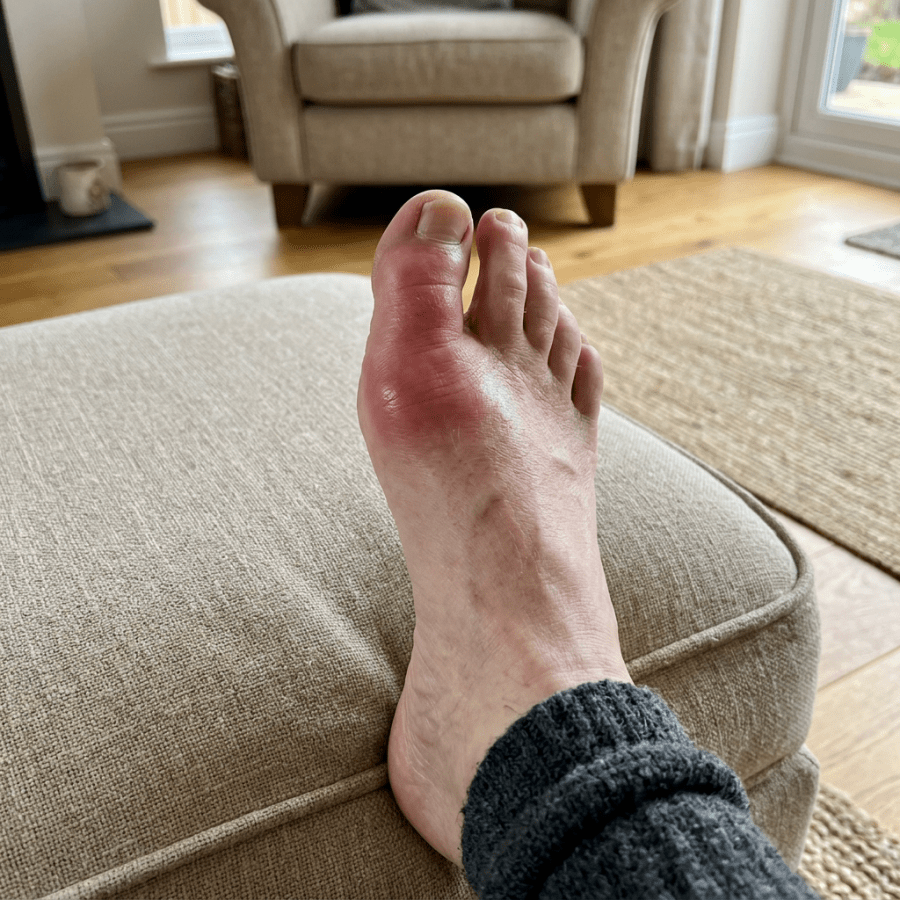
Swollen, reddened big toe resting on a beige ottoman

Diagnosed With Gout? What It Means and How to Prevent Flares

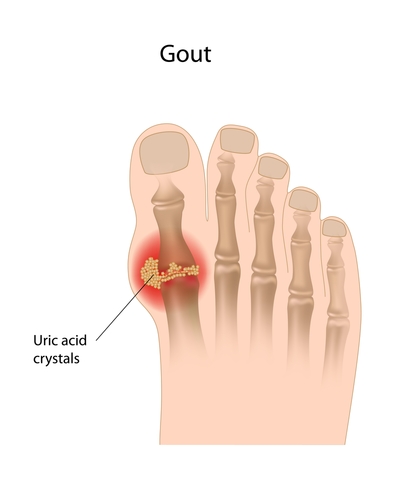
shutterstock_114066385At least once a week, I have patient who presents to the clinic due to pain from gout.  It is a painful condition that develops in some patients who have elevated levels of uric acid in their blood (hyperuricemia).  Up to 66% of patients who have elevated uric acid levels never develop symptoms.  We’re not sure why some people develop symptoms and others don’t have symptoms at all. Uric acid crystals most commonly affect one or multiple joints in the body, but may also cause uric acid crystals to develop within the kidney or urinary tract.  A stone within the kidney may cause impaired kidney function or pain.  Only 15% of people with gout develop kidney stones due to uric acid. Gout risk factors:  Gout is estimated to affect about 2% of the population in the USA.  It is most common in men between 30-45 and women between 55-70.  There is an increased risk of gout with the following: 1)   Taking medications that affect uric acid levels, such as diuretics 2)   Obesity 3)   Ingesting large amounts of meat or seafood 4)   High blood pressure 5)   Consuming high quantities of alcohol 6)   Overeating 7)   Recent surgery or injury Symptoms: 1)   Sudden severe joint pain (usually one joint), sometimes with redness and swelling 2)   Pain and inflammation are worst within several hours and improve over a few days to weeks completely even if untreated Gout phases: 1)   Acute gouty arthritis:  attacks usually involve the big toe or knee which become painful and inflamed 2)   Intercritical period:  The time between attacks.  Usually a second attack occurs within 2 years.  If uric acid levels are uncreated over several years the time between attacks may shorten or the symptoms may become more severe when attacks occur. 3)   Chronic tophaceous gout:  Large numbers of uric acid crystals may collect in joints, bones or cartilage and cause a nodule called a tophus to form.  This tophus is not usually tender, but cause erosion of bone and permanent deformity.  The tophi when the occur on the knuckles can cause an unfortunate cosmetic problem. Diagnosis:  Gout may be suspected if the person has the sudden onset of joint pain in the commonly affected joints such as the big toe.  If the patient has a period when there are no symptoms, and then symptoms return this is very typical of the disease.  The best way to diagnose gout is to examine fluid from the affected joint to look for uric acid crystals.  A medical provider uses a needle and syringe to withdraw a small sample of synovial fluid from the joint and this fluid is sent to the lab for microscopic analysis.  Other criteria for diagnosis gout may be: 1)   Blood testing showing high uric acid levels 2)   Rapid improvement of symptoms after the patient is treated with colchicine 3)   History of pain and inflammation involving one joint at a time, especially at the base of the large toe 4)   The symptoms totally go away between attacks Treatment:  The goals of gout treatment are to decrease the pain of a gout attack and also to reduce the frequency of their attacks.  Some of the treatment options are listed below: 1)   Nonsteroidal anti-inflammatory drugs (NSAIDs) reduce the swelling in the joint.  Examples of these are Ibuprofen or indomethacin.  They are most effective if started as soon as possible after the gout attack starts. 2)   Colchicine is a medication that may decrease the pain of a gout attack very rapidly. 3)   Steroids such as prednisone may be used if an NSAID is not used.  This type of medication can be injected directly into the affected joint or can be given as pills or intramuscular injection.  There is a risk of “rebound gout attack” as the steroids are stopped however, so usually steroids are slowly tapered over 7-10 days. Prevention therapy:  Some medications as well as dietary changes can be helpful to reduce the frequency of gout attacks. 1)   Uric acid lowering medications are used indefinitely because there is not a benefit from taking a break from the medications.  Examples of this are Probenacid, Losartan, and Allopurinol.  Rapid lowering of uric acid can cause a gout flare . 2)   Increased water intake – at least 2 liters/day are recommended Dietary changes:  Obesity is a major risk factor for gout so changing diet may decrease the frequency of gout attacks.  Current recommendations also include eating less of the following: 1)   Red meat 2)   Seafood 3)   Beer and hard alcohol (gin, vodka, etc.) 4)   Foods and drinks that contain high-fructose corn syrup (fond in some non-diet sodas for example) Some foods that may be good to eat or drink if you have gout may include: 1)   Low fat dairy 2)   Foods with complex carbohydrates such as whole grains, brown rice, oats and beans 3)   Vitamin C (500mg/day has been found to have a mild uric acid lowering affect). 4)   Coffee in moderation 5)   Wine in moderation – (1-2 5oz servings/day me be helpful) 6)   Pineapples – see my blog article about preventing gout by eating pineapples 7)   Drink plenty of water – twelve 8oz glasses of water during every day.   I hope that you have found this information useful.  Wishing you the best of health,

Scott Rennie, D.O.
Board Certified in Obesity Medicine and Family Medicine

This blog is for educational purposes only and does not constitute individual medical advice. Always consult your own physician before making changes to your health, medications, or treatment plan.

Woman using an inhaler while seated in a bright living room

Wheezing and Possible Asthma: What Should You Do Next?

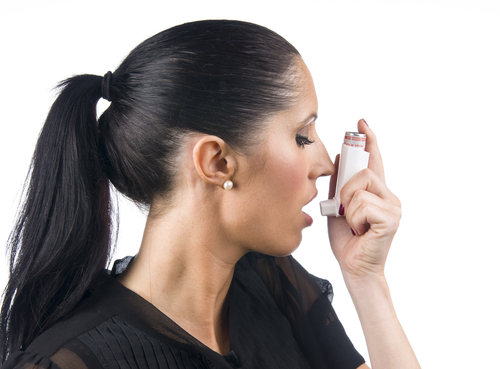
shutterstock_137805167Millions of people suffer from asthma worldwide.  The cause is due to narrowing of the airways (small tubes) in the lungs which is partially or completely reversible. Symptoms of asthma: 1)   Coughing 2)   Wheezing 3)   Chest tightness 4)   Shortness of breath Asthma symptoms tend to come and go and are affected by the amount of inflammation or narrowing of the airways are present.  Things that can cause the airways to narrow may include: 1)   Viruses that increase the production of mucus 2)   Allergens 3)   Exercise 4)   Certain foods 5)   Environmental conditions Asthma Triggers:  We call factors that set off or worsen asthma symptoms “triggers.”  One of our goals is to identify factors that cause asthma flare-ups so we can reduce or prevent asthma attacks.  Some of these asthma triggers in most patients are: 1)   Smoke or chemical irritants 2)   Allergens such as dust, pollen or pet fur 3)   Respiratory infections 4)   Emotional stress 5)   Physical activity 6)   Menstrual cycle in some women 7)   Certain medications such as aspirin, ibuprofen or Aleve have caused asthma symptoms in a small number of patients.  This is rare however. Categories of asthma:  We categorize asthma according to the severity and adjust the treatment plan depending on the patient’s age, level of control and severity of symptoms. 1)   Intermittent asthma:  These patients usually have symptoms that occur two or fever times per week, the asthma does not interfere with their daily activities and nighttime symptoms awaken the patient two or fever nights per month and oral steroid medication is needed no more than once per year to treat symptoms. 2)   Persistent asthma:  These patients have symptoms more frequently, and there may be days that activities are limited due to symptoms.  Symptoms tend to awaken to patient from sleep more often need to be treated more regularly than for intermittent asthma to keep symptoms from returning. Treatment:  Asthma treatments tend to be separated into two catergories: 1)   Short acting bronchodilator medications to treat an acute asthma flare.  These medicines work by temporarily relaxing the muscles around the narrowed airways.  Albuterol (also called Ventolin, Proventil and Proair) is the most commonly used inhaled bronchodilator used in the US There is no benefit to just using short-acting short acting bronchodilators on a regular basis.  If symptoms are occurring more than twice a week, other medications for asthma may be more helpful. 2)   Asthma controller medications:  For patients with more persistent symptoms, inhaled glucocorticoids, long acting bronchodilators, leukotriene modifiers, or oral glucocorticoids may be used. The benefit of regularly using a inhaled glucocorticoid medication is that it will reduce of frequency of symptoms so that the need for the short acting inhaled bronchodilator (albuterol) is not needed as often and improves quality of life and decreases serious attacks. Patients who present to the medical clinic or urgent care generally have progressed beyond treating a mild episode of asthma and usually require a medication in addition to a short acting bronchodilator such as albuterol.  We usually use an oral steroid medicine such as prednisone or dexamethasone. In patients who use an inhaler, it is important to understand how to use it properly.  Most inhalers work best if you hold the mouthpiece of the inhaler 1 to 2 inches in front of your mouth when you activate it.  If you close your mouth on the mouthpiece of the inhaler, less medicine generally reaches the lungs.  A spacer can be very helpful because it allows you to breathe in slowly and fully to inhale more of the asthma medication. Exercise induced asthma:  In patients who get asthma symptoms with exercise, we usually recommend an extra dose of albuterol before exercise to prevent the asthma symptoms.  Sometimes a leukotriene modifier (such as Singulair) or cromolyn may be used on a daily basis to prevent flares in these patients.   I hope that you have found this information useful.  Wishing you the best of health,

Scott Rennie, D.O.
Board Certified in Obesity Medicine and Family Medicine

This blog is for educational purposes only and does not constitute individual medical advice. Always consult your own physician before making changes to your health, medications, or treatment plan.

Woman washing her hands at a kitchen sink with irritated forearm

Skin burns – 1st degree, 2nd degree, 3rd degree and what to do about them

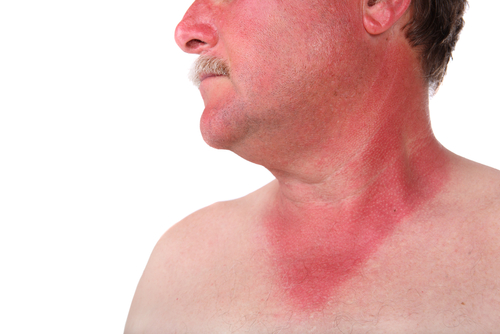
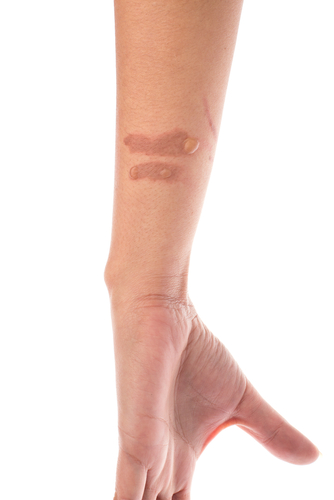
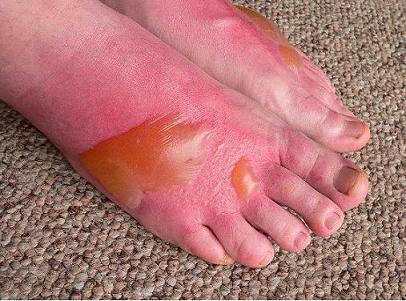
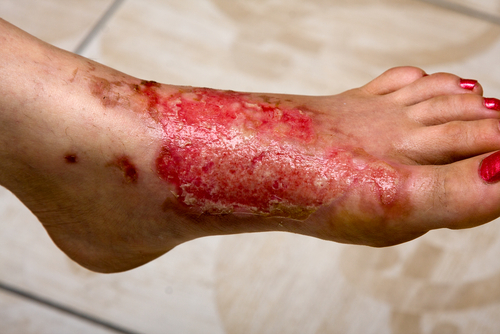
Patients frequently come into the medical clinic with burns.  Several possible sources of exposure can lead to skin burns including hot water or steam, hot objects or flames, chemical, electricity or exposure to the sun. Since moderate to severe burns can cause serious complications, it is important to recognize the signs of a serious skin burn so you can be evaluated by a healthcare provider. When to seek help: 1)    If the burn is on or near a joint such as the fingers, feet or hands 2)    If the burn is on the genital area 3)    If the burn goes all the way around (encircles) an arm, leg, foot, finger or your chest 4)    If the burn is larger than 3 inches or deep 5)    If the patient is younger than 5 years old or older than 70 years old 6)    If there is increasing pain, swelling, redness or pus-like discharge or fever > 100.4 degrees F. Burn classification:  The classification system that we used in the past was based on the thickness of the burn.  The new classification is as follows: 1)  Superficial burn or 1st degree involves only the top layer of skin.  They heal within 3-6 days.shutterstock_56132251 2)  Partial-thickness  or second degree burns involve the two top layers of skin.  These burns are painful with air movement or temperature changes and form blisters.  Partial thickness burns turn white when pressed.  These burns usually health within 7-21 days.  The skin that was burned may become darker or lighter color permanently in some patients. shutterstock_127655633 3)  Deep partial-thickness burns were previously called 3rd degree burns and are painful with deep pressure.  They form blisters and do not turn white with pressure.  These burns take longer than 21 days to heal and usually develop a scar that may be severe.  If the skin blisters immediately, it is at least a deep partial-thickness burn.  bb2_2 4)  Full Thickness Burns:  Extend through all layers of the skin and destroy it completely.  The burned area usually does not hurt and is waxy white to leathery gray in color and the skin is usually dry.  Full-thickness burns do not heal without surgery.  These burns used to be called 4th degree burns.  shutterstock_101309467 Treatment:  Most of the time small superficial or partial-thickness burns can be treated at home, but deeper wounds should be evaluated by a medical provider.  Treatment in the home: 1)   Clean the wound:  If clothing is stuck to the wound, seek care by a medical provider.  Gently wash the burned skin with soap and water.  Do not use alcohol, iodine or other cleansers. 2)   Cool the wound:  After cleaning, you may apply a cold compress or soak the skin in cool water for comfort and reduce pain.  Do not put ice directly on the wound itself however. Infection prevention:  Apply a small amount of antibiotic ointment such as bacitracin or silvadine cream may be applied.  A minor burn may be covered with a bandage or dressing.  If there are blisters, these should be covered with a clean bandage or dressing.  Do not pop the blisters with your fingernail as this may increase the risk of infection.  Leave the blisters alone or gentle pop them on the side of the blister sterile needle if they are large.  Use a non-stick dressing such as Vaseline impregnated gauze or Telfa dressing to cover the wound. If your tetanus has not been updated within 5 years, you need a tetanus booster if the burn is superficial partial-thickness or deeper. Burn Prevention: 1)   Keep matches, lit candles and lighters out of the reach of children 2)   Do not smoke when sleepy 3)   Use a cool-mist humidifier instead of a warm mist humidifier 4)   Apply sunscreen liberally to prevent sunburn and stay out of the sun when possible 5)   Be careful when placing a child in a car seat or stroller because the metal or vinyl can become hot 6)   Set your hot water thermostat to lower than 120 degrees F 7)   Keep children away from fireplaces, hot stoves and ovens 8)   Children’s sleepwear should be non-flammable.   I hope that you have found this information useful.  Wishing you the best of health,

A burn is one of the problems where a camera only tells you so much, and I have written about which problems a video visit can handle and which ones need to be seen in person. The rest of my work these days is obesity medicine, where the argument right now is whether Ozempic and Zepbound cause muscle loss.

Updated for 2026: The Cooling Advice Has Gotten More Specific

When I wrote this in 2012 the standard advice was to run cool water over a burn. That was right, but it was vague, and vague advice gets applied badly. Here is the current version. Cool running tap water, somewhere between 46 and 77 degrees Fahrenheit, for at least twenty minutes, started within the first half hour. There is evidence the window stays useful out to about three hours, so if an hour has already passed, still do it (1). Not ice. Ice constricts the blood supply to skin that is already injured and makes the wound deeper. I still hear ice recommended and it is worth saying plainly: skip it. Plain tap water is fine. It does not raise the infection risk compared with sterile solutions, and the twenty minutes of cooling matters far more than what the water came out of (1).

Silver Sulfadiazine Has Fallen Out of Favor

This is the part of the old post I would write differently today. For decades silver sulfadiazine cream was the default. It is no longer where the evidence points. There is reasonable concern that it impairs the cells doing the healing, slowing things down and possibly worsening scarring, and the trial support for it was never as strong as its popularity suggested (1). What has replaced it is less glamorous and works better. Either a topical antimicrobial under simple gauze changed every twelve to twenty four hours, or one of the modern occlusive dressings, silver foam, hydrocolloid, or silicone, left alone for as long as two weeks. The second approach hurts less and gets opened less often, which is why I favor it, particularly in children (1). Antibiotic pills are not part of routine burn care. An uncomplicated burn does not need them, and giving them anyway does not prevent infection. One thing that has not changed: tetanus. A partial or full thickness burn in someone whose shots are incomplete or unknown needs Td or Tdap, and immune globulin if the primary series was never finished (1).

What I Can and Cannot Do With a Burn Over Video

Burns are one of the harder things to assess on a screen, and I would rather tell you that than pretend otherwise. Depth is the problem. On camera I can usually tell superficial from something deeper, but the line between a deep partial thickness burn and a full thickness one is a judgment I would rather make with the wound in front of me. Good lighting and a close, steady photo help more than people expect. So does telling me exactly what caused it, how hot, and how long the contact lasted. What I can do well from here is talk you through the first twenty minutes while it is happening, sort out dressings and pain control, check your tetanus status, and tell you honestly when this is beyond what a camera can settle.

Burns That Need a Burn Center, Not a Video Visit

The American Burn Association keeps a referral list and it is worth knowing (2). Any full thickness burn. Partial thickness burns covering ten percent or more of the body. Any deep burn on the face, hands, feet, genitals, perineum, or across a major joint. Anything suggesting smoke inhalation, including facial flash burns or singed nasal hair. Chemical burns. All electrical burns, and high voltage or lightning injuries immediately. Pain you cannot get on top of. And essentially any significant burn in a child.

The Bottom Line

Twenty minutes of cool running water, measured, not guessed. No ice. Skip the silver sulfadiazine your medicine cabinet may still be holding. And know which burns are past the point where any of this applies.

Sources

1. Rice PL, Orgill DP. Outpatient Burn Care: Prevention and Treatment. American Family Physician. April 15, 2020. https://www.aafp.org/afp/2020/0415/p463 2. American Burn Association. Guidelines for Burn Patient Referral. https://ameriburn.org/burn-care-team/resources/guidelines-for-burn-patient-referral

Related Reading

When to Use Telemedicine vs. Urgent Care: How I Spot the Sick One Abscesses and MRSA: What To Do About a Skin Infection Basic Wound Care Tips for Non-Medical Professionals Cellulitis – a soft tissue/skin infection – is it MRSA? It’s Cloudy in Seattle: Can You Still Get a Sunburn? Frostbite and cold induced injuries Diabetic Foot Care: How to Check and Protect Your Feet Scott Rennie, D.O.

Board Certified in Obesity Medicine and Family Medicine

This blog is for educational purposes only and does not constitute individual medical advice. Always consult your own physician before making changes to your health, medications, or treatment plan.
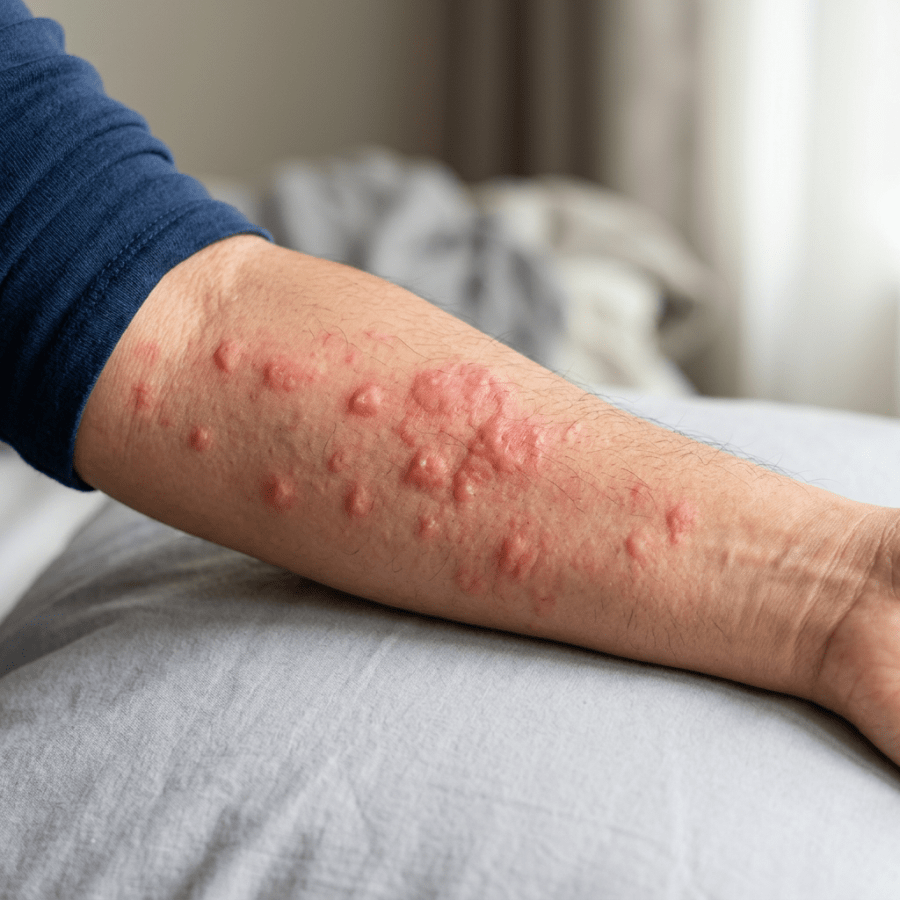
Forearm with multiple raised red bumps and irritated skin

Hives – What am I allergic to?

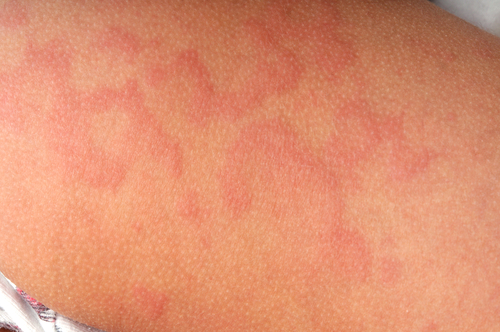
shutterstock_46021174The medical term for hives is urticaria and they are described as raised areas of skin that itch intensely and they are red and often have a pale color to the center.  They are common and occur in at least 20% of people at some point in their lives. Why hives develop:  This skin rash occurs as the body’s immune system is exposed to an allergen (such as a food or chemical) that it inappropriately believes could be harmful.    The body then responds by activating it’s army of immune cells in the skin to fight off the allergen.  When these immune cells (called mast cells) are activated, they release histamine that is a natural chemical that causes itching, redness and swelling of the skin.   In most cases, hives appear and can reappear suddenly – within several hours. Skin appearance:  Hives can occur anywhere on the body and actually appear and disappear and give the appearance that the rash is actually moving around the body.  They are raised areas of skin that itch and these red areas may enlarge and merge together.  The itching is usually the most bothersome symptom and it can be severe enough to interfere with work or sleep. Angioedema:  Some people who get hives also have puffiness of the face/lips, eyelids, mouth, hands, feet and genitalia.  Swelling usually affects one side of the body more than the other and may give the sensation of fullness or discomfort in the area of swelling. Anaphylaxis:  Hives can occur as part of a serious allergic reaction called Anaphylactic shock.  You should see a medical provider right away if you have symptoms along with hives such as: 1)   Trouble breathing 2)   Tightness in the throat 3)   Nausea/vomiting 4)   Cramping or abdominal pain 5)   Passing out 6)   Dizziness or light-headedness Types of hives:  Hives are usually classified based on how long they’ve been present.  Acute (brief) hives, vs. chronic (long-standing) or physical (triggered by a physical stimulation such as sun exposure or cold). Acute hives:  These are the type that we see most often in the medical clinic.  They usually don’t last beyond a few days to a week or two.  Triggers that can cause acute hives include: 1)   Infections:  Viral infections actually have been found to cause more than 80% of the cases of hives in children.  The hives usually last a week or two. 2)   Medications:  Many different kinds of drugs can cause hives including nonsterioidal anti-inflammatory drugs (NSAIDs) such as aspirin, ibuprofen or Aleve.  Antibiotics can also cause hives, as well as narcotic pain medication such as morphine or codeine. 3)   Insect stings:  Stings from bees, wasps, hornets or fire ants can cause hives around the sting.  If you get hives all over your body after a sting, this could be sign of anaphylaxis, and you should be seen by a medical provider as soon as possible. 4)   Food allergies:  food-associated hives usually occur within 30 minutes to an hour after eating the food.  Common foods which can cause hives include milk, eggs, peanuts or other nuts, soy, wheat, fish or shellfish. 5)   Physical contact:  After you touch a certain substance that you are allergic to, you may get hives.  Common substances that can cause hives are plants, raw fruits and vegetables, latex (found in balloons, certain gloves, condoms, etc.) Chronic hives:  Many people have hives that occur daily or almost every day.  We call hives that last longer than 6 weeks chronic hives.  Sometimes they can even last for years.  Hives are frustrating and can effect how you look but it is important to remember that hives are not contagious, they are rarely permanent, they are not life-threatening and symptoms are treatable in most people. For most people who get chronic hives, the cause is unknown.  Chronic hives can be a sign of other medical problems including thyroid or liver problems, chronic infection or lupus.  People with these problems usually have symptoms other than just hives however. Physical hives:  Hives can be triggered by exposure to cold (they often appear as the skin warms up), changes in body temperature or sweating, vibration, pressure, exercise, sunlight or water.  Some people can develop reddened, raised lines if the skin is stroked firmly or scratched.  This is called dermatographism. Diagnosis:  Most people do not need testing. The diagnosis can be made by the medical provider by taking a history and performing a physical examination.  Sometimes testing is done if symptoms are not resolving within six weeks.  Skin testing may be ordered by an allergist to test for food and medication allergies.  Blood tests can also be performed to look for other underlying medical problems.  A skin biopsy is a small sample of skin that is removed and examined under the microscope.  The biopsy can sometimes be helpful for patients who have chronic hives and it is usually performed by a dermatologist (skin doctor). Treatment: 1)  Avoid the cause/trigger.  Many times the cause in not found and the hives usually disappear over days or weeks anyway. 2)  Antihistamines – there are two types of antihistamines.  The older type such as Benadryl often work well, but can cause drowsiness, and are usually taken multiple times per day.  The newer types of antihistamines such as Zyrtec, Claritin or Allegra have fewer side effects are usually taken only once or twice a day. 3)  Oral steroids such as prednisone at a high dose are often used in combination with antihistamines.  We are careful with the use of steroid medications because long-term use can cause serious side effects if taken of long periods of time (months to years). 4)  Topical steroids or creams:  Sometimes topical creams may help with the itching, however we usually don’t use topical steroid creams on the hives because the rash may move from one area of the body to another rapidly.   I hope that you have found this information useful.  Wishing you the best of health,

Hives were everyday family medicine for me. These days I write more about metabolic and menopause care, including the FDA pulling the black box warning off menopause hormone therapy.

Related Reading

Hives and Angioedema: Signs of an Allergic Reaction Allergic Antibiotic Drug Reactions – Am I Truly Allergic to Penicillin? Doctor Said You Have Allergies? How to Know for Sure GLP-1 Skin and Nerve Pain: Ozempic, Wegovy, Mounjaro

Scott Rennie, D.O.
Board Certified in Obesity Medicine and Family Medicine

This blog is for educational purposes only and does not constitute individual medical advice. Always consult your own physician before making changes to your health, medications, or treatment plan.
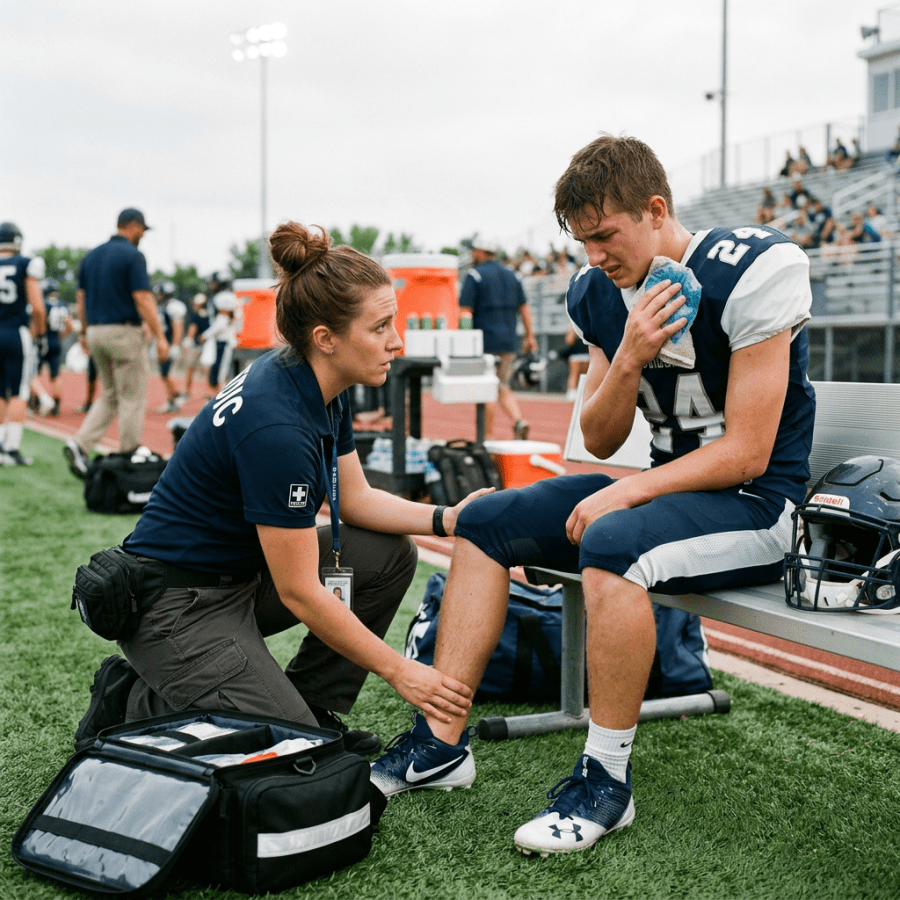
Sports trainer examining a seated football player on the sideline

Head Injury: Is It a Concussion or Something More Serious?

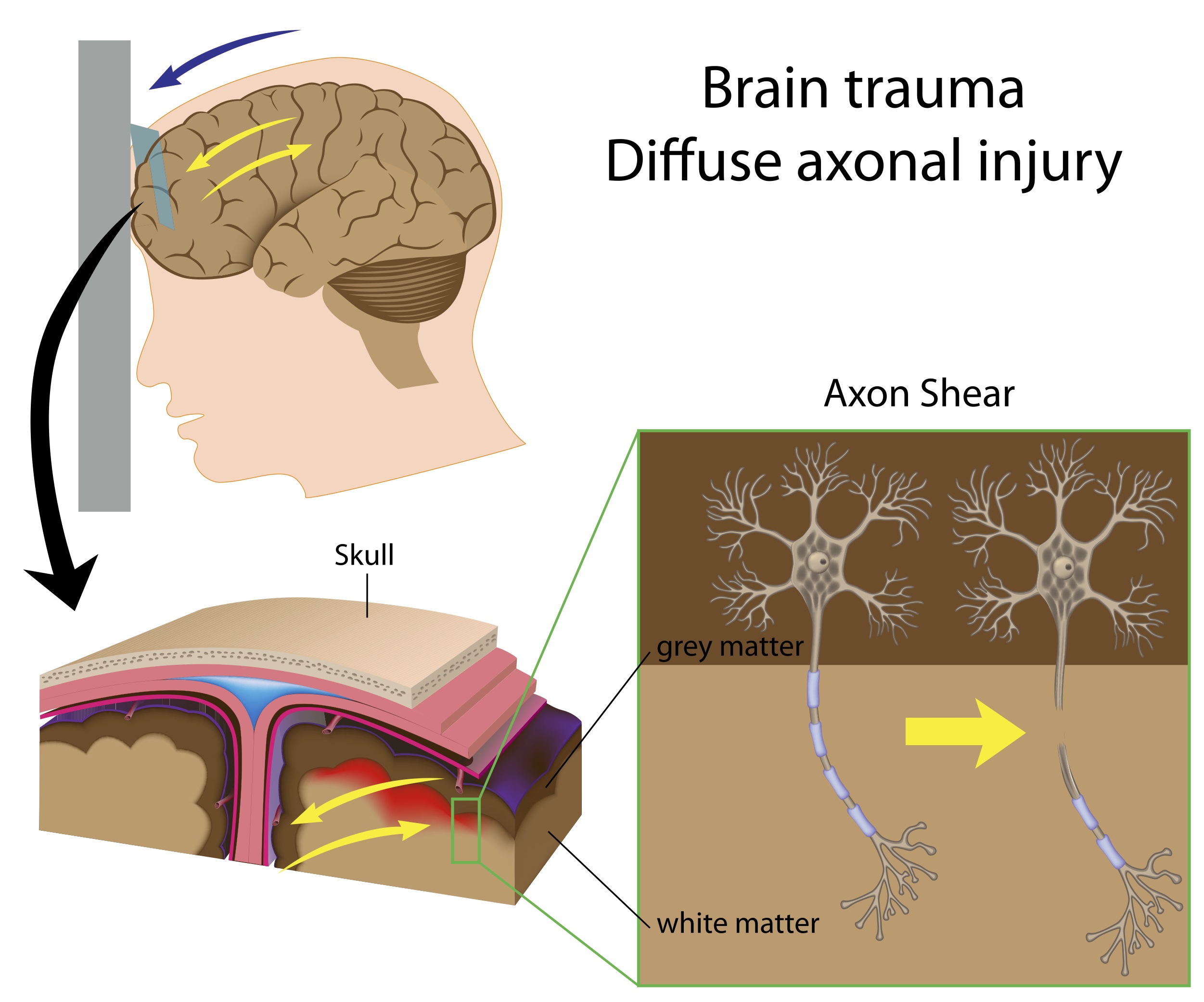
shutterstock_89651788 Head injuries are common all year long in the urgent care setting.  In the winter months, skiing or snowboarding is one of the leading causes of head injuries.  In the summer months, more sports injuries occur with the improved weather in the Seattle area. Most head injuries are not associated with brain injury or longer-term complications.  Rarely, however more significant injuries may develop which could be due to bleeding around the brain. Causes of head injuries:  Most of the time falls are the cause, but motor vehicle accidents, pedestrian or bicycle accidents and sports-related trauma also cause head injuries.  In the medical setting, we also have to be alert for signs of child abuse as well.  The risk of brain injury depend on the type of trauma and the age of the patient. Higher risk injuries: 1)   High speed motor vehicle accidents 2)   Fall from a great height 3)   Being hit by a high speed, a heavy or sharp object 4)   Inflicted injury such as abuse Symptoms of head injuries: 1)   Scalp swelling 2)   Loss of consciousness/passing out – Happens only 5% of the time and usually lasts less than 60 seconds 3)   Headache – Occurs in 20% of patients.  In children who are too young to speak, they may become irritable. 4)   Vomiting – occurs in about 10% of patients.  Children who have a head injury and vomit, do not necessarily have a serious brain injury. 5)   Seizures – Less than 1% of patients have a seizure right after a head injury.  A few of these patients will have a serious head injury.  We will usually do a CT scan of the head if  the patient has a seizure. 6)   Concussion – common symptoms include confusion or inability to remember events around the time of the injury, headache, vomiting, and dizziness. When to seek help: 1)   The patient has recurrent vomiting 2)   The patient has a seizure (convulsion) 3)   The patient loses consciousness after the injury 4)   Severe headache after the injury, or it worsens with time 5)   Head injury in a child with behavior change (lethargic, difficulty to wake, extremely irritable, other abnormal behaviors). 6)   Difficulty walking, is clumsy or has lack of coordination 7)   Slurred speech or confusion 8)   Dizziness that is not resolving 9)   Blood or watery fluid comes from ears 10)  The patient is a child less than 6 months of age 11)  There is a cut that will not stop bleeding after pressure is applied for 10 minutes 12)  The patient fell from a height greater than 5 feet, or was hit with a high speed object or with great force 13)  Patient’s friends/family are concerned about how the patient is acting When do I need a Cat Scan/CT Scan of the brain?  A CT scan is a special X-ray that expose children/adults to radiation and should be avoided if possible.  Sometimes, however a Cat scan will be recommended to diagnose more severe injuries.  Some possible symptoms which may prompt your medical provider to order a CT scan are: 1)   Prolonged loss of consciousness 2)   Persistent or severe memory loss/confusion 3)   Persistent vomiting 4)   Seizure 5)   Severe, persistent or worsening headache 6)   Suspicion of intentional injury (abuse) 7)   Behavioral changes (lethargy, decreased alertness, extreme irritability) 8)   Signs of skull fracture such as a bulging fontanel or skull deformity 9)   Abnormal neurological exam 10)  Severe scalp bruising or swelling in a very young child Why not an MRI?  We use CT scanning instead of an MRI to look for brain injury in most head injuries because it is available at most hospitals, and CT is relatively quick compared to MRI.  MRI requires patients – including children to be completely still for at least 30 minutes and that can be challenging. Head injury treatment at home: 1)   Rest – lie down or participate in quiet activities 2)   If the head is bleeding, clean the area with soap and water and apply pressure with gauze.  If bleeding does not stop, the child should be evaluated 3)   Tylenol may be given in most cases for pain/headache.  If the headache worsens, please have the child evaluated (see above). Monitoring after head injury:  The patient should be observed for signs of worsening injury.  Please call your healthcare provider if any of the following are noted: 1)   Vomiting more than once or vomiting continues for 4-6 hrs after the injury. 2)   Severe/worsening headache 3)   Becomes more drowsy or hard to wake up. 4)   Confused or not acting normally. 5)   Has trouble walking, talking or seeing 6)   Develops stiff neck. 7)   Has a seizure (convulsion) or any abnormal movements or behaviors. 8)   Cannot stop crying – children 9)   Has weakness or numbness involving one side of the body. Return to normal activities:  Patients who have sustained a concussion are at a risk for serious or even fatal complications of they have a second injury within a short time after the first injury – this is called second impact syndrome.  It important not to participate in high impact sports or risky activities for 6 weeks. Post-concussion syndrome:  Sometimes the patient who has sustained a head injury may develop a group of symptoms in the first few days after the injury called “post concussion syndrome.”  These symptoms can include headaches, anxiety, irritability, dizziness, or impaired memory or concentration.  In 85-90% of patients, this resolves within a few weeks-few months after the injury.  There isn’t any specific treatment for post-concussion syndrome. Head injury prevention: 1)   Wear a bicycle helmet when riding bikes, skating , sledding or participating in activities where you may hit your head 2)   Install car seats/booster seats correctly.  At least a booster seat is needed until the child is at least 4 feet 9” tall.  Individual states may have additional regulations about the use of booster/car seats. 3)   Use gates on stairways to prevent injuries in infants/young children 4)   Install window guards on all windows above the first floor 5)   Do not use wheeled baby walkers 6)   Teach kids to safely cross the street.  Young children should never cross the street alone. 7)   Discuss sports safety with your healthcare provider.  Be sure that a child has appropriate protective equipment.   I hope that you have found this information useful.  Wishing you the best of health,

Scott Rennie, D.O.
Board Certified in Obesity Medicine and Family Medicine

This blog is for educational purposes only and does not constitute individual medical advice. Always consult your own physician before making changes to your health, medications, or treatment plan.
Dry, red, cracked skin surrounding a person's elbow

Dry, Itchy Skin: Could It Be Eczema or Dermatitis?

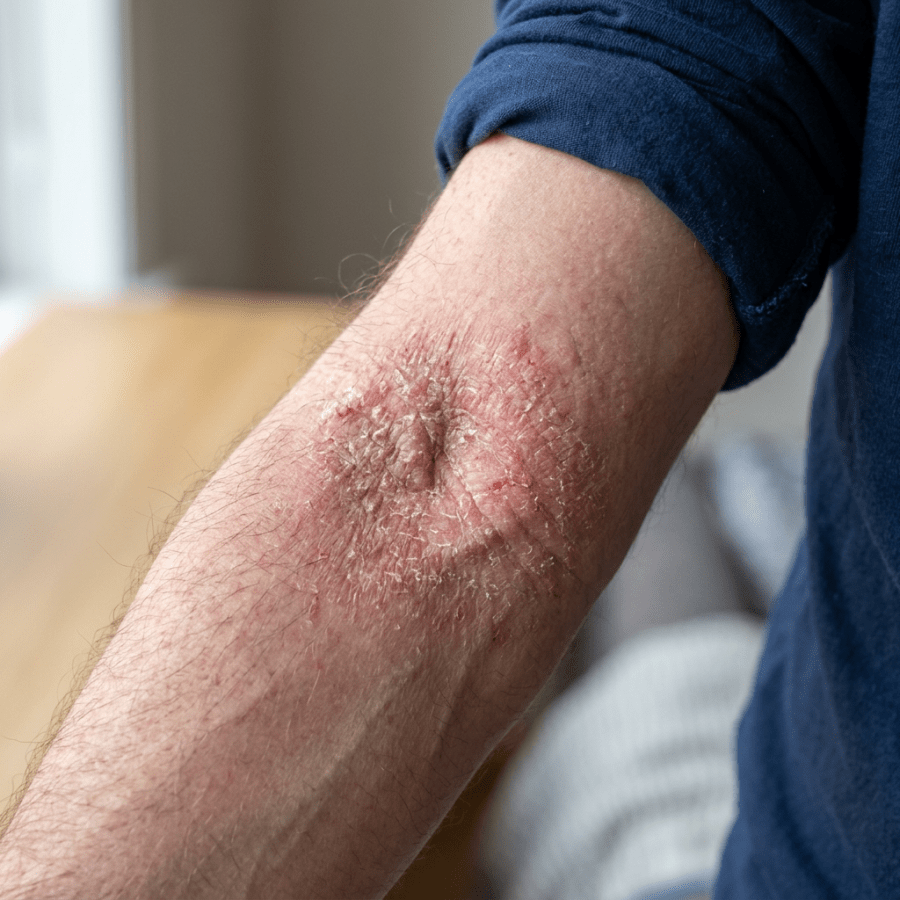
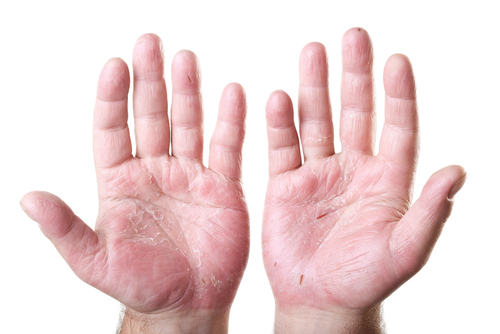
shutterstock_106764923Eczema (atopic dermatitis) is a problem that is characterized by dry, itchy, scaly and often red skin.  There seems to be a genetic predisposition for eczema in some people.  People who have eczema seem to have more allergies than those who do not. Causes:  The epidermis or outside layer of skin seems to get irritated by environmental irritants.  Patients who have this can be extremely sensitive to water – and if they repeatedly put their hands in water, it may be more common.  Other times, there are certain skin products that seem to bring it on such as makeup, and petroleum products are a common cause in those who work in the automotive industry.  For healthcare workers, latex gloves can cause severe irritation to the skin.  In children, it has been linked to food allergies. Symptoms:  Most individuals have their first symptom of eczema before the age of 5.  The symptoms are often characterized by itching, small bumps, skin flaking and patches of redness.  Scratching the skin can cause worsening symptoms.  It is more commonly found in certain areas of the body, which help in the diagnosis. Most common areas of the body affected: 1)   Hands/fingers of healthcare workers 2)   In infants – front of arms, legs, cheeks or scalp may be red/scaly. 3)   Back of the neck, elbow creases and backs of the knees as well as the face, wrists and forearms may be affected. Diagnosis:  There is no specific tests to diagnose eczema. The diagnosis is made by taking a medical history and performing a physical examination. Cure:  There is no cure for eczema – it is controlled/treated. Treatment:  It typically improves and then flares (worsens) periodically.  Eczema is not curable, but it is controllable with proper self-care and medications such as: 1)   Keeping skin hydrated with skin emollients (creams and ointments that moisturize the skin and prevent it from drying out).  The best emollients for people with eczema tend to be thick creams or ointments such as (Eucerin or Vaseline petroleum jelly).  They are most effective when applied immediately after bathing.  Lotions contain more water than creams and are less effective. 2)   Avoid hot baths (greater than 10-15 minutes) because they actually can dry the skin out 3)   Topical steroids – prescription strength steroid creams or ointments may be recommended and are usually applied twice a day. 4)   Protopic and Elidel are often effective for eczema but don’t work as quickly as topical steroids.  The are useful in sensitive areas such as the face or groin and can be used in kids under age 2. 5)   Oral Steroids are very rarely used to treat a severe eczema flare.  There are potential side effects, therefore it is not the most common treatment. 6)   Ultraviolet light therapy (phototherapy) can control eczema, but is expensive and may increase the patient’s risk for skin cancer so is usually only used if other therapies are not successful. 7)   Oral antihistamines can be useful for itching, but do not usually help with the eczema. 8)   Wet dressings may also help soothe the skin, and reduce itching and redness but do not treat the eczema, but rather help with symptoms. Factors that make eczema worse:  Reducing or eliminating some of these factors may help: 1)   Heat, perspiration or chronic exposure to water (such as handwashing) 2)   Emotional stress/anxiety 3)   Rapid temperature changes 4)   Exposure to certain irritating chemicals/soaps/detergents/perfumes.   I hope that you have found this information useful.  Wishing you the best of health,

Related Reading

A comparison of topical steroid medications Seborrheic Dermatitis – Dandruff, Cradle Cap and Adult Seborrhea What Is Psoriasis? An Overview of This Skin Condition Ringworm, Athlete’s Foot and Jock Itch and Fungal Nail Infections – “There Are Fungus Among Us”

Scott Rennie, D.O.
Board Certified in Obesity Medicine and Family Medicine

This blog is for educational purposes only and does not constitute individual medical advice. Always consult your own physician before making changes to your health, medications, or treatment plan.
Woman sitting on bed with hand to her head, looking distressed

Dizziness, Vertigo and Lightheadedness: Possible Causes

shutterstock_134577920Patients present to the urgent care or medical clinic with dizziness quite frequently.  Finding the cause is sometimes challenging.  Hopefully a discussion on the topic will answer some questions if you or someone you know has dizziness/vertigo. Dizziness:  often described as feeling that you are spinning or tiliting, or that you are about to fall or pass out.  Dizziness can also cause you to feel light headed or have difficulty walking straight. Vertigo:  A specific type of dizziness that causes a sense of spinning, dizziness, swaying or that you are moving or the world is moving around you.  Several different issues within the inner ear or brain can cause vertigo.  Some of these issues are not serious and others are more concerning. These feelings can last days, hours or just seconds and can come and go.  It may feel worse when you change positions (roll over or stand up) or move your head.  You may also feel nauseated or vomit, have a headache and be sensitive to light or noise, have double vision, have a racing heart Causes:  Possible causes include: 1)   Inner ear problems – infection in the vestibular system, or small pieces of calcium can cause dizziness 2)   Meniere’s disease 3)   Benign paroxysmal positional vertigo 4)   Medications 5)   Migraine headaches 6)   Stroke or TIA 7)   Bleeding in the brain 8)   Brain tumor 9)  Heart problems such as low blood pressure or a rapid heart rate 10)  Motion sickness from a boat ride or similar motion 11)  Infection such as a bladder infection (especially in the elderly When to seek help:  Warning signs that should prompt you to speak with a medical provider include: 1)   New or severe headache 2)   Fever greater than 100.4 degrees F 3)   Trouble seeing or double vision 4)   Trouble talking or hearing 5)   Weakness of an arm or leg 6)   Inability to walk without assistance 7)   Passing out 8)   Numbness or tingling 9)   Chest pain 10)  Persistent vomiting 11)  The patient is elderly 12)  The patient has had a stroke in the past 13)  The patient has high blood pressure, diabetes or smokes Treatment:  The treatment is tailored to the individual patient and the cause of their dizziness/vertigo.  In addition to treating the underlying cause, other treatments may include: 1)   An antihistamine such as Benadryl or meclizine 2)   Anti-nausea medications such as Phenergan or Zofran 3)   Eply maneuver:  If the problem is due to benign positional vertigo due to small stones in the inner ear being out of place.   I hope that you have found this information useful.  Wishing you the best of health,

Scott Rennie, D.O.
Board Certified in Obesity Medicine and Family Medicine

This blog is for educational purposes only and does not constitute individual medical advice. Always consult your own physician before making changes to your health, medications, or treatment plan.
Doctor using a stethoscope to examine a seated patient who is holding his chest

Costochondritis: Chest Pain Not Related to Your Heart

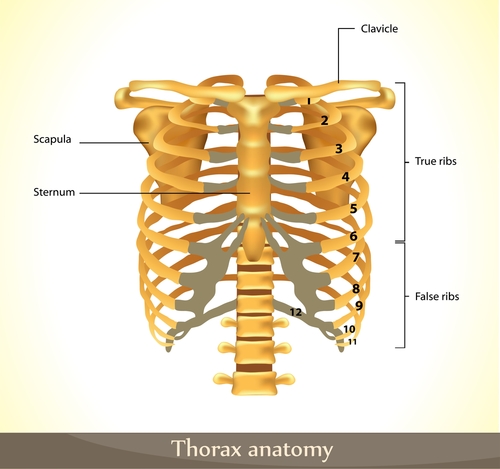
shutterstock_80287546This is for informational use only and should not be used to substitute for seeing a medical provider to determine the cause of your pain. Sometimes patients come into the clinic with complaints of pain in the chest and are worried about their heart.  It can be confusing because the pain can occur in the same general area as pain that we think of when we say cardiac chest pain, but the history and physical exam is different. A variety of terms have been used to describe this syndrome such as costochondritis, costosternal syndrome, anterior chest wall syndrome, Tietze’s syndrome (costochondritis with swelling at the painful area).  The diagnosis is based upon the ability to reproduce pain by pushing on the involved cartilage on the rib cage. In the photo, the grey colored areas represent cartilage.   It is caused by inflammation of the junctions where the upper ribs join with the cartilage that holds them to the breastbone (sternum).  It is very common syndrome that is seen in the medical clinic and often follows some sort of activity or trauma.  Many patients with a cough develop this as a result of the continued coughing and rapid expansion/contraction of the rib cage. Symptoms:  Pain and tenderness in the locations where your ribs attach to your breastbone (costosternal joints), often sharp pain, often worse when taking deep breaths, pain when coughing, and difficulty breathing. Causes:  We don’t know what exactly causes most cases of costochondritis, but some causes might be:  Injury such as a blow to the chest, physical strain from lifting or stenuous exercise, upper respiratory illness (produces cough/sneezing), pain from other areas of your body can sometimes be misinterpreted by your brain, causing pain in places far away from where the problem occurs – this is called referred pain. Treatment:  Heat or ice may be helpful in relieving symptoms.  Medications can also be used to reduce the inflammation  – ibuprofen or naproxen are commonly used for this.  Avoid unnecessary exercise or activities such as contact sports until there is improvement in your symptoms.   I hope that you have found this information useful.  Wishing you the best of health,

Scott Rennie, D.O.
Board Certified in Obesity Medicine and Family Medicine

This blog is for educational purposes only and does not constitute individual medical advice. Always consult your own physician before making changes to your health, medications, or treatment plan.
Golden retriever with eyes closed being petted by a woman indoors

How Pet Therapy Helps People and Animals Heal Together

Article from NPR:
Ryan Shank-Rowe, 9, takes part in a therapeutic riding program at Little Full Cry Farm in Clifton, Va., last month.
Maggie Starbard/NPRRyan Shank-Rowe, 9, takes part in a therapeutic riding program at Little Full Cry Farm in Clifton, Va., last month.
Those of us who own pets know they make us happy. But a growing body of scientific research is showing that our pets can also make us healthy, or healthier. That helps explain the increasing use of animals — dogs and cats mostly, but also birds, fish, and even horses — in settings ranging from hospitals and nursing homes to schools, jails and mental institutions. Take Viola, or Vi for short. The retired guide dog is the resident canine at theChildren’s Inn on the campus of the National Institutes of Health in Bethesda, Maryland. The Inn is where families stay when their children are undergoing experimental therapies at NIH. Vi, a chunky yellow Labrador retriever with a perpetually wagging tail, greets families as they come downstairs in the morning, as they return from treatment in the afternoon, and can even be “checked out” for a walk around the bucolic NIH grounds.
 Thelma Balmaceda, age, 4, pets Viola, the resident canine at the Children's Inn on the campus of the National Institutes of Health in Bethesda, Md. Families stay at the inn when their children are undergoing experimental therapies at NIH.
Melissa Forsyth/NPRThelma Balmaceda, age, 4, pets Viola, the resident canine at the Children’s Inn on the campus of the National Institutes of Health in Bethesda, Md. Families stay at the inn when their children are undergoing experimental therapies at NIH.
“There really isn’t a day when she doesn’t brighten the spirits of a kid at the Inn. And an adult. And a staff member,” says Meredith Daly, the Inn’s spokeswoman. But Vi may well be doing more than just bringing smiles to the faces of stressed out parents and children. Dogs like Vi have helped launch an entirely new field of medical research over the past three decades or so. The use of pets in medical settings actually dates back more than 150 years, says Aubrey Fine, a clinical psychologist and professor at California State Polytechnic University. “One could even look at Florence Nightingale recognizing that animals provided a level of social support in the institutional care of the mentally ill,” says Fine, who has written several books on the human-animal bond. But it was only in the late 1970s that researchers started to uncover the scientific underpinnings for that bond. One of the earliest studies, published in 1980, found that heart attack patients who owned pets lived longer than those who didn’t. Another early study found that petting one’s own dog could reduce blood pressure. More recently, says Rebecca Johnson, a nurse who heads the Research Center for Human/Animal Interaction at the University of Missouri College of Veterinary Medicine, studies have been focusing on the fact that interacting with animals can increase people’s level of the hormone oxytocin. “That is very beneficial for us,” says Johnson. “Oxytocin helps us feel happy and trusting.” Which, Johnson says, may be one of the ways that humans bond with their animals over time. But Johnson says it may also have longer-term human health benefits. “Oxytocin has some powerful effects for us in the body’s ability to be in a state of readiness to heal, and also to grow new cells, so it predisposes us to an environment in our own bodies where we can be healthier.” Animals can also act as therapists themselves or facilitate therapy – even when they’re not dogs or cats. For example, psychologist Aubrey Fine, who works with troubled children, uses dogs in his practice but also a cockatoo and even a bearded dragon named Tweedle. “One of the things that’s always been known is that the animals help a clinician go under the radar of a child’s consciousness, because the child is much more at ease and seems to be much more willing to reveal,” he says. Horses have also become popular therapists for people with disabilities. “The beauty of the horse is that it can be therapeutic in so many different ways,” says Breeanna Bornhorst, executive director of the Northern Virginia Therapeutic Riding Program in Clifton, Va. “Some of our riders might benefit from the connection and the relationship-building with the horse and with their environment. Other riders maybe will benefit physically, from the movements, and build that core strength, and body awareness and muscle memory.” On a recent day, one of the therapeutic riding program’s instructors – speech therapist Cathy Coleman – works one-on-one with 9-year-old Ryan Shank-Rowe, who has autism. Well, not really one-on-one. The co-therapist in this session is a speckled pony named Happy.
Cathy Coleman is a speech pathologist for the Northern Virginia Therapeutic Riding Program. She uses a horse named Happy in her therapy sessions with 9-year-old Ryan Rowe, who has autism.
Maggie Starbard/NPRCathy Coleman is a speech pathologist for the Northern Virginia Therapeutic Riding Program. She uses a horse named Happy in her therapy sessions with 9-year-old Ryan Rowe, who has autism.
“Walk on” says Ryan, and Happy obediently does. “Excellent,” Coleman replies. As the session progresses, Ryan makes Happy trot, weave in and out of poles, and even rides bareback, all the while answering Coleman’s questions and keeping up a continual back-and-forth chatter. Coleman says she used to see Ryan in a more formal office environment. But since he’s started horseback riding, his speech has actually improved. “I get greater engagement, greater alertness, more language, more processing, all those things,” she says. “Plus, he’s just really good at it.” And Ryan’s mother, Donna Shank, says the riding has helped with more than just his speech. “It’s helped his following directions, some really core life skills about getting dressed and balance — which really translate to a lot of safety issues, too.” But not all the research is focused on the humans. “We want to know how the animals are benefitting from the exchange,” says Rebecca Johnson of the University of Missouri. Much of Johnson’s research, for example, has focused on the value of dog-walking by studying volunteers who walk dogs at animal shelters. She even wrote a book, Walk a Hound, Lose a Pound. Those programs have clearly helped people get healthier, she says. Not only do they increase their exercise while they’re walking the dogs, “but it increases their awareness, so that they exercise more during the week.” But it turns out the program was also helping the dogs. “What we found was that they were significantly more likely to be adopted if they were in the dogwalking group,” she says, thanks to the additional exercise and socialization they were getting. Johnson’s now working on a new project with likely benefits for dogs and humans. Military veterans returning from Iraq and Afghanistan are providing shelter dogs with basic obedience training. And while it’s still early in the research, she says, one thing seems pretty clear: “Helping the animals is helping the veterans to readjust to being at home.” Now the research is getting an even bigger scientific boost. The National Institutes of Health, with funding from pet food giant Mars, Inc., recently created a federal research program to study human-animal interaction. The program, operated through the National Institute for Child Health and Human Development, offers scientists research grants to study the impact of animals on child development; in physical and psychological therapeutic treatments, and on the effects of animals on public health, including their ability to reduce or prevent disease. Johnson says it’s critical to establish the scientific foundation for the premise that animals are good for people, even if that seems obvious. “The last thing we want is for an entire field to be based on warm fuzzy feelings and not on scientific data,” she says. “So it’s very important that now the NIH is focused on this … and it is helping scientists across the country like myself to be able to do our research.”

Scott Rennie, D.O.
Board Certified in Obesity Medicine and Family Medicine

This blog is for educational purposes only and does not constitute individual medical advice. Always consult your own physician before making changes to your health, medications, or treatment plan.
Steaming cup of lemon tea, thermometer reading 98.9°F, tissues, and medicine on bedside table

What Is a Viral Upper Respiratory Infection (URI)?

shutterstock_118647259The common cold is a group of symptoms that are caused by one of a large number of viruses.  Most viruses only cause the patient to be sick once, but because of the large number of viruses, a person can have a cold multiple times throughout a lifetime.  The average adult experiences 3-4 upper respiratory infections per year, while children experience 8-12 colds/year. Transmission:  Spread of the infection is from person-to-person, but can also be transmitted by an infected person touching a surface and leaving some virus particles and then an un-infected person touching the contaminated surface. Direct contact is the most frequent way the virus is spread.  Most commonly the virus is on the infected persons hands.  If a sick person shakes another persons hand and that un-infected person touches their eye, nose or mouth, they can get infected. Inhaling viral particles is another way cold viruses are spread.  They can be breathed, coughed or sneezed into the air by a sick person and the virus can be transmitted to another person if they are standing nearby (within a few feet) and the droplets touch the unsick persons eye, nose or mouth.  Covering the mouth while coughing reduces the risk of transmission. Symptoms:  Possible symptoms include nasal congestion, runny nose, sneezing, sore throat, low grade fever and cough.  Usually symptoms last from 3-10 days, but sometimes last longer. Most of the time a cold does not cause a serious illness, however if the virus depress the immune system enough, a secondary bacterial infection such as a sinus infection, ear infection, or pneumonia can result.  We usually don’t treat for these kind of infections until the patient has not had resolution for 10-14 days because the infection is likely viral. Influenza virus:  Symptoms can be similar to a common cold, but are usually more severe and can include high fever (above 102 degrees), body aches, headaches, etc.  The influenza virus is more serious and has even caused death in elderly and young people. Treatment:  Most treatments are aimed at relieving the symptoms, but they do not shorten the course of the illness.  The body has a series of defenses and fights off the virus over the course of a few days to two weeks. Runny nose/congestion: 1)   Benadryl or other antihistamines can be helpful for the nasal drainage 2)   Nasal sprays may also be helpful for the nasal congestion 3)   Afrin is often helpful but can cause rebound congestion if used more than 3 days in a row. Sore throat: 1)   Tylenol, ibuprofen or aleve may be helpful for sore throat pain 2)   One dose of oral Dexamethasone has been shown to reduce throat swelling and pain. 3)   Tessalon is a medicine that numbs the back of the throat and can reduce the pain Cough:   This is controversial because cough is the body’s natural mechanism for ridding the airways in the lungs of mucus.  It can be miserable however, so we do treat it in some people.  (be aware that cough is very difficult to treat) 1)  Humidifying the air is helpful to increase the bodies ability to express the mucus from the airways.  Therefore I recommend a steamer in the sick person’s house/room. 2)  Robitussin(guaifenesin) or dextromethorphan may be helpful 3)  Some people find that codeine cough syrup helps suppress cough Using antibiotics to treat a cold:  Antibiotics should NOT be used to treat a common cold because they do not work for viruses.  The possible consequences of using antibiotics for a virus include: 1)   Allergic reaction to the antibiotic 2)   Side effect of the antibiotic such as nausea, heartburn, headache, or diarrhea 3)   Allergic reaction to antibiotic such as hives, swelling of the lips or rash 4)   Antibiotic resistance – the bacteria that are present within the patients body may become resistant to the antibiotics that are being used and thereby increase the chances in the future a bacterial infection caused by these bacteria might not be susceptible to antibiotics.  In fact, there are bacteria in our community now that we have no way to treat.  They are resistant to every antibiotic that we have.  The “super” bacteria are created by overuse of antibiotics or stopping an antibiotic too early in a person who does have a bacterial infection.   I hope that you have found this information useful.  Wishing you the best of health,

Scott Rennie, D.O.
Board Certified in Obesity Medicine and Family Medicine

This blog is for educational purposes only and does not constitute individual medical advice. Always consult your own physician before making changes to your health, medications, or treatment plan.