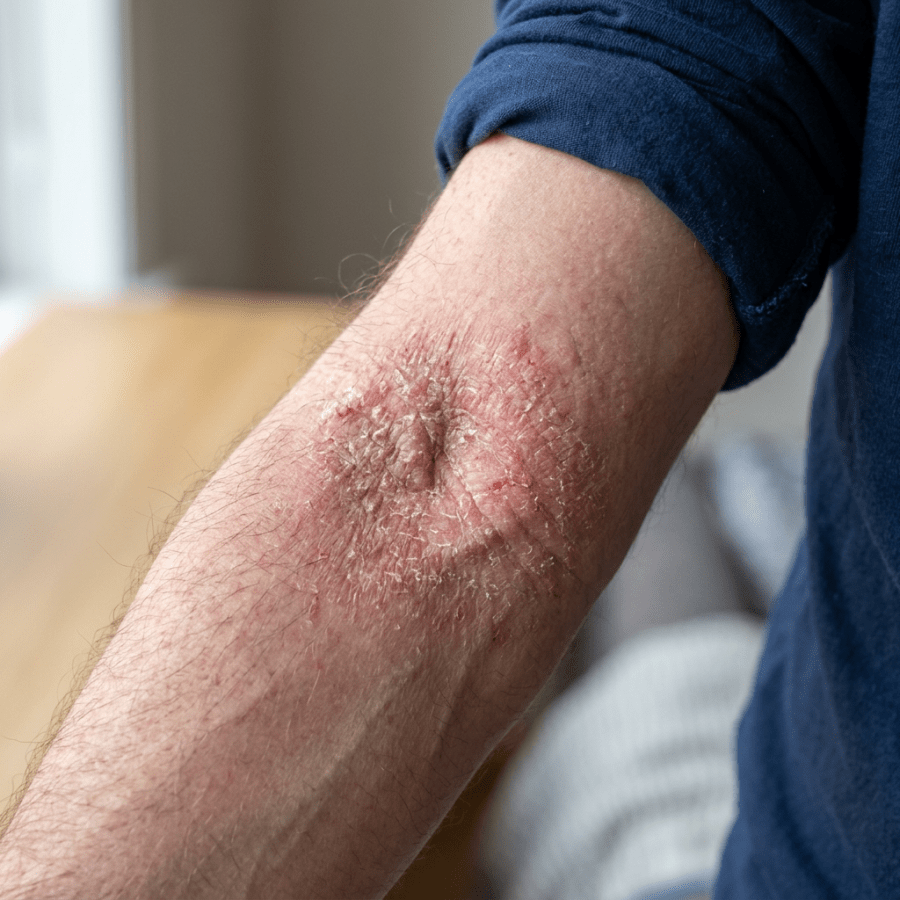
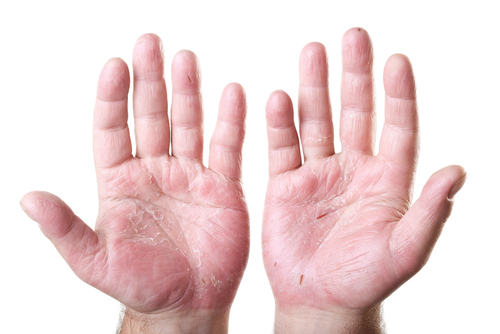
 Eczema (atopic dermatitis) is a problem that is characterized by dry, itchy, scaly and often red skin. There seems to be a genetic predisposition for eczema in some people. People who have eczema seem to have more allergies than those who do not.
Causes: The epidermis or outside layer of skin seems to get irritated by environmental irritants. Patients who have this can be extremely sensitive to water – and if they repeatedly put their hands in water, it may be more common. Other times, there are certain skin products that seem to bring it on such as makeup, and petroleum products are a common cause in those who work in the automotive industry. For healthcare workers, latex gloves can cause severe irritation to the skin. In children, it has been linked to food allergies.
Symptoms: Most individuals have their first symptom of eczema before the age of 5. The symptoms are often characterized by itching, small bumps, skin flaking and patches of redness. Scratching the skin can cause worsening symptoms. It is more commonly found in certain areas of the body, which help in the diagnosis.
Most common areas of the body affected:
1) Hands/fingers of healthcare workers
2) In infants – front of arms, legs, cheeks or scalp may be red/scaly.
3) Back of the neck, elbow creases and backs of the knees as well as the face, wrists and forearms may be affected.
Diagnosis: There is no specific tests to diagnose eczema. The diagnosis is made by taking a medical history and performing a physical examination.
Cure: There is no cure for eczema – it is controlled/treated.
Treatment: It typically improves and then flares (worsens) periodically. Eczema is not curable, but it is controllable with proper self-care and medications such as:
1) Keeping skin hydrated with skin emollients (creams and ointments that moisturize the skin and prevent it from drying out). The best emollients for people with eczema tend to be thick creams or ointments such as (Eucerin or Vaseline petroleum jelly). They are most effective when applied immediately after bathing. Lotions contain more water than creams and are less effective.
2) Avoid hot baths (greater than 10-15 minutes) because they actually can dry the skin out
3) Topical steroids – prescription strength steroid creams or ointments may be recommended and are usually applied twice a day.
4) Protopic and Elidel are often effective for eczema but don’t work as quickly as topical steroids. The are useful in sensitive areas such as the face or groin and can be used in kids under age 2.
5) Oral Steroids are very rarely used to treat a severe eczema flare. There are potential side effects, therefore it is not the most common treatment.
6) Ultraviolet light therapy (phototherapy) can control eczema, but is expensive and may increase the patient’s risk for skin cancer so is usually only used if other therapies are not successful.
7) Oral antihistamines can be useful for itching, but do not usually help with the eczema.
8) Wet dressings may also help soothe the skin, and reduce itching and redness but do not treat the eczema, but rather help with symptoms.
Factors that make eczema worse: Reducing or eliminating some of these factors may help:
1) Heat, perspiration or chronic exposure to water (such as handwashing)
2) Emotional stress/anxiety
3) Rapid temperature changes
4) Exposure to certain irritating chemicals/soaps/detergents/perfumes.
I hope that you have found this information useful. Wishing you the best of health,
Eczema (atopic dermatitis) is a problem that is characterized by dry, itchy, scaly and often red skin. There seems to be a genetic predisposition for eczema in some people. People who have eczema seem to have more allergies than those who do not.
Causes: The epidermis or outside layer of skin seems to get irritated by environmental irritants. Patients who have this can be extremely sensitive to water – and if they repeatedly put their hands in water, it may be more common. Other times, there are certain skin products that seem to bring it on such as makeup, and petroleum products are a common cause in those who work in the automotive industry. For healthcare workers, latex gloves can cause severe irritation to the skin. In children, it has been linked to food allergies.
Symptoms: Most individuals have their first symptom of eczema before the age of 5. The symptoms are often characterized by itching, small bumps, skin flaking and patches of redness. Scratching the skin can cause worsening symptoms. It is more commonly found in certain areas of the body, which help in the diagnosis.
Most common areas of the body affected:
1) Hands/fingers of healthcare workers
2) In infants – front of arms, legs, cheeks or scalp may be red/scaly.
3) Back of the neck, elbow creases and backs of the knees as well as the face, wrists and forearms may be affected.
Diagnosis: There is no specific tests to diagnose eczema. The diagnosis is made by taking a medical history and performing a physical examination.
Cure: There is no cure for eczema – it is controlled/treated.
Treatment: It typically improves and then flares (worsens) periodically. Eczema is not curable, but it is controllable with proper self-care and medications such as:
1) Keeping skin hydrated with skin emollients (creams and ointments that moisturize the skin and prevent it from drying out). The best emollients for people with eczema tend to be thick creams or ointments such as (Eucerin or Vaseline petroleum jelly). They are most effective when applied immediately after bathing. Lotions contain more water than creams and are less effective.
2) Avoid hot baths (greater than 10-15 minutes) because they actually can dry the skin out
3) Topical steroids – prescription strength steroid creams or ointments may be recommended and are usually applied twice a day.
4) Protopic and Elidel are often effective for eczema but don’t work as quickly as topical steroids. The are useful in sensitive areas such as the face or groin and can be used in kids under age 2.
5) Oral Steroids are very rarely used to treat a severe eczema flare. There are potential side effects, therefore it is not the most common treatment.
6) Ultraviolet light therapy (phototherapy) can control eczema, but is expensive and may increase the patient’s risk for skin cancer so is usually only used if other therapies are not successful.
7) Oral antihistamines can be useful for itching, but do not usually help with the eczema.
8) Wet dressings may also help soothe the skin, and reduce itching and redness but do not treat the eczema, but rather help with symptoms.
Factors that make eczema worse: Reducing or eliminating some of these factors may help:
1) Heat, perspiration or chronic exposure to water (such as handwashing)
2) Emotional stress/anxiety
3) Rapid temperature changes
4) Exposure to certain irritating chemicals/soaps/detergents/perfumes.
I hope that you have found this information useful. Wishing you the best of health,
Scott Rennie, D.O.
Board Certified in Obesity Medicine and Family Medicine
This blog is for educational purposes only and does not constitute individual medical advice. Always consult your own physician before making changes to your health, medications, or treatment plan.
 Doctor Rennie's Blog
It’s hard to find experienced people in this particular subject, but you sound like you know what you’re talking about!
Thanks