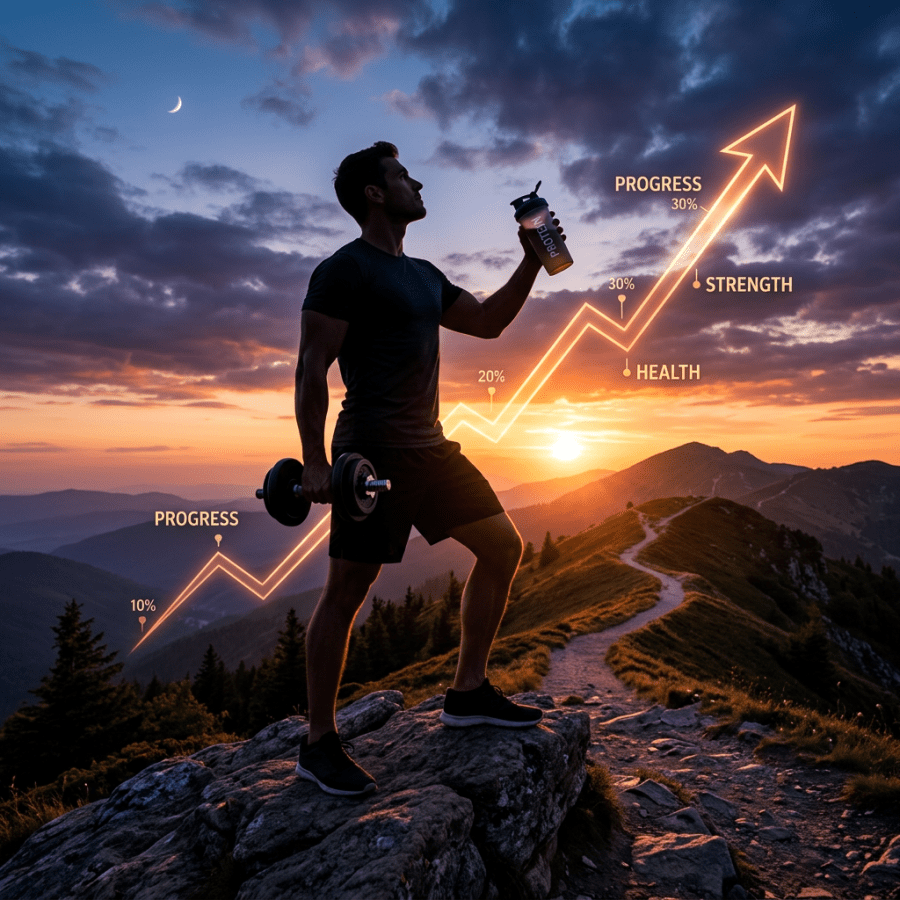
Man holding dumbbell and protein shake on mountain with rising fitness progress chart

Do Ozempic and Zepbound Cause Muscle Loss?

Every few months a new worry about GLP-1 therapy moves through the news cycle. Lately the one I’m fielding most on video visits is muscle. Patients read a headline about “Ozempic muscle” or see a segment warning that these drugs are quietly turning people frail, and they show up to their visit asking whether the weight they’re losing is actually fat, or whether they’re hollowing out their strength along with it. Most just phrase it in terms of what they saw online: GLP or Ozempic muscle loss. Truth is, most of my patients aren’t that worried about it at first. They’re focused on getting the fat off. But some have seen the scare ads on Facebook and other social media railing against GLP-1 medications in general, touting muscle loss as the reason to avoid them. It’s a fair question, and it deserves a real answer.

What the data actually shows

Here’s the uncomfortable part first: the concern isn’t manufactured. Across GLP-1 and dual-agonist trials, roughly 25 to 40 percent of total weight lost is lean mass rather than fat mass, and that share climbs with higher doses and greater total weight loss. In patients losing more than 15 percent of body weight on high-dose therapy, average lean mass decline runs in the range of 10 to 15 percent. That’s not trivial, and it’s higher than what we’d want to see if the sole measuring stick were “weight coming off.”

Lean mass loss and clinically meaningful muscle loss aren’t the same thing, though, and this is where I think the public conversation gets sloppy. Lean mass includes water, organ tissue, and connective tissue alongside contractile muscle. Some degree of lean mass loss happens with any significant weight reduction, including bariatric surgery and aggressive caloric restriction without any medication at all. The relevant clinical question is whether strength and function held up, and whether frailty risk moved. On that narrower and more important question, the current evidence is reassuring for most patients: there’s no consistent signal that GLP-1-induced weight loss causes outright sarcopenia or functional decline in the general obesity population studied so far.

Where the concern sharpens is in specific subgroups: adults over 65, patients with baseline sarcopenia or frailty, and anyone starting from a lower muscle reserve. That’s the population where I’m paying closer attention now, more than the healthy 40-year-old with obesity and good baseline strength.

What’s changing in how we prescribe

A few practical shifts have made their way into how I approach this with patients this year. When muscle preservation is a priority, I start low and titrate slower. This isn’t new advice for tolerability, but it applies here too: aggressive, fast weight loss appears to pull proportionally more from lean mass than a slower trajectory toward the same endpoint.

Protein intake is no longer an aside I mention on the way out the door. Current guidance points to 1.2 to 1.6 g/kg of body weight per day for patients on GLP-1 therapy, meaningfully higher than general population recommendations, and given how much these medications suppress appetite, hitting that number takes real intention. I’ve started asking patients to walk me through a typical day’s protein intake rather than assuming they’re getting enough just because they’re eating less overall.

Resistance training is now part of the treatment plan itself, prescribed with the same specificity as the medication. Two or more sessions a week of resistance work is the most consistent lever we have for preserving lean mass during GLP-1-driven weight loss. For patients who’ve never lifted weights, even bodyweight or band-based resistance work at home is a reasonable starting point, and it’s worth a specific referral to physical therapy or a trainer rather than a general nudge.

And I’m tracking more than the scale. For patients on higher doses, losing significant weight, or starting from a place of reduced muscle reserve, I’m now discussing body composition tracking, whether that’s a DEXA scan, bioelectrical impedance, or simply following functional measures like grip strength and chair-stand time, rather than relying on weight alone to judge how treatment is going. I’ll say plainly: I don’t yet fully trust the consumer-grade body composition numbers patients bring me on their phones. Grip strength and chair-stand time are the measures I put the most weight on. Over video I’m relying on what a patient can demonstrate on camera and tell me, rather than testing it myself, which is a real limitation of doing this work remotely.

Muscle is not the only tissue worth watching on these drugs. Nerve complaints turn up too, from skin that hurts to the touch through to the more serious neuropathies, and the risk of both rises with dose and with how fast the weight comes off. I cover that separately in GLP-1 skin and nerve pain.

What’s coming that may change this conversation further

Drug development is moving on this too, well past prescribing technique. At the American Diabetes Association’s 85th Scientific Sessions this year, early data from the BELIEVE study looked at bimagrumab, an antibody that blocks activin receptor signaling, paired with semaglutide, specifically to see whether it could preserve lean mass during GLP-1 weight loss without blunting fat loss. Separately, researchers at Stanford published mouse data in June showing that a muscle-repair-targeted compound improved muscle regeneration and strength recovery alongside GLP-1 treatment, again without compromising fat loss. Neither approach is available for patients today, but they reflect where the field is heading: toward combination approaches that decouple fat loss from lean mass loss more deliberately.

Where the newer agents in the pipeline land on this question is also worth watching. Retatrutide, the triple GIP/GLP-1/glucagon agonist from Lilly, posted strong topline results across its TRIUMPH program this year, with weight loss in the 20 to 28 percent range depending on the trial population, and a BLA submission is planned for early 2027. Amgen’s MariTide, a monthly injectable combining a GLP-1 agonist with an amylin antibody, showed roughly 20 percent weight loss in Phase 2 with a safety profile consistent with the existing GLP-1 class. Body composition data from both programs will matter as much as the topline weight-loss numbers once they mature.

The bottom line

Muscle loss with GLP-1 therapy is real, but it’s manageable, not a reason to avoid treatment or panic mid-course. Older adults and anyone with baseline frailty need the closest attention, and so does anyone pursuing rapid, high-percentage weight loss on a higher dose. I order a DEXA when I actually need an answer to how much of that weight is fat, and it’s an easier call in a patient who might also have osteoporosis, since the same scan answers both questions. Insurance makes this harder than it should be, and plenty of patients who already know they’re overweight don’t want to pay out of pocket just to confirm it. Protein intake and resistance training aren’t optional add-ons anymore. They’re as much a part of the standard prescription as the injection itself.

Scott Rennie, D.O.
Board Certified in Obesity Medicine and Family Medicine

This blog is for educational purposes only and does not constitute individual medical advice. Always consult your own physician before making changes to your health, medications, or treatment plan.

Sources:

GLP-1 Therapies in 2026: Beyond Blood Sugar and the Scale, AJMC: https://www.ajmc.com/view/glp-1-therapies-in-2026-beyond-blood-sugar-and-the-scale

Should We Be Concerned About Muscle Loss With GLP-1s?, Medscape: https://www.medscape.com/viewarticle/should-we-be-concerned-about-muscle-loss-glp-1s-2026a1000p67

Increasing GLP-1 Use Raises Muscle Loss Concerns, Medscape: https://www.medscape.com/viewarticle/increasing-glp-1-use-raises-muscle-loss-concerns-2026a1000p4h

Deep Dive: GLP-1, Muscle Loss and What It Means, Medscape: https://www.medscape.com/c99/p10/are-concerns-glp-1s-and-muscle-loss-real-or-overblown-2026a1000gdz

New GLP-1 Therapies Enhance Quality of Weight Loss by Improving Muscle Preservation, American Diabetes Association: https://diabetes.org/newsroom/press-releases/new-glp-1-therapies-enhance-quality-weight-loss-improving-muscle-0

Drug enhances muscle repair during GLP-1 weight-loss treatment in mice, Stanford Medicine: https://med.stanford.edu/news/all-news/2026/06/muscle-glp-1.html

Retatrutide FDA Approval Status 2026, freemedicaljournals.com: https://freemedicaljournals.com/blog/retatrutide-fda-approval-status-2026/

Results From Amgen’s Phase 2 Obesity Study of Monthly MariTide, Amgen: https://www.amgen.com/newsroom/press-releases/2025/06/results-from-amgens-phase-2-obesity-study-of-monthly-maritide-presented-at-the-american-diabetes-association-85th-scientific-sessions


Why Do I Eat at Night? Night Eating Syndrome Explained

Night Eating Syndrome (NES) is one of those conditions that many patients, and even some clinicians, overlook. NES is a recognizable eating disorder where the timing of food intake shifts into the evening and nighttime hours, distinct from occasional snacking after dinner. Patients often feel embarrassed and dismiss it as a bad habit. It has real consequences for weight, sleep, and overall health.

The diagnosis of NES is based on established criteria. To meet the definition, at least 25 percent of daily food intake occurs after the evening meal or there are at least two episodes of nocturnal eating per week. These episodes are not explained by social or cultural norms. People with NES are aware of what they are eating at night, unlike sleep-related eating disorders where the behavior may happen without recall. The condition also needs to cause significant distress or impairment in functioning (Allison & Tarves, 2011).

In practice, this can look two different ways. Some patients skip breakfast, eat a small lunch, and end up consuming half their calories after dinner. Others wake almost every night around 1 or 2 a.m., head to the kitchen, and eat before they can fall back asleep. Over time, the pattern disrupts sleep and drives weight gain.

NES also overlaps with mood and sleep disorders. Patients often report insomnia, depression, or evening stress. Eating becomes a way to cope with anxiety or to induce sleep. That’s why treatment has to be more than calorie restriction. Cognitive behavioral therapy focused on both eating and sleep habits has shown promise, and selective serotonin reuptake inhibitors (SSRIs) have been helpful in some patients (Allison & Tarves, 2011). I prefer CBT-I, but in practice medications often end up being what gets prescribed. I don’t treat night eating syndrome myself. I screen for it before prescribing weight loss medications, then refer out.

The tie between NES and obesity is important. McCuen-Wurst and colleagues (2018) have shown that NES is associated with higher rates of metabolic problems such as type 2 diabetes and hypertension. Timing matters. Eating late into the night throws off circadian rhythms and glucose metabolism, so the impact is greater than just extra calories.

On a video visit, NES surfaces only if you ask about it directly. Within the past six months, one patient told me, “I can’t sleep unless I eat something at midnight.” That single line was the diagnosis: Night Eating Syndrome. We had her follow up with behavioral health.

Treatment is best when it’s individualized. Weight loss alone won’t fix NES if the underlying behaviors and triggers aren’t addressed. Collaboration between primary care, psychiatry, nutrition, and sleep medicine can make a real difference. For colleagues, the key is asking when patients eat as closely as how much. For patients, understanding that this is a recognized condition with treatment options can take away some of the shame and open the door to better care.

Scott Rennie, D.O.
Board Certified in Obesity Medicine and Family Medicine

This blog is for educational purposes only and does not constitute individual medical advice. Always consult your own physician before making changes to your health, medications, or treatment plan.

References:

Allison KC, Tarves EP. Treatment of night eating syndrome. Psychiatr Clin North Am. 2011;34(4):785-796. doi:10.1016/j.psc.2011.08.002

McCuen-Wurst C, Ruggieri M, Allison KC. Disordered eating and obesity: associations between binge-eating disorder, night-eating syndrome, and weight-related comorbidities. Ann N Y Acad Sci. 2018 Jan;1411(1):96-105. doi: 10.1111/nyas.13467. Epub 2017 Oct 16. PMID: 29044551; PMCID: PMC5788730

What Is an Obesity Medicine Board Certified Doctor?

More family physicians, myself included, are choosing to become certified through the American Board of Obesity Medicine. The credential looks small on paper. What sits behind it is a real change in how we handle obesity and the conditions that travel with it.

ABOM certification is open to physicians who can show advanced knowledge in preventing, evaluating, and treating obesity. There are two routes. One is 60 hours of continuing medical education credits in obesity-related topics, half of which must specifically address obesity treatment. The other is an accredited obesity medicine fellowship. Either way, candidates then sit for a 4-hour exam covering the physiology and pathophysiology of obesity, nutrition and behavioral treatment, medications, surgery, and bias in care.

Why go through all that? We are the ones patients come to first. About 40% of U.S. adults have obesity, and it is tied to diabetes, heart disease, infertility, arthritis, and worse outcomes with infections. Yet most of us had very little structured training on obesity in medical school or residency. I certainly didn’t. ABOM fills that gap with something more useful than repeating “eat less, move more.”

Patients are also asking harder questions than they used to. GLP-1 medications like semaglutide and tirzepatide changed the conversation. People have worked out that weight regulation is physiology, not character. They want to know whether medication makes sense for them, what the risks are, and what else they should be doing. Certification puts you in a better position to answer that honestly and to build a plan that lasts longer than a few months.

For me, the certification built confidence. I know how to adjust anti-obesity medications, screen for related conditions like PCOS or fatty liver, and talk about weight without stigma. Patients notice. They feel taken seriously when obesity gets treated as the chronic medical condition it is.

One case stays with me. A patient in her fifties came to me with obesity and prediabetes, worn down after years of failed diets. Using what I’d learned, I recognized she was a candidate for pharmacotherapy. We started semaglutide, and we built a plan around meal structure, activity, and sleep. Within months her A1c had come back into the normal range and her energy had returned.

Colleagues are seeing benefits too. A physician I know in rural Missouri became ABOM-certified and quickly became a regional referral point. Practices in nearby towns began sending her patients rather than having them drive hours to an urban obesity clinic. In an underserved area, that is the difference between getting treated and not.

For doctors considering it, the field is growing quickly. More than 11,500 physicians in the United States and Canada now hold the certification, up from roughly 9,800 a year earlier. Insurers are beginning to recognize obesity medicine, which means more treatments get covered when a certified physician is guiding them. You also end up connected to a national group of people working on one of the largest drivers of chronic disease we have.

So the certification is a line on a CV. It is also the reason I practice differently than I did before I sat the exam, and that is the part that reaches patients.

Scott Rennie, D.O.

Sources:

American Board of Obesity Medicine: https://www.abom.org

Johnson-Rabbett B, et al. An Update on the American Board of Obesity Medicine (ABOM): 2017-2024. Obesity. 2025. doi:10.1002/oby.70013

CDC/NCHS. Obesity and Severe Obesity Prevalence in Adults: United States, August 2021-August 2023. NCHS Data Brief No. 508: https://www.cdc.gov/nchs/products/databriefs/db508.htm

Flegal KM, Kruszon-Moran D, Carroll MD, Fryar CD, Ogden CL. Trends in Obesity Among Adults in the United States, 2005 to 2014. JAMA. 2016;315(21):2284-2291.

Board Certified in Obesity Medicine and Family Medicine

This blog is for educational purposes only and does not constitute individual medical advice. Always consult your own physician before making changes to your health, medications, or treatment plan.

Why the Scale Isn’t the Best Measure of Weight Loss

When patients bring up weight loss, the number on the scale is almost always the first thing out of their mouth. The scale is a poor narrator. What is being lost, fat or muscle or some mix of the two, matters as much as how much of it is gone. That distinction is body composition, and it drives health, function, and what happens years down the line.

Research from Dr. Dympna Gallagher and colleagues has mapped how body composition shifts during weight loss, and how activity, resistance training in particular, protects muscle through it.

Not all weight loss is the same. Weight comes off as a mix of fat and fat-free mass, the latter including muscle, water, and bone. Work from the 1980s estimated that 20 to 30 percent of the weight lost on a standard diet comes from lean mass (Webster et al., 1984). That fraction is not fixed. Age, diet quality, activity, and the speed of loss all move it. Steady loss of about half a kilogram a week protects muscle better than anything faster (Council on Scientific Affairs, JAMA 1988). This matters because Framingham data link muscle loss to higher mortality while fat loss lowers risk (Allison et al., 1999).

Exercise changes the arithmetic. Gallagher’s review and work from Beavers and colleagues found that structured exercise cuts muscle loss during weight reduction nearly in half. In one trial in older adults, resistance training brought lean mass loss down from 16 percent to 10 percent (Beavers et al., 2017). Resistance work beat aerobic exercise at preserving muscle even when both groups lost similar total weight, and combining them produced the best result: more fat lost, better strength, better mobility (Davidson et al., 2009).

Body composition also drifts with age even when the scale holds steady. The Health ABC study found people gradually losing skeletal muscle and subcutaneous fat while gaining visceral fat and fat within muscle tissue (Newman et al., 2005). Less muscle with more central fat raises metabolic risk and costs mobility, and it is a large part of why sarcopenic obesity shows up in older adults.

Bariatric surgery offers a natural experiment in what happens under very large weight loss. Gallagher’s group found that surgical patients lost substantial fat while holding onto muscle long term, provided nutrition stayed adequate and they resumed activity afterward (Davidson et al., 2018). Skeletal muscle remained relatively stable at five years despite major reductions in fat mass.

What I tell patients comes down to this. Do not manage your health by the scale alone. Protect the muscle. Resistance training two or three times a week, adequate protein while calories are restricted, and goals you can actually sustain. A 5 to 10 percent reduction over roughly 20 weeks improves metabolic risk and is realistic for most people (Wadden et al., 1996). I would rather track grip strength or how many chair stands someone can do than watch the scale week to week, because those numbers tell me whether the weight coming off is the weight we wanted to lose.

That is the whole point of paying attention to composition. Losing fat while holding muscle buys better health, more independence, and better metabolic outcomes. Resistance training is not an optional extra here. It belongs in the treatment plan alongside everything else.

Scott Rennie, D.O.

References

Gallagher D. Body Composition Changes with Weight Loss, Including Physical Activity Regimens. Columbia University, 2022.

Wadden TA et al. Am J Clin Nutr. 1996;63(3 Suppl):294S-298S.

Council on Scientific Affairs. JAMA. 1988;260(17):2547-2551.

Webster JD et al. Can J Appl Sport Sci. 1984;9(3):111-118.

Allison DB et al. Int J Obes Relat Metab Disord. 1999;23(1):1-7.

Beavers KM et al. Obesity. 2017;25(9):1476-1483.

Davidson LE et al. Arch Intern Med. 2009;169(2):122-131.

Davidson LE et al. Obesity. 2018;26(3):500-506.

Newman AB et al. Am J Clin Nutr. 2005;82(4):872-878.

Board Certified in Obesity Medicine and Family Medicine

This blog is for educational purposes only and does not constitute individual medical advice. Always consult your own physician before making changes to your health, medications, or treatment plan.

Is Yo-Yo Dieting Bad for You? Weight Cycling Explained

A lot of my patients describe the same arc. They work hard, lose weight, feel good for a while, and then months or years later it comes back. That repeated loss and regain is weight cycling. It is common, and it is hard on people both physically and emotionally.

The question I hear most often is whether it is even worth trying if the weight is coming back anyway. The research answers that more clearly than it used to, and the answer is yes.

Weight cycling generally means repeated intentional loss followed by unintentional regain. Some researchers set the bar at a 10 percent change in body weight occurring three or more times. Depending on the study, it affects 20 to 35 percent of men and up to half of women (Montani et al., 2015).

Why does the weight return? Biology pushes back harder than most people anticipate. After weight loss, resting energy expenditure falls further than body size alone would predict, and this metabolic adaptation can persist for years, meaning the body burns less than expected (Fothergill et al., 2016). Hormones move too. Leptin drops, hunger hormones climb, and patients end up hungrier and less satisfied by meals than they were before (Sumithran et al., 2011). The body also tends to compensate for exercise by raising appetite. Together these explain why maintenance is the hard part, not the losing (Thomas et al., 2012).

The real question is whether the cycling itself does damage. Large reviews and cohort studies have not found strong evidence that weight cycling raises mortality or major chronic disease risk when the weight loss is intentional and supervised (Mehta et al., 2014). Some work suggests regain may favor fat over muscle, visceral fat especially, though the findings are inconsistent (Mackie et al., 2017).

The psychological picture is better than most people assume. Foster and colleagues found that patients who regained weight still reported improvements in mood, hunger, and eating behavior after the loss phase (Foster et al., 1996). Other work has found no consistent long-term harm from the pattern itself (Osborn et al., 2011).

So should patients keep trying? The National Task Force on the Prevention and Treatment of Obesity concluded in 1994 that weight cycling should not deter people from attempting weight loss, and that position has held up (National Task Force, JAMA 1994). The benefits of intentional loss, lower blood pressure, better lipids, better glucose control, better quality of life, generally outweigh the risk of regaining.

One of my patients lost about 8 percent of her body weight through diet and walking. A year later most of it had come back. During the stretch she kept it off, though, her blood pressure normalized and she came off one of her antihypertensives. The weight returned. The benefit she got during that window was real and measurable, and the research says her experience is the rule rather than the exception.

What I steer patients toward is sustainable habit rather than another aggressive diet. Regular activity, consistent eating patterns, decent sleep, and watching the trend line instead of the daily number. A setback does not undo the progress. Staying connected to support, whether that is a clinician, a dietitian, or counseling, matters more than most people expect.

Weight cycling is real and it is discouraging. It is not a reason to stop. Even temporary weight loss buys real health, and the useful reframe is to treat weight management as ongoing care rather than a project with an end date.

Scott Rennie, D.O.

References

Montani JP et al. Obesity Reviews. 2015.

Fothergill E et al. Obesity. 2016.

Sumithran P et al. NEJM. 2011.

Thomas DM et al. Obesity. 2012.

Mehta T et al. Obesity Reviews. 2014.

Mackie GM et al. Obes Res Clin Pract. 2017.

Foster GD et al. J Consult Clin Psychol. 1996.

Osborn CY et al. Ethn Dis. 2011.

National Task Force on the Prevention and Treatment of Obesity. Weight cycling. JAMA. 1994;272(15):1196-1202.

Board Certified in Obesity Medicine and Family Medicine

This blog is for educational purposes only and does not constitute individual medical advice. Always consult your own physician before making changes to your health, medications, or treatment plan.

Does Fasting Slow Aging? What the Science Says

Aging cannot be stopped. The pace of it may be influenced by what and when we eat, and that idea is old rather than new. Since the 1930s, animal studies have shown that cutting calories without causing malnutrition extends lifespan. Rodents held at a 30 percent reduction lived longer with less cancer and less heart disease.

The proposed mechanisms are lower oxidative stress, better mitochondrial function, and less inflammation. Less fuel in, less metabolic wear.

Then you move from mice to people and it gets complicated.

The CALERIE trials brought calorie restriction into human research. CALERIE II found that cutting roughly 15 percent of calories for two years improved blood pressure, cholesterol, and markers of oxidative stress, and those benefits appeared without major weight loss (Kraus et al., 2019). The obstacle is adherence. Sustained restriction is hard on mood, on social life, and on nutritional balance, and most people will not hold it.

Which is how fasting patterns entered the conversation. Intermittent fasting covers several approaches. Some people fast on alternate days. Others follow 5:2, eating normally five days a week and restricting on two. Time-restricted feeding, which confines eating to an 8 to 10 hour window, has drawn the most recent attention.

Alternate-day fasting does produce fat and weight loss, but hunger is a serious barrier and dropout rates run high. Modified versions have not clearly outperformed standard calorie restriction (Trepanowski et al., 2017).

Time-restricted feeding looks more workable. Sutton and colleagues tested an early schedule with all meals between 7 a.m. and 3 p.m. Participants did not lose weight, but insulin sensitivity, blood pressure, and oxidative stress markers all improved, and they reported less hunger through the evening (Sutton et al., 2018). Other short-term work points the same direction, particularly on appetite control and metabolic flexibility (Hatori et al., 2012; Varady et al., 2022).

What does that mean in practice? Calorie restriction has the strongest animal data and some genuinely promising human results, and almost nobody sustains it. Alternate-day fasting rarely survives contact with real life. Time-restricted feeding is the one most patients can actually keep, and even moving to a 10 hour window and dropping late-night meals is a defensible starting point.

When I talk this through with patients, I usually suggest starting at a 12 hour window and tightening it only if they tolerate the change well. What goes in the window still matters more than the window does, and nutrient density should not get lost in the enthusiasm about timing.

Fasting is one tool among several, and which one fits depends on the person, their health, and what they can hold onto for longer than a month.

Scott Rennie, D.O.

References

Ravussin E, Redman LM et al. 2015.

Kraus WE et al. Lancet Diabetes Endocrinol. 2019.

Sutton EF et al. Cell Metab. 2018.

Trepanowski JF et al. JAMA Intern Med. 2017.

Heilbronn LK et al. 2005.

Spadaro PA et al. 2022.

Hatori M et al. Cell Metab. 2012.

Varady KA et al. 2022.

Board Certified in Obesity Medicine and Family Medicine

This blog is for educational purposes only and does not constitute individual medical advice. Always consult your own physician before making changes to your health, medications, or treatment plan.

How Does Aging Change Your Metabolism? What Research Shows

Obesity, diabetes, cardiovascular disease, and frailty get treated as though they were the price of getting older. Work from researchers like Luigi Fontana points somewhere else. Decades of metabolic strain do most of this damage, and diet, activity, and the choices stacked on top of them shape how much strain accumulates.

The scale is hard to ignore. Chronic disease accounts for close to 90% of U.S. healthcare spending, most of it aimed at managing complications rather than preventing them (Martin et al., Health Affairs, 2021). Life expectancy in this country fell by more than two years between 2019 and 2021. Obesity now affects 40.3% of adults aged 20 and older, with 9.7% in the severe range (1). Excess adiposity drives hypertension, diabetes, fatty liver disease, and several cancers.

The biology is familiar. Oxidative stress, inflammation, and insulin resistance sit underneath most of these conditions (Fontana & Partridge, Cell, 2015). Abdominal fat is active tissue rather than storage. It fuels insulin resistance and chronic inflammation, and it also activates bone marrow. In the PESA cohort of 745 apparently healthy adults imaged with FDG-PET, bone marrow activation tracked with every component of metabolic syndrome, and the activated group carried metabolic syndrome at 22.2% versus 6.7% (Devesa et al., Eur Heart J, 2022). Obesity changes the terrain of the body long before symptoms show up.

Calorie restriction without malnutrition is the clearest intervention we have. The animal data are strong. In rhesus monkeys, long-term restriction slowed age-related brain atrophy (Colman et al., Science, 2009), preserved muscle and function (Colman et al., J Gerontol, 2008), and lowered frailty and chronic disease burden (Yamada et al., J Gerontol, 2018).

This literature gets oversold, and the primate data are where it happens. The 2017 joint reanalysis of the two big studies found a survival benefit in the Wisconsin animals and no significant survival effect in the National Institute on Aging cohort (Mattison et al., Nat Commun, 2017). Health measures improved in both. Lifespan did not reliably follow. That is a more honest summary than the one usually quoted.

Human data are thinner but point the same direction. CALERIE tested roughly a 25% calorie reduction over two years and found improvements in blood pressure, cholesterol, glucose, inflammatory markers, heart rate variability, and insulin sensitivity (Meydani et al., Aging, 2016; Stein et al., Aging Cell, 2012; Weiss et al., Am J Clin Nutr, 2006). Even the more realistic reduction people actually achieved, closer to 12%, produced meaningful metabolic change (Kraus et al., Lancet Diabetes Endocrinol, 2019).

Calories are one variable. Nutrient quality and timing matter too. Studies in mice suggest high-protein diets may shorten lifespan, while restricting methionine or branched-chain amino acids improves metabolic health and longevity markers (Solon-Biet et al., Cell Metab, 2014). A trial in men with prostate cancer found that a single month of protein restriction lowered fat mass, cholesterol, and insulin (Fontana et al., Cell Rep, 2016). Protein source appears to matter as well, with plant-based sources holding an advantage over animal-based ones.

Timing has drawn its own attention. Intermittent fasting, whether through time-restricted eating or alternate-day fasting, extends lifespan in animal studies and protects against age-related disease including diabetes and cancer (Mattson et al., PNAS, 2014). Human studies suggest benefits on body fat, insulin sensitivity, and metabolic markers (Tosti et al., Aging Biology, 2022).

The gut microbiome adds a layer underneath all of it. Diet shapes microbial diversity and function, which in turn shapes inflammation, immunity, and metabolism (Thorburn et al., Immunity, 2014; Griffin et al., Cell Host Microbe, 2017). Fiber, protein type, and eating pattern all shift that balance. Nutrition never acts alone. It works through microbial partners.

What Fontana and others argue is that the real challenge lies less in treating diseases once they appear and more in holding metabolic integrity across a lifespan. That means healthcare built around prevention rather than reaction. Whole-food, plant-predominant eating. Fewer excess calories. Less reliance on protein-heavy patterns. Fasting strategies where they fit the patient. Attention to gut and immune health.

Aging isn’t a disease. Metabolic dysfunction is. Treat it early and seriously, through diet, lifestyle, and the interventions that have evidence behind them, and the curve bends toward years worth having.

Scott Rennie, D.O.

References:

1. National Center for Health Statistics. Prevalence of Overweight, Obesity, and Severe Obesity Among Adults Age 20 and Older: United States, 1960–1962 Through August 2021–August 2023. https://www.cdc.gov/nchs/data/hestat/obesity-adult-17-18/obesity-adult.htm

2. Martin AB, et al. Health Affairs. 2021.

3. Fontana L, Partridge L. Promoting health and longevity through diet: from model organisms to humans. Cell. 2015;161(1):106-118. https://pubmed.ncbi.nlm.nih.gov/25815989/

4. Fontana L, Kennedy BK, Longo VD, Seals D, Melov S. Medical research: treat ageing. Nature. 2014;511(7510):405-407. https://pubmed.ncbi.nlm.nih.gov/25056047/

5. Devesa A, et al. Bone marrow activation in response to metabolic syndrome and early atherosclerosis. Eur Heart J. 2022;43(19):1809-1828. https://pubmed.ncbi.nlm.nih.gov/35567559/

6. Colman RJ, et al. Science. 2009;325(5937):201-204.

7. Colman RJ, et al. J Gerontol A Biol Sci Med Sci. 2008;63(6):556-559.

8. Yamada Y, et al. J Gerontol A Biol Sci Med Sci. 2018;73(3):273-278.

9. Mattison JA, et al. Caloric restriction improves health and survival of rhesus monkeys. Nat Commun. 2017;8:14063. https://pubmed.ncbi.nlm.nih.gov/28094793/

10. Weiss EP, et al. Am J Clin Nutr. 2006;84(5):1033-1042.

11. Meydani SN, et al. Aging (Albany NY). 2016;8(7):1416-1431.

12. Stein PK, et al. Aging Cell. 2012;11(4):644-650.

13. Kraus WE, et al. Lancet Diabetes Endocrinol. 2019;7(9):673-683.

14. Solon-Biet SM, et al. Cell Metab. 2014;19(3):418-430.

15. Fontana L, et al. Cell Rep. 2016;16(2):520-530.

16. Mattson MP, et al. Proc Natl Acad Sci USA. 2014;111(47):16647-16653.

17. Tosti V, et al. Aging Biology. 2022.

18. Thorburn AN, et al. Immunity. 2014;40(6):833-842.

19. Griffin NW, et al. Cell Host Microbe. 2017;21(1):84-96.

Board Certified in Obesity Medicine and Family Medicine

This blog is for educational purposes only and does not constitute individual medical advice. Always consult your own physician before making changes to your health, medications, or treatment plan.

Do Gut Bacteria Affect Your Weight? The Microbiome

When we talk about obesity, the conversation usually stops at calories and exercise. The trillions of microorganisms living in the gut deserve a place in it too. That ecosystem shapes metabolism, appetite, immune function, and the way the body handles stress. I have found that once patients understand the connection, they see weight and health in a very different light.

The microbiome covers more than bacteria. It includes archaea, fungi, viruses, and all their genetic material and metabolic products. The microbiota refers to the organisms themselves. None of it is passive. These organisms interact with diet, hormones, and the immune system in ways that either support health or push toward disease.

Diet does most of the shaping. Patterns rich in fiber and plant foods foster diversity and encourage species like Bifidobacteria and Bacteroides. Diets heavy in fat and low in fiber do the reverse. In older adults, that second pattern has been linked to frailty and worse health outcomes (Claesson et al., Nature, 2012).

The clinical relevance shows up in the obesity data. People with obesity tend to carry less diverse microbiomes and a greater capacity to pull energy out of food. In the foundational experiments, gut bacteria from obese mice were transplanted into germ-free mice, and the recipients gained more fat on the same caloric intake (Turnbaugh et al., Nature, 2006). The earlier work that set this up was a profiling study rather than a transplant, showing that ob/ob mice carry a different microbial composition than lean littermates (Ley et al., PNAS, 2005). Worth keeping those two straight, since they get merged constantly.

The mechanism comes down to metabolites. Microbes in the colon ferment fiber into short-chain fatty acids such as acetate, propionate, and butyrate. These influence GLP-1 and PYY, shift fat metabolism, and trigger inflammatory pathways that feed insulin resistance (Islam et al., Nutrients, 2022; Kong et al., Front Neurosci, 2021). High-fat diets also weaken the gut barrier, letting lipopolysaccharides leak into circulation. That process, metabolic endotoxemia, promotes systemic inflammation, insulin resistance, and weight gain (Kobyliak et al., Nutr J, 2016).

Antibiotic exposure adds another layer. A JAMA Network Open cohort followed 5,128 New Zealand children and found that 95% had received at least one antibiotic course before age four. Those with more than nine courses had 2.4 times the odds of obesity by age 4.5, and the association was strongest when exposure began before the first birthday (Chelimo et al., 2020). Animal models mirror it. Low-dose antibiotics given at weaning increased fat mass and altered metabolic pathways (Cho et al., Nature, 2012).

The microbiome talks to the brain as well. Microbial metabolites affect ghrelin, leptin, GLP-1, and CCK, the hormones that govern appetite, mood, and satiety (Van Son et al., Int J Mol Sci, 2021). That may be part of why chronic stress, anxiety, and disordered eating so often travel alongside changes in gut composition.

So where does this land in practice? Obesity treatment has to reach past calorie restriction. Supporting a healthy microbiome matters. Fiber-rich diets, probiotics, and prebiotics are under study as low-risk interventions. Synbiotics, which combine the two, are being evaluated as well. Fecal microbiota transplantation remains research territory. Even bariatric surgery outcomes may be partly explained by microbial shifts (Kovatcheva-Datchary et al., Cell Metab, 2015).

I have seen patients become more open to dietary change once they understand that what they eat feeds their microbes as much as it feeds them. That reframe carries weight. It moves the focus from restriction to partnership, from fighting the body to working with it.

Scott Rennie, D.O.

References:

1. Claesson MJ, et al. Gut microbiota composition correlates with diet and health in the elderly. Nature. 2012;488(7410):178-184. https://pubmed.ncbi.nlm.nih.gov/22797518/

2. Turnbaugh PJ, et al. An obesity-associated gut microbiome with increased capacity for energy harvest. Nature. 2006;444(7122):1027-1031. https://pubmed.ncbi.nlm.nih.gov/17183312/

3. Ley RE, et al. Obesity alters gut microbial ecology. Proc Natl Acad Sci USA. 2005;102(31):11070-11075. https://pubmed.ncbi.nlm.nih.gov/16033867/

4. Islam MR, et al. Nutrients. 2022;14(3):624.

5. Kong D, et al. Front Neurosci. 2021;15:755845.

6. Kobyliak N, et al. Nutr J. 2016;15:43.

7. Chelimo C, et al. Associations of Prenatal and Childhood Antibiotic Exposure With Obesity at Age 4 Years. JAMA Netw Open. 2020;3(1):e1917577. https://pubmed.ncbi.nlm.nih.gov/31977058/

8. Cho I, et al. Antibiotics in early life alter the murine colonic microbiome and adiposity. Nature. 2012;488(7413):621-626. https://pubmed.ncbi.nlm.nih.gov/22914093/

9. Van Son J, et al. Int J Mol Sci. 2021;22(6):2993.

10. Kovatcheva-Datchary P, et al. Cell Metab. 2015;22(6):971-982.

Board Certified in Obesity Medicine and Family Medicine

This blog is for educational purposes only and does not constitute individual medical advice. Always consult your own physician before making changes to your health, medications, or treatment plan.