
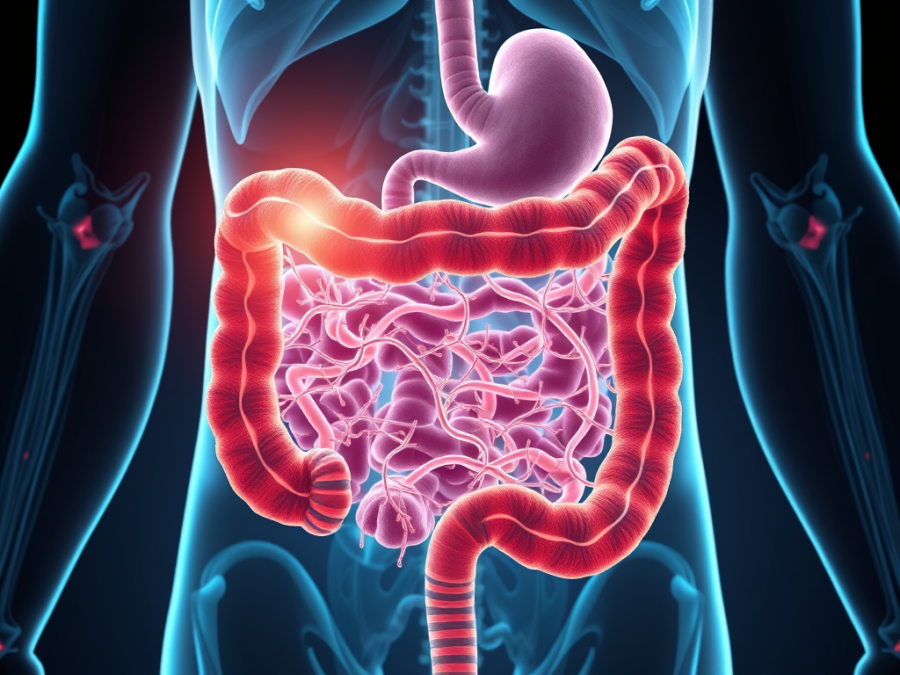
When we think about metabolic disease, attention goes to blood sugar, insulin, and fat. Another organ drives much of the process quietly, and it is the gut.
Calling the gut a digestive tube undersells it badly. It is a complex, dynamic system that shapes how we handle nutrients, regulate hormones, and respond to infection. Researchers now treat it as central to metabolic health, and that shift has opened new thinking about both prevention and treatment.
Consider what it actually contains. Its own nervous system, sometimes called the second brain. An endocrine system producing GLP-1, PYY, and ghrelin. A major site of immune defense. And constant interaction with the trillions of microbes living inside it. Together these systems determine how food gets processed, when fullness registers, and how glucose is regulated (Seeley et al., Cell Metab, 2015).
The gut-brain conversation is the powerful part. Signals move both directions. Hormones, nerve messages, and bacterial metabolites all feed into how the brain regulates appetite and metabolism. This is a large part of why simple calorie counting fails so often. The gut can override willpower, and the brain listens closely to what it says.
Bariatric surgery demonstrates the whole system in action. Vertical sleeve gastrectomy and Roux-en-Y gastric bypass do far more than reduce stomach size. They produce wide-reaching changes in gut physiology that explain why they work so well for weight loss and diabetes control. After surgery, GLP-1 rises, insulin sensitivity improves, food preferences shift, and bile acid metabolism changes. The gut barrier tightens, which reduces inflammation. Most striking of all, patients often defend a new, lower body weight afterward, which suggests the whole regulatory system has reset (Stefater et al., Gastroenterology, 2010). Bile acid signaling appears central to that reset, and it holds across procedures (Myronovych et al., Obesity, 2014).
Nutrient signaling changes too. Iron metabolism is altered after surgery, and the change has been linked to HIF-2α signaling pathways that also improve glucose handling and GLP-1 release (Evers et al., Cell Rep, 2022). Adaptations like that are hard to explain with mechanical restriction alone.
The microbiome is another piece. Surgery shifts bacterial composition toward communities associated with healthier metabolism, and barrier function improves alongside it. Molecules like Reg3g strengthen the gut lining, increasing mucus and reducing leakiness, which lowers systemic inflammation and metabolic stress (Shin et al., Cell Metab, 2022).
These insights point toward treatments that skip the operating room. GLP-1 receptor agonists reproduce some of the hormonal effects seen after bypass or sleeve. Bile acid modulators, microbiome therapies, and strategies targeting iron signaling are all under study as ways into the same pathways.
Seen this way, the gut is where the body decides how to use energy, how to balance hormones, and how to regulate immunity. For patients, that science explains why surgery and gut-focused medications can make such a difference. For clinicians, it suggests the most effective treatment plans will be the ones that respect what the gut is actually doing.
References:
1. Seeley RJ, Chambers AP, Sandoval DA. The role of gut adaptation in the potent effects of multiple bariatric surgeries on obesity and diabetes. Cell Metab. 2015;21(3):369-378. https://pubmed.ncbi.nlm.nih.gov/25662404/
2. Stefater MA, et al. Sleeve gastrectomy induces loss of weight and fat mass in obese rats, but does not affect leptin sensitivity. Gastroenterology. 2010;138(7):2426-2436. https://pubmed.ncbi.nlm.nih.gov/20226189/
3. Myronovych A, et al. Vertical sleeve gastrectomy reduces hepatic steatosis while increasing serum bile acids in a weight-loss-independent manner. Obesity (Silver Spring). 2014;22(2):390-400. https://pubmed.ncbi.nlm.nih.gov/23847068/
4. Evers SS, et al. Cell Rep. 2022;38(11):110487.
5. Shin JH, et al. Cell Metab. 2022;34(5):747-761.e6.
Board Certified in Obesity Medicine and Family Medicine
This blog is for educational purposes only and does not constitute individual medical advice. Always consult your own physician before making changes to your health, medications, or treatment plan.
 Doctor Rennie's Blog