
Food Addiction and Obesity: How the Brain Is Involved

The human brain gets described as an engineering marvel. Like any product, it ships with vulnerabilities. Evolution built a system for surviving scarcity, and we now run that system in an environment of constant stimulation and engineered food. The mismatch explains a great deal about why obesity and addiction share so much ground.

One useful way to frame it is in terms of failure modes. Sometimes the design itself creates the problem. Sometimes development goes off track. And sometimes a perfectly good brain breaks down under conditions no brain was built for.

Take the design. We evolved to crave calorie-dense food because it was scarce and it kept us alive. Sugar and fat are now everywhere, and those old drives get hijacked. Food companies understand how to exploit them, the same way addictive substances exploit the same reward circuitry. The biology has not changed. The environment has.

Development matters too. Prenatal nutrition, early childhood adversity, and other disruptions shape how the brain handles reward and stress. Analysis of roughly 2,700 children in the NIH-funded ABCD Study found that higher BMI was associated with thinner cortex, particularly in prefrontal regions, and with lower working memory on list-sorting tasks (Laurent et al., 2020). Brain development itself appears alterable in the setting of poor diet and excess weight.

Then there are the extreme conditions. Trauma, chronic stress, and social adversity overwhelm coping systems, and food and drugs become the fallback. Calling that a failure of willpower misses what is happening. The brain is adapting, badly, to circumstances it can’t otherwise handle. It also helps explain why obesity and addiction cluster in groups facing economic hardship and unstable environments.

Dopamine sits at the center of both. Dopamine does more than produce pleasure. It teaches the brain what to attend to and what to repeat. Eat sugar, dopamine surges, the brain takes note. Use a drug, same signal. With repeated exposure, dopamine receptors downregulate (Volkow et al., 2013). Tolerance builds. Soon more sugar or more drug is needed to reach baseline.

Refined sugar is unusually effective in this loop. It spikes glucose fast, drives dopamine release, and slips past satiety signaling. Animal studies show sugar producing binge-like intake patterns and withdrawal signs on removal (Avena et al., Neurosci Biobehav Rev, 2008). In humans, high sugar intake has been linked to memory problems, greater inflammation, and impaired hippocampal function (Kendig, Appetite, 2014). Which is why cutting sugar feels less like breaking a habit and more like breaking an addiction.

So what helps? Supporting the brain at each stage. Protecting the developing brain through prenatal nutrition and limiting early sugar exposure. Teaching children coping skills, protecting sleep, and building activity, all of which strengthen the prefrontal cortex that reins in impulse. Reducing ultra-processed food at home and in schools.

Medications now target this signaling directly. GLP-1 receptor agonists act on satiety hormones in the gut and on brain pathways that regulate appetite. They reset the system rather than substituting for resolve.

Research is moving toward brain-based interventions: neurofeedback, brain stimulation, digital tools that reinforce healthier behavior in real time. The underlying message has not changed. Obesity and addiction are brain-based conditions shaped by biology, environment, and lived experience. Recognizing that changes how we treat and support the people in front of us, without letting anyone off the hook for their own care.

Scott Rennie, D.O.

References:

1. Laurent JS, et al. Associations Among Body Mass Index, Cortical Thickness, and Executive Function in Children. JAMA Pediatr. 2020;174(2):170-177. https://pubmed.ncbi.nlm.nih.gov/31816020/

2. Volkow ND, Wang GJ, Tomasi D, Baler RD. Obesity and addiction: neurobiological overlaps. Obes Rev. 2013;14(1):2-18. https://pubmed.ncbi.nlm.nih.gov/23016694/

3. Avena NM, Rada P, Hoebel BG. Evidence for sugar addiction: behavioral and neurochemical effects of intermittent, excessive sugar intake. Neurosci Biobehav Rev. 2008;32(1):20-39. https://pubmed.ncbi.nlm.nih.gov/17617461/

4. Kendig MD. Cognitive and behavioural effects of sugar consumption in rodents: a review. Appetite. 2014;80:41-54. https://pubmed.ncbi.nlm.nih.gov/24816323/

Board Certified in Obesity Medicine and Family Medicine

This blog is for educational purposes only and does not constitute individual medical advice. Always consult your own physician before making changes to your health, medications, or treatment plan.
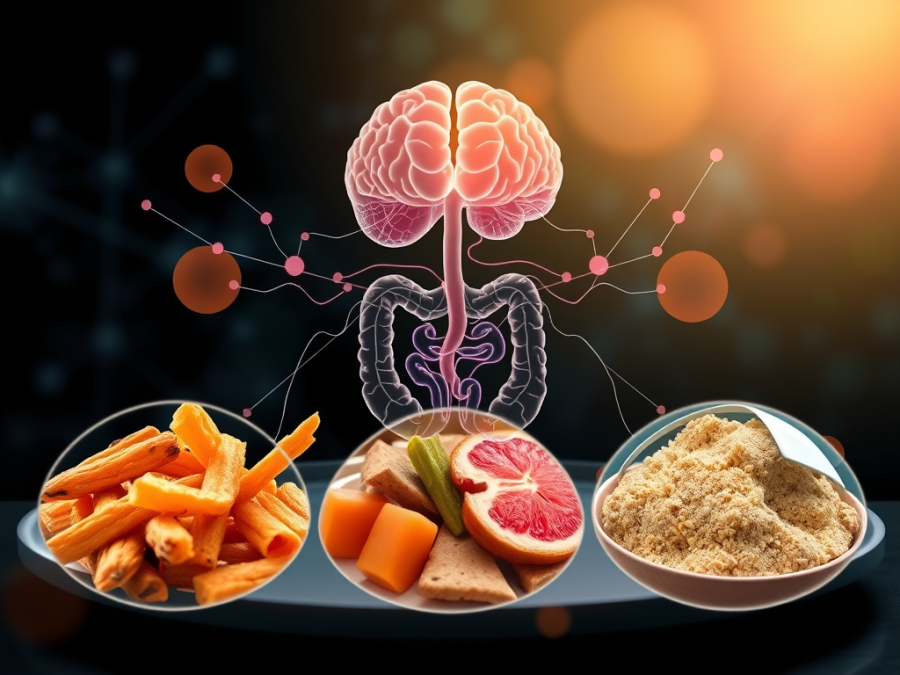
How Processed Food Disrupts the Gut Brain Connection

For years we told patients obesity came down to calories in and calories out. The research has moved. The gut-brain axis, the two-way traffic between the digestive system and the central nervous system, sits at the center of hunger, satiety, and reward. When it works, it regulates intake without conscious effort. Against the current food supply, it often doesn’t work.

The axis runs on neural, hormonal, and metabolic signals. After a meal, the gut reports what came in, how much, and when to stop. That system evolved for whole foods and scarce calories. It was never built for a diet dominated by processed, energy-dense products.

Alexandra DiFeliceantonio and Dana Small have argued that modern food disrupts the system by creating mismatches between what the gut senses and how the brain responds (Small & DiFeliceantonio, Science, 2019). Three features stand out.

The first is macronutrient combination. Fat and refined carbohydrate rarely appear together in high amounts in nature. Most processed food delivers both. People assign higher value to fat-carb combinations even when calories are held constant. In one controlled experiment, participants bid more money for foods containing both than for foods containing either alone (DiFeliceantonio et al., Cell Metab, 2018).

Speed of absorption is the second. Highly processed foods deliver calories fast, producing stronger responses in glucose metabolism and reward pathways (Carmody et al., PNAS, 2011; Hall et al., Cell Metab, 2019). Rodents develop stronger preferences for rapidly metabolized foods. In humans, faster eating rate tracks with weight gain.

Additives are the third. Sweeteners, emulsifiers, and artificial flavors make food more palatable while confusing the signaling underneath. When sweet taste stops reliably predicting calorie content, the brain loses the ability to regulate intake based on prior experience (Dalenberg et al., Cell Metab, 2020). The body learns that taste no longer matches nutrition.

The evidence supports the picture. People with obesity show altered valuation of high-reward foods compared with lean individuals (Perszyk et al., Nutrients, 2021). Rodents fed cafeteria-style diets full of energy-dense processed food overeat and gain weight, while chow-fed controls hold steady (Johnson & Kenny, Nat Neurosci, 2008; Beilharz et al., Front Psychol, 2014). Neuroimaging shows the striatum responding differently to fat-carb combinations than to single macronutrients (DiFeliceantonio et al., 2018).

All of which points at something uncomfortable. The modern food environment may overwhelm and distort the very systems built to keep intake in check. That is a real explanation for why “eat less, move more” fails so often. The advice assumes intact gut-brain signaling in people whose signaling is already compromised.

The open research question is how to restore it. Diets built around foods that reinforce reliable gut-brain communication. Studies of how additives affect hormonal and neural markers of satiety. Behavioral work helping patients relearn hunger and fullness cues.

Clinically, the thing worth holding onto is the environment patients are choosing inside. A food supply engineered to exploit biological vulnerabilities will beat most people’s intentions, and restoring the fidelity of that signaling may be where the real leverage sits.

Scott Rennie, D.O.

References:

1. Small DM, DiFeliceantonio AG. Processed foods and food reward. Science. 2019;363(6425):346-347. https://pubmed.ncbi.nlm.nih.gov/30679360/

2. DiFeliceantonio AG, et al. Supra-Additive Effects of Combining Fat and Carbohydrate on Food Reward. Cell Metab. 2018;28(1):33-44.e3. https://pubmed.ncbi.nlm.nih.gov/29909968/

3. Carmody RN, Weintraub GS, Wrangham RW. Energetic consequences of thermal and nonthermal food processing. Proc Natl Acad Sci USA. 2011;108(48):19199-19203. https://pubmed.ncbi.nlm.nih.gov/22065771/

4. Hall KD, et al. Ultra-Processed Diets Cause Excess Calorie Intake and Weight Gain. Cell Metab. 2019;30(1):67-77.e3. https://pubmed.ncbi.nlm.nih.gov/31105044/

5. Dalenberg JR, et al. Short-Term Consumption of Sucralose with, but not without, Carbohydrate Impairs Neural and Metabolic Sensitivity to Sugar in Humans. Cell Metab. 2020;31(3):493-502.e7. https://pubmed.ncbi.nlm.nih.gov/32130879/

6. Perszyk EE, et al. Nutrients. 2021;13(11):3846.

7. Johnson PM, Kenny PJ. Dopamine D2 receptors in addiction-like reward dysfunction and compulsive eating in obese rats. Nat Neurosci. 2010;13(5):635-641. https://pubmed.ncbi.nlm.nih.gov/20348917/

8. Beilharz JE, Maniam J, Morris MJ. Front Psychol. 2014;5:1454.

Board Certified in Obesity Medicine and Family Medicine

This blog is for educational purposes only and does not constitute individual medical advice. Always consult your own physician before making changes to your health, medications, or treatment plan.