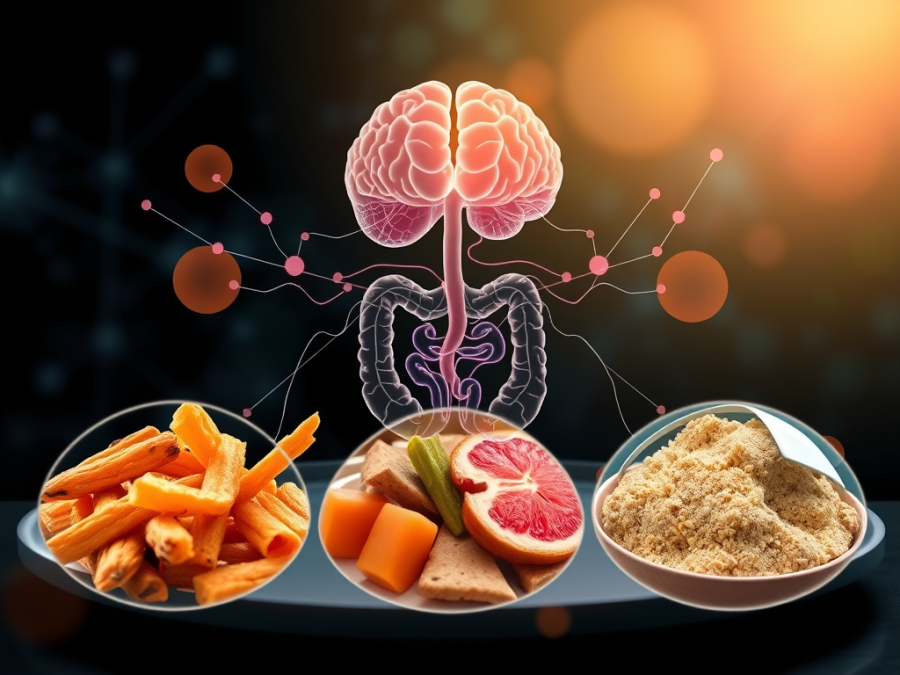
For years we told patients obesity came down to calories in and calories out. The research has moved. The gut-brain axis, the two-way traffic between the digestive system and the central nervous system, sits at the center of hunger, satiety, and reward. When it works, it regulates intake without conscious effort. Against the current food supply, it often doesn’t work.
The axis runs on neural, hormonal, and metabolic signals. After a meal, the gut reports what came in, how much, and when to stop. That system evolved for whole foods and scarce calories. It was never built for a diet dominated by processed, energy-dense products.
Alexandra DiFeliceantonio and Dana Small have argued that modern food disrupts the system by creating mismatches between what the gut senses and how the brain responds (Small & DiFeliceantonio, Science, 2019). Three features stand out.
The first is macronutrient combination. Fat and refined carbohydrate rarely appear together in high amounts in nature. Most processed food delivers both. People assign higher value to fat-carb combinations even when calories are held constant. In one controlled experiment, participants bid more money for foods containing both than for foods containing either alone (DiFeliceantonio et al., Cell Metab, 2018).
Speed of absorption is the second. Highly processed foods deliver calories fast, producing stronger responses in glucose metabolism and reward pathways (Carmody et al., PNAS, 2011; Hall et al., Cell Metab, 2019). Rodents develop stronger preferences for rapidly metabolized foods. In humans, faster eating rate tracks with weight gain.
Additives are the third. Sweeteners, emulsifiers, and artificial flavors make food more palatable while confusing the signaling underneath. When sweet taste stops reliably predicting calorie content, the brain loses the ability to regulate intake based on prior experience (Dalenberg et al., Cell Metab, 2020). The body learns that taste no longer matches nutrition.
The evidence supports the picture. People with obesity show altered valuation of high-reward foods compared with lean individuals (Perszyk et al., Nutrients, 2021). Rodents fed cafeteria-style diets full of energy-dense processed food overeat and gain weight, while chow-fed controls hold steady (Johnson & Kenny, Nat Neurosci, 2008; Beilharz et al., Front Psychol, 2014). Neuroimaging shows the striatum responding differently to fat-carb combinations than to single macronutrients (DiFeliceantonio et al., 2018).
All of which points at something uncomfortable. The modern food environment may overwhelm and distort the very systems built to keep intake in check. That is a real explanation for why “eat less, move more” fails so often. The advice assumes intact gut-brain signaling in people whose signaling is already compromised.
The open research question is how to restore it. Diets built around foods that reinforce reliable gut-brain communication. Studies of how additives affect hormonal and neural markers of satiety. Behavioral work helping patients relearn hunger and fullness cues.
Clinically, the thing worth holding onto is the environment patients are choosing inside. A food supply engineered to exploit biological vulnerabilities will beat most people’s intentions, and restoring the fidelity of that signaling may be where the real leverage sits.
References:
1. Small DM, DiFeliceantonio AG. Processed foods and food reward. Science. 2019;363(6425):346-347. https://pubmed.ncbi.nlm.nih.gov/30679360/
2. DiFeliceantonio AG, et al. Supra-Additive Effects of Combining Fat and Carbohydrate on Food Reward. Cell Metab. 2018;28(1):33-44.e3. https://pubmed.ncbi.nlm.nih.gov/29909968/
3. Carmody RN, Weintraub GS, Wrangham RW. Energetic consequences of thermal and nonthermal food processing. Proc Natl Acad Sci USA. 2011;108(48):19199-19203. https://pubmed.ncbi.nlm.nih.gov/22065771/
4. Hall KD, et al. Ultra-Processed Diets Cause Excess Calorie Intake and Weight Gain. Cell Metab. 2019;30(1):67-77.e3. https://pubmed.ncbi.nlm.nih.gov/31105044/
5. Dalenberg JR, et al. Short-Term Consumption of Sucralose with, but not without, Carbohydrate Impairs Neural and Metabolic Sensitivity to Sugar in Humans. Cell Metab. 2020;31(3):493-502.e7. https://pubmed.ncbi.nlm.nih.gov/32130879/
6. Perszyk EE, et al. Nutrients. 2021;13(11):3846.
7. Johnson PM, Kenny PJ. Dopamine D2 receptors in addiction-like reward dysfunction and compulsive eating in obese rats. Nat Neurosci. 2010;13(5):635-641. https://pubmed.ncbi.nlm.nih.gov/20348917/
8. Beilharz JE, Maniam J, Morris MJ. Front Psychol. 2014;5:1454.
Board Certified in Obesity Medicine and Family Medicine
This blog is for educational purposes only and does not constitute individual medical advice. Always consult your own physician before making changes to your health, medications, or treatment plan.
 Doctor Rennie's Blog