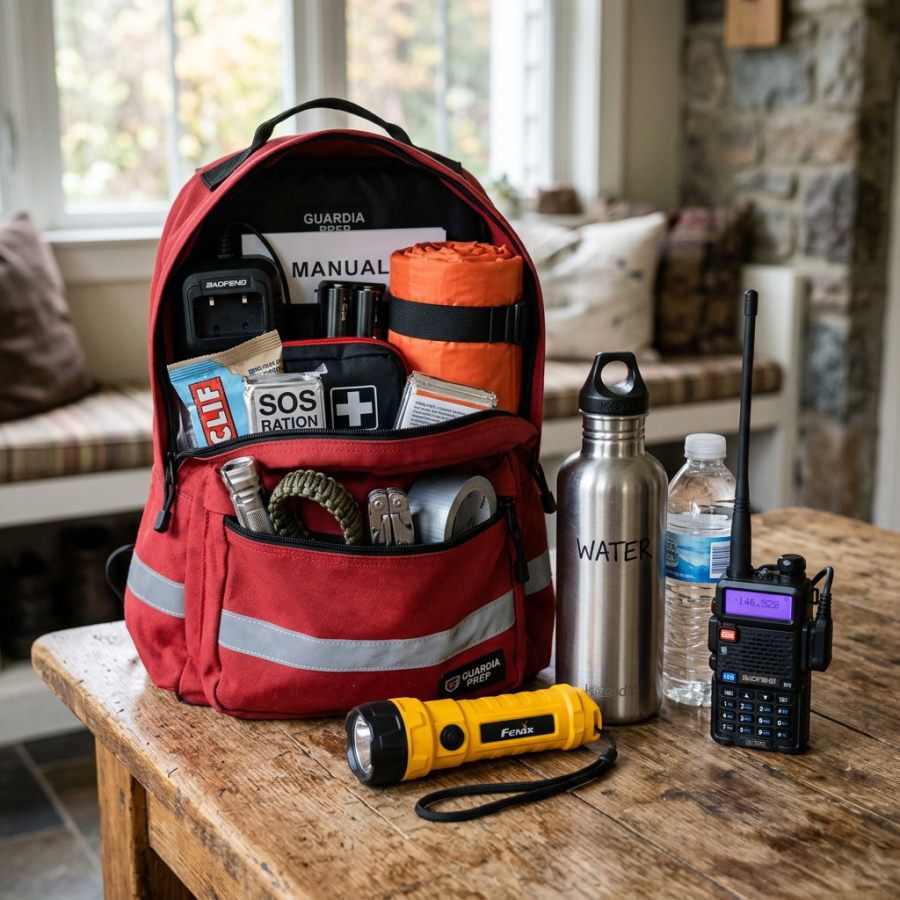
Red emergency backpack containing manual, food bars, first aid kit, rope, multitool, flashlight, water bottles, and radio

Disaster Preparedness: An Amateur Radio Operator’s View

Personal Disaster Preparedness

presented by John Covington, W4CC This discussion has been presented at club meetings, civic groups and even over the Tarheel Emergency Net. As I mentioned then, the purpose of this discussion is to encourage you to think about how you should prepare for a disaster. There is no “one-size-fits-all” formula for disaster preparedness. Consider some of the points mentioned below and decide what preparations are best for you.

What is Disaster Preparedness?

Disaster Preparedness means taking steps necessary to make sure you and your family are safe and as comfortable as possible in the aftermath of a disaster.

Main Types of Disasters

It’s not possible to prepare for every conceivable disaster, so think carefully about what hazards are most likely to affect you. These will vary greatly depending on exactly where you live.
  1. Natural – in North Carolina, hurricanes and winter weather are the most disruptive, but can usually be predicted a few days in advance. Flooding due to severe thunderstorms and tornadoes are not very predictable.
  2. Technological (man-made accidental) – radiological, chemical releases; fires. Not predictable, but many hazards are identifiable in advance.
  3. Terrorist (man-made – deliberate) radiological, chemical, explosions, etc. Not predictable.

Your Personal Preparations – Stay Put or Evacuate?

You need to consider both possibilities – sometimes the decision will be made by circumstances beyond your control. Staying put requires more preparation, but you retain your privacy. Evacuation places most of the burden of preparation on someone else. Evacuating to someone’s home is nice, but not always possible. If you evacuate to a disaster shelter, you will be dry, well-fed and have no privacy. For disasters not requiring immediate evacuation, prepare for a 72-hour “stay put” scenario. 72 hours is long enough for the worst part of the disaster to pass, or for you to make a smart decision about what to do next if it hasn’t. For disasters requiring immediate evacuation, have necessities (such as medicine) where you can get to them quickly. A ready kit is a good thing to have so you can be as self-sufficient as possible until you get established somewhere else. Don’t wait too long to make the decision to evacuate. Many flood deaths in this state have resulted from people waiting too long, then their evacuation route disappears. Consider carefully the psychological impact of a disaster on your family. Some people can just handle survival situations better than others. Even if your home is intact, evacuation may end up being the best thing to do.

Family Communications Plan

You and your family should plan how you will contact each other if you are not together when disaster strikes. Don’t rely exclusively on cellular telephones since they usually work intermittently following a disaster. Your plan should include designating an emergency contact person who lives out of town. Sometimes a long-distance call is actually easier to make than a local call during a disaster. Someone out of town may be more easily able to communicate among separated family members. Make sure each member of your family has the number of this emergency contact in writing.

Staying Put

Ask yourself if you can survive 72 hours in your home without utilities (electricity, gas, water, phone)? You will most likely lose electricity and telephone service during a disaster. Natural gas and city water usually continue to be available (but not well water).
  • Be prepared for both summer and winter weather since the survival conditions are very different.
  • Always store several gallons of drinking water. You need drinking water more than anything else except air! You can use dirty water to flush your toilets, but drinking water must be clean.
  • It is easy to test your preparedness for staying put (although your family may not think so). Turn the main circuit breaker off for a weekend and see how you do. If you can go the whole weekend without turning it back on, you are well prepared.
  • Some people use generators to provide electricity. If you do, make sure you know how to connect your generator so it is not connected to the electrical grid!
  • Natural gas or propane is usually available even after a disaster. Find out if you can use your gas appliances without any electricity. Gas stoves, water heaters and logs can probably be used without power, but ovens and furnaces usually can not.
  • Neither landline nor cellular phones will work dependably after disasters. For landlines, have at least one phone available that does not require separate electricity to use. For cellular, have a power cord that allows you to use or charge the phone from your car battery.
  • Have sufficient batteries on hand to power essential equipment, including flashlights and AM/FM/WX radios. The radios will be your source of news about the disaster, as well as entertainment.
  • Have sufficient light sources (flashlights, candles, cyalume sticks). Be careful with any source of ignition, such as candles.

Evacuation

If you must leave your home, make sure you have thought about what you need to take with you. For example, medicine will probably be hard to obtain after a disaster. It’s best if you can take all essentials with you so you can be as self-sufficient as possible until you get established somewhere else. Depending on the type of disaster, evacuation might be a slow process, and stopping along the way for supplies won’t be possible. A 72-hour ready kit is the best way to make sure you have what you need, and is useful even if you stay put. You can make your own or purchase them already made (from suppliers such as www.nitro-pak.com). Ready-made kits are generic and will probably have a couple of items you don’t need and will be missing an item or two you do need. Some other things you must consider about evacuating:
  • Have plenty of fuel in all of your vehicles, since your preferred vehicle might end up being unavailable.
  • Have cash on hand. Credit cards and ATMs will not be useful while power is out.
  • Have a map of the area. Familiar routes can be blocked by floods and storm damage, so you may end up taking unfamiliar roads.
  • Find out, in advance, where disaster shelters in your community are established, and mark them on the map.
  • Having a plan for getting your family back together in case you are not able to evacuate together.
  • Establish a family communications plan. Designate someone outside the disaster area you will contact.

Items for a Basic 72-Hour Kit

This list is suggested by www.ready.gov and includes basic items you should have on hand for a disaster. Keep these items in a container that you can take with you if you need to evacuate, or locate them easily if you are staying put. This is not a “one size fits all” list, you should modify it to suit your circumstances. For example, you might want to add insect repellent and toothbrushes for personal comfort.
  • Water, one gallon of water per person per day, for drinking and sanitation
  • Food, at least a three-day supply of non-perishable food
  • Battery-powered radio and extra batteries
  • Flashlight and extra batteries
  • First Aid kit
  • Whistle to signal for help
  • Dust mask or cotton t-shirt, to help filter the air
  • Moist towelettes for sanitation
  • Wrench or pliers to turn off utilities
  • Can opener for food (if kit contains canned food)
  • Plastic sheeting and duct tape to shelter-in-place
  • Unique family needs, such as daily prescription medications, infant formula or diapers, and important family documents
  • Garbage bags and plastic ties for personal sanitation

Conclusion

If you aren’t motivated to spend any time on disaster preparedness, at the bare minimum, do the following:
  • Talk to your family about this subject.
  • Keep sufficient drinking water on hand.
  • Write down important phone numbers.
  • Keep your cars at least half full of fuel.
  • Keep cash on hand.

Related Reading

Become an Amateur Ham Radio Operator for Emergency Communications Keep These Items in a Home First Aid Kit for Emergencies Build a First Aid Kit to Keep in Your Car for Travel Getting Started With Amateur (Ham) Radio as a Hobby LA Wildfires: Health Risks and a Doctor’s Perspective

Scott Rennie, D.O.
Board Certified in Obesity Medicine and Family Medicine

This blog is for educational purposes only and does not constitute individual medical advice. Always consult your own physician before making changes to your health, medications, or treatment plan.


Grey dog sleeping on a plush rug in a living room near a patterned sofa and wooden side table

Dementia in Pets: What Are the Early Warning Signs?

We’ve gotten better at spotting the signs of Alzheimer’s disease in people. But what about animals? Can we recognize something similar in them, and more importantly, is there anything we can do to slow it down?

Steve Dale wrote about this in USA Today Weekend, and it raises an important point. Cognitive dysfunction (CD) in pets is real. It’s not a brand-new condition, but as our dogs and cats live longer, we’re seeing it more often and learning how to identify it. Gary Landsberg, a veterinary behaviorist in Ontario, explained it simply: it has always been there, but now we’re better at recognizing the patterns. His current research is even looking at the condition in cats.

One easy way for pet owners to remember the common signs is with the acronym DISH. Disorientation shows up as confusion, like a dog trying to push through the wrong side of a doggie door. Changes in interaction are another clue, such as a once-social pet becoming withdrawn. Sleep problems may appear as cats yowling in the middle of the night or dogs pacing for hours with no clear reason. And then there’s house soiling, where a well-trained animal suddenly starts having accidents indoors.

That’s usually how CD is diagnosed, by ruling out other possible causes and then looking for these consistent patterns. Owners often describe little things at first that don’t seem connected, but over time they add up.

What can we do about it? Right now, the strongest evidence points to one very practical step: exercise. Professor Carl Cotman at the University of California, Irvine, who directs the Institute for Brain Aging and Dementia, has studied how dementia affects both people and animals. His work suggests the brain responds the same way in both cases, and physical activity makes a difference.

This is an area of ongoing research, but it’s also something pet owners can act on right now. Just as we encourage older adults to stay active, it looks like our aging pets may benefit from the same approach.

Related Reading

How to Keep Your Pets Safe and Calm This 4th of July

Why Do People Pinch Others on Saint Patrick’s Day?

Vitamin D and Sunshine: Make the Most of a Sunny Seattle Day

Scott Rennie, D.O.
Board Certified in Obesity Medicine and Family Medicine

This blog is for educational purposes only and does not constitute individual medical advice. Always consult your own physician before making changes to your health, medications, or treatment plan.

Sources:

  • Dale S. “Spotting signs of dementia in pets.” USA Today Weekend.

  • Landsberg GM, Veterinary Behaviorist, Cancog Technologies.

  • Cotman CW, University of California, Irvine, Institute for Brain Aging and Dementia.

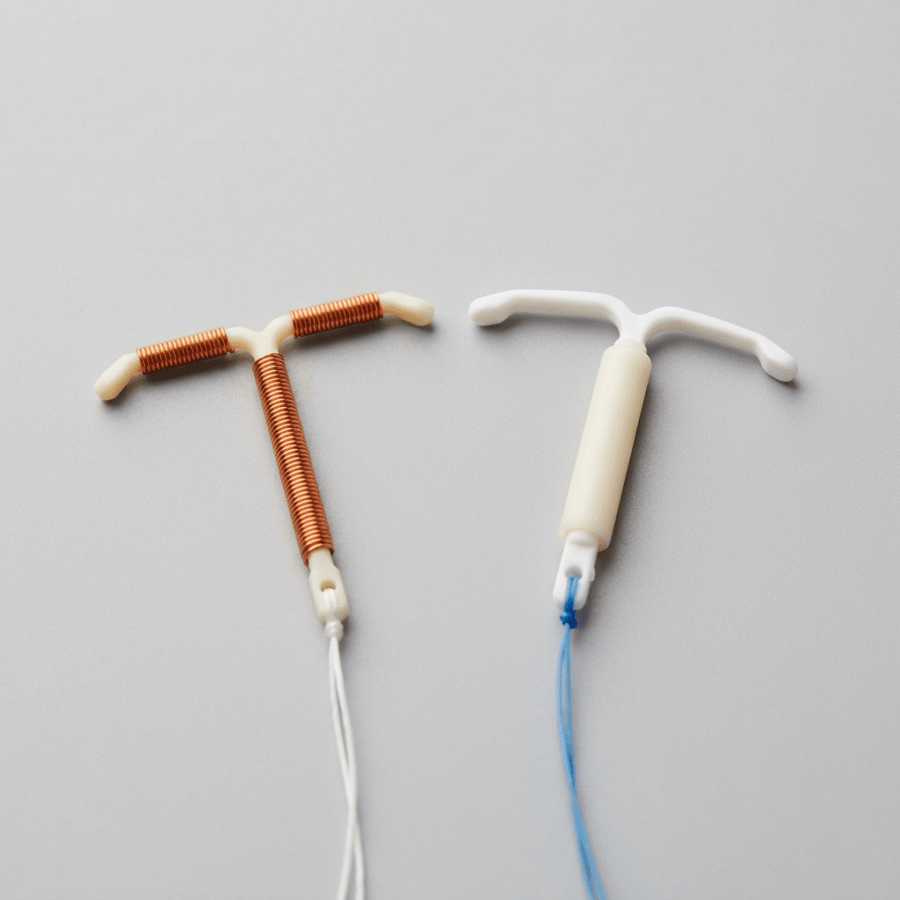
Two IUD devices side by side neutral background

Mirena vs Paragard: Side Effects and Risks Compared

I do not place IUDs. I practice entirely by video, so what I actually do is have the conversation, help someone decide which device they want, and send them somewhere to have it put in. That turns out to be most of the work anyway. By the time a patient reaches the procedure room the decision has usually already been made, often on the basis of something a friend said.

So this is the conversation, written down.

Two devices that have almost nothing in common

People talk about “getting an IUD” as though it were one thing. Mirena and Paragard sit in the same place and prevent pregnancy about equally well, and past that they behave like different drugs, because one of them is a drug and the other is a piece of copper.

Mirena releases levonorgestrel, 52 mg in the device, locally into the uterus. It thickens cervical mucus, thins the endometrium, and suppresses ovulation inconsistently. The FDA extended its contraceptive approval to eight years in August 2022, based on extension-trial data showing efficacy above 99 percent through years six to eight (1, 2). Its separate indication for heavy menstrual bleeding runs five years, not eight, which trips people up.

Paragard is a copper T380A. No hormone at all. Copper ions are toxic to sperm and change the intrauterine environment enough to prevent fertilization. Approved for ten years (3).

The bleeding difference, which is what people actually care about

This is the fork in the road, and everything else is secondary.

Mirena makes periods lighter. Progressively so. A meaningful minority stop bleeding altogether within the first year, and many others go down to spotting. For someone whose periods are ruining a week of every month, that is the point of the device, not a side effect of it.

Paragard does the opposite. Heavier flow, more cramping, particularly in the first three to six months. It settles for most people. It does not settle for everyone, and it is the most common reason the copper device comes out early.

So the first question is not which device. It is what your periods are like now and what you would like them to be. Answer that and the device usually picks itself.

What people worry about, in the order they raise it

Hormones. Mirena’s levonorgestrel acts mostly locally, and systemic levels are far below what a combined pill delivers. That does not mean nobody has systemic effects. Some patients report mood change, breast tenderness or acne, and I do not tell them it cannot be the device. The honest statement is that the systemic exposure is low, the trials do not show a consistent mood signal, and individual experience still counts.

Insertion pain. This got taken seriously very late. Patients were told for decades it would be a pinch. It is not a pinch for a lot of people, particularly if they have never been pregnant. Ask the placing clinician directly what they offer for pain, before the appointment, not at the appointment.

Perforation. Roughly one per thousand insertions, and higher in someone who is postpartum and breastfeeding.

Expulsion. A few percent, most often in the first year and most often around a period.

Infection and fertility. The elevated infection risk is confined to about the first twenty days after insertion, which is a placement-related event rather than an ongoing property of the device. Neither device causes infertility. That belief traces back to the Dalkon Shield in the 1970s, a badly designed product withdrawn fifty years ago, and it is still costing people options today.

Emergency contraception, where the answer changed

The copper IUD was the most effective emergency contraceptive available, full stop, if placed within five days. That was true for a long time and it is still true.

What changed is that the levonorgestrel 52 mg IUD is now an option there too. Turok and colleagues published a randomized noninferiority trial in the New England Journal in 2021 showing the LNG device was noninferior to copper for emergency contraception (4). That matters practically, because it means someone who wants ongoing lighter periods no longer has to accept the copper device just to cover the emergency need.

The perimenopausal use nobody mentions

This is the part of the topic I see most, given what I spend my days on.

A woman in her forties with heavy, unpredictable bleeding is often handed a choice between ablation, hysterectomy and waiting it out. The levonorgestrel IUD belongs in that conversation and frequently is not in it. It treats the bleeding, it covers contraception during the years when fertility is low but not zero, and if she later goes on systemic estrogen for vasomotor symptoms, it provides the endometrial protection that estrogen requires.

One device, three jobs.

Most of the time it has not been discussed yet when the subject comes up with me. Part of that is age. These patients are older, and if they have thought about an IUD at all it was as birth control, twenty years ago, in a different phase of life. Nobody has framed it to them as a treatment for the bleeding they are actually calling about.

For patients

Decide what you want your periods to do, then pick the device. Lighter or absent points to Mirena. No hormones at any cost, accepting heavier periods, points to Paragard.

Ask whoever is placing it what they offer for pain control, and ask before the day. If you are in your forties and bleeding heavily, ask specifically whether the hormonal IUD would treat that, because it may not come up otherwise.

For colleagues

The eight-year contraceptive approval and the five-year heavy-bleeding indication are different numbers on the same device, and patients are being told one or the other at random.

Bring the LNG-IUD into perimenopausal bleeding conversations earlier. The path from heavy bleeding to ablation still skips it more often than it should.

The Bottom Line

Both devices prevent pregnancy better than almost anything else available, so effectiveness is not the deciding factor. Bleeding is. Mirena makes periods lighter and is approved for eight years of contraception and five years of heavy-bleeding treatment. Paragard is hormone-free, lasts ten, and makes periods heavier. The old fear that an IUD will cost you your fertility comes from a product pulled from the market in the 1970s and should not be steering anyone’s decision in 2026. If you are in your forties with heavy periods, ask about the hormonal one specifically.

Related Reading

Perimenopause and Menopause Symptoms and How to Manage Them

FDA Removes Black Box Warning From Menopause Hormone Therapy

Why Menopause Care Is Missing From Women’s Checkups

Menopause Treatment by Telemedicine: How It Works

Scott Rennie, D.O.
Board Certified in Obesity Medicine and Family Medicine

This blog is for educational purposes only and does not constitute individual medical advice. Always consult your own physician before making changes to your health, medications, or treatment plan.

Sources

1. Mirena (levonorgestrel-releasing intrauterine system) prescribing information. Bayer HealthCare Pharmaceuticals. FDA label, 2022. https://www.accessdata.fda.gov/drugsatfda_docs/label/2022/021225s043lbl.pdf

2. Bayer. Mirena approved in the US for extended duration of use in contraception. August 2022. https://www.bayer.com/media/en-us/mirena-from-bayer-approved-in-the-us-for-extended-duration-of-use-in-contraception/

3. Paragard T 380A (copper) intrauterine device prescribing information. CooperSurgical. DailyMed. https://dailymed.nlm.nih.gov/dailymed/drugInfo.cfm?setid=3c420b53-c95e-46af-aebd-73741be58391

4. Turok DK, Gero A, Simmons RG, et al. Levonorgestrel vs. Copper Intrauterine Devices for Emergency Contraception. N Engl J Med. 2021;384(4):335-344. PMID 33503342. https://pubmed.ncbi.nlm.nih.gov/33503342/

Medical alert bracelet with allergy and diabetes information next to round alarm clock on bedside table

First Aid for seizures

When people ask about first aid for seizures, I usually start with the basics. Carry medical identification. If an emergency happens, it helps bystanders and providers know you have a seizure disorder and what to do next. Family, friends, and coworkers should also know how to respond. Safety comes first, and the details matter.

It’s important to think about daily risks. Someone with uncontrolled seizures should be cautious around high places, moving equipment, hot stoves, or machinery. Staying active is still encouraged, but some activities call for extra planning. Swimming, climbing, or gymnastics are safer when another person is present who understands seizures and knows basic life-saving skills. Even routine things like bike riding or canoeing can be made safer with helmets and life jackets.

Medication is another cornerstone. If you’ve been prescribed an anticonvulsant, don’t stop it suddenly or change the dose without talking to your doctor. The exact drug and dose depend on the type of epilepsy and factors like weight, age, and other health conditions. Watch out for drug interactions, including with over-the-counter medications. Pharmacists are a good resource when you’re not sure. Alcohol should also be avoided since it can interfere with seizure control.

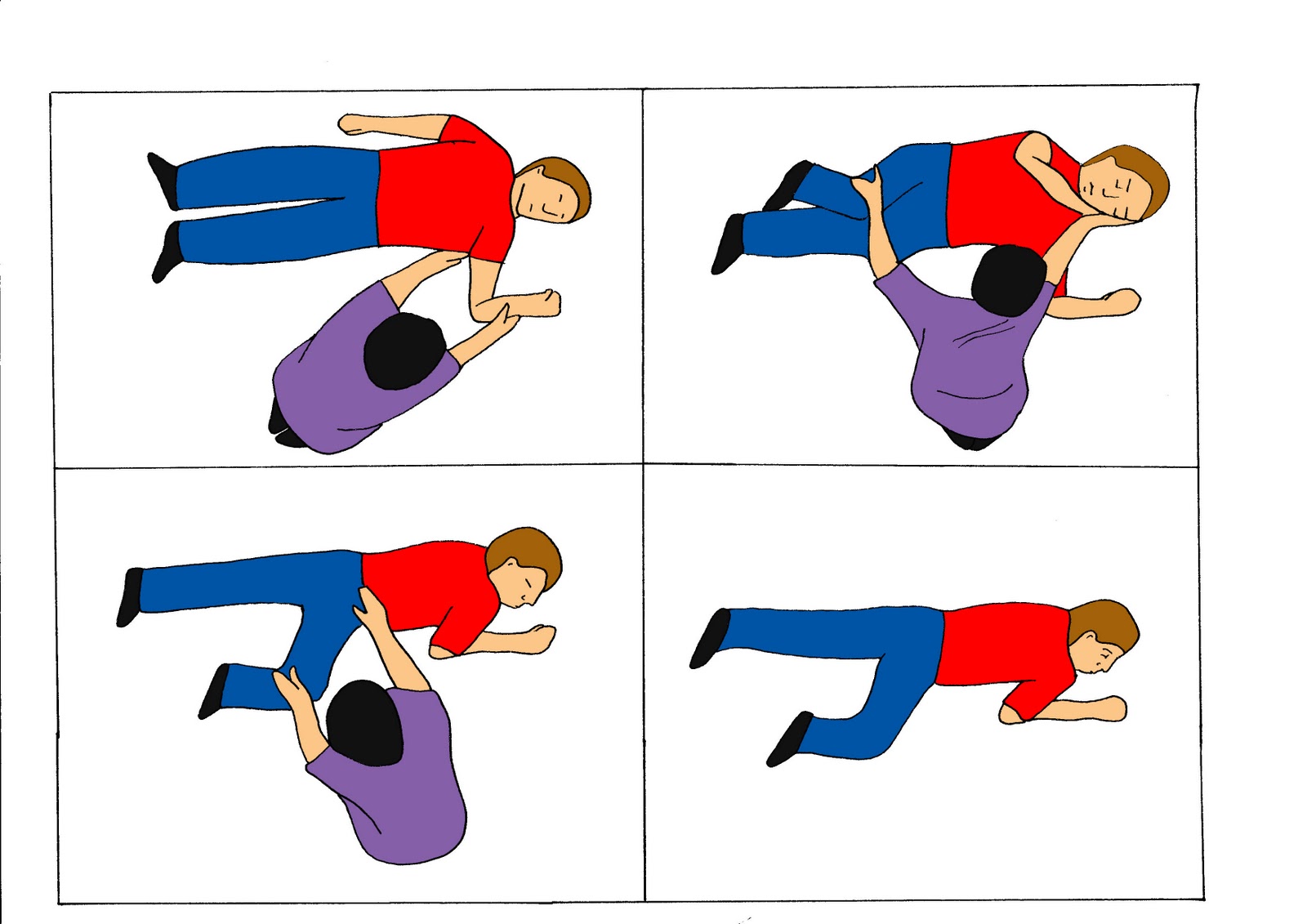
If someone has a seizure, the steps are simple but crucial. Loosen anything tight around the neck. Move sharp objects away to reduce injury risk. Don’t try to hold the person down. Don’t put anything in the mouth. Let the seizure run its course. When it’s over, place the person on their side so the airway stays clear. Often, there’s confusion after the event, so it helps to stay close until they’re fully awake.

Not every seizure requires a trip to the hospital. If it ends in a minute or two and the person has a known diagnosis of epilepsy, observation may be enough. Call an ambulance if the seizure lasts more than five minutes, if seizures repeat without recovery in between, or if the person doesn’t regain awareness. Extra caution is needed if there are other medical conditions such as diabetes or heart disease.

Children can have many types of seizures, and the approach shifts depending on what you see. With a generalized tonic-clonic seizure, keeping the airway open and the head protected are priorities. With absence seizures, observation and careful note-taking matter more. If awareness is altered but movements continue, guiding the child to a safe place is often the best step. Any first seizure in a child should prompt medical evaluation, and some types such as infantile spasms need urgent attention.

Education matters as much as medication here. Bystanders who know to move objects away, stay calm and wait it out change how the whole event goes.

This is for general information only and not meant as medical advice for an individual patient. If you or someone you love has seizures, discuss a personalized plan with your healthcare provider.

Wishing you the best of health,

Related Reading

Head Injury: Is It a Concussion or Something More Serious?

Headaches: Migraine, Cluster, Tension and Chronic Daily Pain

Stroke Warning Signs: What to Know About CVA and TIA

Acute Flaccid Myelitis: A Mystery Illness in Washington State

Scott Rennie, D.O.
Board Certified in Obesity Medicine and Family Medicine

This blog is for educational purposes only and does not constitute individual medical advice. Always consult your own physician before making changes to your health, medications, or treatment plan.


Source:

DNA strand with labeled growth hormone pathway steps next to an hourglass at sunset

Does the Laron Syndrome Gene Mutation Hold Keys to Longevity?

There is a group of people in the southern Ecuadorian provinces of Loja and El Oro who almost never get cancer and almost never get diabetes. They are also, on average, about four feet tall.

Both facts have the same cause, and the story has been badly told for fifteen years. It gets written up as a longevity discovery. It is not one, and what it actually is turns out to be more interesting.

What the mutation does

Laron syndrome is a mutation in the growth hormone receptor. The pituitary makes growth hormone normally. The body cannot hear it. Since most of growth hormone’s effect on tissue runs through IGF-1, and IGF-1 production depends on that receptor working, people with the mutation have very low circulating IGF-1 from birth. They are short. Severely so, and untreated adults reach heights well below any normal range.

The Ecuadorian cluster is the largest known population with it, descended from a founder effect in a relatively isolated region.

The numbers that made people pay attention

Jaime Guevara-Aguirre followed roughly a hundred of these individuals for 22 years and published with Valter Longo’s group in Science Translational Medicine in 2011 (1).

Among the affected subjects: one nonlethal malignancy, and no cases of diabetes. Among their unaffected relatives, living in the same villages, eating the same food, drinking the same water: 17 percent cancer prevalence and 5 percent diabetes (1).

That is not a subtle effect. Not a hazard ratio you argue about. Essentially zero versus roughly one in six.

The metabolic picture explains the diabetes half. Fasting insulin in the affected group ran 1.4 µU/mL against 4.4 in relatives, and HOMA-IR was 0.34 against 0.96 (1). They were markedly more insulin sensitive, and this despite a high prevalence of obesity in the group, which is the detail that should make anyone who works in metabolic medicine sit up.

The cancer half is less settled. When the investigators treated human mammary epithelial cells with hydrogen peroxide in the presence of serum from affected subjects, they saw fewer DNA breaks and more apoptosis of damaged cells, along with reduced expression of RAS, PKA and TOR and increased SOD2 (1). Damaged cells being cleared rather than surviving to divide.

Here is the part that gets left out

They do not live longer.

People with Laron syndrome in this cohort live about as long as their unaffected siblings. The protection from cancer and diabetes is real and it does not translate into extra years, because the deaths come from elsewhere: accidents, alcohol-related causes, and convulsive disorders appear disproportionately (2).

So the honest summary is that this mutation removes two of the diseases that kill most of us, and the years get spent anyway. Which is a lesson about longevity research generally. Compressing morbidity and extending lifespan are different outcomes, and a study that shows one is routinely reported as showing the other.

A 2024 follow-up from the same group looked at cardiovascular risk in these subjects and found markers that were normal or better than their relatives (3), and earlier work has reported delayed age-related cognitive decline (3). The healthspan signal keeps holding up. The lifespan signal was never there.

Why this matters if you are not four feet tall

The obvious wrong conclusion is that low growth hormone is good and we should all have less of it. Nobody is proposing to give people this mutation.

The useful conclusion runs the other direction, at the anti-aging clinics selling growth hormone injections to men in their fifties. The GH and IGF-1 axis, pushed up, is the same axis that is pushed down in the population with almost no cancer. That does not prove supplemental growth hormone causes cancer in a 55-year-old, and I am not going to claim it does. It is a reason to ask what evidence exists that pushing the pathway the other way is safe over decades.

The other thread worth following is nutritional. The pathways involved here, IGF-1, TOR, PKA, are the same ones that respond to protein intake and to fasting, which is why Longo’s laboratory went from this cohort to fasting-mimicking diets. I have written elsewhere about what the fasting evidence does and does not support, and the short version is that the mechanism is well-motivated and the human outcome data is thinner than the enthusiasm.

The Bottom Line

A hundred or so people in southern Ecuador carry a growth hormone receptor mutation that appears to make them nearly immune to two of the most common chronic diseases in the world. One nonlethal cancer and zero diabetes in the affected group, against 17 percent and 5 percent in their own relatives. They do not live longer for it. That combination, better healthspan without longer lifespan, is the actual finding, and it is worth more than the version that gets headlined. If anyone offers you growth hormone as an anti-aging therapy, this cohort is the reason to ask what evidence they have that pushing that pathway up is safe.

Related Reading

Longevity Medicine: What Actually Works, and What Doesn’t

Does Fasting Slow Aging? What the Science Says

How Does Aging Change Your Metabolism? What Research Shows

Scott Rennie, D.O.
Board Certified in Obesity Medicine and Family Medicine

This blog is for educational purposes only and does not constitute individual medical advice. Always consult your own physician before making changes to your health, medications, or treatment plan.

Sources

1. Guevara-Aguirre J, Balasubramanian P, Guevara-Aguirre M, et al. Growth hormone receptor deficiency is associated with a major reduction in pro-aging signaling, cancer, and diabetes in humans. Sci Transl Med. 2011;3(70):70ra13. PMID 21325617. https://pubmed.ncbi.nlm.nih.gov/21325617/

2. Guevara-Aguirre J, Guevara A, Palacios I, et al. Insights from the clinical phenotype of subjects with Laron syndrome in Ecuador. PMID 33047268. https://pubmed.ncbi.nlm.nih.gov/33047268/

3. Guevara-Aguirre J, Mishra A, Canepa M, et al. Normal or improved cardiovascular risk factors in IGF-I-deficient adults with growth hormone receptor deficiency. Med. 2024;5(7):816-825.e4. PMID 38677286. https://pubmed.ncbi.nlm.nih.gov/38677286/

Tablet showing a heart-shaped home medical service logo with a red cross and play button.

Watch Dr. Rennie’s New Video for Rennie Family Health

Check out my new video for Rennie Family Health:


Spintext.com helped me create it, and they do excellent work. If you’re looking for an organization to help promote your practice with video or websites, I highly recommend them!

Related Reading

Royal Pains the TV Show: Now Meet the Real-Life Version American Academy of Private Physicians Conference in Austin, TX Shifting to Telemedicine: Reflections for Fellow Physicians

Scott Rennie, D.O.
Board Certified in Obesity Medicine and Family Medicine

This blog is for educational purposes only and does not constitute individual medical advice. Always consult your own physician before making changes to your health, medications, or treatment plan.
COVID-19 vaccine vial labeled sterile suspension next to a shield emblem on a wooden table in a lab

King County Flu Update: Influenza Activity in Feb 2011

It’s still recommended that healthcare providers continue to actively recommend influenza vaccination for everyone six months of age and older.

Public Health Seattle & King County reported in February 2011 that flu was still circulating in the area during week 5, though at lower levels than what we typically see during peak seasons. Looking back, in three of seven influenza seasons since 2002, flu activity didn’t peak until March or even later. The exception, of course, was the 2009 H1N1 outbreak, which followed a very different pattern.

On the national level, the CDC found that the current trivalent vaccine was well-matched to the strains circulating at that time. That match between vaccine and circulating virus is one of the key factors in how much protection we see across the community.

Seasonal flu patterns can be unpredictable. Some years activity drops early, while other years it lingers into spring. The important takeaway is that flu vaccination still matters late in the season. Patients often ask if it’s worth getting the shot in February or March. The data suggest that it is, especially since later peaks are not unusual.

For more information and regular updates, you can check local and national resources:

Scott Rennie, D.O.
Board Certified in Obesity Medicine and Family Medicine

This blog is for educational purposes only and does not constitute individual medical advice. Always consult your own physician before making changes to your health, medications, or treatment plan.

Tissues, tea mug, thermometer on cozy blanket

Cold vs Flu vs COVID vs RSV: How to Tell Them Apart

This post used to be a comparison of the common cold, seasonal flu and H1N1 swine flu. That framing is fifteen years out of date, and keeping it would be misleading in a specific way: H1N1 is no longer a separate thing to tell apart from seasonal flu. The 2009 pandemic strain settled into circulation as one of the ordinary seasonal influenza A subtypes, A(H1N1)pdm09. When you get influenza A now, that is frequently what it is.

The four illnesses actually worth separating in 2026 are cold, influenza, COVID-19 and RSV.

The honest answer first

You cannot reliably tell them apart from symptoms. Neither can I, over video, and neither can anyone in an exam room with a stethoscope and a light and all the time in the world, which is worth saying plainly because patients arrive having read a symptom chart and expecting me to run their answers through it and hand back a name.

That is not a limitation of describing symptoms carefully. All four are respiratory viruses that produce overlapping illness, and the overlap became worse rather than better once COVID stopped presenting the way it did in 2020. Loss of smell was a useful discriminator for about a year and then largely stopped being one.

So everything below is about probabilities and about what changes your management, not about a checklist that gives you an answer.

What each one tends to look like

A cold builds. Over a day or two, it goes sore throat, then congestion and runny nose, then cough. Fever is uncommon in adults. You feel unwell and you keep functioning.

Influenza arrives. People remember the hour. Fever, headache, aching muscles, exhaustion out of proportion to the respiratory symptoms, dry cough. The abruptness is the most useful single feature, and it is still only suggestive.

COVID-19 in 2026 mostly looks like a bad cold with more fatigue and a more persistent cough, often with a sore throat that patients describe as worse than the rest of it. Onset is usually less abrupt than flu.

RSV in adults gets missed constantly because everyone files it under a childhood illness. In an older adult or someone with COPD or heart failure it presents as wheeze, worsening breathlessness and a cough that will not clear, frequently without much fever. If a patient over 65 with lung disease has been coughing and wheezing for a week, RSV belongs on the list.

Why testing is worth it now, when it was not in 2011

The old advice was that testing rarely changed anything. That was fair when the treatments were marginal.

It is no longer fair, for one reason: there are time-limited treatments, and the clock starts at symptom onset.

Oseltamivir works best started within 48 hours (1). Baloxavir is a single dose, and the trial that established it in adults and adolescents also enrolled within 48 hours of symptom onset (2). For COVID, nirmatrelvir and ritonavir is a five-day window from symptom onset in people at higher risk. Miss the window and the conversation becomes supportive care.

Combination home tests that read out COVID and influenza A and B from a single swab are now available over the counter. They are less sensitive than what a lab runs, particularly early, and a negative on day one in someone who clearly has influenza is a false negative more often than it is reassurance. A positive is useful. A negative in a sick person is not an all-clear.

The practical consequence: if you are in a group where antivirals are worth having, test early rather than waiting to see how it goes. Waiting is what closes the window.

What I do with this over video

I ask when it started, and I ask for the hour rather than the day, because abrupt onset is the most discriminating piece of history available and people can usually place it.

I ask what the household has. In a season, the household is often better evidence than the symptoms.

I ask about breathing rather than about cough, because cough is universal and shortness of breath is what separates the people who need to be seen. Anyone reporting new breathlessness at rest, chest pain, confusion, or an inability to keep fluids down gets routed out of the video visit, and my order of preference is primary care first, urgent care next, emergency department when it needs to be. Primary care is the hardest of the three to get into quickly, which is exactly the problem.

On the vaccines

All four illnesses here have a prevention story, and three of them have vaccines. I am deliberately not listing eligibility ages in this post, because the authoritative source for those is the CDC schedule and I will not publish vaccine ages under my license on the strength of a secondary source. Ask your pharmacist or your physician, and see my separate post on this season’s COVID vaccine for the version of that conversation I can source properly.

For patients

If it hit you all at once and you feel like you were run over, think influenza and test today rather than tomorrow, because the treatment window is 48 hours.

If it built up gradually and mostly involves your nose and throat, it is probably a cold and there is nothing to take for it.

If you are older or have lung disease and you have been wheezing for a week without much fever, ask specifically about RSV.

A negative home test on the first day means very little. Call about breathing, not about cough.

For colleagues

Adult RSV is the one being missed. It gets called a COPD exacerbation or an atypical pneumonia and never gets tested for, and the epidemiology suggests it is a good deal more common in older adults than our diagnosis rate implies.

Antiviral time windows deserve to be said out loud to patients before they are sick, particularly in the higher-risk groups. Patients who know there is a clock behave differently in the first 24 hours.

The Bottom Line

H1N1 is not a separate illness any more, it is one of the ordinary seasonal influenza A subtypes, and that is why this post needed rewriting. Cold, flu, COVID and RSV cannot be reliably separated by symptoms, and the abruptness of onset is the only feature that carries much weight. What has genuinely changed since 2011 is that testing now changes management, because oseltamivir and baloxavir want to be started within 48 hours and the COVID antiviral within five days. If you are going to test, test early. Waiting is the mistake.

Related Reading

Do I Have the Flu? Common Influenza Symptoms Explained

2026-2027 COVID Vaccine: Who Qualifies, and Do You Need a Doctor’s Note?

Flu Prevention: Vaccines, Symptoms, and Treatment Options

Why Won’t Antibiotics Cure a Viral Infection? Doctor Explains

Scott Rennie, D.O.
Board Certified in Obesity Medicine and Family Medicine

This blog is for educational purposes only and does not constitute individual medical advice. Always consult your own physician before making changes to your health, medications, or treatment plan.

Sources

1. Uyeki TM, Bernstein HH, Bradley JS, et al. Clinical Practice Guidelines by the Infectious Diseases Society of America: 2018 Update on Diagnosis, Treatment, Chemoprophylaxis, and Institutional Outbreak Management of Seasonal Influenza. Clin Infect Dis. 2019;68(6):e1-e47. PMID 30566567. https://pubmed.ncbi.nlm.nih.gov/30566567/

2. Hayden FG, Sugaya N, Hirotsu N, et al. Baloxavir Marboxil for Uncomplicated Influenza in Adults and Adolescents. N Engl J Med. 2018;379(10):913-923. PMID 30184455. https://pubmed.ncbi.nlm.nih.gov/30184455/

3. World Health Organization. Influenza (seasonal) fact sheet. https://www.who.int/news-room/fact-sheets/detail/influenza-%28seasonal%29

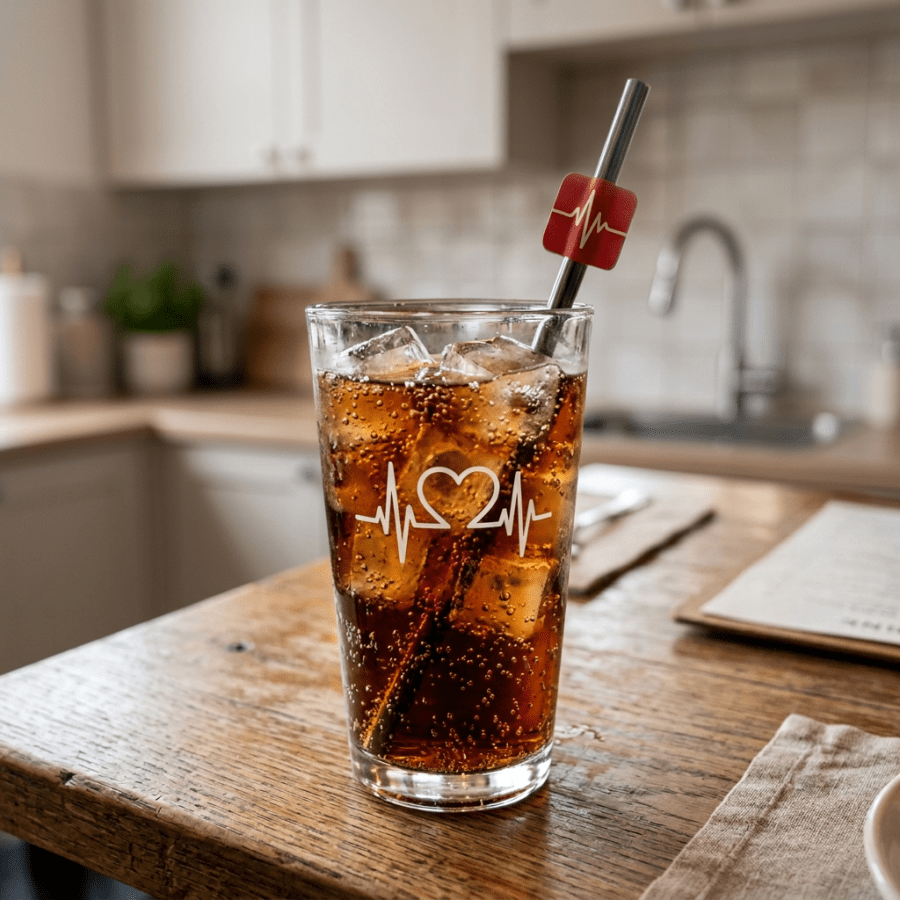
Glass of ice-filled soda with heartbeat and heart graphics on table

Does Diet Soda Raise Stroke and Heart Attack Risk?

Someone switches from regular soda to diet soda, feels reasonably good about it, and then reads a headline saying diet soda causes strokes. That has been the pattern for about fifteen years now, and the evidence underneath it has moved enough to be worth going through properly.

Where the scare started

The original signal came from the Northern Manhattan Study. Gardener and colleagues followed 2,564 people for a mean of ten years and counted 591 vascular events, meaning stroke, myocardial infarction or vascular death. People drinking diet soft drinks daily had a hazard ratio of 1.43 compared with people drinking none, with a confidence interval of 1.06 to 1.94 (1).

What made it interesting is that the association held after adjusting for metabolic syndrome, diabetes, hypertension, cardiac disease and hypercholesterolemia, and that regular soft drinks showed no such association in the same cohort (1).

A confidence interval running from 1.06 to 1.94 is a study saying “something is probably here, and we cannot tell you how big.”

What came after

The Women’s Health Initiative analysis in 2019 is the one that made me take this more seriously. 81,714 postmenopausal women. Those consuming two or more artificially sweetened beverages a day, compared with less than one a week, had a hazard ratio of 1.23 for all stroke, 1.31 for ischemic stroke, 1.29 for coronary heart disease and 1.16 for all-cause mortality (2).

The subgroup finding is the one that sticks. In women with no prior cardiovascular disease and no diabetes, high consumption was associated with more than double the risk of small artery occlusion ischemic stroke, hazard ratio 2.44 (2). That subgroup matters precisely because it is the group where reverse causation is least likely to explain the result.

Then erythritol. Witkowski and colleagues published in Nature Medicine in 2023, working across a discovery cohort of 1,157 patients and US and European validation cohorts of 2,149 and 833. Circulating erythritol in the highest quartile was associated with increased three-year risk of major adverse cardiovascular events, and they followed it with mechanistic work on platelet reactivity (3).

Erythritol is not aspartame or sucralose. It is a sugar alcohol used heavily in stevia and monk fruit blends and in a great deal of what gets sold as keto-friendly. Somebody avoiding artificial sweeteners on principle may be consuming more erythritol than anyone in that study.

The problem with all of it

Reverse causation. It is the whole difficulty and it does not go away.

People do not drink diet soda at random. They drink it because they are worried about their weight, or because someone told them to cut sugar, or because they already have diabetes. So a cohort of daily diet soda drinkers is enriched for people who were already heading toward a vascular event before they ever opened a can. Statistical adjustment helps and does not fix it, because you can only adjust for what you measured.

There is no randomized trial showing that drinking diet soda causes strokes. There is not going to be one. The trials that do exist are short and use intermediate endpoints, and they generally show that substituting a sweetened beverage for a sugar-sweetened one produces modest weight loss.

The World Health Organization landed on this in 2023 and issued a conditional recommendation against using non-sugar sweeteners for weight control, on low-certainty evidence, noting possible long-term associations with type 2 diabetes and cardiovascular disease (4). Conditional and low-certainty are doing real work in that sentence. It is not a ban and it was not presented as one.

What I think this adds up to

Diet soda is not established as a cause of stroke. The associations are consistent across several large cohorts, which is more than nothing, and they are exactly what confounding by indication would also produce, which is why nobody has closed the case.

Here is what I tell patients, and I separate it by what they came in for.

If you have diabetes, diet soda does not spike your blood sugar the way regular soda does. So if you are not going to give up soda completely, diet is the better of the two, and I would rather you drink it than pretend you are going to stop.

That is the whole of the defense. Diet soda is not healthy, and we know that. Some of what is in it has been linked to health problems, which is most of this post. And there is a second issue that matters more in a weight-management visit than the vascular question does: some research suggests diet soda makes you hungrier.

Yunker and colleagues ran a randomized crossover trial in 74 adults, published in JAMA Network Open in 2021, comparing sucralose against sucrose. Sucralose produced less suppression of acyl-ghrelin, the hunger hormone, and the neural responses in appetite and reward regions differed by sex and by BMI, with women and people with obesity looking most sensitive to the difference (5).

Most people do not want to be hungry. They want to lose weight, not gain it. If a drink is quietly making the day harder, that is a real cost even if nobody’s carotids are worse for it.

I will give you the trial that cuts against me, because it exists and it is better designed than most of what is in this post. Harrold and colleagues randomized 493 people in a 52-week behavioral weight-management program to either water or non-nutritively sweetened beverages. The sweetened-beverage group maintained more weight loss, 7.5 kg against 6.1 kg, a difference of 1.4 kg (6). That is a real randomized result and it says that for someone actively working a program, swapping to diet drinks did not sabotage them and may have helped.

So my position is not that diet soda is dangerous. It is that it is not good for you, the appetite signal is worth taking seriously in someone trying to lose weight, and if you are diabetic and choosing between two sodas, choose the one that does not move your glucose.

For patients

If you switched from regular soda to diet, do not switch back on the strength of these headlines. That trade still looks favorable.

If you are drinking several a day and trying to lose weight, cutting down is reasonable, and the best reason is appetite rather than any proven vascular danger. If you specifically avoid artificial sweeteners and use stevia or monk fruit blends, check the label for erythritol, because that is the one with the most concerning recent data.

For colleagues

The small artery occlusion subgroup in the WHI analysis is the finding worth knowing, because it is the one least explained by reverse causation.

Also worth knowing that patients hear “conditional recommendation on low-certainty evidence” as “WHO says diet soda is dangerous,” and correcting that is a two-sentence conversation that is usually worth having.

The Bottom Line

Daily diet soda has been linked to vascular events in several large cohorts, with hazard ratios in the 1.2 to 1.4 range, and the association survives adjustment. It has never been shown to cause them, and the people who choose diet soda are different from the people who do not in ways no adjustment fully captures. Diet soda beats regular soda. Water beats both. If you have diabetes and you are not giving up soda, take the one that does not move your glucose. If you are trying to lose weight, the argument against it is appetite rather than your arteries. And the most interesting recent finding is not about aspartame at all, it is about erythritol, which is in a great many products marketed to people who are trying to avoid artificial sweeteners.

Related Reading

Stroke Warning Signs: What to Know About CVA and TIA

Headaches: Migraine, Cluster, Tension and Chronic Daily Pain

First Aid for seizures

How Do You Actually Lose Weight? A Doctor Explains

Newly Diagnosed With Type 2 Diabetes: What You Should Know

Doctor Supervised Weight Loss: What Works Long Term

Scott Rennie, D.O.
Board Certified in Obesity Medicine and Family Medicine

This blog is for educational purposes only and does not constitute individual medical advice. Always consult your own physician before making changes to your health, medications, or treatment plan.

Sources

1. Gardener H, Rundek T, Markert M, et al. Diet soft drink consumption is associated with an increased risk of vascular events in the Northern Manhattan Study. J Gen Intern Med. 2012;27(9):1120-1126. PMID 22282311. https://pubmed.ncbi.nlm.nih.gov/22282311/

2. Mossavar-Rahmani Y, Kamensky V, Manson JE, et al. Artificially Sweetened Beverages and Stroke, Coronary Heart Disease, and All-Cause Mortality in the Women’s Health Initiative. Stroke. 2019;50(3):555-562. PMID 30802187. https://pubmed.ncbi.nlm.nih.gov/30802187/

3. Witkowski M, Nemet I, Alamri H, et al. The artificial sweetener erythritol and cardiovascular event risk. Nat Med. 2023;29(3):710-718. PMID 36849732. https://pubmed.ncbi.nlm.nih.gov/36849732/

4. World Health Organization. Use of non-sugar sweeteners: WHO guideline. 2023. https://www.who.int/publications/i/item/9789240073616

5. Yunker AG, Alves JM, Luo S, et al. Obesity and Sex-Related Associations With Differential Effects of Sucralose vs Sucrose on Appetite and Reward Processing: A Randomized Crossover Trial. JAMA Netw Open. 2021;4(9):e2126313. PMID 34581796. https://pubmed.ncbi.nlm.nih.gov/34581796/

6. Harrold JA, Hill S, Radu C, et al. Non-nutritive sweetened beverages versus water after a 52-week weight management programme: a randomised controlled trial. Int J Obes (Lond). 2024;48(1):83-93. PMID 37794246. https://pubmed.ncbi.nlm.nih.gov/37794246/

Remove all background people, empty room only

American Academy of Private Physicians Conference in Austin, TX

This last weekend, I attended a summit by the  AAPP (American Academy of Private Physicians) in Austin, Texas.  The meeting provided great networking opportunities and information for physicians who are interested in starting their own private medical practice. We learned from a panel of physicians of various backgrounds about their private practices and some ways that they have made them successful.  It was encouraging to hear how the patients and physicians have found concierge/private practice to be restoring to the the doctor-patient relationship of past times – unbound by insurance companies and provider network constraints.

Related Reading

Royal Pains the TV Show: Now Meet the Real-Life Version Direct Primary Care: Access Problems in Today’s Clinics Why Are Some U.S. Physicians Moving to Canada to Practice? Watch Dr. Rennie’s New Video for Rennie Family Health

Scott Rennie, D.O.
Board Certified in Obesity Medicine and Family Medicine

This blog is for educational purposes only and does not constitute individual medical advice. Always consult your own physician before making changes to your health, medications, or treatment plan.