What Causes It?
Swimmer’s ear can result from bacterial or fungal infections, but it can also be triggered by allergies, eczema, or psoriasis. The nickname “Swimmer’s Ear” comes from its strong association with prolonged water exposure, which creates an ideal environment for bacteria to grow.
How It Differs from a Middle Ear Infection
Many people use the term “ear infection” to refer to otitis media, which affects the middle ear behind the eardrum. Otitis externa, on the other hand, affects the outer ear canal—and the treatment and causes are different.
Risk Factors
Several things can increase your risk of developing otitis externa:
-
Over-cleaning the ears, which strips away protective earwax and may scratch the canal.
-
Swimming, especially in untreated water, can trap moisture in the ear.
-
Hearing aids, ear plugs, or in-ear headphones that block airflow and may trap moisture.
-
Skin trauma, such as from Q-tips or fingernails, can create entry points for infection.
Symptoms
Look out for:
-
Ear pain, especially when tugging on the outer ear.
-
Itching deep in the ear canal.
-
Fluid drainage, including pus or clear fluid.
-
Swelling or muffled hearing—the canal may swell shut in more severe cases.
Diagnosis
Your healthcare provider will examine the ear using an otoscope—a small lighted tool that allows them to see signs of redness, swelling, or discharge in the ear canal.
Treatment
The main goals of treatment are to:
-
Clear the infection.
-
Reduce inflammation and pain.
-
Prevent recurrence.
Depending on the case, we may flush the ear canal gently with a mix of water and hydrogen peroxide to remove debris and bacteria. Most patients will be prescribed antibiotic ear drops, often with a small amount of steroid to reduce inflammation.
How to Use Ear Drops Properly
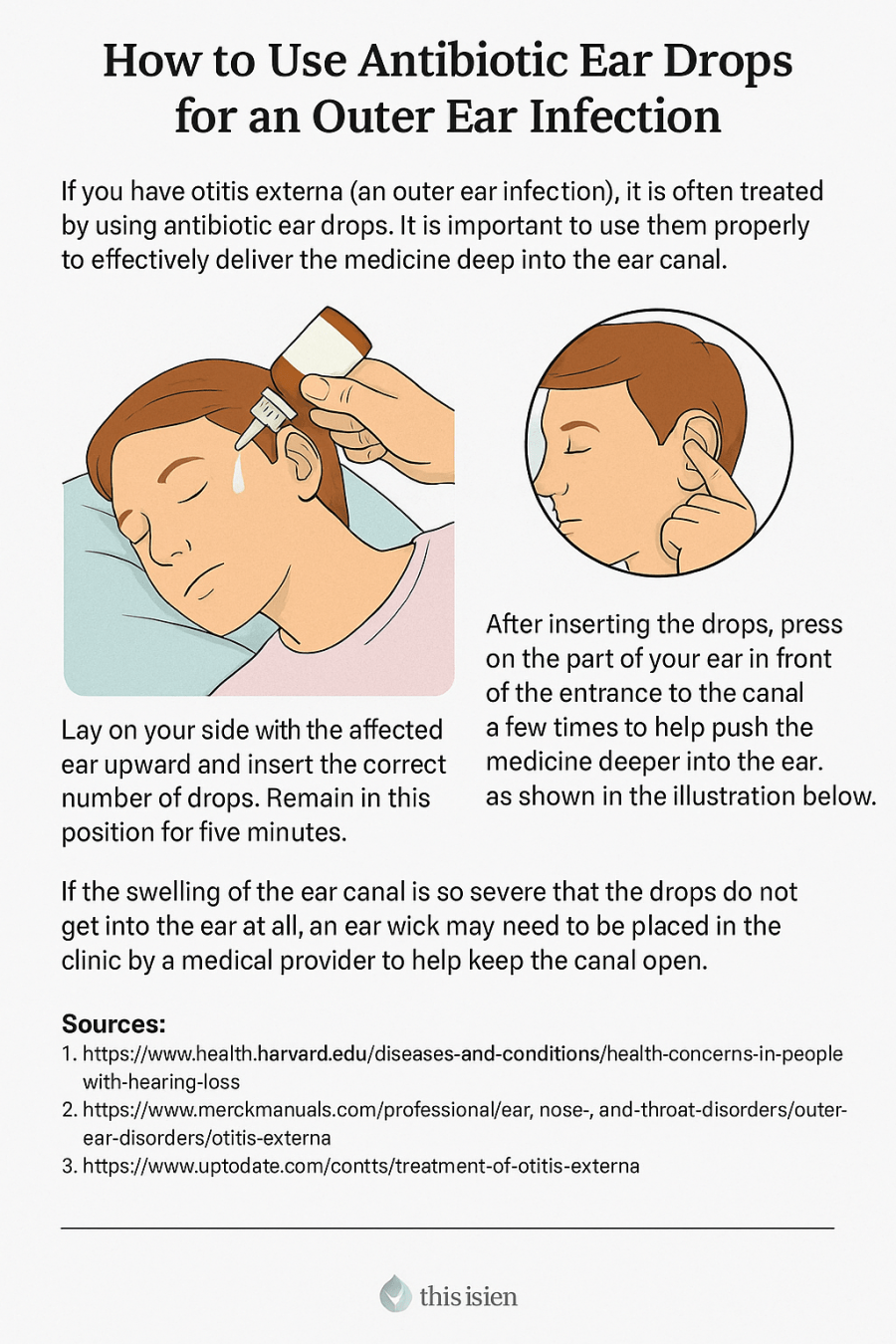
Correct technique matters. Follow these steps to make sure the medication gets deep into the canal:
-
Lie on your side with the affected ear facing up, or tilt your head.
-
Place the prescribed number of drops into the ear canal.
-
Stay in that position for 20 minutes, or use a small cotton ball at the ear opening to help hold the drops in.
-
Finish the full course of treatment, even if you feel better in a few days.
-
Call your provider if symptoms persist after 36–48 hours.
If the ear canal is too swollen for drops to enter, this may require an in-person visit for placement of a wick—a small sponge that helps carry the medication deeper into the canal.
Pain Management
Most cases respond well to ibuprofen or naproxen (Aleve). Prescription pain relievers are rarely needed.
Protect the Ear During Treatment
-
Avoid getting the ear wet. During showers, cover the ear with a dry cotton ball.
-
Do not swim for 7–10 days after starting treatment.
-
Avoid inserting hearing aids, earbuds, or Q-tips until fully healed.
Prevention Tips
To reduce the risk of future infections:
-
Never insert Q-tips, fingers, or towels deep into the ear canal.
-
Dry your ears after swimming by shaking them out or using a blow dryer on low, held at least 12 inches away.
-
Use over-the-counter drying drops after swimming.
-
Swim with earplugs designed to keep water out of the canal.
Scott Rennie, D.O.
Board Certified in Obesity Medicine and Family Medicine
This blog is for educational purposes only and does not constitute individual medical advice. Always consult your own physician before making changes to your health, medications, or treatment plan.
 Doctor Rennie's Blog