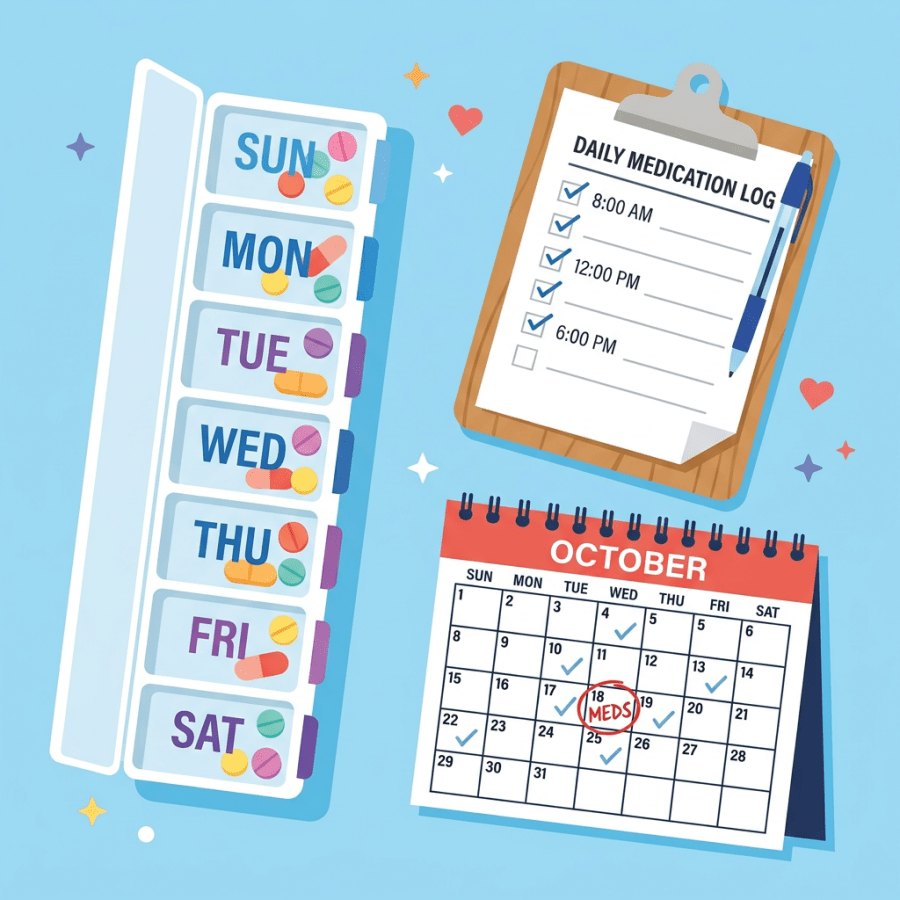

Many of my patients, and many of the families I work with, face the same challenge. Their parents are taking multiple medications, sometimes several times a day, and it’s hard to keep everything straight. As memory declines with age, the details of what to take, when to take it, and why it matters can easily get lost. The problem is that missing doses or mixing up prescriptions can quickly affect health.
I’ve found that patients do better when they understand why they’re taking each medication. A simple note like “blood pressure” or “cholesterol” written next to the name helps. I often hand out an updated medication list at every visit. It’s printed in a large, easy-to-read font so it doesn’t get overlooked. Some people keep that list on the fridge or next to their pill bottles so they can check it quickly. Others like to carry it on a USB drive or keep it stored securely online, so it’s available if they land in another clinic or hospital. The key is making sure the list stays current. Whenever a prescription changes, I encourage families to replace the old list immediately (Centers for Disease Control and Prevention, 2023).
Where medications are stored makes a difference too. If bottles are tucked away in a cabinet, they’re easier to forget. Putting them near the coffee maker, a water dispenser, or a bathroom sink works better. Those spots become natural reminders because the person passes them throughout the day.
When I visit a patient at home, I try to look at the actual bottles. Comparing what’s on the label with what’s on the chart can prevent mistakes, like taking an outdated prescription. If a refill is almost due, it’s easier to take care of it right then than to wait until the patient runs out.
Simple tools can also make a big impact. Pill boxes are inexpensive and work well for organizing doses by day or time. Even basic versions you can buy at the pharmacy help patients and caregivers see at a glance whether a dose has been taken. More advanced boxes come with reminders built in, though those cost more.
Technology is playing a growing role in this space. Some prescription bottles now come with reminder caps that glow, beep, or even send a text message when it’s time to take the next dose. Vitality’s GlowCaps are one example that combine light and sound alerts with electronic reminders (Vitality, 2024). For patients who already use smartphones, setting a daily alarm or calendar alert works just as well.
There are also mobile apps designed specifically for tracking medications. Options like iPills, Pillbox, Pillboxer, and The Pill Phone help patients and caregivers schedule, track, and confirm doses (National Institutes of Health, 2022). For tech-savvy patients, these can reduce the burden of trying to remember everything on their own.
None of these approaches are complicated, but they do take a little extra time and attention. Whether it’s keeping an updated list, moving the bottles where they’re easier to see, or using a pill box or phone alarm, the goal is the same. Patients who remember their medications stay healthier, and caregivers have one less thing to worry about.
This article is for information only and is not medical advice for any individual. Please talk with your medical provider about any specific questions.
Scott Rennie, D.O.
Board Certified in Obesity Medicine and Family Medicine
This blog is for educational purposes only and does not constitute individual medical advice. Always consult your own physician before making changes to your health, medications, or treatment plan.
 Doctor Rennie's Blog