
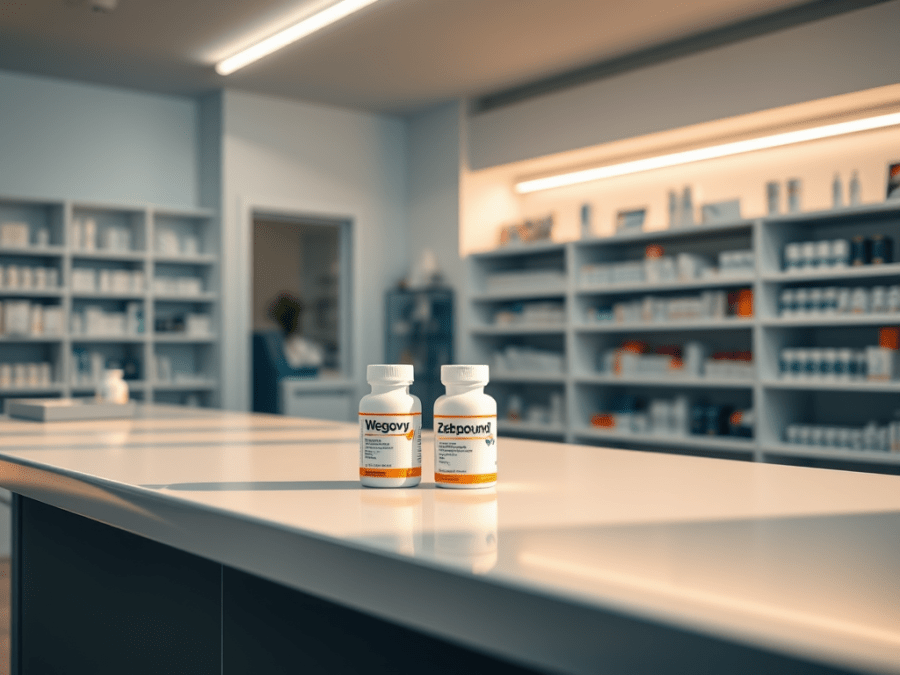
Wegovy and Zepbound Cash Pay Prices Without Insurance

Patients and colleagues ask me often about the cost of GLP-1 medications when insurance does not cover them. Wegovy and Zepbound are both FDA approved for weight management. Many patients run into the same barrier: their insurance plan excludes the drug entirely. In those cases, people end up paying cash, and the list price can be thousands of dollars a month.

Novo Nordisk now offers a cash pay path that changes the math for some patients. Through NovoCare Pharmacy, every Wegovy dose strength drops to 499 dollars for a 28 day supply, shipped directly to the patient’s home. This applies only when a patient’s insurance won’t cover Wegovy at all; if a commercial plan does cover it, a separate savings offer can drop the copay as low as 0 to 25 dollars, but the 499 dollar flat price is reserved for patients paying entirely out of pocket. Medicare and Medicaid patients don’t qualify. Sources: Novo Nordisk press release, August 5, 2025 (prnewswire.com), and the NovoCare savings program website (novocare.com).

I had a patient not long ago who had already tried to fill Wegovy at a local pharmacy. The pharmacist told her the cash price was over 1,300 dollars. She could not afford that. Under this new program, she can request her prescription be sent to NovoCare Pharmacy and receive the medication for 499 dollars a month instead. Still expensive. For some patients it is the only feasible way to continue therapy when insurance refuses to cover it.

Eli Lilly runs a comparable program for Zepbound. Both LillyDirect and NovoCare are really good in my experience. The paperwork is less than most insurance companies require, and both platforms are quick to get medications out to patients. I like them equally and don’t have a preference. Self pay patients can get Zepbound for 500 dollars a month, a 28 day supply, dispensed through a mail order pharmacy under LillyDirect, Lilly’s patient access platform, and shipped to the patient. The same coverage rule applies: this is for patients whose insurance doesn’t cover the drug, and Medicare, Medicaid, and other government insurance don’t qualify. Source: LillyDirect program site and Eli Lilly press announcement, August 2025.

These programs are designed for a narrow group: patients with no coverage at all, facing list prices that are otherwise out of reach.

If you are a patient considering these programs, the next step is to talk with your prescribing clinician. Prescriptions have to be routed to the designated mail order pharmacies to qualify for the flat cash price. Taking the prescription to a local retail pharmacy and expecting the same deal won’t work.

As a physician, I see how frustrating the access issue has become. Some patients with coverage pay very little. Others pay nothing. Then the next patient on my schedule that same day has no coverage at all and faces a price higher than their mortgage. These new programs don’t solve every problem. For patients paying entirely out of pocket, they make a real difference. Whether 499 or 500 dollars a month is enough is a fair question. It beats a price higher than a mortgage payment, and for now, that’s the trade on the table.

Sources: Novo Nordisk press release August 5, 2025, NovoCare savings program (novocare.com), Eli Lilly press materials August 2025, LillyDirect (lillydirect.com).

Scott Rennie, D.O.
Board Certified in Obesity Medicine and Family Medicine

This blog is for educational purposes only and does not constitute individual medical advice. Always consult your own physician before making changes to your health, medications, or treatment plan.

Can You Do Intermittent Fasting on Ozempic or Wegovy?

Weight comes up in almost every visit I do. For some patients it is fifteen pounds standing between them and a better blood pressure number. For others it is obesity that has already done damage, and the conversation starts further back. The work can feel overwhelming from the inside. What’s changed is that the tools finally match the size of the problem. Medications like Ozempic, Wegovy, Mounjaro, and Zepbound, the GLP-1 receptor agonists, have shifted how this is approached, and paired with a structure like intermittent fasting they help people lose weight and keep it off.

What GLP-1 Agonists Do

These drugs mimic glucagon-like peptide-1, a hormone that regulates appetite and blood sugar. Given as medication, they slow gastric emptying and push stronger satiety signals to the brain, so fullness arrives earlier and stays longer. They also improve insulin sensitivity, which is why they earned their place in type 2 diabetes first.

The weight effect is substantial. Wegovy and Zepbound carry FDA approval specifically for weight loss. Ozempic and Mounjaro are approved for diabetes and produce strong weight results as well, which is the source of most of the confusion patients arrive with about which drug is which.

How They Work With Intermittent Fasting

Intermittent fasting improves insulin sensitivity, supports fat loss, and helps regulate hunger hormones. Staying with it is the hard part. Many patients tell me they can’t get past the hunger. GLP-1 medications change that equation by blunting appetite and cravings, which makes a fasting schedule something a person can actually hold.

A patient of mine started a 16:8 fasting plan (16 hours fasting, 8 hours eating) while on a GLP-1 medication. Before starting the medication, she felt shaky and irritable during fasting. After starting, she was surprised by how manageable it felt. She ate smaller meals, felt full, and didn’t struggle to maintain the fasting window.

Side Effects and Adjustments

Nausea leads the list, and it’s worst early. Diarrhea and reflux show up too. Most of it settles as the body adapts. Start low, titrate slowly, and resist the urge to chase the next dose because the scale stalled for two weeks. Patients who stay in contact through the titration get their dose adjusted before they quit over side effects, and the ones who go quiet are the ones who stop the drug entirely.

Barriers to Access

Getting these medications is its own project. Cost is the main wall. Insurance coverage for weight loss remains inconsistent in a way that’s hard to explain to a patient who has just been told the drug would help, and out-of-pocket pricing is punishing. Demand has outrun supply, so delays and shortages are part of the picture.

Then there are the compounded versions. Some pharmacies sell them well below brand pricing, and they’re not FDA-approved. Safety and potency can’t be guaranteed. I tell patients to stay away from them, and I don’t soften that advice when someone pushes back on price.

Putting It Into Context

These aren’t quick fixes. They are tools, and they work when they sit on top of durable changes: balanced eating, regular activity, attention to mental health. Intermittent fasting is one workable way to structure eating alongside them. The lifestyle piece doesn’t become optional because a medication is doing part of the lifting.

When patients pair the medication with habits they can sustain, results hold longer and vary less. The goal is a set of strategies that still works three years from now, not the fastest possible drop on the scale.

Scott Rennie, D.O.

Sources

U.S. Food and Drug Administration. FDA Approvals: Wegovy, Zepbound.

Wilding JPH, et al. Once-Weekly Semaglutide in Adults with Overweight or Obesity. N Engl J Med. 2021;384:989-1002.

Jastreboff AM, et al. Tirzepatide Once Weekly for the Treatment of Obesity. N Engl J Med. 2022;387:205-216.

American Diabetes Association. Pharmacologic Approaches to Glycemic Treatment: Standards of Medical Care in Diabetes, 2024. Diabetes Care. 2024;47(Suppl 1):S181-S202.

Board Certified in Obesity Medicine and Family Medicine

This blog is for educational purposes only and does not constitute individual medical advice. Always consult your own physician before making changes to your health, medications, or treatment plan.