
Man holding dumbbell and protein shake on mountain with rising fitness progress chart

Do Ozempic and Zepbound Cause Muscle Loss?

Every few months a new worry about GLP-1 therapy moves through the news cycle. Lately the one I’m fielding most on video visits is muscle. Patients read a headline about “Ozempic muscle” or see a segment warning that these drugs are quietly turning people frail, and they show up to their visit asking whether the weight they’re losing is actually fat, or whether they’re hollowing out their strength along with it. Most just phrase it in terms of what they saw online: GLP or Ozempic muscle loss. Truth is, most of my patients aren’t that worried about it at first. They’re focused on getting the fat off. But some have seen the scare ads on Facebook and other social media railing against GLP-1 medications in general, touting muscle loss as the reason to avoid them. It’s a fair question, and it deserves a real answer.

What the data actually shows

Here’s the uncomfortable part first: the concern isn’t manufactured. Across GLP-1 and dual-agonist trials, roughly 25 to 40 percent of total weight lost is lean mass rather than fat mass, and that share climbs with higher doses and greater total weight loss. In patients losing more than 15 percent of body weight on high-dose therapy, average lean mass decline runs in the range of 10 to 15 percent. That’s not trivial, and it’s higher than what we’d want to see if the sole measuring stick were “weight coming off.”

Lean mass loss and clinically meaningful muscle loss aren’t the same thing, though, and this is where I think the public conversation gets sloppy. Lean mass includes water, organ tissue, and connective tissue alongside contractile muscle. Some degree of lean mass loss happens with any significant weight reduction, including bariatric surgery and aggressive caloric restriction without any medication at all. The relevant clinical question is whether strength and function held up, and whether frailty risk moved. On that narrower and more important question, the current evidence is reassuring for most patients: there’s no consistent signal that GLP-1-induced weight loss causes outright sarcopenia or functional decline in the general obesity population studied so far.

Where the concern sharpens is in specific subgroups: adults over 65, patients with baseline sarcopenia or frailty, and anyone starting from a lower muscle reserve. That’s the population where I’m paying closer attention now, more than the healthy 40-year-old with obesity and good baseline strength.

What’s changing in how we prescribe

A few practical shifts have made their way into how I approach this with patients this year. When muscle preservation is a priority, I start low and titrate slower. This isn’t new advice for tolerability, but it applies here too: aggressive, fast weight loss appears to pull proportionally more from lean mass than a slower trajectory toward the same endpoint.

Protein intake is no longer an aside I mention on the way out the door. Current guidance points to 1.2 to 1.6 g/kg of body weight per day for patients on GLP-1 therapy, meaningfully higher than general population recommendations, and given how much these medications suppress appetite, hitting that number takes real intention. I’ve started asking patients to walk me through a typical day’s protein intake rather than assuming they’re getting enough just because they’re eating less overall.

Resistance training is now part of the treatment plan itself, prescribed with the same specificity as the medication. Two or more sessions a week of resistance work is the most consistent lever we have for preserving lean mass during GLP-1-driven weight loss. For patients who’ve never lifted weights, even bodyweight or band-based resistance work at home is a reasonable starting point, and it’s worth a specific referral to physical therapy or a trainer rather than a general nudge.

And I’m tracking more than the scale. For patients on higher doses, losing significant weight, or starting from a place of reduced muscle reserve, I’m now discussing body composition tracking, whether that’s a DEXA scan, bioelectrical impedance, or simply following functional measures like grip strength and chair-stand time, rather than relying on weight alone to judge how treatment is going. I’ll say plainly: I don’t yet fully trust the consumer-grade body composition numbers patients bring me on their phones. Grip strength and chair-stand time are the measures I put the most weight on. Over video I’m relying on what a patient can demonstrate on camera and tell me, rather than testing it myself, which is a real limitation of doing this work remotely.

Muscle is not the only tissue worth watching on these drugs. Nerve complaints turn up too, from skin that hurts to the touch through to the more serious neuropathies, and the risk of both rises with dose and with how fast the weight comes off. I cover that separately in GLP-1 skin and nerve pain.

What’s coming that may change this conversation further

Drug development is moving on this too, well past prescribing technique. At the American Diabetes Association’s 85th Scientific Sessions this year, early data from the BELIEVE study looked at bimagrumab, an antibody that blocks activin receptor signaling, paired with semaglutide, specifically to see whether it could preserve lean mass during GLP-1 weight loss without blunting fat loss. Separately, researchers at Stanford published mouse data in June showing that a muscle-repair-targeted compound improved muscle regeneration and strength recovery alongside GLP-1 treatment, again without compromising fat loss. Neither approach is available for patients today, but they reflect where the field is heading: toward combination approaches that decouple fat loss from lean mass loss more deliberately.

Where the newer agents in the pipeline land on this question is also worth watching. Retatrutide, the triple GIP/GLP-1/glucagon agonist from Lilly, posted strong topline results across its TRIUMPH program this year, with weight loss in the 20 to 28 percent range depending on the trial population, and a BLA submission is planned for early 2027. Amgen’s MariTide, a monthly injectable combining a GLP-1 agonist with an amylin antibody, showed roughly 20 percent weight loss in Phase 2 with a safety profile consistent with the existing GLP-1 class. Body composition data from both programs will matter as much as the topline weight-loss numbers once they mature.

The bottom line

Muscle loss with GLP-1 therapy is real, but it’s manageable, not a reason to avoid treatment or panic mid-course. Older adults and anyone with baseline frailty need the closest attention, and so does anyone pursuing rapid, high-percentage weight loss on a higher dose. I order a DEXA when I actually need an answer to how much of that weight is fat, and it’s an easier call in a patient who might also have osteoporosis, since the same scan answers both questions. Insurance makes this harder than it should be, and plenty of patients who already know they’re overweight don’t want to pay out of pocket just to confirm it. Protein intake and resistance training aren’t optional add-ons anymore. They’re as much a part of the standard prescription as the injection itself.

Scott Rennie, D.O.
Board Certified in Obesity Medicine and Family Medicine

This blog is for educational purposes only and does not constitute individual medical advice. Always consult your own physician before making changes to your health, medications, or treatment plan.

Sources:

GLP-1 Therapies in 2026: Beyond Blood Sugar and the Scale, AJMC: https://www.ajmc.com/view/glp-1-therapies-in-2026-beyond-blood-sugar-and-the-scale

Should We Be Concerned About Muscle Loss With GLP-1s?, Medscape: https://www.medscape.com/viewarticle/should-we-be-concerned-about-muscle-loss-glp-1s-2026a1000p67

Increasing GLP-1 Use Raises Muscle Loss Concerns, Medscape: https://www.medscape.com/viewarticle/increasing-glp-1-use-raises-muscle-loss-concerns-2026a1000p4h

Deep Dive: GLP-1, Muscle Loss and What It Means, Medscape: https://www.medscape.com/c99/p10/are-concerns-glp-1s-and-muscle-loss-real-or-overblown-2026a1000gdz

New GLP-1 Therapies Enhance Quality of Weight Loss by Improving Muscle Preservation, American Diabetes Association: https://diabetes.org/newsroom/press-releases/new-glp-1-therapies-enhance-quality-weight-loss-improving-muscle-0

Drug enhances muscle repair during GLP-1 weight-loss treatment in mice, Stanford Medicine: https://med.stanford.edu/news/all-news/2026/06/muscle-glp-1.html

Retatrutide FDA Approval Status 2026, freemedicaljournals.com: https://freemedicaljournals.com/blog/retatrutide-fda-approval-status-2026/

Results From Amgen’s Phase 2 Obesity Study of Monthly MariTide, Amgen: https://www.amgen.com/newsroom/press-releases/2025/06/results-from-amgens-phase-2-obesity-study-of-monthly-maritide-presented-at-the-american-diabetes-association-85th-scientific-sessions


Compounded Semaglutide and Tirzepatide: What to Know Now

When patients ask me about compounded weight loss drugs like semaglutide and tirzepatide, I take a deep breath. The topic is complicated and keeps changing. I won’t just tell patients to avoid them. They’re already looking for these options, and my job is to help them navigate the risks safely.

Dr. Beverly Tchang’s “swim safely” analogy fits well. We can’t stop people from diving into the ocean of compounded products, but we can at least give them floaties: information, caution, and tools to make better decisions. (Tchang, Medscape)

Here’s how I explain it to patients and colleagues, updated with the most recent data.

Why compounded versions exist

When semaglutide and tirzepatide injections were in short supply a few years ago, patients turned to compounding pharmacies that offered custom formulations, often at a lower price. (GoodRx)

In late 2024, the FDA ended the declared shortage of tirzepatide. (Stat News) By early 2025, semaglutide (Ozempic and Wegovy) followed. Once the shortages ended, enforcement ramped up against compounded versions. (GoodRx)

Now, compounded versions are only legal in narrow circumstances, such as when a patient has a medical need that can’t be met by an approved product. (GoodRx)

In December 2024, the FDA sent warning letters to several companies selling unapproved GLP-1 drugs labeled “for research use only.” (Reuters) Some of these contained no active ingredient, incorrect salt forms, or inconsistent potency. (Verywell Health)

Key risks and what to look for

Not all compounding pharmacies operate at the same standard. A friendly local pharmacist doesn’t necessarily mean the product is safe. Dr. Tchang’s checklist gives a good framework for evaluating any compounded GLP-1 medication. A simplified version: look for a pharmacy where the medication is prescribed by a licensed provider, there are no disciplinary actions on file, the pharmacy has been in business for more than a year, only semaglutide base is used (not a salt form), and the facility is FDA-registered or FDA-inspected; it should also be able to ship sterile drugs safely to all 50 states.

If a compounding pharmacy cannot meet these criteria, that’s a red flag. Ask directly for documentation. If they can’t provide it, walk away.

Some compounders also mix in vitamins or preservatives to make their product “different” from the brand name; that may sound harmless, but combining untested additives with peptides can change how the drug behaves. (GoodRx)

A few are promoting oral or sublingual forms of semaglutide and tirzepatide. These seem attractive for patients who don’t like injections, but they haven’t been validated in clinical trials, and absorption is unpredictable. (Omada Health)

Even small changes in formulation or dosing can interrupt treatment and cause rebound weight gain or side effects.

How I approach this with patients

When a patient says, “I found a compounding pharmacy that sells it for half the price,” I acknowledge their concern. Access and cost are real issues. But I explain that the regulatory situation has changed. If an FDA-approved version is available, that’s the standard we should use first.

I encourage patients to ask the pharmacy for their certificate of analysis, sterility test results, and ingredient source; if the pharmacy hesitates or says it’s proprietary, that’s enough reason to stop.

One patient of mine was on a compounded semaglutide microdose that wasn’t commercially available, at least as she described it to me. I never could pin down what she was actually getting. The compounder wouldn’t release potency data either. We moved her to a low-dose commercial version instead. Weight loss slowed a little. Safety and consistency improved, and I knew what was in the pen.

We also reviewed manufacturer assistance programs and insurance coverage. Many patients don’t realize that drug makers often cap out-of-pocket costs for brand medications; cost confusion is one of the biggest drivers behind compounded use.

The FDA’s BeSafeRx campaign

The FDA has an ongoing public safety campaign called BeSafeRx, designed to help patients and providers verify the legitimacy of online pharmacies and compounded drug sources; it offers tools to check pharmacy licenses, identify red flags, and report suspicious products.

It’s a good resource for anyone considering buying compounded or online medications; I often share it directly with patients so they can see what trustworthy sourcing looks like.

You can find the BeSafeRx information at:

https://www.fda.gov/drugs/buying-using-medicine-safely/besaferx-your-source-online-pharmacy-information

What’s changed recently

The REDEFINE trial (NEJM, 2025) studied cagrilintide combined with semaglutide (CagriSema) and showed about 20.4 percent weight loss over 68 weeks, compared with 14.9 percent with semaglutide alone; that kind of data will shape treatment algorithms going forward. GoodRx reports that the FDA’s grace period for compounding GLP-1s has officially ended for both tirzepatide and semaglutide, though some pharmacies still market “custom” or “non-identical” formulations, and regulators are watching closely.

Approach this without judgment if you’re a clinician. Patients are trying to find affordable solutions. And they often trust what they see on social media more than official channels; we can help most by staying informed, asking questions, and documenting carefully. Patients should be cautious for a different reason. Ask your provider to review any compounded medication before you use it, make sure your pharmacy meets every item on that checklist, and use resources like the FDA’s BeSafeRx to verify safety.

Knowledge and transparency remain the best safeguards.

Scott Rennie, D.O.

Board Certified in Obesity Medicine and Family Medicine

This blog is for educational purposes only and does not constitute individual medical advice. Always consult your own physician before making changes to your health, medications, or treatment plan.

What Is an Obesity Medicine Board Certified Doctor?

More family physicians, myself included, are choosing to become certified through the American Board of Obesity Medicine. The credential looks small on paper. What sits behind it is a real change in how we handle obesity and the conditions that travel with it.

ABOM certification is open to physicians who can show advanced knowledge in preventing, evaluating, and treating obesity. There are two routes. One is 60 hours of continuing medical education credits in obesity-related topics, half of which must specifically address obesity treatment. The other is an accredited obesity medicine fellowship. Either way, candidates then sit for a 4-hour exam covering the physiology and pathophysiology of obesity, nutrition and behavioral treatment, medications, surgery, and bias in care.

Why go through all that? We are the ones patients come to first. About 40% of U.S. adults have obesity, and it is tied to diabetes, heart disease, infertility, arthritis, and worse outcomes with infections. Yet most of us had very little structured training on obesity in medical school or residency. I certainly didn’t. ABOM fills that gap with something more useful than repeating “eat less, move more.”

Patients are also asking harder questions than they used to. GLP-1 medications like semaglutide and tirzepatide changed the conversation. People have worked out that weight regulation is physiology, not character. They want to know whether medication makes sense for them, what the risks are, and what else they should be doing. Certification puts you in a better position to answer that honestly and to build a plan that lasts longer than a few months.

For me, the certification built confidence. I know how to adjust anti-obesity medications, screen for related conditions like PCOS or fatty liver, and talk about weight without stigma. Patients notice. They feel taken seriously when obesity gets treated as the chronic medical condition it is.

One case stays with me. A patient in her fifties came to me with obesity and prediabetes, worn down after years of failed diets. Using what I’d learned, I recognized she was a candidate for pharmacotherapy. We started semaglutide, and we built a plan around meal structure, activity, and sleep. Within months her A1c had come back into the normal range and her energy had returned.

Colleagues are seeing benefits too. A physician I know in rural Missouri became ABOM-certified and quickly became a regional referral point. Practices in nearby towns began sending her patients rather than having them drive hours to an urban obesity clinic. In an underserved area, that is the difference between getting treated and not.

For doctors considering it, the field is growing quickly. More than 11,500 physicians in the United States and Canada now hold the certification, up from roughly 9,800 a year earlier. Insurers are beginning to recognize obesity medicine, which means more treatments get covered when a certified physician is guiding them. You also end up connected to a national group of people working on one of the largest drivers of chronic disease we have.

So the certification is a line on a CV. It is also the reason I practice differently than I did before I sat the exam, and that is the part that reaches patients.

Scott Rennie, D.O.

Sources:

American Board of Obesity Medicine: https://www.abom.org

Johnson-Rabbett B, et al. An Update on the American Board of Obesity Medicine (ABOM): 2017-2024. Obesity. 2025. doi:10.1002/oby.70013

CDC/NCHS. Obesity and Severe Obesity Prevalence in Adults: United States, August 2021-August 2023. NCHS Data Brief No. 508: https://www.cdc.gov/nchs/products/databriefs/db508.htm

Flegal KM, Kruszon-Moran D, Carroll MD, Fryar CD, Ogden CL. Trends in Obesity Among Adults in the United States, 2005 to 2014. JAMA. 2016;315(21):2284-2291.

Board Certified in Obesity Medicine and Family Medicine

This blog is for educational purposes only and does not constitute individual medical advice. Always consult your own physician before making changes to your health, medications, or treatment plan.

New Obesity Drugs Beyond Ozempic and Zepbound Explained

Obesity treatment is shifting fast. For years the standard toolkit was lifestyle counseling plus a handful of older medications. New drug classes now target the actual biology of the disease: hormonal signaling, metabolic rate, body composition. Three groups matter most right now. Nutrient-stimulated hormone-based therapies. Oral small molecule receptor agonists. And activin receptor pathway inhibitors.

NuSHs mimic or amplify the body’s own hormonal response to food. GLP-1 increases satiety, slows gastric emptying, and supports insulin secretion (Wilding et al., N Engl J Med, 2021). GIP regulates fat metabolism and glucose response (Frías et al., N Engl J Med, 2021). Amylin, co-secreted with insulin, works as its own satiety signal (Dehestani et al., J Obes Metab Syndr, 2021). PYY reduces appetite and energy intake (Schmidt et al., Am J Physiol Endocrinol Metab, 2014). Oxyntomodulin reduces intake too, and also raises energy expenditure (Wynne et al., Int J Obes, 2006).

Several drugs in this class are already in trials, and CagriSema pairs an amylin analogue with a GLP-1 receptor agonist, reducing body weight by 17.1 percent in 20 weeks in a Phase 1b trial, not Phase 3 (Enebo et al., Lancet, 2021). Survodutide, a GLP-1 and glucagon receptor agonist, produced weight loss of up to 18.7 percent over 46 weeks (Le Roux et al., Lancet Diabetes Endocrinol, 2024). Retatrutide, which hits GIP, GLP-1, and glucagon receptors together, produced a 24.2 percent reduction over 48 weeks in Phase 2 testing. Women lost about 28.5 percent of body weight, men about 21.9 percent (Jastreboff et al., N Engl J Med, 2023). Oral semaglutide at 50 mg reached 17.4 percent weight loss at 68 weeks, with 37 percent of participants losing more than a fifth of their body weight (Knop et al., Lancet, 2023). Mari-tide is still in Phase 2, with promising early results.

Small molecule receptor agonists are the other track, and their edge is simple: a pill instead of a needle. Orforglipron produced about 14.7 percent weight loss at 36 weeks, in range with the injectables (Wharton et al., N Engl J Med, 2023). Danuglipron is behind it. Early Phase 2 data, in patients with type 2 diabetes rather than obesity specifically, showed reduced appetite alongside improved glucose and weight outcomes (Saxena et al., Diabetes Obes Metab, 2023). Whether that holds up in an obesity-only population is still unclear.

Activin receptor pathway inhibitors take a different approach. They target pathways that preserve muscle while fat comes off, since traditional weight loss burns muscle right along with fat. These drugs try to change that ratio (Heymsfield et al., JAMA Netw Open, 2021).

Bimagrumab, a monoclonal antibody that blocks the activin type II receptor, reduced fat mass by 20.5 percent while increasing lean mass by 3.6 percent over 48 weeks in trials. Combine it with a GLP-1 drug like semaglutide or tirzepatide and the body-composition effect gets stronger still. Taldefgrobep, a myostatin inhibitor originally developed for Duchenne muscular dystrophy, is now being tested for obesity. SRK-439 is another myostatin-targeting antibody in development, aimed at fat loss without the lean-mass cost.

What sets these treatments apart is what the weight loss is made of: more muscle retained, metabolic markers that move too, alongside the pounds lost. That’s a real shift, for patients who may get more durable results and fewer complications, and for clinicians who get more tools to match therapy to the person in front of them.

Scott Rennie, D.O.

References:

Wilding JPH, et al. Once-Weekly Semaglutide in Adults with Overweight or Obesity. N Engl J Med. 2021;384:989-1002. PMID 33567185. https://pubmed.ncbi.nlm.nih.gov/33567185/

Frías JP, et al. Tirzepatide versus Semaglutide Once Weekly in Patients with Type 2 Diabetes (SURPASS-2). N Engl J Med. 2021. PMID 34170647. https://pubmed.ncbi.nlm.nih.gov/34170647/

Dehestani B, Stratford NR, le Roux CW. Amylin as a Future Obesity Treatment. J Obes Metab Syndr. 2021;30(4):320-325. PMID 34929674. https://pubmed.ncbi.nlm.nih.gov/34929674/

Schmidt JB, Gregersen NT, Pedersen SD, et al. Effects of PYY3-36 and GLP-1 on energy intake, energy expenditure, and appetite in overweight men. Am J Physiol Endocrinol Metab. 2014;306(11):E1248-56. PMID 24735885. https://pubmed.ncbi.nlm.nih.gov/24735885/

Wynne K, Park AJ, Small CJ, et al. Oxyntomodulin increases energy expenditure in addition to decreasing energy intake in overweight and obese humans: a randomised controlled trial. Int J Obes (Lond). 2006;30(12):1729-1736. PMID 16619056. https://pubmed.ncbi.nlm.nih.gov/16619056/

Enebo LB, Berthelsen KK, Kankam M, et al. Lancet. 2021;397:1736-1748. Phase 1b trial. PMID 33894838. https://pubmed.ncbi.nlm.nih.gov/33894838/

Le Roux CW, et al. Lancet Diabetes Endocrinol. 2024;12:162-173. PMID 38330987. https://pubmed.ncbi.nlm.nih.gov/38330987/

Jastreboff AM, et al. N Engl J Med. 2023;389:514-526. PMID 37366315. https://pubmed.ncbi.nlm.nih.gov/37366315/

Knop FK, et al. Lancet. 2023 (OASIS 1). PMID 37385278. https://pubmed.ncbi.nlm.nih.gov/37385278/

Wharton S, Blevins T, Connery L, et al. N Engl J Med. 2023;389:877-888. PMID 37351564. https://pubmed.ncbi.nlm.nih.gov/37351564/

Saxena AR, Frias JP, Brown LS, et al. Tolerability, safety and pharmacodynamics of oral, small-molecule GLP-1 receptor agonist danuglipron for type 2 diabetes. Diabetes Obes Metab. 2023. PMID 37311722. https://pubmed.ncbi.nlm.nih.gov/37311722/

Heymsfield SB, Coleman LA, Miller R, et al. Effect of Bimagrumab vs Placebo on Body Fat Mass Among Adults With Type 2 Diabetes and Obesity. JAMA Netw Open. 2021;4(1):e2033457. PMID 33439265. https://pubmed.ncbi.nlm.nih.gov/33439265/

Board Certified in Obesity Medicine and Family Medicine

This blog is for educational purposes only and does not constitute individual medical advice. Always consult your own physician before making changes to your health, medications, or treatment plan.

Why Is Losing Weight and Keeping It Off So Hard?

As a physician, one of the most common questions I hear from patients is, “Why is it so hard to lose weight and keep it off?” The answer sits in how the body protects its energy stores. What once kept humans alive through scarcity now works against us, in a world of constant food access. The brain runs this system. Understanding its role is where treatment has to start.

Fat storage was never a flaw. Our biology stores energy as fat because that protected our ancestors when food access was unpredictable. Without it, surviving famine would have been unlikely (Schwartz et al., Endocr Rev, 2017).

The brain monitors and regulates fat mass much like a thermostat, a concept called the defended fat mass, or set point, and when fat stores rise, the brain senses the change through hormones like leptin and insulin and responds by increasing energy use while dialing down appetite. When fat stores fall, the brain reads that as a threat. It lowers energy use and ramps up hunger to rebuild the reserve.

That’s why weight loss so often gets followed by regain. The body works to hold on to defended fat mass, and it works at it actively (Rosenbaum & Leibel, Int J Obes, 2010).

The trouble is that our environment no longer matches our biology. Calorie-dense processed food, disrupted sleep, chronic stress, and sedentary living push fat mass higher than what was historically defended. Over time, this reset drives obesity at the population level (Hall & Guo, Gastroenterology, 2017).

Obesity is best understood as a neurometabolic disease. The body does exactly what it was built to do here: protect its energy reserves. In the modern world, though, that defense turns harmful, raising the risk of diabetes, cardiovascular disease, and hypertension (Heymsfield & Wadden, N Engl J Med, 2017).

The real goal of treatment is to recalibrate the defended fat mass. When the brain adapts to a lower set point, weight loss follows without a running fight against hunger.

This is where medications enter. Phentermine reduces appetite by stimulating the nervous system. Topiramate cuts cravings and helps stabilize mood. Bupropion/naltrexone targets reward pathways to blunt food cravings. Liraglutide, a GLP-1 receptor agonist, increases satiety and slows digestion. Newer agents, semaglutide and tirzepatide chief among them, are highly effective GLP-1 receptor agonists that produce sustained weight loss (Wilding et al., N Engl J Med, 2021).

Not every medication works on the brain. Orlistat blocks fat absorption in the gut. It helps some patients, but it doesn’t touch defended fat mass, which caps its long-term effect (Yanovski & Yanovski, JAMA, 2014).

The core point: weight regulation is hardwired. Not chosen. Patients live inside a system where the brain works hard to preserve fat stores. Treatments that respect that biology work better than the ones that ignore it.

Scott Rennie, D.O.

References:

Hall KD, Guo J. Obesity Energetics: Body Weight Regulation and the Effects of Diet Composition. Gastroenterology. 2017;152(7):1718-1727. PMID 28193517. https://pubmed.ncbi.nlm.nih.gov/28193517/

Heymsfield SB, Wadden TA. Mechanisms, Pathophysiology, and Management of Obesity. N Engl J Med. 2017;376:254-266. PMID 28402780. https://pubmed.ncbi.nlm.nih.gov/28402780/

Rosenbaum M, Leibel RL. Adaptive thermogenesis in humans. Int J Obes (Lond). 2010;34 Suppl 1:S47-55. PMID 20935667. https://pubmed.ncbi.nlm.nih.gov/20935667/

Schwartz MW, et al. Obesity Pathogenesis: An Endocrine Society Scientific Statement. Endocr Rev. 2017;38:267-296. PMID 28898979. https://pubmed.ncbi.nlm.nih.gov/28898979/

Wilding JPH, et al. Once-Weekly Semaglutide in Adults with Overweight or Obesity. N Engl J Med. 2021;384:989-1002. PMID 33567185. https://pubmed.ncbi.nlm.nih.gov/33567185/

Yanovski SZ, Yanovski JA. Long-term Drug Treatment for Obesity: A Systematic and Clinical Review. JAMA. 2014;311:74-86. PMID 24231879. https://pubmed.ncbi.nlm.nih.gov/24231879/

Board Certified in Obesity Medicine and Family Medicine

This blog is for educational purposes only and does not constitute individual medical advice. Always consult your own physician before making changes to your health, medications, or treatment plan.

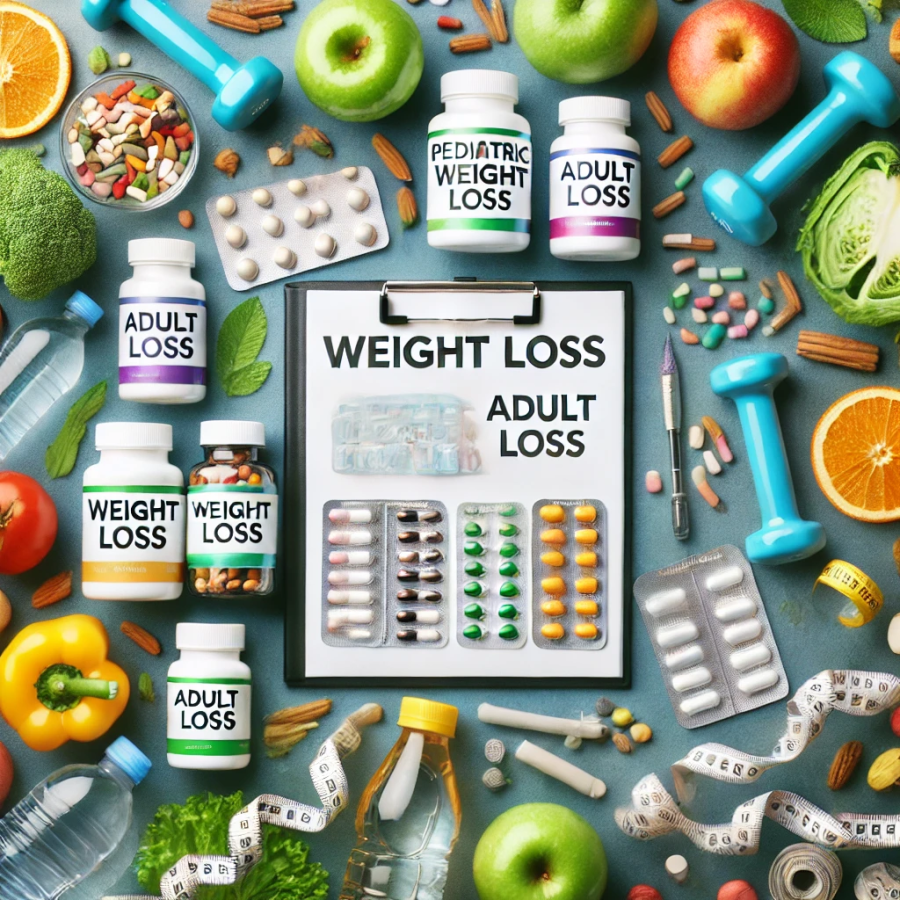
Weight Loss Medications for Kids and Adults Explained

As a physician, I know that treating obesity can be tough. Many families put in real effort with diet and exercise and still don’t see enough progress. When that happens, medication becomes worth discussing. Not for everyone. For the right patient, though, it can make a real difference.

Every price below reflects March 2025, when this was first written, and drug pricing in this class moves constantly, list price, cash price, and whatever a given insurer decides to cover can all diverge sharply, so treat every figure below as a historical marker rather than a current quote.

For children ages 12 and older, there are a few choices. Orlistat, brand name Xenical, blocks fat absorption in the gut. Because it stays in the digestive tract, it doesn’t touch appetite or the brain. The catch is side effects. Eat too much fat on this drug and a kid can get oily stools, gas, frequent bowel movements. A low-fat diet helps. It can still be uncomfortable. The price ran about $50 to $200 a month. The FDA cleared it for ages 12 and up.

Liraglutide, brand name Saxenda, is another option. It mimics a gut hormone called GLP-1, helping with appetite control and slowing stomach emptying. It’s effective, and it also helps blood sugar control, which matters if a patient has insulin resistance. But it requires daily injections, and nausea is common. Vomiting and diarrhea can happen too. Monthly cost usually fell between $1,200 and $1,500 a month. The FDA approved it for kids starting at age 12.

Phentermine combined with topiramate, sold as Qsymia, is approved for adolescents 12 and up who meet obesity criteria. Phentermine reduces appetite. Topiramate curbs cravings. Together they can produce substantial weight loss, especially in patients who struggle with binge eating. Side effects include dry mouth, dizziness, insomnia, and mood changes, and blood pressure and heart rate need regular checks. Cost averaged $200 to $300 a month.

Semaglutide, brand name Wegovy, is another GLP-1 receptor agonist, injected once weekly instead of daily. Clinical studies show it produces impressive weight loss. Side effects mirror other GLP-1 drugs: nausea, vomiting, diarrhea, abdominal pain, constipation. Out-of-pocket cost usually ran $1,300 to $1,600 a month. The FDA approved it for adolescents age 12 and up.

Setmelanotide, or Imcivree, is different from everything above. It targets rare genetic conditions that cause obesity, POMC, PCSK1, or LEPR deficiencies, by restoring hormonal signals that regulate hunger. It’s not meant for most patients, only those with a specific genetic diagnosis. For those who qualify, it can work well. The price tag was steep, though: about $16,000 a month.

For adults, the options broaden, and the prices below are again what things cost in March 2025, not today. Phentermine has been used for decades. It works on the central nervous system to suppress appetite, usually prescribed short-term and paired with diet and exercise. It can be effective, but it may cause insomnia, dry mouth, and a faster heart rate, and it isn’t safe for people with heart disease. The cost was low, around $30 to $60 a month.

Bupropion combined with naltrexone, sold as Contrave, takes a different approach. Bupropion affects brain chemistry to help with appetite and mood. Naltrexone reduces cravings. Some patients feel more energetic on it. Side effects can include nausea, dizziness, and insomnia. Mood changes are possible, so follow-up matters. Cost averaged $200 to $300 a month.

Tirzepatide, marketed as Mounjaro, is one of the newest medications. It activates both GLP-1 and GIP receptors, improving satiety and insulin sensitivity. Given as a weekly injection, it has shown striking results for weight loss. Nausea and diarrhea are the most common side effects, as with other drugs in this class. Costs ran high, around $1,000 to $1,500 a month. At publication it was FDA-approved for type 2 diabetes, not obesity, though already used off-label for weight loss.

A few points cut across all of these. Insurance coverage is unpredictable: some insurers won’t cover these drugs at all, others demand proof that lifestyle efforts were tried first. Close monitoring is essential, because side effects vary. None of these drugs replace healthy habits. They work best stacked on top of diet, activity, and behavior change.

For patients and families, the choices can feel like a lot. Knowing what’s actually available, and what each option costs and asks of you, helps match the right treatment to the right person.

Scott Rennie, D.O.

Sources:

Board Certified in Obesity Medicine and Family Medicine

This blog is for educational purposes only and does not constitute individual medical advice. Always consult your own physician before making changes to your health, medications, or treatment plan.