
Pain in the elbow is a common musculoskeletal complaint seen in the urgent care. It can happen as a result of sports injury or trauma or can be symptoms of underlying infection, gout or bursitis. Several causes are listed below:
Elbow tendinopathy: This is usually called golf or tennis elbow and is caused when then tendon, or strong band of tissue that connects muscles to bones is injured or inflamed. The symptoms are pain, swelling and even weakness in the elbow.
Olecranon bursitis: A “bursa” is a small fluid-filled sac that sits near a bone. Bursitis happens when the bursa gets irritated and swollen and can happen when a joint is moved over and over again in the same way over a short period of time. It may also happen if the elbow sits on a hard surface or stays in a position that presses on the bursa for a long time.
Nerve entrapment: The ulnar, median and radial nerves course in close proximity to the elbow. Ulnar neuropathy is the most common compression neuropathy and it can cause sensory loss, pain and paresthesias over the ring and small fingers.
Osteoarthritis: Degenerative processes of the elbow are rare because it is non-weight bearing. When present however osteoarthritis is usually related to prior fractures that involve the joint. If there is an elbow deformity, we often think about underlying inflammatory arthritis.
Radial head fracture: Fracture of the radial head of the elbow most often occurs when the patient falls on an outstretched hand. The radial head and neck make up the proximal portion of the radius. Pain and swelling over the lateral elbow can be a sign of this type of fracture.
Elbow dislocation: Posterior elbow dislocation is the most common dislocation in children younger than 10 years of age and the second most common in adults, after shoulder dislocation. Posterior elbow dislocations usually occur after a fall or a twisting injury to the elbow.
Radial head subluxation (nursemaid’s elbow): This is a common elbow injury in young children typically between 1-4 years old. The mechanism of injury is sudden traction on the distal arm with the forearm pronated and the elbow extended. A portion of the annular ligament of the patient’s elbow slips over the head of the radius and slides into the radiohumeral joint where it becomes trapped and causes pain. The treatment is generally fairly easy by an experienced healthcare provider and the patient has immediate relief of pain when it is done properly.
Gout: Usually characterized by the sudden onset of severe elbow pain often with redness, swelling and tenderness. There is no history of trauma. It is caused from the uric acid crystals that develop in the joint (usually a single joint) and is less common in the elbow than the big toe.
Treatment of elbow pain: Identifying the cause of the patients elbow pain and treating that is the most efficient way to treat the patient’s pain. Treatment may involve manipulation of the joint, using a shoulder sling and ice, or medication such as anti-inflammatories, and pain relievers, and possibly antibiotics.
I hope that you have found this information useful. Wishing you the best of health,
Scott Rennie, D.O.
Board Certified in Obesity Medicine and Family Medicine
This blog is for educational purposes only and does not constitute individual medical advice. Always consult your own physician before making changes to your health, medications, or treatment plan.

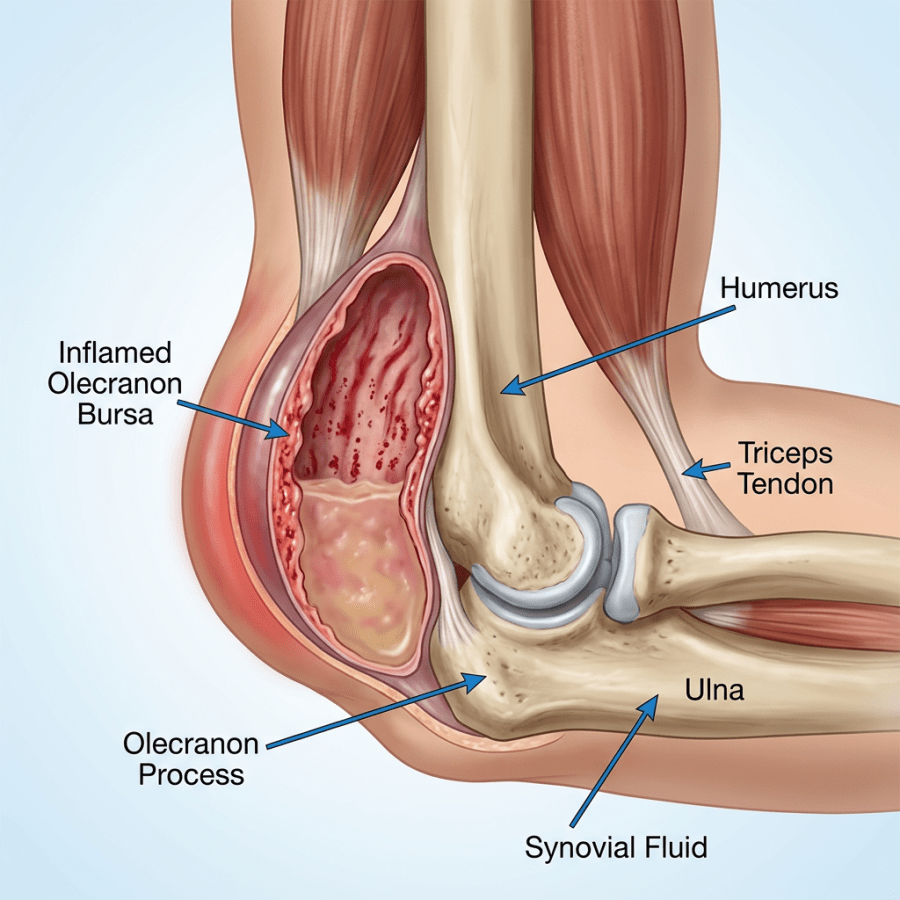
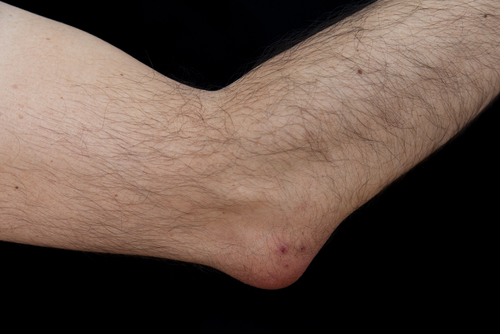
 A patient came in today complaining about a lump on her elbow and that is has been slightly painful for the last week. She is a student and spends many hours reading books and resting her elbow on a table while studying. This disorder called olecranon bursitis is a fairly common condition in which the bursa, which is a sac-like structure that protects the elbow from pressure injuries becomes inflamed.
Bursas are found all over the body including the shoulders, elbows, knees, feet and hips. They contain a lubricating fluid that fills the sac and decreases the friction between ligaments, bones and tendons.
Bursitis of the elbow can be caused from:
A patient came in today complaining about a lump on her elbow and that is has been slightly painful for the last week. She is a student and spends many hours reading books and resting her elbow on a table while studying. This disorder called olecranon bursitis is a fairly common condition in which the bursa, which is a sac-like structure that protects the elbow from pressure injuries becomes inflamed.
Bursas are found all over the body including the shoulders, elbows, knees, feet and hips. They contain a lubricating fluid that fills the sac and decreases the friction between ligaments, bones and tendons.
Bursitis of the elbow can be caused from:

 Doctor Rennie's Blog