 Photo credit: http://www.tamilbrahmins.com/share-your-knowledge/14868-nursemaid-s-elbow.html
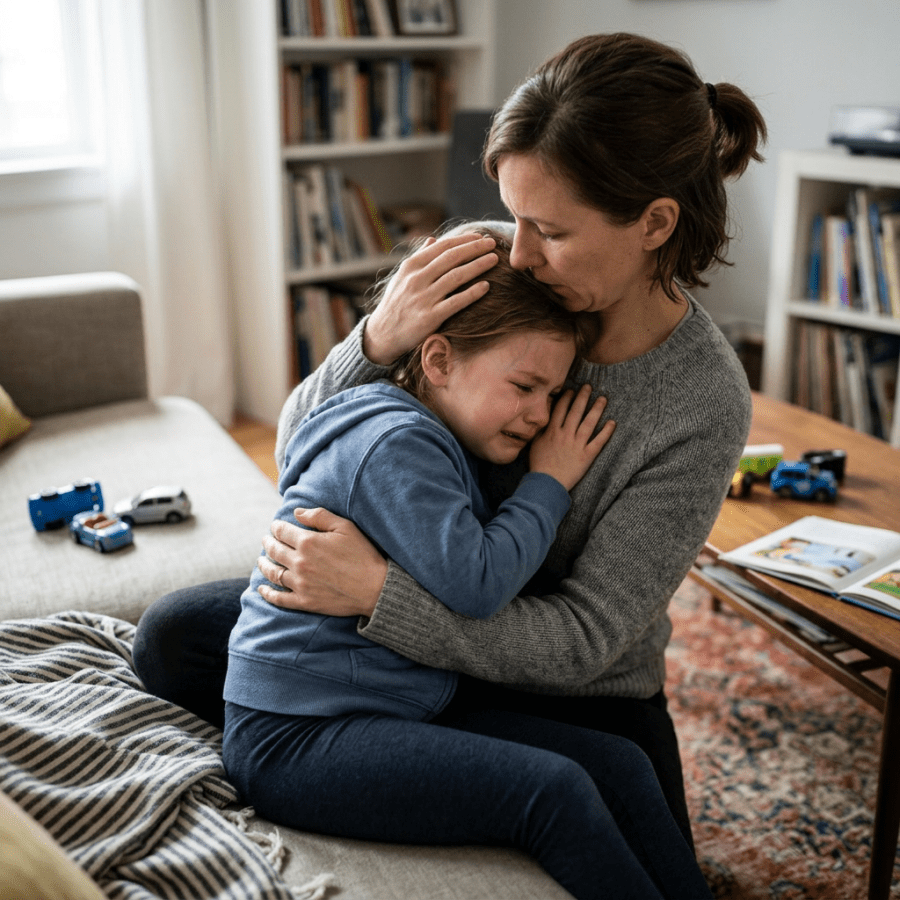
A parent brought her young child in to see me today and told me that she was holding hands with her and then the child suddenly jerked her hand away and attempted to twirl around in a dance move. After the little girl yanked her arm away, she cried and didn’t want to move her left arm at all. This is a common scenario and classic story for what we call nursemaid’s elbow or radial head subluxation (RHS).
Nursemaid’s elbow is the most common elbow injury in young children. It usually affects kids between one and four years of age. The left arm is more commonly affected than the right.
Mechanism: With sudden traction of the child’s arm with the elbow extended, a portion of a ligament in the elbow slips over one of the elbow bones and gets trapped in this position. By 5 years old, this ligament becomes thicker and more resistant to being displaced.
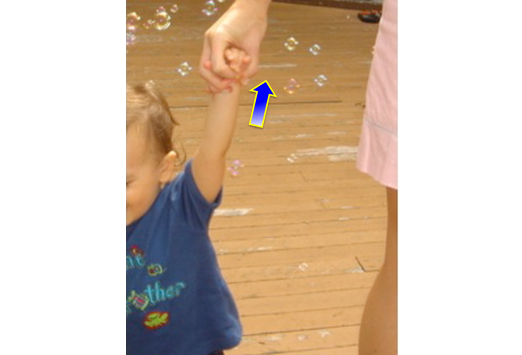
The typical story is that the wrist was pulled while the child’s palm was pointed down towards the ground. This is common when the parent or caregiver grabs the child’s arm to prevent them from falling or pulling away. It can also occur when the child is swung by the forearms during play.
Falling onto the elbow, minor trauma, or twisting motion of the arm can also cause radial head subluxation. Younger children sometimes roll over in bed and this can somehow trap the forearm under the body and result in longitudinal traction.
Symptoms: When the child comes in, I usually hear the story that she’s not using the affected arm.
Treatment: Most of the time after explaining the procedure to the parents, we can treat the displaced ligament by relocating it by putting the child’s arm/elbow through a range of motion technique. No anesthesia or sedation is required, although the procedure is painful briefly.
Complications/Recurrence: Nursemaid’s elbow can sometimes occur again if the child sustains another injury with the typical mechanism. There are no long term complications associated with nursemaid’s elbow. As previously mentioned, the annular ligament strengthens with age and therefore radial head subluxation rarely occurs after age five.
The little girl who came into the clinic today is doing great. The procedure to fix her elbow took a few seconds and after a few minutes she was using her arm again and practicing her dance moves.
I hope that you have found this information useful. Wishing you the best of health,
Photo credit: http://www.tamilbrahmins.com/share-your-knowledge/14868-nursemaid-s-elbow.html
A parent brought her young child in to see me today and told me that she was holding hands with her and then the child suddenly jerked her hand away and attempted to twirl around in a dance move. After the little girl yanked her arm away, she cried and didn’t want to move her left arm at all. This is a common scenario and classic story for what we call nursemaid’s elbow or radial head subluxation (RHS).
Nursemaid’s elbow is the most common elbow injury in young children. It usually affects kids between one and four years of age. The left arm is more commonly affected than the right.
Mechanism: With sudden traction of the child’s arm with the elbow extended, a portion of a ligament in the elbow slips over one of the elbow bones and gets trapped in this position. By 5 years old, this ligament becomes thicker and more resistant to being displaced.
The typical story is that the wrist was pulled while the child’s palm was pointed down towards the ground. This is common when the parent or caregiver grabs the child’s arm to prevent them from falling or pulling away. It can also occur when the child is swung by the forearms during play.
Falling onto the elbow, minor trauma, or twisting motion of the arm can also cause radial head subluxation. Younger children sometimes roll over in bed and this can somehow trap the forearm under the body and result in longitudinal traction.
Symptoms: When the child comes in, I usually hear the story that she’s not using the affected arm.
Treatment: Most of the time after explaining the procedure to the parents, we can treat the displaced ligament by relocating it by putting the child’s arm/elbow through a range of motion technique. No anesthesia or sedation is required, although the procedure is painful briefly.
Complications/Recurrence: Nursemaid’s elbow can sometimes occur again if the child sustains another injury with the typical mechanism. There are no long term complications associated with nursemaid’s elbow. As previously mentioned, the annular ligament strengthens with age and therefore radial head subluxation rarely occurs after age five.
The little girl who came into the clinic today is doing great. The procedure to fix her elbow took a few seconds and after a few minutes she was using her arm again and practicing her dance moves.
I hope that you have found this information useful. Wishing you the best of health,
Scott Rennie, D.O.
Board Certified in Obesity Medicine and Family Medicine
This blog is for educational purposes only and does not constitute individual medical advice. Always consult your own physician before making changes to your health, medications, or treatment plan.
 Doctor Rennie's Blog