

Measles is back in our daily practice in a way many of us have never seen in our careers. In just the first weeks of 2026, the United States has already recorded more than 900 confirmed measles cases, with most linked to active outbreaks rather than isolated travel related infections. Those numbers are not abstract. They reflect real patients who often first appear with what looks like an ordinary viral upper respiratory infection.
In Virginia, where some of my colleagues practice, the health department has already confirmed 10 measles cases this year, the majority in young children in the Northern region. Public exposure sites in that region now include grocery stores, urgent care centers, emergency departments, churches, and big box retailers, with symptom watch dates stretching into early March. That list reads like a map of daily life, which is exactly the point. Measles is circulating in the same spaces our patients and our own families move through every day.
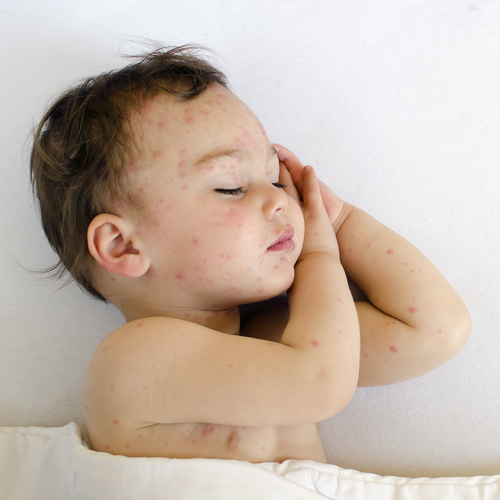
Clinically, we know this pattern. Early measles often looks like influenza or another common respiratory virus, with fever, cough, coryza, and conjunctivitis. The rash, when it appears, typically starts on the face or hairline and then spreads down the body over several days. The catch is timing. Patients are contagious for about four days before the rash and about four days after it appears, which means they have already spent several days at work, school, religious services, or stores while shedding virus. On a virtual visit, we are often meeting them right in the middle of that window.
On a 24/7 virtual care platform, measles usually does not present with a red flag label in the chief complaint. Instead, it shows up as “fever and cough,” “pink eye,” or “rash on face” typed into a symptom field at 10 p.m. A typical encounter might start with a parent worried about a toddler who has had three days of high fever, a worsening dry cough, a streaming nose, and eyes that are red and watery. The parent may have tried acetaminophen and fluids at home and is now concerned because the child just looks wiped out. At that point there may be no rash, or the parent might mention a few faint spots on the forehead that they are not sure about.
The current outbreaks highlight just how contagious measles is. The virus lives in the nose and throat and is released into the air when an infected person breathes, coughs, or sneezes. It can remain viable in the air or on surfaces for up to two hours after the person leaves. This is why unannounced walk ins to clinics or emergency departments are so risky and why strict infection control and coordination with public health are not optional. One infectious patient who sits in a crowded waiting room can trigger a long chain of secondary cases.
From an epidemiologic standpoint, the current U.S. numbers are sobering. As of mid to late February 2026, national case counts have passed 900 and are now over 1,100, with infections documented in more than two dozen states. A large share of these cases are tied to ongoing outbreaks that began in 2025 and spilled into this year. The vast majority of patients are unvaccinated or have unknown vaccination status, often children and adolescents. Hospitalization rates vary by age, but recent CDC data show that even in 2024, several percent of cases required inpatient care, with higher risk among young children and adults. Measles can lead to pneumonia, encephalitis, and death, even in high resource settings.
On the Virginia Department of Health dashboard, six of the ten cases reported in 2026 have occurred in children under five years old, a group that cannot always be fully immunized yet and that we worry about the most. That number is the one I keep coming back to. Exposure notifications list locations like a grocery store in Lorton, multiple retail sites and restaurants in Manassas, a church, and an office building in Alexandria, each with specific time windows and follow up symptom watch dates 21 days out. It is easy to imagine the scenarios. A preschooler with early measles sitting in a shopping cart. A young adult with mild symptoms walking into an urgent care center after work. These are ordinary moments that turn into public health events.
For virtual care clinicians, the practical question is what to do when that next “simple viral illness” consult pops up in the queue. First, we cannot afford to ignore vaccination status. Every patient with upper respiratory symptoms, especially in outbreak regions, should be asked directly about MMR doses and prior measles infection. This includes adults who vaguely recall “getting shots as a kid” but are not sure which ones. Second, we need to look closely at risk factors: unvaccinated or incompletely vaccinated patients, infants who are too young for full immunization, immunocompromised individuals, pregnant patients, and anyone with recent travel to areas with known outbreaks or exposure to crowded settings.
When clinical suspicion is high, escalation needs to happen quickly and in a structured way. Patients should be referred for immediate in person evaluation and diagnostic testing in a setting that is prepared to implement airborne precautions. Instead of showing up unannounced at a clinic or emergency department, patients should call ahead, so infection prevention teams can arrange safe arrival and isolation. Coordination with local health departments is key. I haven’t hit real friction getting a family to follow that plan, since I haven’t had a suspected measles case reach that point yet. What I do run into, often, is patients, mostly kids, who are unvaccinated because a parent made that choice on purpose and says so plainly when I ask. On the Virginia site, there is even a specific survey link for people who may have been exposed, which triggers public health follow up. Similar mechanisms exist in other states and are often underused.
Virtual clinicians also have a clear boundary here. On the Teladoc platform, for example, management of suspected or confirmed measles is explicitly prohibited, and all such cases must be referred to in-person care. That restriction exists because measles care and infection control require physical assessment, access to testing, immunoglobulin and vaccine for post-exposure prophylaxis, and the ability to initiate supportive treatment for complications, none of which can be delivered over video.
Vaccination remains the core prevention strategy. Two doses of MMR vaccine provide about 97 percent protection against measles. Breakthrough infections can occur, but they are uncommon, and most cases in the current outbreaks are in people who are unvaccinated or not fully vaccinated. The Virginia data show that over 90 percent of the state’s population, and roughly 95 percent of kindergarteners, are vaccinated against measles, yet small pockets of under vaccination have still allowed the virus to spread. In every virtual encounter, we have a chance to answer questions, correct misinformation, and nudge patients toward getting up to date on their shots.
I haven’t personally managed a confirmed measles case over telemedicine. But here’s the kind of scenario clinicians in virtual care should be watching for, a hypothetical built from the pattern these outbreaks produce, not a real patient of mine: A college student logs on late at night with a fever, sore throat, and mild cough after returning from a service trip where they worked in crowded community settings. They mention that their university recently sent out an email about a measles exposure but they “think” they had all their vaccines as a child. As the clinician, you dig a little deeper, learn there is no documentation of a second MMR dose, and find that the student has started to notice a faint rash near the hairline. In that moment, treating this as a routine viral upper respiratory infection would be a miss. Instead, you walk the student through the concern for measles, arrange urgent in person evaluation, instruct them to call ahead before arrival, and notify your internal public health liaison to coordinate with the local health department. That single decision can prevent dozens of secondary cases in a dormitory and on campus.
The current surge of measles cases is a reminder that this disease remains an ongoing threat, one that follows gaps in vaccination and public health infrastructure. For those of us working in virtual care, our role is to keep it on the differential, ask the extra questions, recognize the pattern a day or two earlier, and move swiftly when suspicion is high. The work can feel routine until it is not. Two years ago I wasn’t asking about immunization status at every visit. I do now, at any health-related visit, and especially with kids. I’ve also changed how I handle a rash over video, because video alone is generally not as good quality as a high-resolution photo. Getting a usable photo takes some coaching. The patient needs to stand back far enough, get the angle right, and hold the phone steady so it isn’t blurry. I like a distance shot to see the whole pattern and a macro shot up close if the patient can manage it.
Centers for Disease Control and Prevention. Measles Cases and Outbreaks. Updated February 26, 2026. Available at: https://www.cdc.gov/measles/data-research/index.html. Accessed February 27, 2026.
Centers for Disease Control and Prevention. Measles Vaccination. Updated December 29, 2025. Available at: https://www.cdc.gov/measles/vaccines/index.html. Accessed February 27, 2026.
Centers for Disease Control and Prevention. Measles, Mumps, and Rubella (MMR) Vaccination: Information for Healthcare Professionals. Updated January 25, 2026. Available at: https://www.cdc.gov/vaccines/hcp/by-disease/mmr.html. Accessed February 27, 2026.
Virginia Department of Health. Measles. 2026. Available at: https://www.vdh.virginia.gov/measles/. Accessed February 27, 2026.
Virginia Department of Health, Office of Emergency Preparedness. VDH OEP Weekly Situation Update. Published February 19, 2026. Available at: https://www.vdh.virginia.gov/emergency-preparedness/2026/02/20/vdh-oep-weekly-situation-update-137/. Accessed February 27, 2026.
Virginia Department of Health. Virginia Health Officials Investigating Two Confirmed Measles Cases in Northern Virginia. News release, February 18, 2026. Available at: https://www.vdh.virginia.gov/news/public-relations-contacts/2026-regional-news-releases/virginia-health-officials-investigating-two-confirmed-measles-cases-in-northern-virginia/. Accessed February 27, 2026.
Robinson A. VDH: Measles outbreak not likely in Northern Virginia despite uptick in cases. ALXnow. Published February 22, 2026. Available at: https://www.alxnow.com/2026/02/23/vdh-measles-outbreak-not-likely-in-n-va-despite-uptick-in-cases/. Accessed February 27, 2026.
WSBT / Sinclair Broadcast Group. Measles cases surpass 1,100 so far in 2026 as outbreaks continue to spread. Published February 26, 2026. Available at: https://wsbt.com/news/nation-world/us-measles-cases-surpass-1100-so-far-in-2026-health-experts-warn-centers-for-disease-control-and-prevention. Accessed February 27, 2026.
Board Certified in Obesity Medicine and Family Medicine
This blog is for educational purposes only and does not constitute individual medical advice. Always consult your own physician before making changes to your health, medications, or treatment plan.

 Doctor Rennie's Blog