
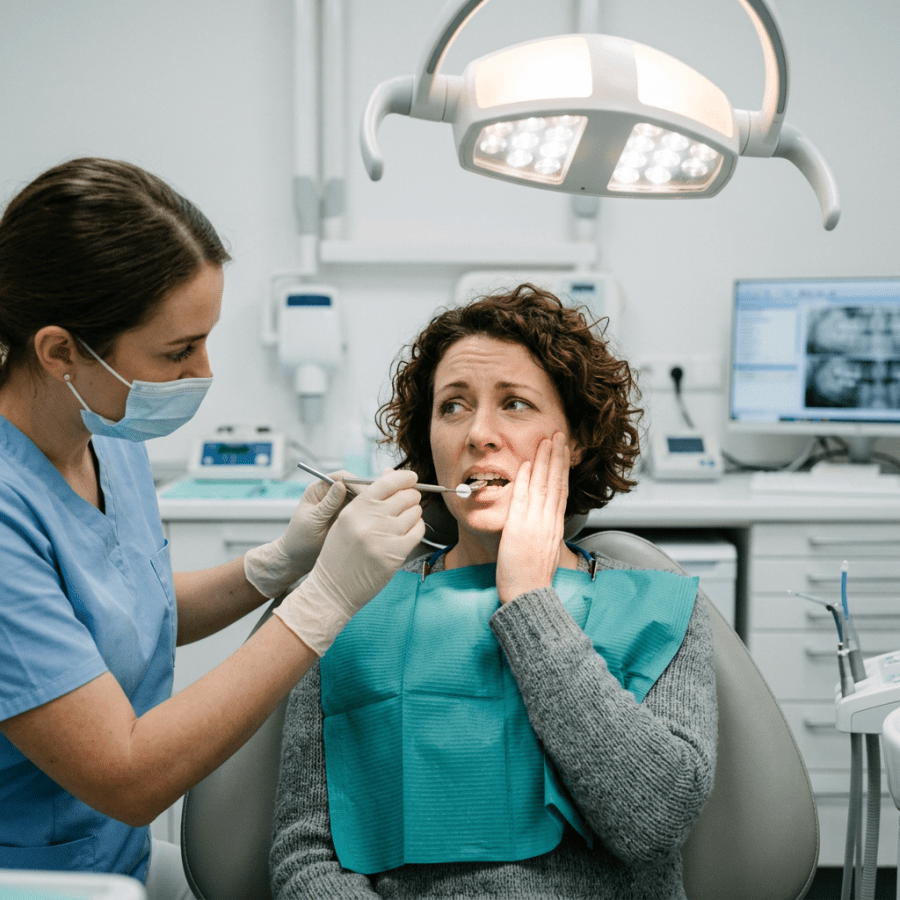
 Even though I’m not a dentist or oral surgeon, I have patients who come in to get treatment for their dental infections. A tooth infection is a result of bacteria that can extend into the gums, cheeks, throat, behind the tongue or even into the jaw or facial bones. These infections are known as dental abscesses and can become very painful.
Patients with a weakened immune system, autoimmune disorder or who experience trauma to the mouth or gums can also be more susceptible to have dental infections. Pus from the infection can collect at the site of the infection and may become more painful until the abscess either ruptures and drains on it’s own or is drained surgically. If the infection progresses, it can become so severe that it may block the patient’s airway and cause difficulty breathing. This is rare, but is a medical emergency requiring immediate surgical attention.
Symptoms: Patients with dental infections often complain of pain, swelling and redness of the mouth or face. It can feel like a sinus infection if the involved tooth is on the upper jaw. There is always tenderness with pushing over the area of infection. Late signs of a dental infection might be fever, chills, nausea, or vomiting.
Diagnosis: Usually a doctor or dentist can determine if you have an abscess or dental infection by physically examining the affected area. Sometimes x-rays of the mouth may be necessary if the infection is located in the deepest part of the tooth.
Treatment: Pain relievers may be helpful such as ibuprofen or Aleve. For more severe infections, narcotic-type medications such as Vicodin may be prescribed. Antibiotics are helpful to treat the infection, but usually are not the cure. Dental abscesses are infections that involve the teeth, gums, jaw and sometimes the cheek or throat so they need surgical attention by a dentist or oral surgeon. Your local family physician, urgent care doctor or emergency physician is generally not trained in how to perform dental surgery so it is important to be seen by the dentist. A dentist can also perform a dental block that numbs the nerve causing the pain. Generally this is far more helpful that oral pain relievers. They may also cut open the abscess if it’s along the gum line to allow the pus to drain. They may also pull the tooth or perform a root canal. An abscess that has extended to the floor of the mouth or to the neck may need to be drained in the operating room under anesthesia.
Prevention: A major role is maintaining excellent dental health is prevention with brushing, flossing and regular dental checkups. If tooth decay is discovered it should be treated early so that cavities do not develop into abscesses. Avoiding tobacco (chewing and smoking) is also helpful for prevention of decay.
To find a dentist in your area, the American Dental Association has a useful Dentist locator: http://www.ada.org/ada/findadentist/advancedsearch.aspx
I hope that you have found this information useful. Wishing you the best of health,
Even though I’m not a dentist or oral surgeon, I have patients who come in to get treatment for their dental infections. A tooth infection is a result of bacteria that can extend into the gums, cheeks, throat, behind the tongue or even into the jaw or facial bones. These infections are known as dental abscesses and can become very painful.
Patients with a weakened immune system, autoimmune disorder or who experience trauma to the mouth or gums can also be more susceptible to have dental infections. Pus from the infection can collect at the site of the infection and may become more painful until the abscess either ruptures and drains on it’s own or is drained surgically. If the infection progresses, it can become so severe that it may block the patient’s airway and cause difficulty breathing. This is rare, but is a medical emergency requiring immediate surgical attention.
Symptoms: Patients with dental infections often complain of pain, swelling and redness of the mouth or face. It can feel like a sinus infection if the involved tooth is on the upper jaw. There is always tenderness with pushing over the area of infection. Late signs of a dental infection might be fever, chills, nausea, or vomiting.
Diagnosis: Usually a doctor or dentist can determine if you have an abscess or dental infection by physically examining the affected area. Sometimes x-rays of the mouth may be necessary if the infection is located in the deepest part of the tooth.
Treatment: Pain relievers may be helpful such as ibuprofen or Aleve. For more severe infections, narcotic-type medications such as Vicodin may be prescribed. Antibiotics are helpful to treat the infection, but usually are not the cure. Dental abscesses are infections that involve the teeth, gums, jaw and sometimes the cheek or throat so they need surgical attention by a dentist or oral surgeon. Your local family physician, urgent care doctor or emergency physician is generally not trained in how to perform dental surgery so it is important to be seen by the dentist. A dentist can also perform a dental block that numbs the nerve causing the pain. Generally this is far more helpful that oral pain relievers. They may also cut open the abscess if it’s along the gum line to allow the pus to drain. They may also pull the tooth or perform a root canal. An abscess that has extended to the floor of the mouth or to the neck may need to be drained in the operating room under anesthesia.
Prevention: A major role is maintaining excellent dental health is prevention with brushing, flossing and regular dental checkups. If tooth decay is discovered it should be treated early so that cavities do not develop into abscesses. Avoiding tobacco (chewing and smoking) is also helpful for prevention of decay.
To find a dentist in your area, the American Dental Association has a useful Dentist locator: http://www.ada.org/ada/findadentist/advancedsearch.aspx
I hope that you have found this information useful. Wishing you the best of health,
Scott Rennie, D.O.
Board Certified in Obesity Medicine and Family Medicine
This blog is for educational purposes only and does not constitute individual medical advice. Always consult your own physician before making changes to your health, medications, or treatment plan.
 Doctor Rennie's Blog