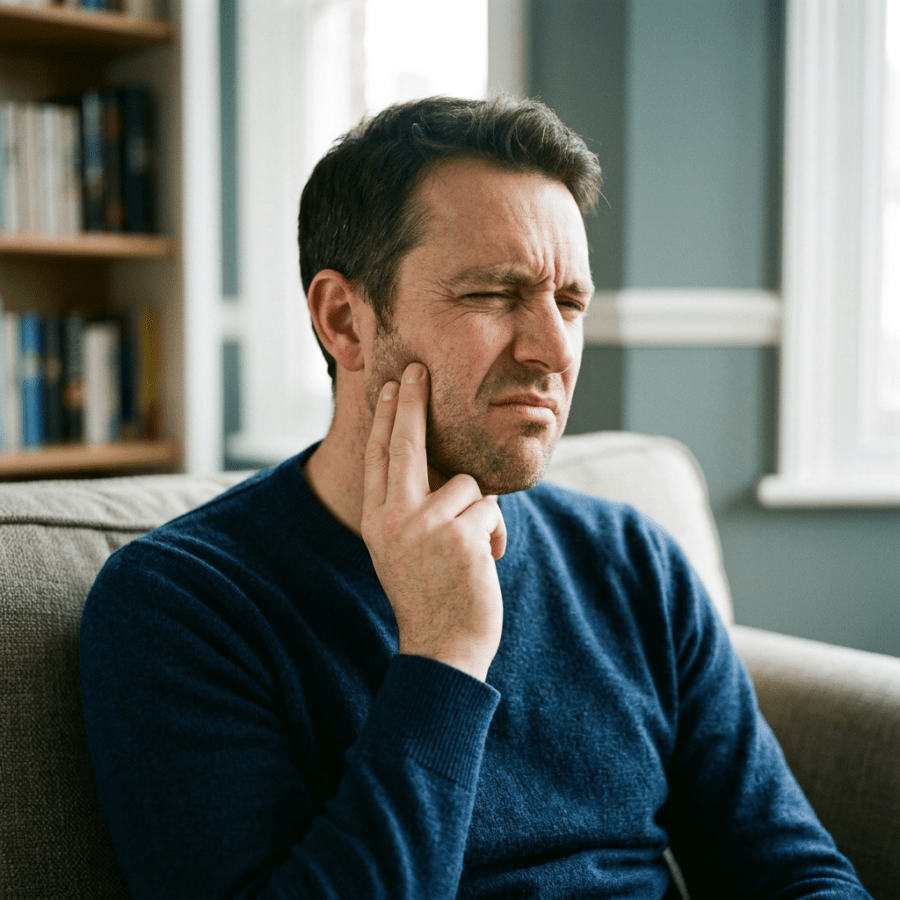
 Photo credit: http://ttocs.hubpages.com/hub/Exercises-to-Help-Alleviate-TMJJaw-Pain
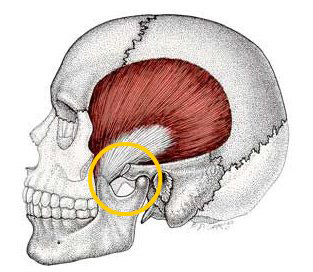
The mandible of the jaw is a modified hinge joint that is supported by muscles and allows you to chew your food. The joint that allows this movement is the jaw joint, called the temporomandiublar joint or TMJ. It is located just in front of your ear. You can feel the joint by putting your finger on your cheek in front of your ear and open/close your mouth.
Inflammation of this joint can cause pain and that can sometimes be confusing because the average person often does not think about this area as a source of pain.
Symptoms of TMJ inflammation can be:
1) A dull pain in the jaw muscles on one side
2) Pain around the ear that can be confused for an ear infection
3) Jaw pain that can sometimes make you think you have a tooth infection
4) Neck pain or tenderness
5) Pain when chewing food
6) Popping when opening your mouth
7) Difficulty opening your mouth widely because of pain
8) Headache
Causes: Because the jaw is a hinge joint, it can become inflamed with arthritis. Other possible causes are:
1) Stress that causes jaw clenching
2) Teeth grinding – especially at night when you are asleep
3) If your teeth/bite is not quite right, sometimes a dentist can help adjust this
Treatment: For many people the symptoms occur only occasionally and do not last very long. There is not a “usual” treatment for TMJ. Treating the cause of the problem is the goal, and that might be fixing your teeth/bite or decreasing stress that might lead to jaw clenching or teeth grinding. Dentists will sometimes fit patients with a dental appliance that helps protect the teeth and also decreases grinding. For some people this has been very helpful in reducing the pain from TMJ. Other possible treatments include:
1) Medications to reduce inflammation and relieve pain such as non-steroidal anti-inflammatory drugs (ibuprofen, naproxen, etc.) or muscle relaxants
2) Jaw exercises that stretching of the muscles around the TMJ
3) Stress reduction and biofeedback to decrease teeth griding/clenching
4) Appropriate dental care
5) Avoiding actions that cause your symptoms such as yawning, singing or chewing gun
To find a dentist in your area, the American Dental Association has a useful Dentist locator: http://www.ada.org/ada/findadentist/advancedsearch.aspx
I hope that you have found this information useful. Wishing you the best of health,
Photo credit: http://ttocs.hubpages.com/hub/Exercises-to-Help-Alleviate-TMJJaw-Pain
The mandible of the jaw is a modified hinge joint that is supported by muscles and allows you to chew your food. The joint that allows this movement is the jaw joint, called the temporomandiublar joint or TMJ. It is located just in front of your ear. You can feel the joint by putting your finger on your cheek in front of your ear and open/close your mouth.
Inflammation of this joint can cause pain and that can sometimes be confusing because the average person often does not think about this area as a source of pain.
Symptoms of TMJ inflammation can be:
1) A dull pain in the jaw muscles on one side
2) Pain around the ear that can be confused for an ear infection
3) Jaw pain that can sometimes make you think you have a tooth infection
4) Neck pain or tenderness
5) Pain when chewing food
6) Popping when opening your mouth
7) Difficulty opening your mouth widely because of pain
8) Headache
Causes: Because the jaw is a hinge joint, it can become inflamed with arthritis. Other possible causes are:
1) Stress that causes jaw clenching
2) Teeth grinding – especially at night when you are asleep
3) If your teeth/bite is not quite right, sometimes a dentist can help adjust this
Treatment: For many people the symptoms occur only occasionally and do not last very long. There is not a “usual” treatment for TMJ. Treating the cause of the problem is the goal, and that might be fixing your teeth/bite or decreasing stress that might lead to jaw clenching or teeth grinding. Dentists will sometimes fit patients with a dental appliance that helps protect the teeth and also decreases grinding. For some people this has been very helpful in reducing the pain from TMJ. Other possible treatments include:
1) Medications to reduce inflammation and relieve pain such as non-steroidal anti-inflammatory drugs (ibuprofen, naproxen, etc.) or muscle relaxants
2) Jaw exercises that stretching of the muscles around the TMJ
3) Stress reduction and biofeedback to decrease teeth griding/clenching
4) Appropriate dental care
5) Avoiding actions that cause your symptoms such as yawning, singing or chewing gun
To find a dentist in your area, the American Dental Association has a useful Dentist locator: http://www.ada.org/ada/findadentist/advancedsearch.aspx
I hope that you have found this information useful. Wishing you the best of health,
Scott Rennie, D.O.
Board Certified in Obesity Medicine and Family Medicine
This blog is for educational purposes only and does not constitute individual medical advice. Always consult your own physician before making changes to your health, medications, or treatment plan.
 Doctor Rennie's Blog
I don’t even know how I ended up here, but I thought this post was good. I do not know who you are but definitely you’re going to a famous blogger if you aren’t already 😉 Cheers!
My jaw started clicking recently and i have a tense neck with a small lump could this be it?
Hi Nat,
I have not heard about TMJ causing neck pain or a lump in the neck…
My Jaw has been popping for a while and there was’nt really any sound and now i can hear the sound. it seems like it got worse and after i eat something for a while it starts to hurt. Could this be TMJ ?
Yes, it could be TMJ. You don’t have to hear a sound for it to be due to TMJ disorder however some people do.
Is it ok if a 12 year old gets it i started yesterday it hurts and it pops almost every time i chew it is anoying and relly painful
I’d recommend that he is seen by a medical or dental provider as soon as possible.