
I do not place IUDs. I practice entirely by video, so what I actually do is have the conversation, help someone decide which device they want, and send them somewhere to have it put in. That turns out to be most of the work anyway. By the time a patient reaches the procedure room the decision has usually already been made, often on the basis of something a friend said.
So this is the conversation, written down.
Two devices that have almost nothing in common
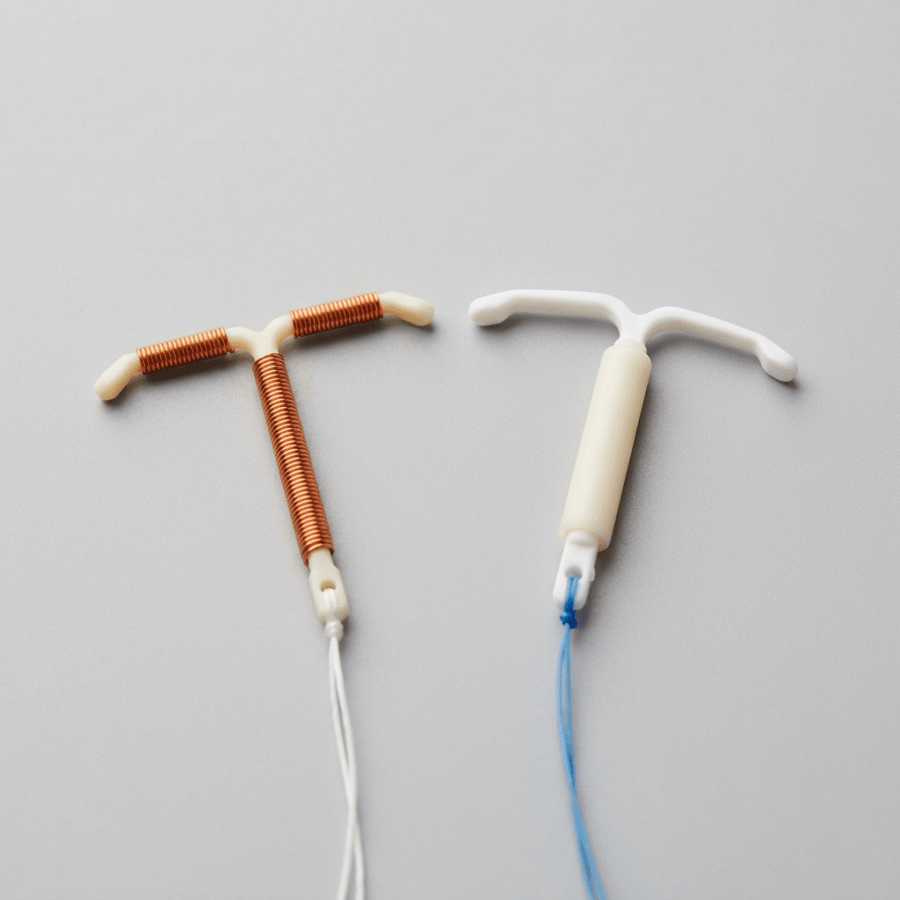
People talk about “getting an IUD” as though it were one thing. Mirena and Paragard sit in the same place and prevent pregnancy about equally well, and past that they behave like different drugs, because one of them is a drug and the other is a piece of copper.
Mirena releases levonorgestrel, 52 mg in the device, locally into the uterus. It thickens cervical mucus, thins the endometrium, and suppresses ovulation inconsistently. The FDA extended its contraceptive approval to eight years in August 2022, based on extension-trial data showing efficacy above 99 percent through years six to eight (1, 2). Its separate indication for heavy menstrual bleeding runs five years, not eight, which trips people up.
Paragard is a copper T380A. No hormone at all. Copper ions are toxic to sperm and change the intrauterine environment enough to prevent fertilization. Approved for ten years (3).
The bleeding difference, which is what people actually care about
This is the fork in the road, and everything else is secondary.
Mirena makes periods lighter. Progressively so. A meaningful minority stop bleeding altogether within the first year, and many others go down to spotting. For someone whose periods are ruining a week of every month, that is the point of the device, not a side effect of it.
Paragard does the opposite. Heavier flow, more cramping, particularly in the first three to six months. It settles for most people. It does not settle for everyone, and it is the most common reason the copper device comes out early.
So the first question is not which device. It is what your periods are like now and what you would like them to be. Answer that and the device usually picks itself.
What people worry about, in the order they raise it
Hormones. Mirena’s levonorgestrel acts mostly locally, and systemic levels are far below what a combined pill delivers. That does not mean nobody has systemic effects. Some patients report mood change, breast tenderness or acne, and I do not tell them it cannot be the device. The honest statement is that the systemic exposure is low, the trials do not show a consistent mood signal, and individual experience still counts.
Insertion pain. This got taken seriously very late. Patients were told for decades it would be a pinch. It is not a pinch for a lot of people, particularly if they have never been pregnant. Ask the placing clinician directly what they offer for pain, before the appointment, not at the appointment.
Perforation. Roughly one per thousand insertions, and higher in someone who is postpartum and breastfeeding.
Expulsion. A few percent, most often in the first year and most often around a period.
Infection and fertility. The elevated infection risk is confined to about the first twenty days after insertion, which is a placement-related event rather than an ongoing property of the device. Neither device causes infertility. That belief traces back to the Dalkon Shield in the 1970s, a badly designed product withdrawn fifty years ago, and it is still costing people options today.
Emergency contraception, where the answer changed
The copper IUD was the most effective emergency contraceptive available, full stop, if placed within five days. That was true for a long time and it is still true.
What changed is that the levonorgestrel 52 mg IUD is now an option there too. Turok and colleagues published a randomized noninferiority trial in the New England Journal in 2021 showing the LNG device was noninferior to copper for emergency contraception (4). That matters practically, because it means someone who wants ongoing lighter periods no longer has to accept the copper device just to cover the emergency need.
The perimenopausal use nobody mentions
This is the part of the topic I see most, given what I spend my days on.
A woman in her forties with heavy, unpredictable bleeding is often handed a choice between ablation, hysterectomy and waiting it out. The levonorgestrel IUD belongs in that conversation and frequently is not in it. It treats the bleeding, it covers contraception during the years when fertility is low but not zero, and if she later goes on systemic estrogen for vasomotor symptoms, it provides the endometrial protection that estrogen requires.
One device, three jobs.
Most of the time it has not been discussed yet when the subject comes up with me. Part of that is age. These patients are older, and if they have thought about an IUD at all it was as birth control, twenty years ago, in a different phase of life. Nobody has framed it to them as a treatment for the bleeding they are actually calling about.
For patients
Decide what you want your periods to do, then pick the device. Lighter or absent points to Mirena. No hormones at any cost, accepting heavier periods, points to Paragard.
Ask whoever is placing it what they offer for pain control, and ask before the day. If you are in your forties and bleeding heavily, ask specifically whether the hormonal IUD would treat that, because it may not come up otherwise.
For colleagues
The eight-year contraceptive approval and the five-year heavy-bleeding indication are different numbers on the same device, and patients are being told one or the other at random.
Bring the LNG-IUD into perimenopausal bleeding conversations earlier. The path from heavy bleeding to ablation still skips it more often than it should.
The Bottom Line
Both devices prevent pregnancy better than almost anything else available, so effectiveness is not the deciding factor. Bleeding is. Mirena makes periods lighter and is approved for eight years of contraception and five years of heavy-bleeding treatment. Paragard is hormone-free, lasts ten, and makes periods heavier. The old fear that an IUD will cost you your fertility comes from a product pulled from the market in the 1970s and should not be steering anyone’s decision in 2026. If you are in your forties with heavy periods, ask about the hormonal one specifically.
Related Reading
Perimenopause and Menopause Symptoms and How to Manage Them
FDA Removes Black Box Warning From Menopause Hormone Therapy
Why Menopause Care Is Missing From Women’s Checkups
Menopause Treatment by Telemedicine: How It Works
Scott Rennie, D.O.
Board Certified in Obesity Medicine and Family Medicine
This blog is for educational purposes only and does not constitute individual medical advice. Always consult your own physician before making changes to your health, medications, or treatment plan.
Sources
1. Mirena (levonorgestrel-releasing intrauterine system) prescribing information. Bayer HealthCare Pharmaceuticals. FDA label, 2022. https://www.accessdata.fda.gov/drugsatfda_docs/label/2022/021225s043lbl.pdf
2. Bayer. Mirena approved in the US for extended duration of use in contraception. August 2022. https://www.bayer.com/media/en-us/mirena-from-bayer-approved-in-the-us-for-extended-duration-of-use-in-contraception/
3. Paragard T 380A (copper) intrauterine device prescribing information. CooperSurgical. DailyMed. https://dailymed.nlm.nih.gov/dailymed/drugInfo.cfm?setid=3c420b53-c95e-46af-aebd-73741be58391
4. Turok DK, Gero A, Simmons RG, et al. Levonorgestrel vs. Copper Intrauterine Devices for Emergency Contraception. N Engl J Med. 2021;384(4):335-344. PMID 33503342. https://pubmed.ncbi.nlm.nih.gov/33503342/









 Doctor Rennie's Blog