
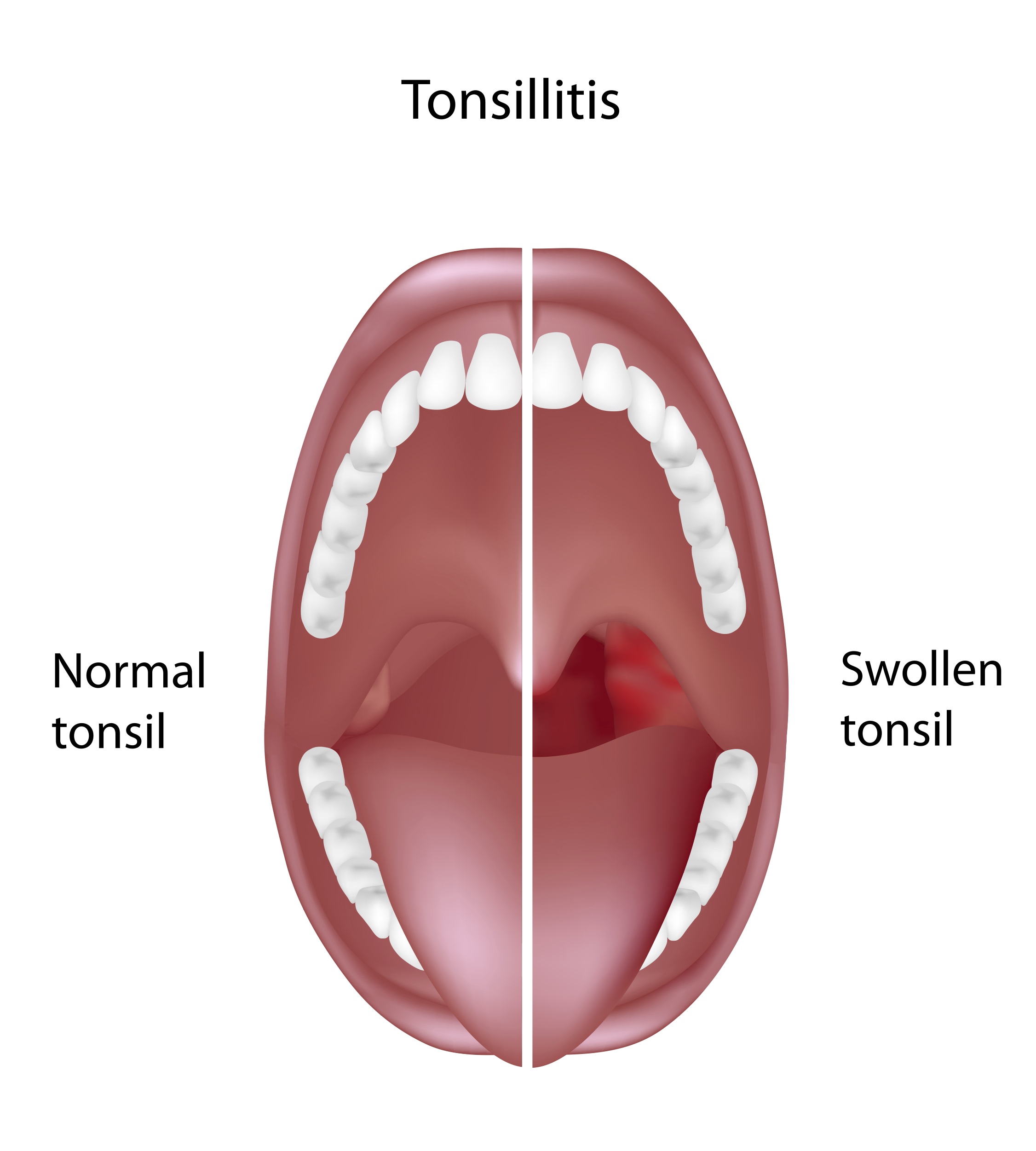
 Sore throat is one of the most common problems that people have in the winter when they come to the medical clinic. There are many different causes of a sore throat, including bacterial or viral infections. Although a sore throat usually resolves without any complications, there are times that antibiotic treatment is required. There are very rare causes of sore throat pain that can be serious or life threatening.
When to call the doctor: Since it’s tough to know your sore throat is caused by a virus or bacteria, I encourage you to call your doctor if one or more of the following are present: temperature > 101 degrees F or 38 degrees C, season is late fall, winter or early spring, you don’t have a cough, the age of the patient is between 5-15 years old, recent exposure to someone with strep throat, difficulty breathing/swallowing, your voice sounds muffled, they have a stiff neck or difficulty opening their mouth.
Causes of sore throat: Viruses are the most common cause of sore throat, but bacteria are another common cause. The causes of sore throat depend on the age of the patient as well as the season and geographic location. Many different viruses can cause swelling and throat pain. Most common viruses that cause sore throat also cause the common cold, but others include influenza, adenovirus, and Epstein-Barr virus (the cause of mononucleosis).
Symptoms of viral pharyngitis: Usually with a viral infection, the patient will have runny nose, nasal congestion and can even have irritation and/or redness of the eyes, cough, hoarseness, skin rash and even diarrhea. Viral infections can also cause fever that makes you feel miserable. A high fever does not mean that your you have a bacterial infection.
Group A streptococcus – (GAS): The bacteria that causes strep throat. Other bacteria can also cause sore throat, but group a strep is the most common. Up to 30% of children with sore throat will have strep throat. Winter and early spring are the most common times of the year when it occurs. It is the most common in school-age children and their young siblings.
Symptoms of Strep Throat: Sudden development of fever (temperature > 100.4 degrees F), headache, abdominal pain, nausea and vomiting, swollen glands in the neck, white patches of pus in the back or sides of throat, small red spots on the roof of the mouth. A cough and cold are not usually seen with strep throat.
Diagnosis: Most of the time the cause of the sore throat is a virus and does not require treatment with antibiotics. It is, however important to recognize and treat kids with strep throat to prevent complications of strep throat which can cause rheumatic fever. There are two types of tests that can help diagnose strep throat. One is a rapid strep test and the other is a throat culture. Both of these tests require a swab of the back of the throat to look for the strep bacteria. The throat culture is more accurate, but it takes 24-48 hours to get the results back. The rapid test isn’t quite as accurate but the benefit is that you know the results before going home from the clinic.
Treatment: The treatment of sore throat depends on the cause; strep throat is treated with antibiotic while viral pharyngitis is treated with rest, pain relievers and measure to make the patient more comfortable while the body heals. It is important to monitor for dehydration because some children with sore throat are reluctant to drink or eat due to pain.
Strep throat is usually treated with an antibiotic such as penicillin or similar antibiotic. After 24 hours of treatment, children can return to school most of the time. If they are having trouble swallowing or eating, they should not go to school and should be re-evaluated. The antibiotic is usually continued for a full 10 day course.
Anti-inflammatory medications such as naproxen, ibuprofen, dexamethasone or prednisone can be helpful to reduce the pain of sore throat. Oral rinses such as salt-water gargles, sprays, lozenges, and sipping warm liquids can also be helpful for sore throat pain.
Complications of strep throat: Most of the time strep throat itself isn’t dangerous. It can, however lead to serious complications such as the spread of the bacteria to the sinuses, skin, blood and middle ear. Strep throat can also lead to Scarlet fever (illness with rash), inflammation of the kidney (post-streptococcal glomerulonephritis), and even Rheumatic fever, which is a serious condition that can affect the heart, joints, nervous system and skin.
I hope that you have found this information useful. Wishing you the best of health,
Strep is one of the harder calls to make over video, since nobody can swab a throat through a camera. I went into that in the trouble with diagnosing strep throat and ear infections by telemedicine.
Updated for 2026: There Is a New Guideline, the First Since 2012
This post went up in 2012, the same year the infectious disease society last wrote formal guidance on strep throat. In October 2025 they finally revised it, so the timing here is almost comic. Here is what is different. The headline change is that scoring is now formally part of deciding who gets tested. Centor, McIsaac, or FeverPAIN, in adults and in children three and up. Before, scoring was something many of us used out of habit and clinical sense. Now it is written down (1). Worth being honest about the strength of that: the recommendation is conditional and the certainty of evidence behind it is rated very low. It is a sensible way to organize thinking, not a law of nature. The four things the score is asking about have not changed. Fever. Tonsillar swelling or exudate. Tender, swollen nodes in the front of the neck. And absence of cough, which is the one people forget and the one that carries a lot of weight. A cough pushes the odds toward a virus, hard.Treatment Has Barely Moved, and That Is Remarkable
Group A strep has never developed penicillin resistance. Not once, not anywhere, in seventy odd years of use. Penicillin V for ten days, amoxicillin for ten days, or a single intramuscular shot of benzathine penicillin remain the answer (1). The ten days matters and it is where treatment quietly fails. You will feel better in two or three days. The course is not about how you feel, it is about preventing rheumatic fever, and stopping early is the common reason that protection is lost. If you carry a penicillin allergy label, cephalexin or cefadroxil are reasonable, but not if your reaction was the immediate kind, hives, swelling, wheeze, within minutes to hours. Macrolides and clindamycin are the fallbacks, with the caveat that resistance to both is real and varies a great deal by region (1). This is also the point where I would send you to read about getting a penicillin allergy label removed, because most of them are wrong, and this is exactly the situation where carrying a wrong one costs you the best drug.Testing Got Better
The rapid antigen test you are used to runs around 86 percent sensitivity and 96 percent specificity. The newer molecular point of care tests come in between 93 and 99 percent sensitive (2). Practically: a positive rapid test is trustworthy, and a negative one in someone who really looks like strep is worth a second thought.The Honest Limit of a Video Visit
I want to be straightforward, because this is the condition where patients are most often frustrated with me. I cannot swab your throat through a camera. I also cannot feel your neck. Two of the scoring elements are things I am partly taking your word for or judging from a photograph, which is not the same as an exam. What that means in practice is that I can tell you whether you are likely enough to have strep to be worth testing, and I can sort out the large group who clearly have a virus and need nothing. What I cannot do is confirm strep from here. If your score is high, you need a swab, and that means going somewhere. What helps me most is a well lit photo of the back of your throat, taken with a phone flash and a spoon handle, and a straight answer about whether you have a cough.When It Is Not Strep and Not Minor
Some throat problems are emergencies and they announce themselves. Drooling, or being unable to swallow your own saliva. Noisy breathing. Being unable to open your mouth fully. A voice that sounds like you are talking around a hot potato. Swelling clearly worse on one side, pushing things across. A stiff neck. Any of those, stop reading and go be seen. Those patterns suggest a peritonsillar abscess, epiglottitis, or worse, and none of them get better with a prescription sent to a pharmacy.The Bottom Line
No cough plus fever plus swollen glands plus pus on the tonsils is worth a swab. Cough and a runny nose almost never is. If you are treated, finish all ten days even though you will feel fine by day three.Sources
1. Infectious Diseases Society of America. Clinical Practice Guideline for the Diagnosis and Management of Group A Streptococcal Pharyngitis. Updated October 14, 2025. https://www.idsociety.org/practice-guideline/streptococcal-pharyngitis2/ 2. Management of Sore Throat: Time to Update. American Family Physician. 2024;109(4):301-302. https://www.aafp.org/pubs/afp/issues/2024/0400/editorial-sore-throat.htmlRelated Reading
Am I Truly Allergic to Penicillin? When to Use Telemedicine vs. Urgent Care: How I Spot the Sick One Scott Rennie, D.O.Board Certified in Obesity Medicine and Family Medicine
This blog is for educational purposes only and does not constitute individual medical advice. Always consult your own physician before making changes to your health, medications, or treatment plan.
 Doctor Rennie's Blog
Thank you for writing this informative post. I was looking for strep throat treatment and here i got every thing.