
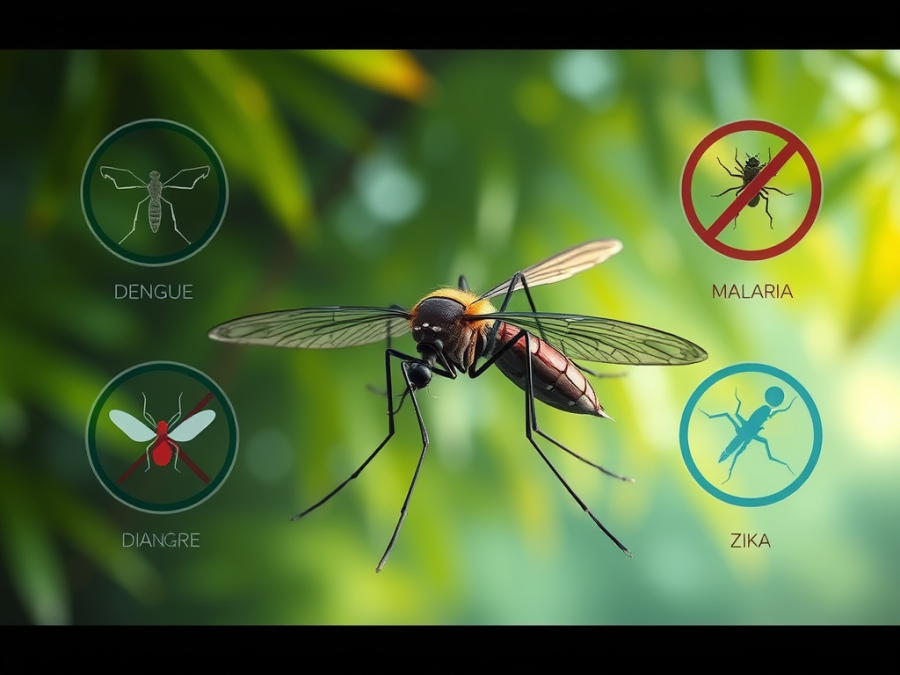
Mosquitoes Are More Than a Nuisance to Your Health

For a long time, malaria, dengue, and Zika were filed under “somewhere else.” In the U.S. and Europe most people encountered them in a textbook or a travel clinic and nowhere else. That is changing.

Climate shifts, international travel, and the sheer resilience of mosquitoes like Aedes aegypti have pushed these infections north. They are turning up in the southern U.S. and in parts of Europe now. Calling them tropical diseases is starting to be inaccurate.

Sanjay Gupta and Timothy Winegard made the scale of it plain in a CNN interview: mosquitoes kill more people than any other animal, and more than 700,000 people die each year from what they carry. That number is difficult to sit with.

The viral illnesses get most of the attention. Dengue, Zika, chikungunya, and West Nile are the familiar names. Dengue was once almost entirely tropical and now appears in Florida and Europe. Zika made headlines for the birth defects it caused. Chikungunya is remembered by anyone who has had it for the joint pain. West Nile is simply established across much of the U.S. at this point.

Malaria is a different animal, caused by protozoa rather than a virus. Most people still think of it as an African disease. Yet there have been locally acquired cases in the U.S. recently. Warm temperatures and standing water are all the transmission cycle really needs.

Parasitic worms belong in the conversation too. Lymphatic filariasis is still overwhelmingly tropical, but the movement of people and goods makes expansion more plausible than it used to be.

Prevention is unglamorous and effective. Emptying standing water around a house does more than people expect. Repellent, intact window screens, and long sleeves cut exposure. For travelers, treated bed nets and the right vaccines, yellow fever among them, still carry the load.

Clinicians need to reframe how we think about these illnesses. They are not filed under travel medicine anymore. With malaria reappearing in Florida and Texas, recognizing early symptoms and pushing prevention falls to us. I have had patients look genuinely surprised when I brought up insect repellent on a video visit for something unrelated. It struck them as beside the point. That reaction is the thing that has to change.

Mosquitoes are not slowing down, and the illnesses they carry keep moving closer to where our patients actually live. The questions are coming. We should have answers ready.

Scott Rennie, D.O.

References

Gupta S, Winegard T. CNN interview on mosquito-borne disease, 2023.

Centers for Disease Control and Prevention. Malaria in the United States, 2023.

World Health Organization. Mosquito-borne diseases fact sheet, 2023.

Watch: Dr. Sanjay Gupta & Timothy Winegard discuss how to avoid mosquito bites and the diseases they carry.

Board Certified in Obesity Medicine and Family Medicine

This blog is for educational purposes only and does not constitute individual medical advice. Always consult your own physician before making changes to your health, medications, or treatment plan.
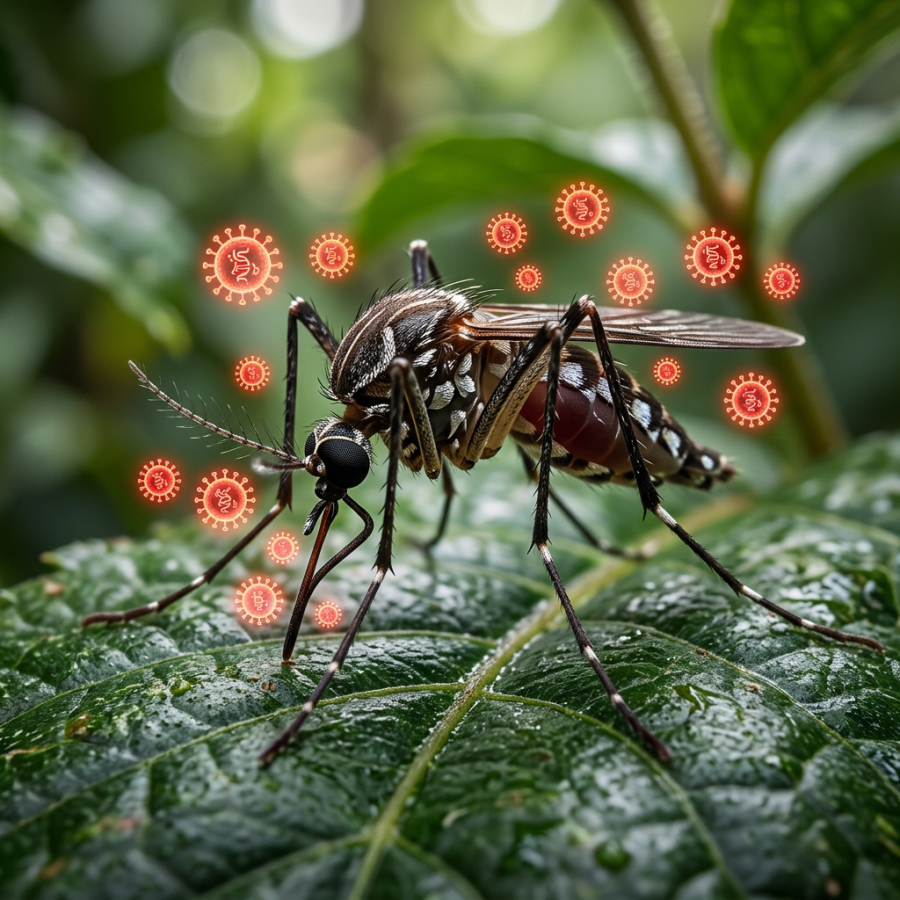
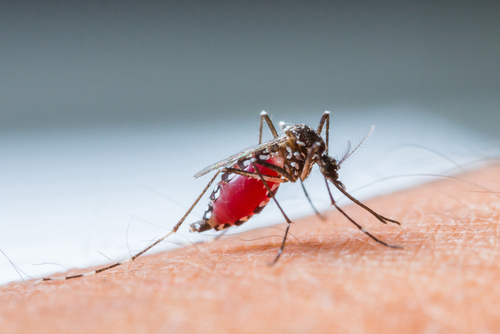
Close-up of a mosquito on a leaf with red virus particles overlay

West Nile Virus: 5 Things You Need to Know About It

shutterstock_134183042   Aug 17, 2012 | 3:36 PM ET | MyHealthNewsDaily Staff In the wake of 10 deaths due to West Nile virus, and hundreds of infections, authorities in Texas are spraying insecticide in the Dallas region, hoping to curb the spread of the disease, which can spread by mosquitoes. A total of 693 cases of West Nile virus infections, including 26 deaths, were reported as of Aug. 14 to the Centers for Disease Control and Prevention (CDC). The number of cases reported by this second week in August is the highest since 1999, when the disease was first seen in the U.S., according to the CDC. About 60 percent of this year’s cases have involved the “neuroinvasive” form of West Nile infection, in which the nervous system is affected. Such cases can cause inflammation of neural tissues, such as meningitis and encephalitis. More than 80 percent of all reported cases were from six states (Texas, Mississippi, Louisiana, Oklahoma, South Dakota and California), and almost half of all cases have been reported from Texas.

Here are five things you need to know about West Nile virus:

1. What is West Nile virus? West Nile virus is a type of virus called a flavivirus. Other viruses in this group cause dengue, yellow fever and Japanese encephalitis. Flaviviruses are commonly transmitted by ticks and mosquitoes. West Nile virus was first identified in Uganda in 1937, according to the National Institutes of Health (NIH). 2. How does West Nile Virus spread? It is likely that West Nile is spread from birds to people through mosquito bites, the NIH says. Early fall is the time of year that mosquitoes tend to have the highest levels of the virus, and human cases tend to peak around this time. The virus can also be spread through blood transfusions and organ transplants. Pregnant women can transmit the virus to their fetus, and mothers can transmit it to babies through breast milk, the CDC says. West Nile virus cannot be spread by casual contact, or touching or kissing an infected person, according to the CDC. 3. What are the symptoms of a West Nile infection? About 80 percent of people infected with West Nile show no symptoms at all, according to the CDC. The other 20 percent have symptoms such as fever, headache, body aches, nausea, vomiting and sometimes swollen lymph glands. Some develop a rash on the chest, stomach and back. Symptoms may last anywhere from a few days to several weeks. Severe forms of West Nile, which affect the nervous system, can be life-threatening. The NIH says that the following symptoms need prompt medical attention: muscle weakness, stiff neck, weakness in one arm or leg, confusion or a change in ability to think clearly and loss of consciousness or coma. 4. How can I prevent catching West Nile? The CDC recommends using an insect repellent that contains one of the following ingredients: DEET, picardin, oil of lemon eucalyptus (or a synthetic version of this oil, called PMD), or IR3535. These ingredients are suggested by the Environmental Protection Agency because they provide reasonably long-lasting protection against mosquito bites. The CDC also suggests wearing long sleeves and pants, or staying indoors, at dusk and dawn, when mosquitoes are most active. Mosquitoes breed in standing water, and so removing standing water from flower pots, pet dishes, buckets and barrels can reduce the risk of transmission. Children’s wading pools should be emptied and stored on their sides when not in use. 5. How is West Nile virus treated? There is no treatment for West Nile virus infections, according to the CDC. Mild symptoms can resolve on their own. People with severe symptoms may need to be hospitalized and receive intravenous fluids or help with breathing, the CDC says. Pass it on: Authorities in Dallas are spraying insecticide, hoping to curb the spread of the West Nile Virus, which has killed 10.

Scott Rennie, D.O.
Board Certified in Obesity Medicine and Family Medicine

This blog is for educational purposes only and does not constitute individual medical advice. Always consult your own physician before making changes to your health, medications, or treatment plan.