
 I often have people come into the clinic and ask me to treat warts, mostly on their hands or their feet. Some people aren’t aware of what these are so I thought a brief discussion might help people identify warts and also mention some common treatments.
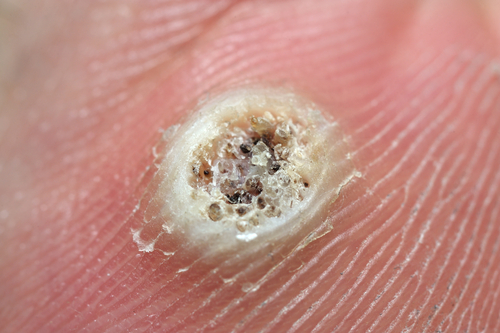
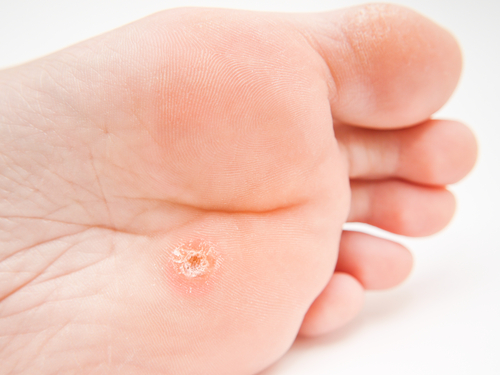
Common skin warts are generally non-dangerous raised and round or oval shaped skin growths that often stick up compared to the surrounding skin. If they’ve been present for months or years, they can sometimes become rather large or form patches that appear like a cauliflower shaped lesion. Sometimes they are identified by tiny black spots or dots that are small, clotted blood vessels but some people call them “seeds.”
What causes a wart? Warts are actually the result of a virus (human papillomavirus) and is spread by touching someone else’s skin who has a wart. They’re also often spread by picking at existing warts and touching other areas on your own body. The virus lives in skin surrounding the wart and can be spread easily by scratching are removing some of the virus under your finger nails. Warts can also be spread by coming into contact with skin cells that have fallen off an infected persons foot. It can actually take up to six months after exposure to the virus for a wart to appear.
What are the most common areas where warts occur on the body? The most common areas of the body for warts are:
I often have people come into the clinic and ask me to treat warts, mostly on their hands or their feet. Some people aren’t aware of what these are so I thought a brief discussion might help people identify warts and also mention some common treatments.
Common skin warts are generally non-dangerous raised and round or oval shaped skin growths that often stick up compared to the surrounding skin. If they’ve been present for months or years, they can sometimes become rather large or form patches that appear like a cauliflower shaped lesion. Sometimes they are identified by tiny black spots or dots that are small, clotted blood vessels but some people call them “seeds.”
What causes a wart? Warts are actually the result of a virus (human papillomavirus) and is spread by touching someone else’s skin who has a wart. They’re also often spread by picking at existing warts and touching other areas on your own body. The virus lives in skin surrounding the wart and can be spread easily by scratching are removing some of the virus under your finger nails. Warts can also be spread by coming into contact with skin cells that have fallen off an infected persons foot. It can actually take up to six months after exposure to the virus for a wart to appear.
What are the most common areas where warts occur on the body? The most common areas of the body for warts are:
- Fingers
- Hands
- Knees
- Elbows
- Around the fingernails (periungual warts)
- Feet (plantar warts)
- Face
- Lower legs
- Leave it alone – about 67% of all warts will go away within two years even if not treated. Most people treat then however because they can spread or become larger over time.
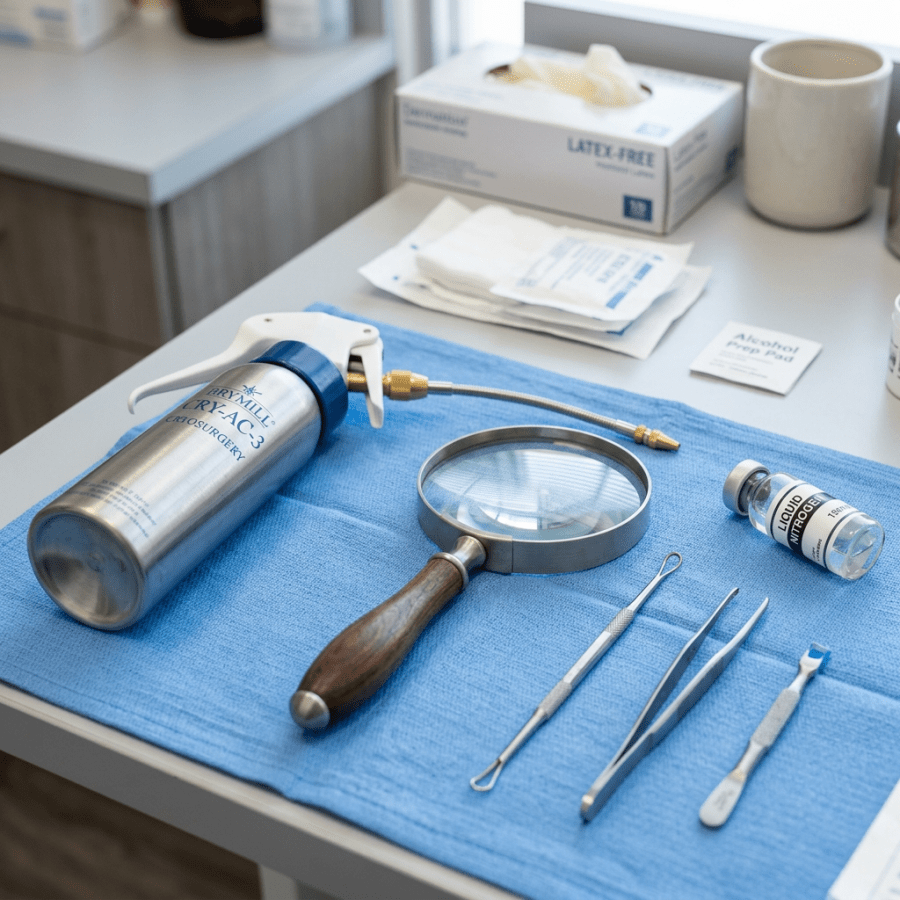
- Liquid nitrogen: In the doctor’s office, we usually use this very cold liquid to freeze the skin around the wart. It can be painful so it can be a difficult treatment for young children to tolerate. We often need to treat a wart several times using liquid nitrogen and if the wart is large, we may need to trim the top part of the wart off to make the treatment more effective.
- Salicylic acid: Over the counter patches employ this kind of treatment. Usually a liquid or patch is applied to wart and left in place for several days. It is often helpful to soak the skin in warm water for 10-20 minutes before applying the acid to soften the skin. Treatment with salicylic acid can be painful and cause redness to the skin and even bleeding. Many people find that using a nail file or pumice stone is helpful to gently remove the dead skin from the surface of the wart every few days during the treatment. You should be cautious when doing this however because there is a high risk of spreading the virus/warts to other areas on the body when using a file or stone. I usually recommend using a new file or stone each time to help prevent spreading the wart virus. Most people don’t realize that you need to keep applying the acid each day for 1-2 weeks even after the wart is gone because the virus can be present on the skin even if no wart is visible. This helps ensure that the wart does not return weeks or months later.
- Duct tape: The sticky tape easily found in most home improvement stores has been helpful to some people with warts. They apply it directly to the skin over the wart and leave it in place for about a week. It’s not entirely clear how the treatment works, but my thought is that the tap sticks to the surface of the skin where the wart is present and the tape on the skin causes moisture to build up and this makes it easier to remove the dead skin cells (containing the wart virus) when the tape is removed. Many people use an emery board or pumice stone to remove the excess skin after removing the tape and then reapply the tape for another week. It may take up to 4 weeks for the wart to go away using this treatment. We usually don’t recommend using duct tape if you have diabetes because if you cover your skin and a bacterial infection begins, you might not be able to see it starting and an infection may get very large before it is noticed.
- Cantharidin: This is a liquid that is prescribed by healthcare providers such as a dermatologist and applied directly to the wart on the skin. It may cause a blister to appear over the wart after 2-24 hours of treatment. It is usually just placed on the skin once and often dermatologists will recommend using salicylic acid for a week after the skin heals to decrease the chances of the wart coming back.
- Imiquimod: Aldera is the other name for this prescription cream that is applied at bed time several times per week. It works by stimulating the immune system to fight off the wart virus. It is rather expensive and is usually prescribed for genital warts or another type of virus called condyloma acuminate. It can also be used to treat small skin basal cell skin cancers or pre-cancers.
- 5-Fluorouracil: This cream which also goes by the name Carac, Efudex or Fluroplex is applied to flat warts twice a day for 3-5 weeks. We also use this cream to treat small skin pre-cancers and superficial basal cell cancers. It can cause skin irritation especially for those people who get lots of sun exposure.
- Shave excision: This is a procedure where the skin is cut away or removed where the wart is present on the body. This procedure is not very common for treating warts because it can cause permanent skin scarring or keloid formation and may also require stiches after the procedure.
- Immunotherapy: A dermatologist (skin doctor) may inject a medication directly into the wart that triggers the body’s natural immune system to attack the virus. These medications called contact sensitizers are not widely used because they are highly potent, expensive and require careful handling to avoid causing unintentional allergic reactions.
- American Academy of Dermatology: www.aad.org/skin-conditions/dermatology-a-to-z/warts
- Medline Plus: www.nlm.nih.gov/medlineplus/ency/article/000885.htm
- Gibbs S, Harvey I. Topical treatments for cutaneous warts. Cochrane Database Syst Rev 2006
- Moed L, Shwayder TA, Chang MW. Cantharidin revisted: a blistering defense of an ancient medicine. Arch Dermatol 2001; 137:1357
- Muzio G, Massone C, Rebora A. Treatment of non-genital warts with topical imiquimod 5% cream. Eur J Dermatol 2002; 12:347
Warts are stubborn and mostly harmless. The conditions I spend my time on now are the quiet ones that do damage without symptoms, starting with why high cholesterol matters even when you feel fine.
Scott Rennie, D.O.
Board Certified in Obesity Medicine and Family Medicine
This blog is for educational purposes only and does not constitute individual medical advice. Always consult your own physician before making changes to your health, medications, or treatment plan.
 Doctor Rennie's Blog