

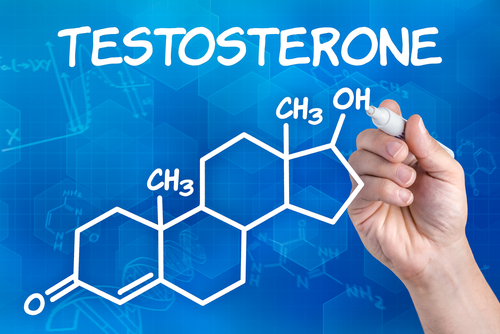
 Low testosterone is a hot topic right now in primary care. Recent advertisements are on television discussing various testosterone treatments available to men with “Low T.” I’ve recently had quite a few patients asking me to check testosterone levels and then they usually have questions about testosterone treatments if the blood levels are abnormal.
Testosterone is a hormone that is produced in both men and women, but it is usually present at higher levels in men. The consequences of low serum testosterone are not known for certain but there are several possible symptoms of low levels including (research is still being done):
Low testosterone is a hot topic right now in primary care. Recent advertisements are on television discussing various testosterone treatments available to men with “Low T.” I’ve recently had quite a few patients asking me to check testosterone levels and then they usually have questions about testosterone treatments if the blood levels are abnormal.
Testosterone is a hormone that is produced in both men and women, but it is usually present at higher levels in men. The consequences of low serum testosterone are not known for certain but there are several possible symptoms of low levels including (research is still being done):
- Low sex drive, erectile dysfunction, poor morning erection
- Fatigue
- Being slow to go through puberty (if it is too low during childhood)
- Decreased bone mineral density
- Decreased muscle mass
- Decreased muscle strength
- Anemia
- Decreased mood
- Decreased cognitive function
- Testosterone therapy should be prescribed only for men with low serum testosterone levels on more than one test and who have symptoms of testosterone deficiency and have no known pituitary or testicular disease.
- In order to minimize the potential risk of causing testosterone-dependent diseases, the target level of testosterone level in the blood should be between 300-400 ng/dL (10.4 to 13.9 nmol/L)
- If a male has symptoms of possible testosterone deficiency such as decreased sex drive, energy, mood or osteoporosis or anemia a serum testosterone level can be checked early in the morning (before 8am when normal testosterone levels are highest). If the level is low, it should be repeated for confirmation.
- Free testosterone levels should only be evaluated in men who have obesity.
- If testosterone levels (both times) is less than 200 ng/dL (6.9 nmol/L) evaluation for causes of hypogonadism can be performed. If there is no pituitary or testicular disease, discuss with the patient about possible treatment with supplemental testosterone (ie. Benefits vs risks).
- If treatment is started and the symptoms that led to measuring the testosterone are not corrected (improved energy, sex drive, anemia, etc.) within a few months then discontinuing the testosterone treatment can be considered.
- Before starting treatment, a digital rectal exam should be performed and a PSA (prostate specific antigen) measured. If a man has higher than normal PSA with no identifiable risk factors a urological evaluation should be performed before any testosterone therapy is started.
- 3 months after starting the testosterone treatment, a digital rectal exam and PSA should be repeated. If there is a prostate nodule or the PSA has increased more than 1.4ng/mL (and confirmed) urological consult should be sought. If the PSA and digital rectal exam is not considered abnormal, the digital rectal exam and PSA should be performed once a year (just as with any man).
Scott Rennie, D.O.
Board Certified in Obesity Medicine and Family Medicine
This blog is for educational purposes only and does not constitute individual medical advice. Always consult your own physician before making changes to your health, medications, or treatment plan.
 Doctor Rennie's Blog