
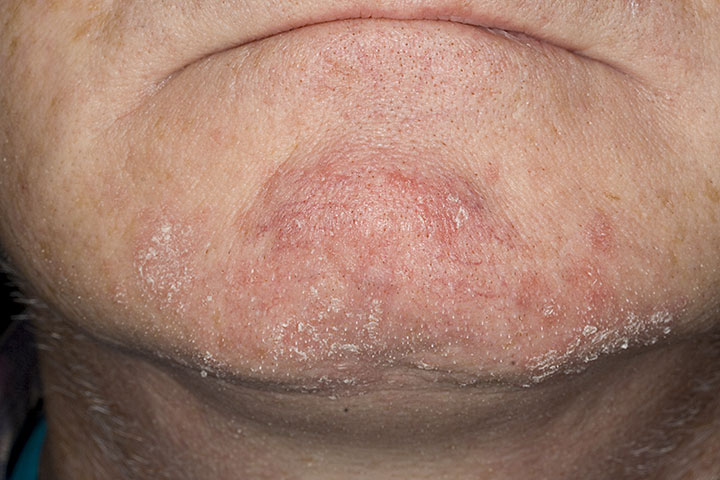
Photo credit: http://hardinmd.lib.uiowa.edu/dermnet/seborrheicdermatitis22.html
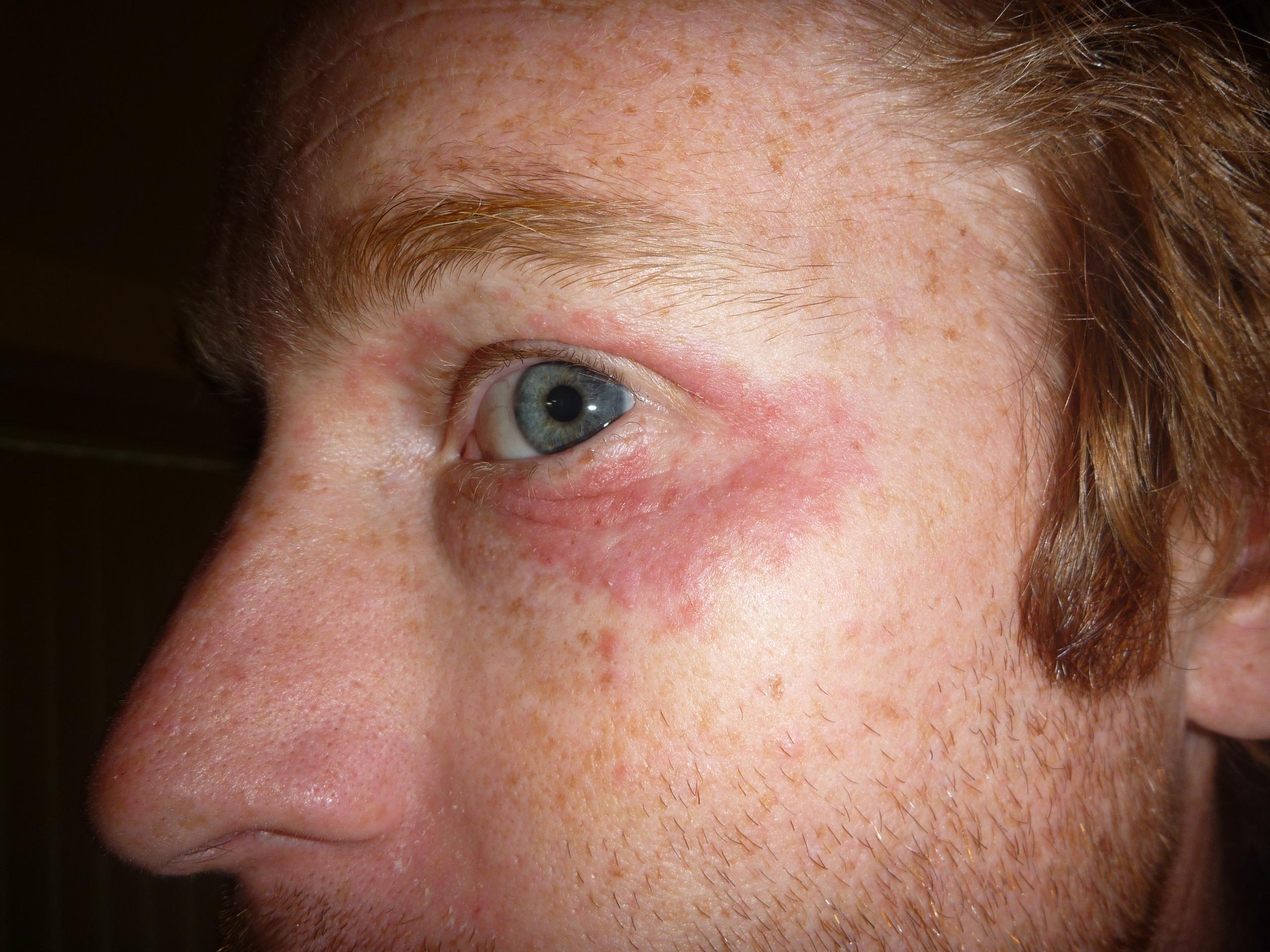
Photo credit: http://siklusair.com/seborrheic-dermatitis-eyes
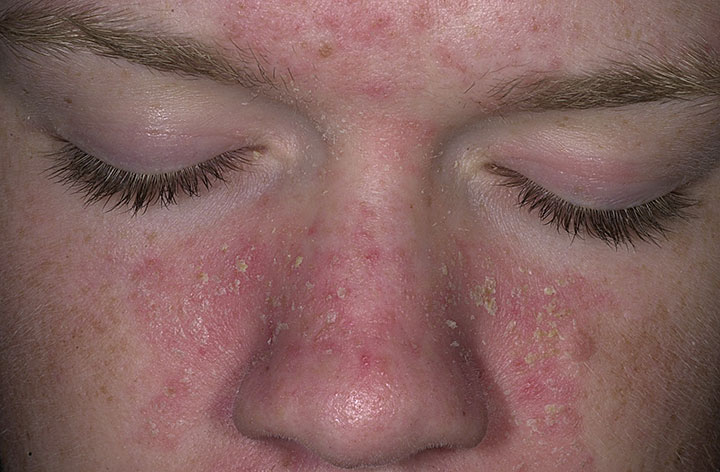
Photo credit: http://medicalcontent.hubpages.com/hub/Seborrheic-Dermatitis-Pictures-on-Face-Scalp-Hair-loss-Causes-Treatment
Seborrheic dermatitis is a common skin condition affecting both infants and adults. It causes redness, greasy scales, flaking along the eyebrows, and itching. It was one of the most common skin conditions I saw as an urgent care physician.
Seborrheic dermatitis, also called seborrhea, is an inflammation of the skin that usually occurs in areas with an abundance of oil glands: the scalp, face, around the eyes, ears, neck, and even the diaper area. In men it is more common where there is facial hair. Infants often have seborrhea on the scalp, where it is known as cradle cap. A mild form confined to the scalp, in children or adults, is what we call dandruff. Symptoms may include:
- Skin scales, white or yellow, usually oily or greasy
- Itching
- Mild redness
- Skin lesions or plaques
The exact cause is unknown, but there is evidence that it flares in times of stress, with hormonal changes, and during particular seasons, especially in extreme cold or warm weather. It is more common in people with weakened immune systems, in those with oily skin, and in certain neurological conditions such as Parkinson’s disease.
Diagnosis: Your healthcare provider can usually diagnose seborrheic dermatitis by examining you and taking a history. A biopsy, a sample of skin removed surgically and examined under a microscope, is rarely needed.
Treatment: Treatment is tailored to the individual patient and to which part of the body is affected. Options include:
- Medicated shampoos such as Neutrogena T-Gel or T-Sal, Head and Shoulders, or Nizoral. These usually contain salicylic acid, coal tar, zinc, selenium sulfide, ketoconazole, or resorcinol. Even if you do not have dandruff, these shampoos can be used on the face and other affected areas, and they work best left in place for five to ten minutes before rinsing.
- Topical steroid creams, lotions, foams or shampoos. Low, medium or even high potency steroids are sometimes prescribed to reduce inflammation, depending on severity and location. Lower potency preparations are used on the face, such as desonide 0.05% lotion.
- Antibacterial creams. Topical agents such as sodium sulfacetamide with sulfur are sometimes prescribed.
- Antifungal creams. Ketoconazole 2% cream and ciclopirox 1% cream are commonly used.
- Other anti-inflammatory medications such as pimecrolimus cream or tacrolimus ointment, sometimes prescribed for facial seborrhea.
- Dermatologists sometimes recommend a compounded mixture combining a steroid with an antifungal or antibacterial agent.
Cure: Unfortunately there is no cure for seborrheic dermatitis. It is a chronic, lifelong condition. It may disappear for months or years and then relapse. We focus on controlling it, usually by combining the treatments above with efforts to reduce known triggers such as emotional stress, extreme cold, and excess body weight.
Blog: https://doctorrennie.wordpress.com
This one is from 2014. I am board certified in obesity medicine and most of what I write now sits there, down to narrow questions like whether you can do intermittent fasting while you are on Ozempic or Wegovy.
Updated for 2026: A New Drug, and the Same Old Shampoo
Most of what I wrote here in 2014 still stands. Ketoconazole 2 percent or ciclopirox 1 percent shampoo, used a couple of times a week for at least a month, is still the backbone. A short run of a mild steroid for a flare. A calcineurin inhibitor like tacrolimus for the face, where I would rather not leave someone on steroids. What is new is roflumilast foam 0.3 percent, sold as Zoryve. It is a topical PDE4 inhibitor, approved in December 2023 for seborrheic dermatitis in anyone nine and older, applied once a day. It is the first genuinely different mechanism approved for this condition in more than twenty years (1). The trial numbers are good. In the phase 3 STRATUM study, 79.5 percent of patients on roflumilast reached clear or almost clear skin at eight weeks against 58 percent on vehicle, with about half completely clear. Itch improved within two days (2). My honest read: it works, and it is a real option when shampoo and a steroid have not been enough or when the face is involved and you want off steroids. It is also expensive, and for a lot of people ketoconazole shampoo bought over the counter handles the problem for a few dollars. I would still start there.Cradle Cap Has Not Changed
Worth saying because parents ask constantly. It resolves on its own over weeks to months. Baby shampoo, soften the scale with mineral oil or petroleum jelly, lift what comes away easily, leave what does not. Do not use medicated dandruff shampoo on an infant. If it is genuinely inflamed and persistent, a low potency steroid or topical antifungal briefly, and that is a conversation to have rather than something to start yourself (1).What a Video Visit Handles Well Here
This is a good fit for the format. Seborrheic dermatitis has a recognizable look and a recognizable distribution, scalp, eyebrows, the creases beside the nose, behind the ears, sometimes mid chest, and a photograph in decent light usually tells me what I need. The questions matter as much as the picture. How long, whether it comes and goes with stress or season, what you have already tried and for how long, and whether you have been using a steroid cream continuously, which causes its own problems on facial skin. Where I want a closer look is when the distribution is not typical, because psoriasis, tinea, and contact dermatitis all get called seborrhea and are treated differently.When To Be Seen In Person
Seborrheic dermatitis that is unusually widespread or severe deserves a conversation about HIV testing, because that association is real and longstanding. Signs of bacterial infection on top, meaning spreading redness, warmth, pus, or fever. Failure to respond to standard treatment, which usually means the diagnosis is wrong rather than the drug. And in an infant, scale spreading well beyond the scalp along with poor feeding or poor weight gain needs a pediatrician.The Bottom Line
Start cheap. Antifungal shampoo, used properly and for long enough, still fixes most of this. Roflumilast is a genuine addition for the cases it does not, particularly on the face. Cradle cap needs patience and mineral oil, not medicine.Sources
1. Vidal SI, Menta N, Green L. Child and Adult Seborrheic Dermatitis: A Narrative Review of the Current Treatment Landscape. Dermatol Ther (Heidelb). 2025;15(3):599-613. https://pmc.ncbi.nlm.nih.gov/articles/PMC11909311/ 2. Blauvelt A, et al. Roflumilast foam 0.3% for adolescent and adult patients with seborrheic dermatitis: a randomized, double-blinded, vehicle-controlled, phase 3 trial. J Am Acad Dermatol. 2024;90(5):986-993. https://pubmed.ncbi.nlm.nih.gov/38253129/ 3. American Academy of Dermatology. Seborrheic dermatitis: Diagnosis and treatment. https://www.aad.org/public/diseases/a-z/seborrheic-dermatitis-treatmentRelated Reading
Ringworm, Athlete’s Foot and Fungal Nail Infections When to Use Telemedicine vs. Urgent Care: How I Spot the Sick One Scott Rennie, D.O.Board Certified in Obesity Medicine and Family Medicine
This blog is for educational purposes only and does not constitute individual medical advice. Always consult your own physician before making changes to your health, medications, or treatment plan.
 Doctor Rennie's Blog