
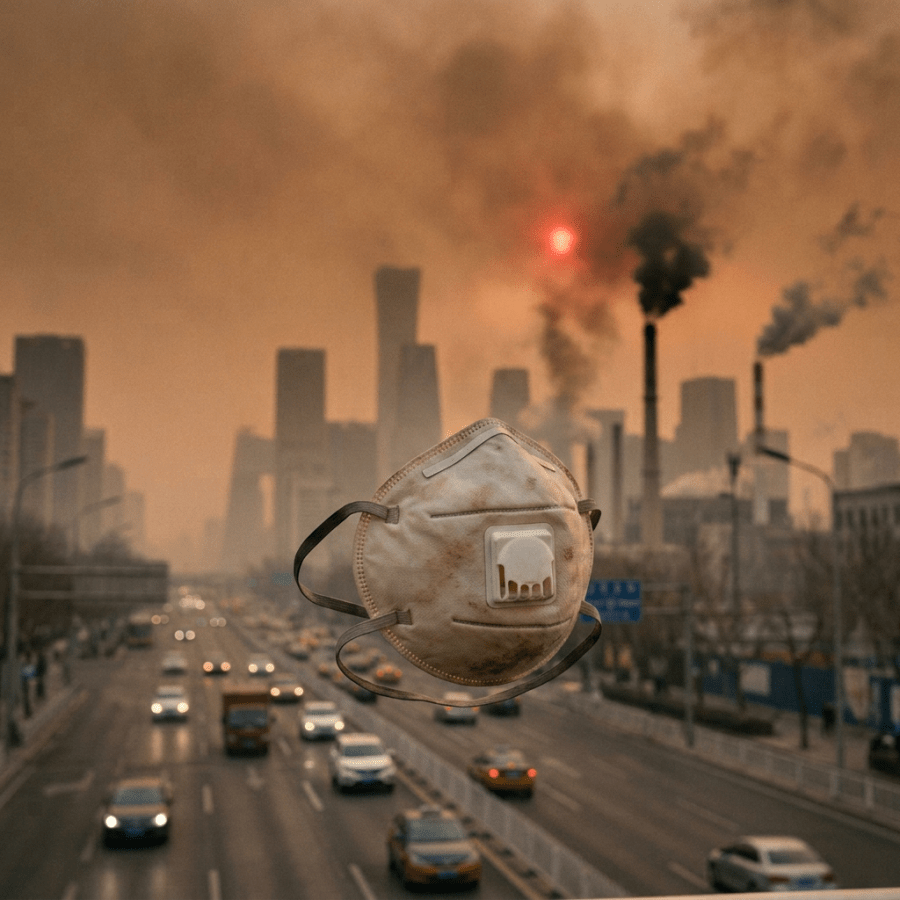
On January 7, 2025, powerful winds sparked wildfires across Los Angeles. I live only a few blocks from one of the burn zones, and like many in the city, I was trying to keep up with the immediate challenges while also absorbing what it meant for health and safety. Those fires were a reminder of just how fragile our environment and infrastructure can be when nature takes over.
The air was heavy with smoke and ash in those first weeks. Step outside and you could taste it, feel it in your throat. Air quality monitors showed “unhealthy” or “very unhealthy” levels for days, mainly due to fine particulate matter, PM2.5. Even indoors, it was hard to escape. The smell crept through closed windows and doors. I’ve had patients call worried about worsening asthma, chest tightness, or headaches after only short exposures.
The winds drove the flames and knocked out power across neighborhoods. My own area went days without electricity, which made it harder to stay updated on evacuation alerts or even preserve basic supplies. There was concern about the water too. Ash and debris can wash into reservoirs and pipes, and that raised real questions about whether tap water was safe to drink. Many of us turned to bottled water, but the shelves emptied fast.
In those weeks, each day brought news of flare-ups in other parts of the region. Containment lines held in one spot, only to break in another. Watching the wind shift kept you tense. We’d all packed bags and set them by the door, not knowing when an evacuation order might come.
Ash settled over yards, on car hoods, across rooftops. The instinct is to clean it as fast as possible, but that can cause more harm than good: leaf blowers just push particles back into the air, where neighbors and children breathe them in. A safer approach is low-tech: a vacuum indoors, or a wet mop and gentle sweeping outside. When I cleaned my porch, I wore an N95 mask, gloves, and goggles. Ash went into sealed trash bags so it wouldn’t scatter again.
Protecting yourself during a wildfire comes down to layers of defense. Stay indoors if the air is poor. Use HEPA filters if you have them. Step outside only if you need to, and wear an N95 mask against fine particles. Skip the outdoor exercise. For water, use bottled supplies when you can, or follow boil-water notices if officials issue them. Keep a go-bag ready with medications, documents, food, and water, and know your evacuation routes and how you’ll get updates, whether that’s a radio, phone alerts, or a neighbor who checks in.
These fires took a toll on health, both physical and mental. But I saw resilience too. A neighbor came by to offer us extra bottled water when supplies ran low. Others opened their doors to families who had to evacuate. The community response was one of the few bright points in a difficult stretch.
It’s clear that Los Angeles needs to strengthen preparedness, both individually and collectively. Climate change is making fire seasons longer and more intense. Infrastructure will have to adapt, but so will we as individuals. Preparedness, whether that’s sealing a window with weather stripping, having an air purifier ready, or knowing your evacuation plan, can make a real difference.
At the time, the focus was on protecting ourselves and helping each other through it. Nobody knew how many more weeks the fires would burn, but people in LA were resourceful, and determined to get through it together.
—
Scott Rennie, D.O.
Board Certified in Obesity Medicine and Family Medicine
This blog is for educational purposes only and does not constitute individual medical advice. Always consult your own physician before making changes to your health, medications, or treatment plan.
Sources
- California Air Resources Board. Smoke Ready California. https://ww2.arb.ca.gov/smokereadyca
- Centers for Disease Control and Prevention (CDC). Wildfires and Your Safety. https://www.cdc.gov/wildfires/about/index.html
- Los Angeles County Department of Public Health. Wildfire Response and Recovery. https://publichealth.lacounty.gov
- US Environmental Protection Agency (EPA). Wildfire Smoke and Health. https://www.epa.gov/wildfires/wildfire-smoke-and-health
 Doctor Rennie's Blog