

 By Lisa Collier Cool
Apr 07, 2011
Misuse of antibiotics has led to a global health threat: the rise of dangerous—or even fatal—superbugs. Methicillin-resistant Staphylococcus aureus (MRSA) is now attacking both patients in hospitals and also in the community and a deadly new multi-drug resistant bacteria called carbapenem-resistant Klebsiella pneumoniae, or CRKP is now in the headlines. Last year, antibiotic resistant infections killed 25,000 people in Europe, the Guardian reports.
Unless steps are taken to address this crisis, the cures doctors have counted on to battle bacteria will soon be useless. CRKP has now been reported in 36 US states—and health officials suspect that it may also be triggering infections in the other 14 states where reporting isn’t required. High rates have been found in long-term care facilities in Los Angeles County, where the superbug was previously believed to be rare, according to a study presented earlier this month. CRKP is even scarier than MRSA because the new superbug is resistant to almost all antibiotics, while a few types of antibiotics still work on MRSA. Who’s at risk for superbugs—and what can you do to protect yourself and family members? Here’s a guide to these dangerous bacteria.
Understanding different types of bacteria.
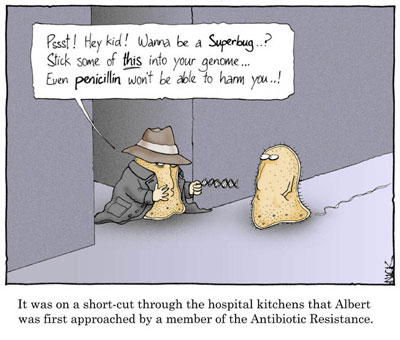
What is antibiotic resistance? Almost every type of bacteria has evolved and mutated to become less and less responsive to common antibiotics, largely due to overuse of these medications. Because superbugs are resistant to these drugs, they can quickly spread in hospitals and the community, causing infections that are hard or even impossible to cure. Doctors are forced to turn to more expensive and sometimes more toxic drugs of last resort. The problem is that every time antibiotics are used, some bacteria survive, giving rise to dangerous new strains like MRSA and CRKP, the CDC reports.
What are CRKP and MRSA? Klebseiella is a common type of gram-negative bacteria that are found in our intestines (where the bugs don’t cause disease). The CRKP strain is resistant to almost all antibiotics, including carbapenems, the so-called “antibiotics of last resort.” MRSA (methacillin-resistant staphylococcus aureus) is a type of bacteria that live on the skin and can burrow deep into the body if someone has cuts or wounds, including those from surgery.
Who is at risk? CRKP and MRSA infects patients, usually the elderly—who are already ill and living in long-term healthcare facilities, such as nursing homes. People who are on ventilators, require IVs, or have undergone prolonged treatment with certain antibiotics face the greatest threat of CRKP infection. Healthy people are at very low risk for CRKP. There are 2 types of MRSA, a form that affects hospital patients, with similar risk factors to CRKP, and another even more frightening strain found in communities, attacking people of all ages who have not been in medical facilities, including athletes, weekend warriors who use locker rooms, kids in daycare centers, soldiers, and people who get tattoos. Nearly 500,000 people a year are hospitalized with MRSA.
Keeping hospital patients safe.
How likely is it to be fatal? In earlier outbreaks, 35 percent of CRKP-infected patients died, Journal of the American Medical Association (JAMA) reported in 2008. The death rate among those affected by the current outbreak isn’t yet known. About 19,000 deaths a year are linked to MRSA in the US and rates of the disease has rise 10-fold, with most infections found in the community.
How does it spread? Both MRSA and CRKP are mainly transmitted by person-to-person contact, such as the infected hands of a healthcare provider. They can enter the lungs through a ventilator, causing pneumonia, the bloodstream through an IV catheter, causing bloodstream infection (sepsis), or the urinary tract through a catheter, causing a urinary tract infection. Both can also cause surgical wounds to become infected. MRSA can also be spread in contact with infected items, such as sharing razors, clothing, and sports equipment. These superbugs are not spread through the air.
What are the symptoms? Since CRKP presents itself as a variety of illnesses, most commonly pneumonia, meningitis, urinary tract infections, wound (or surgical site) infections and blood infections, symptoms reflect those illnesses, most often pneumonia. MRSA typically causes boils and abscesses that resemble infected bug bites, but can also present as pneumonia or flu-like symptoms.
How are superbugs related? The only drug that still works against the CRKP is colistin, a toxic antibiotic that can damage the kidneys. Several drugs, such as vancomycin, may still work against MRSA.
What’s the best protection against superbugs? Healthcare providers are prescribing fewer antibiotics, to help prevent CRKP, MRSA and other superbugs from developing resistance to even more antibiotics. The best way to stop bacteria from spreading is simple hygiene. If someone you know is in a nursing home or hospital, make sure doctors and staff wash their hands in front of you. Also wash your own hands frequently, with soap and water or an alcohol-based hand sanitizer, avoid sharing personal items, and shower after using gym equipment. The CDC has reports on Klebsiella bacteria and MRSA, discussing how to prevent their spread and has just issued a new report on preventing bloodstream infections.
By Lisa Collier Cool
Apr 07, 2011
Misuse of antibiotics has led to a global health threat: the rise of dangerous—or even fatal—superbugs. Methicillin-resistant Staphylococcus aureus (MRSA) is now attacking both patients in hospitals and also in the community and a deadly new multi-drug resistant bacteria called carbapenem-resistant Klebsiella pneumoniae, or CRKP is now in the headlines. Last year, antibiotic resistant infections killed 25,000 people in Europe, the Guardian reports.
Unless steps are taken to address this crisis, the cures doctors have counted on to battle bacteria will soon be useless. CRKP has now been reported in 36 US states—and health officials suspect that it may also be triggering infections in the other 14 states where reporting isn’t required. High rates have been found in long-term care facilities in Los Angeles County, where the superbug was previously believed to be rare, according to a study presented earlier this month. CRKP is even scarier than MRSA because the new superbug is resistant to almost all antibiotics, while a few types of antibiotics still work on MRSA. Who’s at risk for superbugs—and what can you do to protect yourself and family members? Here’s a guide to these dangerous bacteria.
Understanding different types of bacteria.
What is antibiotic resistance? Almost every type of bacteria has evolved and mutated to become less and less responsive to common antibiotics, largely due to overuse of these medications. Because superbugs are resistant to these drugs, they can quickly spread in hospitals and the community, causing infections that are hard or even impossible to cure. Doctors are forced to turn to more expensive and sometimes more toxic drugs of last resort. The problem is that every time antibiotics are used, some bacteria survive, giving rise to dangerous new strains like MRSA and CRKP, the CDC reports.
What are CRKP and MRSA? Klebseiella is a common type of gram-negative bacteria that are found in our intestines (where the bugs don’t cause disease). The CRKP strain is resistant to almost all antibiotics, including carbapenems, the so-called “antibiotics of last resort.” MRSA (methacillin-resistant staphylococcus aureus) is a type of bacteria that live on the skin and can burrow deep into the body if someone has cuts or wounds, including those from surgery.
Who is at risk? CRKP and MRSA infects patients, usually the elderly—who are already ill and living in long-term healthcare facilities, such as nursing homes. People who are on ventilators, require IVs, or have undergone prolonged treatment with certain antibiotics face the greatest threat of CRKP infection. Healthy people are at very low risk for CRKP. There are 2 types of MRSA, a form that affects hospital patients, with similar risk factors to CRKP, and another even more frightening strain found in communities, attacking people of all ages who have not been in medical facilities, including athletes, weekend warriors who use locker rooms, kids in daycare centers, soldiers, and people who get tattoos. Nearly 500,000 people a year are hospitalized with MRSA.
Keeping hospital patients safe.
How likely is it to be fatal? In earlier outbreaks, 35 percent of CRKP-infected patients died, Journal of the American Medical Association (JAMA) reported in 2008. The death rate among those affected by the current outbreak isn’t yet known. About 19,000 deaths a year are linked to MRSA in the US and rates of the disease has rise 10-fold, with most infections found in the community.
How does it spread? Both MRSA and CRKP are mainly transmitted by person-to-person contact, such as the infected hands of a healthcare provider. They can enter the lungs through a ventilator, causing pneumonia, the bloodstream through an IV catheter, causing bloodstream infection (sepsis), or the urinary tract through a catheter, causing a urinary tract infection. Both can also cause surgical wounds to become infected. MRSA can also be spread in contact with infected items, such as sharing razors, clothing, and sports equipment. These superbugs are not spread through the air.
What are the symptoms? Since CRKP presents itself as a variety of illnesses, most commonly pneumonia, meningitis, urinary tract infections, wound (or surgical site) infections and blood infections, symptoms reflect those illnesses, most often pneumonia. MRSA typically causes boils and abscesses that resemble infected bug bites, but can also present as pneumonia or flu-like symptoms.
How are superbugs related? The only drug that still works against the CRKP is colistin, a toxic antibiotic that can damage the kidneys. Several drugs, such as vancomycin, may still work against MRSA.
What’s the best protection against superbugs? Healthcare providers are prescribing fewer antibiotics, to help prevent CRKP, MRSA and other superbugs from developing resistance to even more antibiotics. The best way to stop bacteria from spreading is simple hygiene. If someone you know is in a nursing home or hospital, make sure doctors and staff wash their hands in front of you. Also wash your own hands frequently, with soap and water or an alcohol-based hand sanitizer, avoid sharing personal items, and shower after using gym equipment. The CDC has reports on Klebsiella bacteria and MRSA, discussing how to prevent their spread and has just issued a new report on preventing bloodstream infections.
Scott Rennie, D.O.
Board Certified in Obesity Medicine and Family Medicine
This blog is for educational purposes only and does not constitute individual medical advice. Always consult your own physician before making changes to your health, medications, or treatment plan.





 Doctor Rennie's Blog