
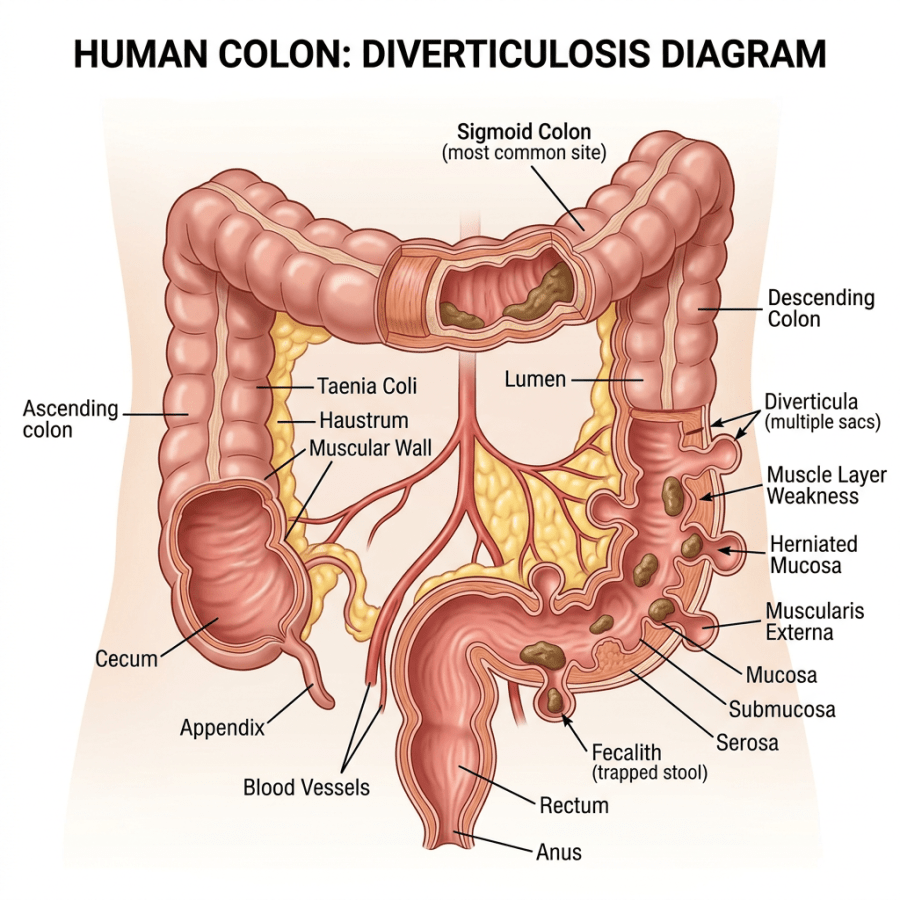
Diagram of the human colon highlighting diverticulosis features including diverticula, muscle layer weakness, herniated mucosa, and fecalith.

Diverticular Disease: Diverticulosis vs Diverticulitis Explained

shutterstock_75923548

When a patient came in with abdominal pain or blood in their stool, one of the conditions we considered was diverticulitis. You may not have heard much about diverticulitis, so this post will try to answer some common questions about diverticular disease.

A diverticulum is a small pouch-like structure that sometimes forms in the muscular wall of the colon. These little pouches often cause no pain, and we usually become aware of them only after a procedure such as a colonoscopy, flexible sigmoidoscopy, a barium enema or a CT scan.

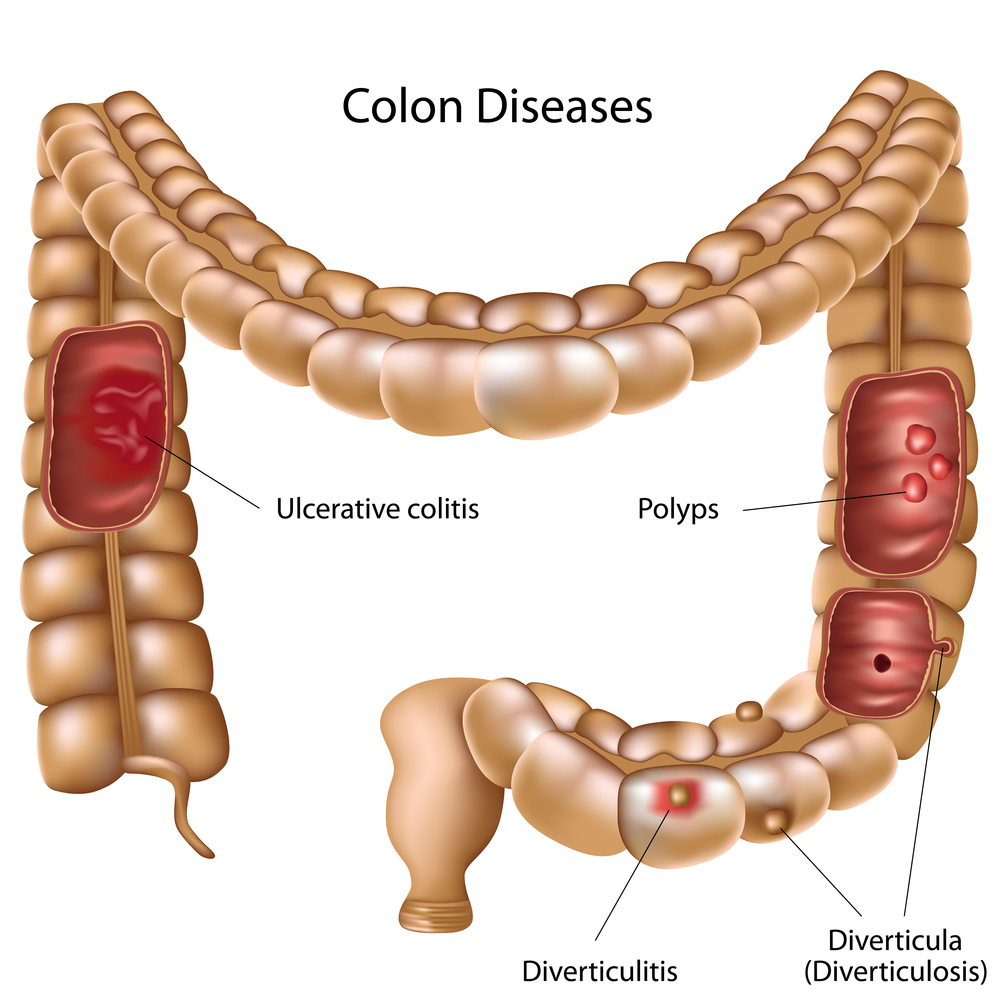
What is diverticulosis? Diverticulosis simply means that diverticula are present. Most people have no symptoms and will remain free of symptoms throughout their lives. (Roughly 15 to 25 percent go on to develop diverticulitis, which is more severe.) I usually think of a diverticulum as a small area where the colon balloons out. These are potentially weak spots that might become inflamed or may rupture under pressure.

What is diverticulitis? Diverticulitis is inflammation of a diverticulum, which occurs when there is thinning or breakdown of the wall of the colon. It is more severe than diverticulosis because the pouches have become irritated, inflamed or stretched, either from pressure within the colon or from hard particles of stool lodged inside them. The diverticulum becomes painful and may rupture, meaning the wall of the colon breaks down and allows stool and bacteria to enter the abdomen. Diverticulitis may also cause bleeding within the colon, because blood vessels often run through the area where diverticula form and they can bleed when the area gets inflamed.

Symptoms of diverticulitis: The symptoms depend on how severe the inflammation inside the colon is. The most common symptom is pain in the left lower abdomen. Patients may also have blood in the stool, nausea, vomiting, constipation, or diarrhea.

Classification of diverticulitis: Simple diverticulitis is more common and usually responds well to medical treatment without surgery. Complicated diverticulitis, about 25 percent of cases, usually requires surgery to remove the section of colon that has become inflamed or ruptured.

Treatment: Diverticulosis itself usually needs no treatment, since diverticula that are not inflamed are generally painless and cause no problems. Many providers do recommend increasing dietary fiber to reduce the chance of constipation, since constipation raises pressure within the colon, which can in turn lead to diverticulitis. Increasing fruits, vegetables, hydration and fiber has not been proven to prevent diverticulitis, however. We used to tell patients with diverticulosis to avoid seeds and nuts, on the theory that they increased the risk of diverticulitis. Research has since shown that advice to be wrong.

Diverticulitis does require treatment, and what you receive depends on the severity of your symptoms. Mild abdominal pain from diverticulitis can usually be managed at home with a clear liquid diet and oral antibiotics. If a patient develops a fever greater than 100.4 degrees F, worsening or severe abdominal pain, or an inability to keep fluids down, hospital treatment is usually recommended.

Hospitalization: If you need to be in the hospital for diverticulitis, you usually will not be allowed to eat or drink until you start feeling better, and antibiotics and IV fluids are given. If an abscess forms, a surgeon may need to drain it by placing a tube through the abdominal wall.

Complications: Peritonitis is a generalized infection within the abdomen that occurs if the colon ruptures. An emergency operation is often required in these cases to remove the diseased section of colon and reconnect the unaffected ends. Sometimes those two steps are done at separate times, with the removal first, so the colon is allowed to heal before the pieces are reattached.

Surgical treatment: Patients who don’t respond well to medical treatment, or who have repeated attacks of diverticulitis, may benefit from surgery to remove the diseased section of colon.

Bleeding from diverticulitis: Most of the time the bleeding stops on its own, but sometimes a colonoscopy or another procedure is necessary to get it under control.

Scott Rennie, D.O.

Board Certified in Obesity Medicine and Family Medicine

This blog is for educational purposes only and does not constitute individual medical advice. Always consult your own physician before making changes to your health, medications, or treatment plan.

Blog: https://doctorrennie.wordpress.com

Abstract artistic illustration of the human digestive system with surrounding microbiome cells

Rectal Bleeding: What Are the Possible Causes of It?

Colon-Endoscopes
anat_colon_1.0

Photo credit: http://www.naturalhealingsolutionsllc.com/learn-about-colon-hydrotherapy.html

Photo credit: http://www.thenurseslockerroom.com/2013/03/sigmoidoscopy-screening-test-for.html

One of the more common problems that brought patients in to see me, believe it or not, was seeing blood in the toilet, on the stool, or on the toilet paper after a bowel movement. Since I had seen several patients about this, I thought I would write about some of the possible causes.

Healthcare providers take this seriously, because blood noticed after a bowel movement can sometimes be a sign of colon or rectal cancer. Fortunately, most causes of rectal bleeding are not cancer.

Causes of rectal bleeding:

  1. Hemorrhoids: Swollen blood vessels in the rectum or anus can cause itching, pain, and bleeding. Patients usually describe hemorrhoidal blood as bright red. It may coat the surface of the stool, drip into the toilet and turn the water red, or show up on the toilet paper. Hemorrhoids do not have to hurt. Painless rectal bleeding during a bowel movement is a common presentation.
  2. Anal fissure: A tear in the lining of the anus can bleed, and there may be pain with a bowel movement.
  3. Other causes include infection, colitis (which may be due to an autoimmune disease such as ulcerative colitis or Crohn’s disease), colon polyps, and colon cancer. If the bleeding comes from higher in the digestive tract, such as in or above the stomach, the blood may look dark black or tarry.

Diagnosis and testing: To find the cause of bloody stools, your provider may perform tests or refer you to a specialist. They will take into account the information you give them, your history, your symptoms, and your age.

1) Rectal exam: Your provider will usually examine the rectum and look for a source of bleeding such as a hemorrhoid or fissure. This may include a digital rectal exam, where the doctor inserts a gloved and lubricated finger into the rectum to feel for possible rectal cancers.

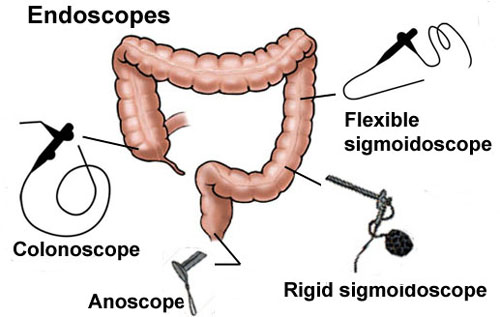
2) Anoscopy: Your doctor may use a small plastic device with an attached light to get a better look at the source of bleeding. Most of the time this is not painful, though it can be a bit uncomfortable, and it can be done in the office.

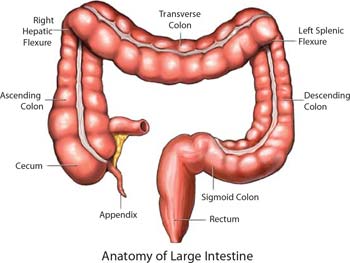
3) Sigmoidoscopy: This is usually done in an outpatient center, and the patient is usually not sedated. Sigmoidoscopes come in rigid and flexible forms, and the flexible one is used most often. A flexible tube, roughly 70 cm long and 1 cm wide, carrying a tiny video camera and a light, is inserted through the anus and gently into the colon while air is introduced to open the area and improve the view. A biopsy is often taken with a small tool. Sigmoidoscopy allows visualization of the anus, rectum, sigmoid colon and the top of the descending colon. It does not reach the entire colon, so it can miss cancers, polyps or bleeding sources in other areas.

4) Colonoscopy: Similar to sigmoidoscopy, but it allows the doctor to examine the entire colon with a longer flexible tube. The colonoscope, about 140 cm long, reaches everything the sigmoidoscope can and also allows visualization of the transverse colon, ascending colon and cecum. The patient is usually sedated.

When to seek help: It is impossible to know the cause of rectal bleeding without an examination. Everyone with rectal bleeding should talk to their healthcare provider about what evaluation they need. Even though there are common causes that are not cancerous, bleeding can be caused by cancer or by precancerous conditions.

Precancerous polyps may sit in the colon for years before turning cancerous, and they can be removed safely, which prevents them from ever becoming cancer. These polyps can produce symptoms very similar to an innocent hemorrhoid.

I’ve met patients who have ignored rectal bleeding for years because they thought it was because they had a hemorrhoid and it turned out to be cancer. With increasing age comes increasing risk of polyps and colon cancer.

Colon cancer screening: For patients at average risk, screening was started by checking the stool for small amounts of blood, which may be hidden, each year beginning at age 50. A first colonoscopy at age 50 was also recommended, unless other risk factors were present, and every 10 years thereafter unless a person was at increased risk based on family history or a previous diagnosis or biopsy result.

Update, 2026: The starting age has changed since this post was written. The American Cancer Society lowered it to 45 for people at average risk in 2018, the U.S. Preventive Services Task Force adopted 45 in 2021, and the ACS reaffirmed age 45 in its 2026 guideline update, with screening continuing through age 75 for those with a life expectancy over 10 years. If you are 45 or older and have not been screened, talk to your provider. See https://www.cancer.org/cancer/types/colon-rectal-cancer/detection-diagnosis-staging/acs-recommendations.html

People at increased or high risk:

If you are at increased or high risk of colorectal cancer, you should begin screening before the standard starting age, be screened more often, or both. The following raise your risk above average:

  1. A personal history of colorectal cancer or adenomatous polyps
  2. A personal history of inflammatory bowel disease (ulcerative colitis or Crohn’s)
  3. A strong family history of colorectal cancer or polyps
  4. A known family history of a hereditary colorectal cancer syndrome such as familial adenomatous polyposis (FAP) or hereditary non-polyposis colon cancer (HNPCC)

Scott Rennie, D.O.

Board Certified in Obesity Medicine and Family Medicine

This blog is for educational purposes only and does not constitute individual medical advice. Always consult your own physician before making changes to your health, medications, or treatment plan.
Blog: https://doctorrennie.wordpress.com