

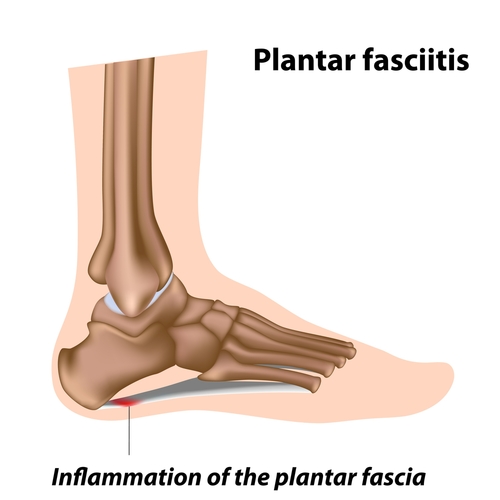
 One of the more common reasons that I see patients in the urgent care for is plantar fasciitis. It causes foot pain, mostly in adults. Patients are more prone to this kind of foot problem if they jump or stand for prolonged periods of time. These motions stretch the plantar fascia. Most people who have an episode of plantar fasciitis have no pain within one year.
Causes: A strain in the ligaments in the fascia which is a thick, white pearly tissue with long fibers that starts at the heal bone and fans out along the under surface of the foot and extends to the toes. The plantar fascia provides support as the toes bear the weight of the body when the heal rises while walking.
Symptoms: pain beneath the heel and sole of the foot. The pain is often worst when stepping out of bed early in the morning or getting up after being seated for a period of time.
Risk factors:
1) Long distance running
2) Standing for long periods of time (grocery store cashiers for example)
3) Dancing
4) Repeated squatting or standing on the toes
5) Poor fitting shoes
6) Obesity
Diagnosis: The diagnosis is usually made by a healthcare provider who takes the history of the patient and performs a physical examination.
Treatment: Several treatment options are used to help with plantar fasciitis. They may include:
1) Rest – Limit jumping or standing for extended periods of time. A complete lack of physical activity is not recommended however
2) Ice – Putting ice on the area 4x/day for 20 minutes at a time may reduce pain
3) Exercise – Home exercises including calf-plantar stretches, foot and ankle circles, toe curls, and toe towels often help reduce pain. Careful attention not to overdo the stretches is important
4) Pain medication – Ibuprofen or Naproxen may be helpful to reduce the swelling and pain
5) Shoes with good arch support or metal shanks take the pressure off the plantar fascia and are one of the most important parts of treatment.
6) Steroid Injection – a steroid shot may be given in the foot to relieve pain but usually the effect wears off after a few weeks. There is also a risk of worsening the foot pain due to small crystals of the steroid forming in the plantar fascia
7) Casting – a short walking cast that has a rocker-shaped bottom decreases the flexibility of the sole of the foot and can provide relief from pain.
8) Surgery – this is rarely recommended for plantar fasciitis. If symptoms persist for at least 6-12 months and all other treatments have failed, it may be an option for some people
I hope that you have found this information useful. Wishing you the best of health,
One of the more common reasons that I see patients in the urgent care for is plantar fasciitis. It causes foot pain, mostly in adults. Patients are more prone to this kind of foot problem if they jump or stand for prolonged periods of time. These motions stretch the plantar fascia. Most people who have an episode of plantar fasciitis have no pain within one year.
Causes: A strain in the ligaments in the fascia which is a thick, white pearly tissue with long fibers that starts at the heal bone and fans out along the under surface of the foot and extends to the toes. The plantar fascia provides support as the toes bear the weight of the body when the heal rises while walking.
Symptoms: pain beneath the heel and sole of the foot. The pain is often worst when stepping out of bed early in the morning or getting up after being seated for a period of time.
Risk factors:
1) Long distance running
2) Standing for long periods of time (grocery store cashiers for example)
3) Dancing
4) Repeated squatting or standing on the toes
5) Poor fitting shoes
6) Obesity
Diagnosis: The diagnosis is usually made by a healthcare provider who takes the history of the patient and performs a physical examination.
Treatment: Several treatment options are used to help with plantar fasciitis. They may include:
1) Rest – Limit jumping or standing for extended periods of time. A complete lack of physical activity is not recommended however
2) Ice – Putting ice on the area 4x/day for 20 minutes at a time may reduce pain
3) Exercise – Home exercises including calf-plantar stretches, foot and ankle circles, toe curls, and toe towels often help reduce pain. Careful attention not to overdo the stretches is important
4) Pain medication – Ibuprofen or Naproxen may be helpful to reduce the swelling and pain
5) Shoes with good arch support or metal shanks take the pressure off the plantar fascia and are one of the most important parts of treatment.
6) Steroid Injection – a steroid shot may be given in the foot to relieve pain but usually the effect wears off after a few weeks. There is also a risk of worsening the foot pain due to small crystals of the steroid forming in the plantar fascia
7) Casting – a short walking cast that has a rocker-shaped bottom decreases the flexibility of the sole of the foot and can provide relief from pain.
8) Surgery – this is rarely recommended for plantar fasciitis. If symptoms persist for at least 6-12 months and all other treatments have failed, it may be an option for some people
I hope that you have found this information useful. Wishing you the best of health,
Related Reading
What Should Every Patient Know About Ankle Sprains? How to Stretch Out Properly How to Manage Chronic Pain Without Relying on Medication I Hurt My Finger or Toe: How Do I Know if It’s Fractured?Scott Rennie, D.O.
Board Certified in Obesity Medicine and Family Medicine
This blog is for educational purposes only and does not constitute individual medical advice. Always consult your own physician before making changes to your health, medications, or treatment plan.
 Doctor Rennie's Blog