

Compounded Semaglutide and Tirzepatide: What to Know Now

When patients ask me about compounded weight loss drugs like semaglutide and tirzepatide, I take a deep breath. The topic is complicated and keeps changing. I won’t just tell patients to avoid them. They’re already looking for these options, and my job is to help them navigate the risks safely.

Dr. Beverly Tchang’s “swim safely” analogy fits well. We can’t stop people from diving into the ocean of compounded products, but we can at least give them floaties: information, caution, and tools to make better decisions. (Tchang, Medscape)

Here’s how I explain it to patients and colleagues, updated with the most recent data.

Why compounded versions exist

When semaglutide and tirzepatide injections were in short supply a few years ago, patients turned to compounding pharmacies that offered custom formulations, often at a lower price. (GoodRx)

In late 2024, the FDA ended the declared shortage of tirzepatide. (Stat News) By early 2025, semaglutide (Ozempic and Wegovy) followed. Once the shortages ended, enforcement ramped up against compounded versions. (GoodRx)

Now, compounded versions are only legal in narrow circumstances, such as when a patient has a medical need that can’t be met by an approved product. (GoodRx)

In December 2024, the FDA sent warning letters to several companies selling unapproved GLP-1 drugs labeled “for research use only.” (Reuters) Some of these contained no active ingredient, incorrect salt forms, or inconsistent potency. (Verywell Health)

Key risks and what to look for

Not all compounding pharmacies operate at the same standard. A friendly local pharmacist doesn’t necessarily mean the product is safe. Dr. Tchang’s checklist gives a good framework for evaluating any compounded GLP-1 medication. A simplified version: look for a pharmacy where the medication is prescribed by a licensed provider, there are no disciplinary actions on file, the pharmacy has been in business for more than a year, only semaglutide base is used (not a salt form), and the facility is FDA-registered or FDA-inspected; it should also be able to ship sterile drugs safely to all 50 states.

If a compounding pharmacy cannot meet these criteria, that’s a red flag. Ask directly for documentation. If they can’t provide it, walk away.

Some compounders also mix in vitamins or preservatives to make their product “different” from the brand name; that may sound harmless, but combining untested additives with peptides can change how the drug behaves. (GoodRx)

A few are promoting oral or sublingual forms of semaglutide and tirzepatide. These seem attractive for patients who don’t like injections, but they haven’t been validated in clinical trials, and absorption is unpredictable. (Omada Health)

Even small changes in formulation or dosing can interrupt treatment and cause rebound weight gain or side effects.

How I approach this with patients

When a patient says, “I found a compounding pharmacy that sells it for half the price,” I acknowledge their concern. Access and cost are real issues. But I explain that the regulatory situation has changed. If an FDA-approved version is available, that’s the standard we should use first.

I encourage patients to ask the pharmacy for their certificate of analysis, sterility test results, and ingredient source; if the pharmacy hesitates or says it’s proprietary, that’s enough reason to stop.

One patient of mine was on a compounded semaglutide microdose that wasn’t commercially available, at least as she described it to me. I never could pin down what she was actually getting. The compounder wouldn’t release potency data either. We moved her to a low-dose commercial version instead. Weight loss slowed a little. Safety and consistency improved, and I knew what was in the pen.

We also reviewed manufacturer assistance programs and insurance coverage. Many patients don’t realize that drug makers often cap out-of-pocket costs for brand medications; cost confusion is one of the biggest drivers behind compounded use.

The FDA’s BeSafeRx campaign

The FDA has an ongoing public safety campaign called BeSafeRx, designed to help patients and providers verify the legitimacy of online pharmacies and compounded drug sources; it offers tools to check pharmacy licenses, identify red flags, and report suspicious products.

It’s a good resource for anyone considering buying compounded or online medications; I often share it directly with patients so they can see what trustworthy sourcing looks like.

You can find the BeSafeRx information at:

https://www.fda.gov/drugs/buying-using-medicine-safely/besaferx-your-source-online-pharmacy-information

What’s changed recently

The REDEFINE trial (NEJM, 2025) studied cagrilintide combined with semaglutide (CagriSema) and showed about 20.4 percent weight loss over 68 weeks, compared with 14.9 percent with semaglutide alone; that kind of data will shape treatment algorithms going forward. GoodRx reports that the FDA’s grace period for compounding GLP-1s has officially ended for both tirzepatide and semaglutide, though some pharmacies still market “custom” or “non-identical” formulations, and regulators are watching closely.

Approach this without judgment if you’re a clinician. Patients are trying to find affordable solutions. And they often trust what they see on social media more than official channels; we can help most by staying informed, asking questions, and documenting carefully. Patients should be cautious for a different reason. Ask your provider to review any compounded medication before you use it, make sure your pharmacy meets every item on that checklist, and use resources like the FDA’s BeSafeRx to verify safety.

Knowledge and transparency remain the best safeguards.

Scott Rennie, D.O.

Board Certified in Obesity Medicine and Family Medicine

This blog is for educational purposes only and does not constitute individual medical advice. Always consult your own physician before making changes to your health, medications, or treatment plan.


Weight Loss Drug Side Effects and How Common They Are

As more patients start anti-obesity medications, the question that comes up most is about side effects. These drugs are powerful tools for weight loss and metabolic health. They aren’t without risk. Knowing what to expect and how to manage it often decides whether someone stays on treatment or quits in month two.

Gastrointestinal effects are the ones I hear about most. Nausea leads the list. In STEP 1, which studied semaglutide 2.4 mg in adults without diabetes, nausea affected 44.2% of participants against 17.4% on placebo (Wilding et al., NEJM, 2021). In SCALE, the corresponding trial of liraglutide 3.0 mg, nausea affected 40.2% versus 14.7% on placebo (Pi-Sunyer et al., NEJM, 2015). Those two trials are the source of most of the numbers in this post, and they studied different drugs. Smaller meals, avoiding high-fat food, and slow dose titration usually get patients through it.

Constipation and diarrhea both follow the same pattern, common early and improving with time. Hydration, added fiber, and sometimes a stool softener handle most constipation. Diarrhea occasionally warrants a dose adjustment. Rarely, delayed gastric emptying can progress toward obstruction, which presents as bloating, pain, and vomiting and needs prompt evaluation.

Pancreatitis is uncommon and serious. In SCALE, acute pancreatitis occurred in a small number of liraglutide patients and none on placebo, at an incidence around 0.3%. Severe abdominal pain radiating to the back with nausea and vomiting should trigger immediate discontinuation and workup.

Gallbladder disease is a real risk and it is mostly a consequence of the weight loss itself. In SCALE, cholelithiasis occurred in 1.5% of liraglutide patients versus 1.1% on placebo, and acute cholecystitis in 0.8% versus 0.4%. Rapid weight loss and changes in bile concentration are the likely mechanism, which means the risk travels with any effective therapy rather than with this drug class specifically.

Hypoglycemia is uncommon with GLP-1 receptor agonists used alone in patients without diabetes, because these drugs stimulate insulin secretion in a glucose-dependent way. Risk climbs sharply in combination with insulin or a sulfonylurea. That combination is where monitoring and dose adjustment of the background agent become necessary, and it is worth addressing before starting rather than after the first low reading.

Thyroid cancer risk is rare and gets asked about constantly. GLP-1 receptor agonists carry a boxed warning for medullary thyroid carcinoma based on rodent C-cell tumor data, and they are contraindicated in anyone with a personal or family history of medullary thyroid carcinoma or multiple endocrine neoplasia type 2. Human data haven’t established a causal link, and a widely publicized French case-control study reporting an association drew substantial methodological criticism in the same journal (Bezin et al., Diabetes Care, 2023). I tell patients the contraindication is firm and the population-level risk remains unproven.

Kidney injury is rare and usually a consequence of dehydration after vomiting or diarrhea rather than a direct drug effect. Pushing fluids during dose escalation is an easy preventive step.

Heart rate increases are reported as well. Resting heart rate can rise by roughly one to four beats per minute on semaglutide or tirzepatide. Palpitations should always be reported.

Pregnancy deserves its own conversation. These medications aren’t recommended during pregnancy, and semaglutide should be stopped at least two months before conception. There is also an interaction with oral contraceptives, since delayed gastric emptying affects absorption. For tirzepatide, patients on oral contraceptives should switch to a non-oral method or add a barrier method for four weeks after starting and for four weeks after each dose increase.

Injection site reactions occur in a small percentage of patients, usually three to five percent. Redness, swelling, and itching are the usual complaints, and rotating sites with good technique resolves most of it.

None of this means patients should avoid these medications. Awareness and early management are what keep people on treatment. I often tell patients to call me if nausea or constipation is interfering with their day-to-day life rather than waiting for the next follow-up. Small changes in dosing or diet usually make the drug tolerable again.

Anti-obesity medications work, and they need thoughtful monitoring. With open communication, most side effects are manageable and most patients stay on track.

Scott Rennie, D.O.

References:

1. Wilding JPH, et al. Once-Weekly Semaglutide in Adults with Overweight or Obesity (STEP 1). N Engl J Med. 2021;384(11):989-1002. https://pubmed.ncbi.nlm.nih.gov/33567185/

2. Pi-Sunyer X, et al. A Randomized, Controlled Trial of 3.0 mg of Liraglutide in Weight Management (SCALE). N Engl J Med. 2015;373(1):11-22. https://pubmed.ncbi.nlm.nih.gov/26132939/

3. Bezin J, et al. GLP-1 Receptor Agonists and the Risk of Thyroid Cancer. Diabetes Care. 2023;46(2):384-390. https://pubmed.ncbi.nlm.nih.gov/36356111/

Board Certified in Obesity Medicine and Family Medicine

This blog is for educational purposes only and does not constitute individual medical advice. Always consult your own physician before making changes to your health, medications, or treatment plan.
New Obesity Drugs Beyond Ozempic and Zepbound Explained

Obesity treatment is shifting fast. For years the standard toolkit was lifestyle counseling plus a handful of older medications. New drug classes now target the actual biology of the disease: hormonal signaling, metabolic rate, body composition. Three groups matter most right now. Nutrient-stimulated hormone-based therapies. Oral small molecule receptor agonists. And activin receptor pathway inhibitors.

NuSHs mimic or amplify the body’s own hormonal response to food. GLP-1 increases satiety, slows gastric emptying, and supports insulin secretion (Wilding et al., N Engl J Med, 2021). GIP regulates fat metabolism and glucose response (Frías et al., N Engl J Med, 2021). Amylin, co-secreted with insulin, works as its own satiety signal (Dehestani et al., J Obes Metab Syndr, 2021). PYY reduces appetite and energy intake (Schmidt et al., Am J Physiol Endocrinol Metab, 2014). Oxyntomodulin reduces intake too, and also raises energy expenditure (Wynne et al., Int J Obes, 2006).

Several drugs in this class are already in trials, and CagriSema pairs an amylin analogue with a GLP-1 receptor agonist, reducing body weight by 17.1 percent in 20 weeks in a Phase 1b trial, not Phase 3 (Enebo et al., Lancet, 2021). Survodutide, a GLP-1 and glucagon receptor agonist, produced weight loss of up to 18.7 percent over 46 weeks (Le Roux et al., Lancet Diabetes Endocrinol, 2024). Retatrutide, which hits GIP, GLP-1, and glucagon receptors together, produced a 24.2 percent reduction over 48 weeks in Phase 2 testing. Women lost about 28.5 percent of body weight, men about 21.9 percent (Jastreboff et al., N Engl J Med, 2023). Oral semaglutide at 50 mg reached 17.4 percent weight loss at 68 weeks, with 37 percent of participants losing more than a fifth of their body weight (Knop et al., Lancet, 2023). Mari-tide is still in Phase 2, with promising early results.

Small molecule receptor agonists are the other track, and their edge is simple: a pill instead of a needle. Orforglipron produced about 14.7 percent weight loss at 36 weeks, in range with the injectables (Wharton et al., N Engl J Med, 2023). Danuglipron is behind it. Early Phase 2 data, in patients with type 2 diabetes rather than obesity specifically, showed reduced appetite alongside improved glucose and weight outcomes (Saxena et al., Diabetes Obes Metab, 2023). Whether that holds up in an obesity-only population is still unclear.

Activin receptor pathway inhibitors take a different approach. They target pathways that preserve muscle while fat comes off, since traditional weight loss burns muscle right along with fat. These drugs try to change that ratio (Heymsfield et al., JAMA Netw Open, 2021).

Bimagrumab, a monoclonal antibody that blocks the activin type II receptor, reduced fat mass by 20.5 percent while increasing lean mass by 3.6 percent over 48 weeks in trials. Combine it with a GLP-1 drug like semaglutide or tirzepatide and the body-composition effect gets stronger still. Taldefgrobep, a myostatin inhibitor originally developed for Duchenne muscular dystrophy, is now being tested for obesity. SRK-439 is another myostatin-targeting antibody in development, aimed at fat loss without the lean-mass cost.

What sets these treatments apart is what the weight loss is made of: more muscle retained, metabolic markers that move too, alongside the pounds lost. That’s a real shift, for patients who may get more durable results and fewer complications, and for clinicians who get more tools to match therapy to the person in front of them.

Scott Rennie, D.O.

References:

Wilding JPH, et al. Once-Weekly Semaglutide in Adults with Overweight or Obesity. N Engl J Med. 2021;384:989-1002. PMID 33567185. https://pubmed.ncbi.nlm.nih.gov/33567185/

Frías JP, et al. Tirzepatide versus Semaglutide Once Weekly in Patients with Type 2 Diabetes (SURPASS-2). N Engl J Med. 2021. PMID 34170647. https://pubmed.ncbi.nlm.nih.gov/34170647/

Dehestani B, Stratford NR, le Roux CW. Amylin as a Future Obesity Treatment. J Obes Metab Syndr. 2021;30(4):320-325. PMID 34929674. https://pubmed.ncbi.nlm.nih.gov/34929674/

Schmidt JB, Gregersen NT, Pedersen SD, et al. Effects of PYY3-36 and GLP-1 on energy intake, energy expenditure, and appetite in overweight men. Am J Physiol Endocrinol Metab. 2014;306(11):E1248-56. PMID 24735885. https://pubmed.ncbi.nlm.nih.gov/24735885/

Wynne K, Park AJ, Small CJ, et al. Oxyntomodulin increases energy expenditure in addition to decreasing energy intake in overweight and obese humans: a randomised controlled trial. Int J Obes (Lond). 2006;30(12):1729-1736. PMID 16619056. https://pubmed.ncbi.nlm.nih.gov/16619056/

Enebo LB, Berthelsen KK, Kankam M, et al. Lancet. 2021;397:1736-1748. Phase 1b trial. PMID 33894838. https://pubmed.ncbi.nlm.nih.gov/33894838/

Le Roux CW, et al. Lancet Diabetes Endocrinol. 2024;12:162-173. PMID 38330987. https://pubmed.ncbi.nlm.nih.gov/38330987/

Jastreboff AM, et al. N Engl J Med. 2023;389:514-526. PMID 37366315. https://pubmed.ncbi.nlm.nih.gov/37366315/

Knop FK, et al. Lancet. 2023 (OASIS 1). PMID 37385278. https://pubmed.ncbi.nlm.nih.gov/37385278/

Wharton S, Blevins T, Connery L, et al. N Engl J Med. 2023;389:877-888. PMID 37351564. https://pubmed.ncbi.nlm.nih.gov/37351564/

Saxena AR, Frias JP, Brown LS, et al. Tolerability, safety and pharmacodynamics of oral, small-molecule GLP-1 receptor agonist danuglipron for type 2 diabetes. Diabetes Obes Metab. 2023. PMID 37311722. https://pubmed.ncbi.nlm.nih.gov/37311722/

Heymsfield SB, Coleman LA, Miller R, et al. Effect of Bimagrumab vs Placebo on Body Fat Mass Among Adults With Type 2 Diabetes and Obesity. JAMA Netw Open. 2021;4(1):e2033457. PMID 33439265. https://pubmed.ncbi.nlm.nih.gov/33439265/

Board Certified in Obesity Medicine and Family Medicine

This blog is for educational purposes only and does not constitute individual medical advice. Always consult your own physician before making changes to your health, medications, or treatment plan.

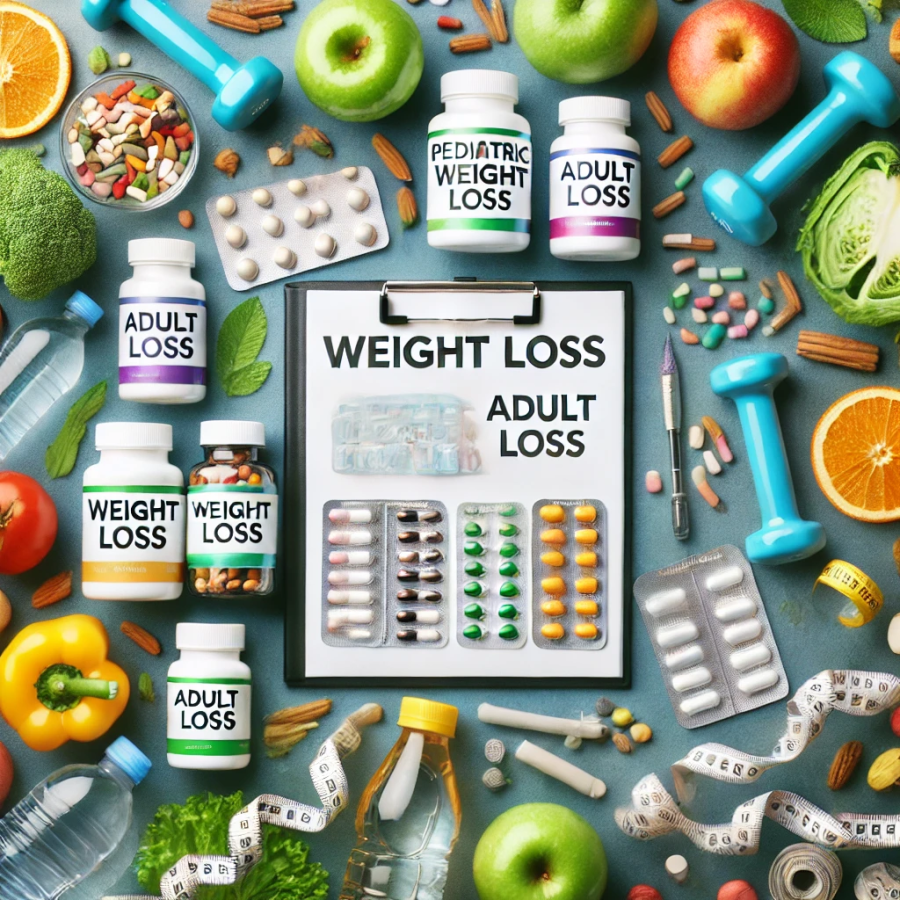
Weight Loss Medications for Kids and Adults Explained

As a physician, I know that treating obesity can be tough. Many families put in real effort with diet and exercise and still don’t see enough progress. When that happens, medication becomes worth discussing. Not for everyone. For the right patient, though, it can make a real difference.

Every price below reflects March 2025, when this was first written, and drug pricing in this class moves constantly, list price, cash price, and whatever a given insurer decides to cover can all diverge sharply, so treat every figure below as a historical marker rather than a current quote.

For children ages 12 and older, there are a few choices. Orlistat, brand name Xenical, blocks fat absorption in the gut. Because it stays in the digestive tract, it doesn’t touch appetite or the brain. The catch is side effects. Eat too much fat on this drug and a kid can get oily stools, gas, frequent bowel movements. A low-fat diet helps. It can still be uncomfortable. The price ran about $50 to $200 a month. The FDA cleared it for ages 12 and up.

Liraglutide, brand name Saxenda, is another option. It mimics a gut hormone called GLP-1, helping with appetite control and slowing stomach emptying. It’s effective, and it also helps blood sugar control, which matters if a patient has insulin resistance. But it requires daily injections, and nausea is common. Vomiting and diarrhea can happen too. Monthly cost usually fell between $1,200 and $1,500 a month. The FDA approved it for kids starting at age 12.

Phentermine combined with topiramate, sold as Qsymia, is approved for adolescents 12 and up who meet obesity criteria. Phentermine reduces appetite. Topiramate curbs cravings. Together they can produce substantial weight loss, especially in patients who struggle with binge eating. Side effects include dry mouth, dizziness, insomnia, and mood changes, and blood pressure and heart rate need regular checks. Cost averaged $200 to $300 a month.

Semaglutide, brand name Wegovy, is another GLP-1 receptor agonist, injected once weekly instead of daily. Clinical studies show it produces impressive weight loss. Side effects mirror other GLP-1 drugs: nausea, vomiting, diarrhea, abdominal pain, constipation. Out-of-pocket cost usually ran $1,300 to $1,600 a month. The FDA approved it for adolescents age 12 and up.

Setmelanotide, or Imcivree, is different from everything above. It targets rare genetic conditions that cause obesity, POMC, PCSK1, or LEPR deficiencies, by restoring hormonal signals that regulate hunger. It’s not meant for most patients, only those with a specific genetic diagnosis. For those who qualify, it can work well. The price tag was steep, though: about $16,000 a month.

For adults, the options broaden, and the prices below are again what things cost in March 2025, not today. Phentermine has been used for decades. It works on the central nervous system to suppress appetite, usually prescribed short-term and paired with diet and exercise. It can be effective, but it may cause insomnia, dry mouth, and a faster heart rate, and it isn’t safe for people with heart disease. The cost was low, around $30 to $60 a month.

Bupropion combined with naltrexone, sold as Contrave, takes a different approach. Bupropion affects brain chemistry to help with appetite and mood. Naltrexone reduces cravings. Some patients feel more energetic on it. Side effects can include nausea, dizziness, and insomnia. Mood changes are possible, so follow-up matters. Cost averaged $200 to $300 a month.

Tirzepatide, marketed as Mounjaro, is one of the newest medications. It activates both GLP-1 and GIP receptors, improving satiety and insulin sensitivity. Given as a weekly injection, it has shown striking results for weight loss. Nausea and diarrhea are the most common side effects, as with other drugs in this class. Costs ran high, around $1,000 to $1,500 a month. At publication it was FDA-approved for type 2 diabetes, not obesity, though already used off-label for weight loss.

A few points cut across all of these. Insurance coverage is unpredictable: some insurers won’t cover these drugs at all, others demand proof that lifestyle efforts were tried first. Close monitoring is essential, because side effects vary. None of these drugs replace healthy habits. They work best stacked on top of diet, activity, and behavior change.

For patients and families, the choices can feel like a lot. Knowing what’s actually available, and what each option costs and asks of you, helps match the right treatment to the right person.

Scott Rennie, D.O.

Sources:

Board Certified in Obesity Medicine and Family Medicine

This blog is for educational purposes only and does not constitute individual medical advice. Always consult your own physician before making changes to your health, medications, or treatment plan.

Can You Do Intermittent Fasting on Ozempic or Wegovy?

Weight comes up in almost every visit I do. For some patients it is fifteen pounds standing between them and a better blood pressure number. For others it is obesity that has already done damage, and the conversation starts further back. The work can feel overwhelming from the inside. What’s changed is that the tools finally match the size of the problem. Medications like Ozempic, Wegovy, Mounjaro, and Zepbound, the GLP-1 receptor agonists, have shifted how this is approached, and paired with a structure like intermittent fasting they help people lose weight and keep it off.

What GLP-1 Agonists Do

These drugs mimic glucagon-like peptide-1, a hormone that regulates appetite and blood sugar. Given as medication, they slow gastric emptying and push stronger satiety signals to the brain, so fullness arrives earlier and stays longer. They also improve insulin sensitivity, which is why they earned their place in type 2 diabetes first.

The weight effect is substantial. Wegovy and Zepbound carry FDA approval specifically for weight loss. Ozempic and Mounjaro are approved for diabetes and produce strong weight results as well, which is the source of most of the confusion patients arrive with about which drug is which.

How They Work With Intermittent Fasting

Intermittent fasting improves insulin sensitivity, supports fat loss, and helps regulate hunger hormones. Staying with it is the hard part. Many patients tell me they can’t get past the hunger. GLP-1 medications change that equation by blunting appetite and cravings, which makes a fasting schedule something a person can actually hold.

A patient of mine started a 16:8 fasting plan (16 hours fasting, 8 hours eating) while on a GLP-1 medication. Before starting the medication, she felt shaky and irritable during fasting. After starting, she was surprised by how manageable it felt. She ate smaller meals, felt full, and didn’t struggle to maintain the fasting window.

Side Effects and Adjustments

Nausea leads the list, and it’s worst early. Diarrhea and reflux show up too. Most of it settles as the body adapts. Start low, titrate slowly, and resist the urge to chase the next dose because the scale stalled for two weeks. Patients who stay in contact through the titration get their dose adjusted before they quit over side effects, and the ones who go quiet are the ones who stop the drug entirely.

Barriers to Access

Getting these medications is its own project. Cost is the main wall. Insurance coverage for weight loss remains inconsistent in a way that’s hard to explain to a patient who has just been told the drug would help, and out-of-pocket pricing is punishing. Demand has outrun supply, so delays and shortages are part of the picture.

Then there are the compounded versions. Some pharmacies sell them well below brand pricing, and they’re not FDA-approved. Safety and potency can’t be guaranteed. I tell patients to stay away from them, and I don’t soften that advice when someone pushes back on price.

Putting It Into Context

These aren’t quick fixes. They are tools, and they work when they sit on top of durable changes: balanced eating, regular activity, attention to mental health. Intermittent fasting is one workable way to structure eating alongside them. The lifestyle piece doesn’t become optional because a medication is doing part of the lifting.

When patients pair the medication with habits they can sustain, results hold longer and vary less. The goal is a set of strategies that still works three years from now, not the fastest possible drop on the scale.

Scott Rennie, D.O.

Sources

U.S. Food and Drug Administration. FDA Approvals: Wegovy, Zepbound.

Wilding JPH, et al. Once-Weekly Semaglutide in Adults with Overweight or Obesity. N Engl J Med. 2021;384:989-1002.

Jastreboff AM, et al. Tirzepatide Once Weekly for the Treatment of Obesity. N Engl J Med. 2022;387:205-216.

American Diabetes Association. Pharmacologic Approaches to Glycemic Treatment: Standards of Medical Care in Diabetes, 2024. Diabetes Care. 2024;47(Suppl 1):S181-S202.

Board Certified in Obesity Medicine and Family Medicine

This blog is for educational purposes only and does not constitute individual medical advice. Always consult your own physician before making changes to your health, medications, or treatment plan.