

Childhood Obesity: How It’s Prevented and Treated

Childhood obesity is a chronic disease affecting roughly 14.7 million children and adolescents in the United States, and growth charts and BMI percentiles are the least interesting part of it. The American Academy of Pediatrics said as much in its 2023 Clinical Practice Guideline, which reframes obesity as a condition deserving the same urgency and structure we bring to any other chronic disease.

The guideline is built around 13 key action statements plus a set of consensus recommendations. The message running through all of them is that waiting doesn’t work. Early, structured intervention does.

The first shift is consistent screening. Pediatricians should measure height, weight, and BMI annually for every child between 2 and 18. Once BMI reaches the 85th percentile, the number stops being the point and the evaluation begins: dyslipidemia, prediabetes, fatty liver disease, hypertension, sleep apnea. That workup includes history, physical examination, and a careful look at social and environmental context.

For children over 10 with obesity, the guideline recommends a fuller lab evaluation. Fasting glucose or A1c, a lipid panel, liver enzymes, and where indicated a sleep study or a PCOS evaluation in adolescent girls. Depression screening belongs in that set too. Obesity travels with comorbidities, and treating one while ignoring the others misses most of the disease.

Once the diagnosis is made, treatment starts. Not next visit. The model is family-centered and non-stigmatizing, and motivational interviewing sits at the center of it because it lets clinicians surface ambivalence, name barriers, and set goals with families rather than at them.

The cornerstone is Intensive Health Behavior and Lifestyle Treatment. IHBLT is structured and sustained in a way brief counseling never is. The evidence supports at least 26 hours of face-to-face individual or group contact over 3 to 12 months, delivered by a multidisciplinary team of physicians, dietitians, behavioral health providers, and exercise professionals. That threshold is where outcomes start to move, and it applies to children as young as 6.

Nutrition counseling focuses on limiting calorie-dense, nutrient-poor food and increasing fruit, vegetables, and lean protein. Activity goals scale by age, with 60 minutes of moderate-to-vigorous movement daily as the benchmark for school-aged children. Behavioral strategies cover self-monitoring, goal setting, and problem solving. Parental involvement is central rather than optional, and programs that engage parents in the behavior change itself see better outcomes.

For families, this looks nothing like being told to eat better and move more. The intensity and the support structure are what shift the needle.

Not every family can reach a program like that. Geography, insurance, and local capacity all get in the way. The guideline acknowledges it and asks providers to deliver the most comprehensive care available while advocating for expanded community-based IHBLT.

Pharmacologic therapy is the next tier. Adolescents 12 and older may be offered FDA-approved weight-loss medication as an adjunct to health behavior and lifestyle treatment, according to each drug’s indications, risks, and benefits. Twelve is the floor. Medications are adjuncts to behavioral treatment rather than replacements for it.

Metabolic and bariatric surgery is addressed as well. For adolescents 13 and older with severe obesity, defined as BMI at or above 120% of the 95th percentile, the guideline supports referral to a comprehensive pediatric surgical center for evaluation.

The guideline also spends real attention on social determinants. Families dealing with poverty, food insecurity, systemic inequity, or nowhere safe to play are facing barriers that have nothing to do with individual willpower. Effective treatment has to acknowledge that and work on it where it can.

For practicing clinicians the roadmap is short: treat when obesity is identified, use motivational interviewing, refer to or provide IHBLT, manage comorbidities in parallel, and advocate for families against stigma and structural barriers.

Sandra Hassink, who helped lead the work, put the central point plainly when the guideline was released: “There is no evidence that ‘watchful waiting’ or delayed treatment is appropriate for children with obesity.”

Scott Rennie, D.O.

References:

1. Hampl SE, Hassink SG, Skinner AC, et al. Clinical Practice Guideline for the Evaluation and Treatment of Children and Adolescents With Obesity. Pediatrics. 2023;151(2):e2022060640. https://publications.aap.org/pediatrics/article/151/2/e2022060640/190443/

2. Executive Summary: Clinical Practice Guideline for the Evaluation and Treatment of Children and Adolescents With Obesity. Pediatrics. 2023;151(2):e2022060641. https://publications.aap.org/pediatrics/article/151/2/e2022060641/190440/

3. American Academy of Pediatrics. Clinical Practice Guideline for the Evaluation and Treatment of Pediatric Obesity: resources and implementation tools. https://www.aap.org/obesitycpg

Board Certified in Obesity Medicine and Family Medicine

This blog is for educational purposes only and does not constitute individual medical advice. Always consult your own physician before making changes to your health, medications, or treatment plan.
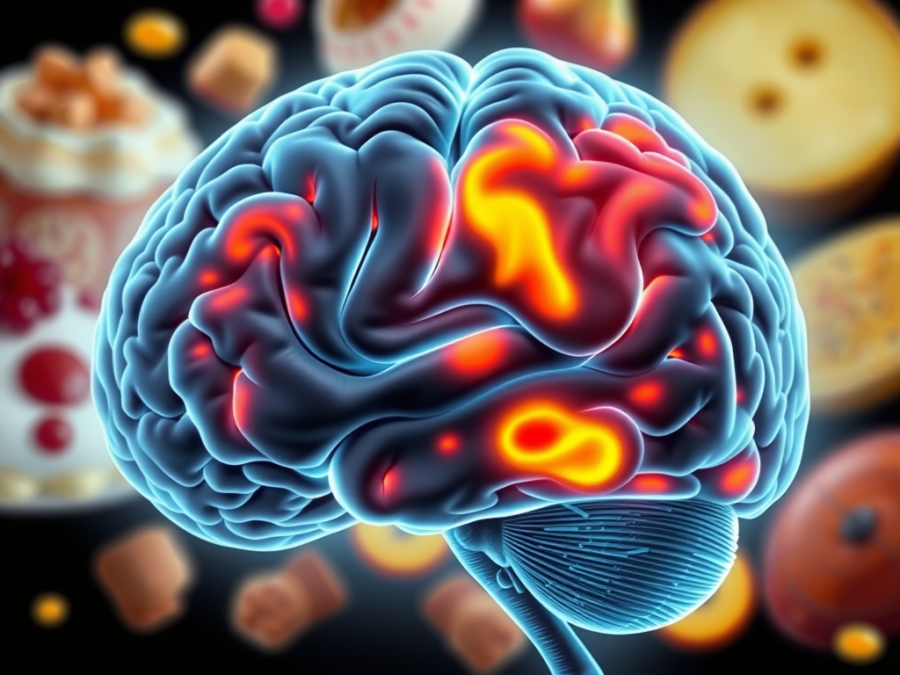

What Brain Scans Show About Appetite and Overeating

Patients say a version of the same thing constantly: “I know what I should eat, but I still crave the wrong things.” That gap between knowledge and behavior is what pushed researchers toward the brain. Functional MRI has shown that appetite runs on circuits that defend fat mass and respond to food cues, and that willpower is a small part of the story.

For years we leaned on BMI as the working definition of obesity. A BMI over 30 got the label, and the number explained nothing about why weight gain happened or why some patients struggle far more than others. Schwartz and colleagues reframed it in 2017 as “a disorder of energy homeostasis, characterized by the defense of an elevated body fat mass” (Schwartz et al., Endocr Rev, 2017). That definition earns its keep. It says the body is working to hold fat stores high, and that when weight comes off, biology answers with stronger hunger signaling, slower metabolism, and shifted hormones.

The gut-fat-brain conversation sits at the center. Leptin, ghrelin, insulin, GLP-1, and PYY all shape hunger and satiety, and fMRI shows how those signals land. High-calorie food cues light up the amygdala, striatum, medial orbitofrontal cortex, and ventral tegmental area, all reward and craving territory (Schur et al., Int J Obes, 2009; Melhorn et al., Am J Clin Nutr, 2018). After weight loss, that reward response doesn’t fade, which is a large part of why relapse is the rule. Interventions do move it. Leptin replacement, intranasal insulin, GLP-1 agonists, and bariatric surgery all reduce this activation (Holsen et al., Int J Obes, 2018; van Bloemendaal et al., Diabetes, 2014).

One finding deserves more attention than it gets: looking at pictures of calorie-dense food predicts what people actually eat. In studies where participants later chose from a buffet, those with higher reward activation to food images selected more high-fat, high-calorie items. The brain response translated into behavior at the table.

That has treatment implications. Patients with persistent reward-driven responses may get the most from GLP-1 agonists like semaglutide. For others, agents acting on central insulin or leptin signaling may fit better. Bupropion-naltrexone targets reward pathways directly and may suit patients where hedonic eating is the main driver. Obesity is a brain-based condition, and it needs brain-aware treatment.

Inflammation belongs in this picture too. Valdearcos and colleagues showed that rodents on a high-fat diet developed hypothalamic gliosis, an inflammatory response in the brain, before they gained significant weight (Valdearcos et al., Cell Metab, 2017). Human MRI findings line up. Individuals with obesity are more likely to show signs of hypothalamic gliosis (Schur et al., Obesity, 2015; Kreutzer et al., Diabetes, 2017). Inflammation may disrupt appetite regulation early, helping drive the defense of elevated fat mass.

For clinicians, this changes the posture. Blaming patients for “failing” when weight returns misreads the physiology. Their biology is built to resist fat loss. Medications acting on appetite centers belong in long-term care rather than short courses. Diet quality may matter for brain inflammation as well as calorie balance. And as with any other chronic disease, the expectation should be continuous management rather than a one-time fix.

Framing obesity as a chronic brain and inflammatory disease does something useful for the room. It takes stigma out of it. Patients are living with a condition in which the brain defends fat mass through powerful signals, and that framing replaces shame with something we can actually treat.

Scott Rennie, D.O.

References:

1. Schwartz MW, Seeley RJ, Zeltser LM, et al. Obesity Pathogenesis: An Endocrine Society Scientific Statement. Endocr Rev. 2017;38(4):267-296. https://pubmed.ncbi.nlm.nih.gov/28898979/

2. Schur EA, et al. Activation in brain energy regulation and reward centers by food cues varies with choice of visual stimulus. Int J Obes (Lond). 2009;33(6):653-661. https://pubmed.ncbi.nlm.nih.gov/19365394/

3. Melhorn SJ, et al. Am J Clin Nutr. 2018;107(4):574-582.

4. Holsen LM, et al. Int J Obes (Lond). 2018;42(4):785-793.

5. van Bloemendaal L, et al. GLP-1 receptor activation modulates appetite- and reward-related brain areas in humans. Diabetes. 2014;63(12):4186-4196. https://pubmed.ncbi.nlm.nih.gov/25071023/

6. Valdearcos M, et al. Microglial Inflammatory Signaling Orchestrates the Hypothalamic Immune Response to Dietary Excess and Mediates Obesity Susceptibility. Cell Metab. 2017;26(1):185-197.e3. https://pubmed.ncbi.nlm.nih.gov/28683286/

7. Kreutzer C, et al. Hypothalamic Inflammation in Human Obesity Is Mediated by Environmental and Genetic Factors. Diabetes. 2017;66(9):2407-2415. https://pubmed.ncbi.nlm.nih.gov/28576837/

8. Schur EA, et al. Radiologic evidence that hypothalamic gliosis is associated with obesity and insulin resistance in humans. Obesity (Silver Spring). 2015;23(11):2142-2148. https://pubmed.ncbi.nlm.nih.gov/26530930/

Board Certified in Obesity Medicine and Family Medicine

This blog is for educational purposes only and does not constitute individual medical advice. Always consult your own physician before making changes to your health, medications, or treatment plan.

Eating Disorders in People With Obesity: Combining Care

Working with patients who struggle with obesity, I see how often excess weight and disordered eating overlap. The two get treated as separate problems, sometimes as opposites. Plenty of people live at the intersection, and ignoring that connection makes treatment less effective and occasionally harmful.

Eating disorders are psychiatric conditions in which eating patterns or related behaviors disrupt health or functioning (APA, DSM-5-TR, 2022). They affect people across all ages, genders, and body sizes. The DSM-5-TR describes anorexia nervosa, bulimia nervosa, binge eating disorder, avoidant or restrictive food intake disorder, and others. Each has distinct features. All carry real medical and psychological risk.

Binge eating disorder matters most in this conversation. It is the most common eating disorder in the United States. Patients describe episodes of eating large amounts with a loss of control, followed by guilt, shame, or depression, without the vomiting or other compensatory behaviors seen in bulimia. Lifetime prevalence runs around 0.85% of U.S. adults, with 12-month prevalence near 0.44% (Udo & Grilo, Biol Psychiatry, 2018; Hudson et al., Arch Gen Psychiatry, 2007). Among patients seeking behavioral weight loss treatment, roughly one in ten meet criteria (Chao et al., Obesity, 2017). Among adults presenting for bariatric surgery, meta-analytic estimates using DSM-5 criteria put it near 14% (Hilbert et al., Int J Eat Disord, 2020).

Why does this matter? Untreated binge eating disorder makes weight loss programs harder to sustain. Patients drop out more often, regain faster, and carry higher rates of depression, anxiety, and substance use. The metabolic toll shows up as more diabetes and hypertension. Identifying it early lets us adapt care, often by starting with cognitive behavioral therapy or another evidence-based treatment before any weight loss effort.

Eating disorders leave physical findings, and a fair number of them are visible on a video call. Dry skin, thinning hair, and the fine body hair of anorexia are all things a patient can show on camera. Parotid enlargement in bulimia is visible. Dental enamel erosion isn’t, and neither are the electrolyte abnormalities that matter most, which is where labs and a low threshold for in-person referral come in. Severe cases can develop life-threatening arrhythmias. Binge eating disorder is more often associated with metabolic changes, elevated liver enzymes and worsening insulin resistance. Psychiatric comorbidity is frequent across the whole spectrum, including depression, anxiety, PTSD, and ADHD (Hilbert et al., Psychol Med, 2014).

It is a mistake to think only thin patients have eating disorders. Many patients with obesity have restrictive patterns, obsessive food thoughts, or emotional eating cycles. I have seen patients try extreme diets, binge during periods of stress, then spiral into weight cycling. Others present with nutrient deficiencies despite high calorie intake. Body size rules an eating disorder neither in nor out.

Screening is where this gets caught. The SCOFF questionnaire and the Eating Disorder Screen for Primary Care are short and practical. Even plain questions about body image, eating patterns, or feeling out of control with food will surface problems. When the psychiatric history includes depression, trauma, or substance use, suspicion should go up.

Treatment requires integration. For binge eating disorder, first-line options include cognitive behavioral therapy, interpersonal therapy, and dialectical behavior therapy (Brownley et al., Ann Intern Med, 2016; Grilo et al., Curr Obes Rep, 2023). Lisdexamfetamine, SSRIs, and topiramate help some patients. These approaches reduce binge episodes and rarely produce significant weight loss, which is worth saying to patients directly so nobody is disappointed by a treatment that is working. Obesity care gets layered in once eating behaviors stabilize. Dietitians, primary care, psychiatry, and behavioral health need to be working the same case. Heavy emphasis on BMI or food rules can backfire by reinforcing disordered thinking.

Sequencing depends on the condition. In anorexia, the priority is weight restoration and psychiatric treatment, never weight reduction. For bulimia, obesity treatment waits until binge-purge behaviors are controlled. In binge eating disorder, obesity treatment can follow once episodes are reduced and things are stable. For ARFID, individual assessment guides the approach. In every case the eating disorder comes first while symptoms are active. Starting weight loss treatment too early worsens the disorder, damages trust, and blocks recovery (Mehler et al., J Eat Disord, 2011).

Recognizing that obesity and eating disorders coexist changes how we practice. It moves the focus from weight to whole-person health. Patients need care addressing both the physical and psychological sides, which means helping them repair their relationship with food and body while long-term medical outcomes improve.

Scott Rennie, D.O.

References:

1. American Psychiatric Association. Diagnostic and Statistical Manual of Mental Disorders, Fifth Edition, Text Revision (DSM-5-TR). 2022.

2. Udo T, Grilo CM. Prevalence and Correlates of DSM-5-Defined Eating Disorders in a Nationally Representative Sample of U.S. Adults. Biol Psychiatry. 2018;84(5):345-354. https://pubmed.ncbi.nlm.nih.gov/29859631/

3. Hudson JI, et al. The prevalence and correlates of eating disorders in the National Comorbidity Survey Replication. Arch Gen Psychiatry. 2007;61(3):348-358. https://pubmed.ncbi.nlm.nih.gov/16815322/

4. Chao AM, et al. Obesity (Silver Spring). 2017;25(4):713-720.

5. Hilbert A, et al. Meta-analysis on the long-term effectiveness of psychological and medical treatments for binge-eating disorder. Int J Eat Disord. 2020;53(9):1353-1376. https://pubmed.ncbi.nlm.nih.gov/32583527/

6. Hilbert A, et al. Psychol Med. 2014;44(15):3239-3250.

7. Brownley KA, et al. Binge-Eating Disorder in Adults: A Systematic Review and Meta-analysis. Ann Intern Med. 2016;165(6):409-420. https://pubmed.ncbi.nlm.nih.gov/27367316/

8. Grilo CM, et al. Curr Obes Rep. 2023.

9. Mehler PS, et al. J Eat Disord. 2011.

Board Certified in Obesity Medicine and Family Medicine

This blog is for educational purposes only and does not constitute individual medical advice. Always consult your own physician before making changes to your health, medications, or treatment plan.