

Childhood Obesity: How It’s Prevented and Treated

Childhood obesity is a chronic disease affecting roughly 14.7 million children and adolescents in the United States, and growth charts and BMI percentiles are the least interesting part of it. The American Academy of Pediatrics said as much in its 2023 Clinical Practice Guideline, which reframes obesity as a condition deserving the same urgency and structure we bring to any other chronic disease.

The guideline is built around 13 key action statements plus a set of consensus recommendations. The message running through all of them is that waiting doesn’t work. Early, structured intervention does.

The first shift is consistent screening. Pediatricians should measure height, weight, and BMI annually for every child between 2 and 18. Once BMI reaches the 85th percentile, the number stops being the point and the evaluation begins: dyslipidemia, prediabetes, fatty liver disease, hypertension, sleep apnea. That workup includes history, physical examination, and a careful look at social and environmental context.

For children over 10 with obesity, the guideline recommends a fuller lab evaluation. Fasting glucose or A1c, a lipid panel, liver enzymes, and where indicated a sleep study or a PCOS evaluation in adolescent girls. Depression screening belongs in that set too. Obesity travels with comorbidities, and treating one while ignoring the others misses most of the disease.

Once the diagnosis is made, treatment starts. Not next visit. The model is family-centered and non-stigmatizing, and motivational interviewing sits at the center of it because it lets clinicians surface ambivalence, name barriers, and set goals with families rather than at them.

The cornerstone is Intensive Health Behavior and Lifestyle Treatment. IHBLT is structured and sustained in a way brief counseling never is. The evidence supports at least 26 hours of face-to-face individual or group contact over 3 to 12 months, delivered by a multidisciplinary team of physicians, dietitians, behavioral health providers, and exercise professionals. That threshold is where outcomes start to move, and it applies to children as young as 6.

Nutrition counseling focuses on limiting calorie-dense, nutrient-poor food and increasing fruit, vegetables, and lean protein. Activity goals scale by age, with 60 minutes of moderate-to-vigorous movement daily as the benchmark for school-aged children. Behavioral strategies cover self-monitoring, goal setting, and problem solving. Parental involvement is central rather than optional, and programs that engage parents in the behavior change itself see better outcomes.

For families, this looks nothing like being told to eat better and move more. The intensity and the support structure are what shift the needle.

Not every family can reach a program like that. Geography, insurance, and local capacity all get in the way. The guideline acknowledges it and asks providers to deliver the most comprehensive care available while advocating for expanded community-based IHBLT.

Pharmacologic therapy is the next tier. Adolescents 12 and older may be offered FDA-approved weight-loss medication as an adjunct to health behavior and lifestyle treatment, according to each drug’s indications, risks, and benefits. Twelve is the floor. Medications are adjuncts to behavioral treatment rather than replacements for it.

Metabolic and bariatric surgery is addressed as well. For adolescents 13 and older with severe obesity, defined as BMI at or above 120% of the 95th percentile, the guideline supports referral to a comprehensive pediatric surgical center for evaluation.

The guideline also spends real attention on social determinants. Families dealing with poverty, food insecurity, systemic inequity, or nowhere safe to play are facing barriers that have nothing to do with individual willpower. Effective treatment has to acknowledge that and work on it where it can.

For practicing clinicians the roadmap is short: treat when obesity is identified, use motivational interviewing, refer to or provide IHBLT, manage comorbidities in parallel, and advocate for families against stigma and structural barriers.

Sandra Hassink, who helped lead the work, put the central point plainly when the guideline was released: “There is no evidence that ‘watchful waiting’ or delayed treatment is appropriate for children with obesity.”

Scott Rennie, D.O.

References:

1. Hampl SE, Hassink SG, Skinner AC, et al. Clinical Practice Guideline for the Evaluation and Treatment of Children and Adolescents With Obesity. Pediatrics. 2023;151(2):e2022060640. https://publications.aap.org/pediatrics/article/151/2/e2022060640/190443/

2. Executive Summary: Clinical Practice Guideline for the Evaluation and Treatment of Children and Adolescents With Obesity. Pediatrics. 2023;151(2):e2022060641. https://publications.aap.org/pediatrics/article/151/2/e2022060641/190440/

3. American Academy of Pediatrics. Clinical Practice Guideline for the Evaluation and Treatment of Pediatric Obesity: resources and implementation tools. https://www.aap.org/obesitycpg

Board Certified in Obesity Medicine and Family Medicine

This blog is for educational purposes only and does not constitute individual medical advice. Always consult your own physician before making changes to your health, medications, or treatment plan.
What Causes Childhood Obesity? Risks and Next Steps

Physicians are seeing the long-term costs of childhood obesity accumulate in real time. Weight percentiles on a growth chart are the smallest part of the picture. Obesity in children is a chronic disease that touches physical development, emotional health, and metabolic trajectory decades out. The American Academy of Pediatrics has been clear that our role reaches past diagnosis into prevention, intervention, and advocacy, starting early and continuing through a child’s development.

For a long time obesity got reduced to a BMI number. BMI says nothing about the biology underneath. Obesity is a disorder of energy homeostasis. Fat cells expand, inflammation increases, hormones shift, and the central nervous system adapts in ways that make weight regulation genuinely hard. The Obesity Medicine Association describes it as a chronic, neurobehavioral disease, and that framing does useful work. It replaces the story about poor choices with a description of physiology meeting environment.

The seeds go in early. Risk factors show up during pregnancy and infancy: maternal obesity, gestational diabetes, formula feeding, rapid weight gain, early introduction of sugar-sweetened beverages. By preschool, adipose tissue in some children already shows inflammation and insulin resistance (Landgraf et al., Diabetes, 2015). Those changes lay groundwork for chronic disease later.

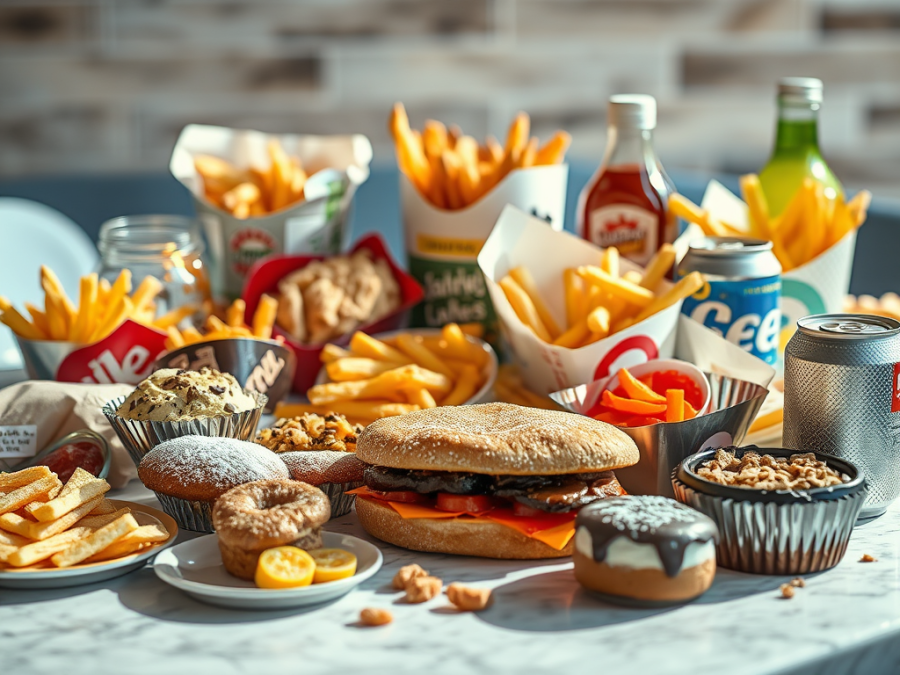
One of the highest-yield conversations is about what children drink. Families rarely realize how much fruit juice and sweetened beverages contribute. Even 100% fruit juice, which reads as the healthy option, behaves metabolically like soda in quantity. High in sugar, stripped of fiber. The AAP recommends no juice in the first year of life, up to 4 ounces daily for ages 1 to 3, 4 to 6 ounces for ages 4 to 6, and no more than 8 ounces for ages 7 to 18. Water and whole fruit are the better answer.

Sugar-sweetened beverages are worse. Soda, sports drinks, flavored teas, and sweetened waters together make up the single largest source of added sugar in children’s diets. Regular consumption tracks with higher calorie intake, greater risk of type 2 diabetes, and higher odds of obesity. Plenty of families keep soda or juice on the table at meals because it is cheap, familiar, or framed as a treat. Shifting toward water, milk, or unsweetened alternatives is one of the few changes that is both simple and consequential.

Activity is the other side. Children under five should be active throughout the day through running, climbing, and unstructured play. From six through seventeen, the recommendation is at least an hour of moderate-to-vigorous activity daily, including aerobic exercise most days plus muscle- and bone-strengthening activity a few times a week. In practice it is harder than it reads. Parents cite safety, cost, and time. Family walks, bike rides, and dance breaks at home aren’t a substitute for a safe neighborhood, but they build habits that carry.

Sedentary behavior deserves its own attention, and this is where the guidance has moved. The old blanket rule of under two hours of screen time a day has been retired. Current AAP guidance emphasizes content quality, co-viewing, and a Family Media Plan built by the household, with roughly one hour a day of high-quality programming for ages 2 to 5 and no screens before 18 months apart from video chat. For older children the useful questions are what the screen is displacing and whether it has become the only way a child settles. Screen-free zones at meals and before bed remain a practical place for families to start.

Environment shapes outcome beyond individual behavior. Children in food-insecure households face higher obesity risk. Limited budgets push families toward calorie-dense, nutrient-poor food. Chronic stress and disrupted routine make it worse. That overlap is why nutrition counseling has to carry an awareness of social determinants alongside it.

Stigma is its own barrier. Children with obesity face bullying and bias from peers, teachers, and health professionals. Weight stigma increases anxiety, depression, and disordered eating, which worsens the condition rather than motivating change (Pont et al., Pediatrics, 2017). Our language matters here. People-first terms like “a child with obesity” rather than “an obese child” reduce shame and preserve trust.

There are real intervention points at every stage. During pregnancy, supporting healthy maternal weight gain and promoting breastfeeding. In early childhood, limiting sugary drinks, protecting sleep and play, establishing routine. In school-age children and adolescents, motivational interviewing and family-based behavioral programs. Even the EHR earns its keep here, prompting screening, flagging comorbidities, and supporting referrals.

Advocacy belongs in the list. Safe neighborhoods, access to nutritious food, and school meal programs shape children’s health at least as much as counseling does.

Childhood obesity is a systemic problem shaped by biology, environment, and society. Failed parenting doesn’t explain it. Our job is to treat compassionately, intervene early, and advocate for healthier environments, and supporting families rather than blaming them is what changes trajectories.

Scott Rennie, D.O.

References:

1. Landgraf K, et al. Evidence of early alterations in adipose tissue biology and function and its association with obesity-related inflammation and insulin resistance in children. Diabetes. 2015;64(4):1249-1261. https://pubmed.ncbi.nlm.nih.gov/25392242/

2. Pont SJ, et al. Stigma Experienced by Children and Adolescents With Obesity. Pediatrics. 2017;140(6):e20173034. https://pubmed.ncbi.nlm.nih.gov/29158228/

3. Heyman MB, Abrams SA; AAP Section on Gastroenterology, Hepatology, and Nutrition and Committee on Nutrition. Fruit Juice in Infants, Children, and Adolescents: Current Recommendations. Pediatrics. 2017;139(6):e20170967. https://pubmed.ncbi.nlm.nih.gov/28562300/

4. American Academy of Pediatrics. Family Media Plan and screen time guidance. https://www.healthychildren.org/English/fmp/Pages/MediaPlan.aspx

Board Certified in Obesity Medicine and Family Medicine

This blog is for educational purposes only and does not constitute individual medical advice. Always consult your own physician before making changes to your health, medications, or treatment plan.

What Brain Scans Show About Appetite and Overeating

Patients say a version of the same thing constantly: “I know what I should eat, but I still crave the wrong things.” That gap between knowledge and behavior is what pushed researchers toward the brain. Functional MRI has shown that appetite runs on circuits that defend fat mass and respond to food cues, and that willpower is a small part of the story.

For years we leaned on BMI as the working definition of obesity. A BMI over 30 got the label, and the number explained nothing about why weight gain happened or why some patients struggle far more than others. Schwartz and colleagues reframed it in 2017 as “a disorder of energy homeostasis, characterized by the defense of an elevated body fat mass” (Schwartz et al., Endocr Rev, 2017). That definition earns its keep. It says the body is working to hold fat stores high, and that when weight comes off, biology answers with stronger hunger signaling, slower metabolism, and shifted hormones.

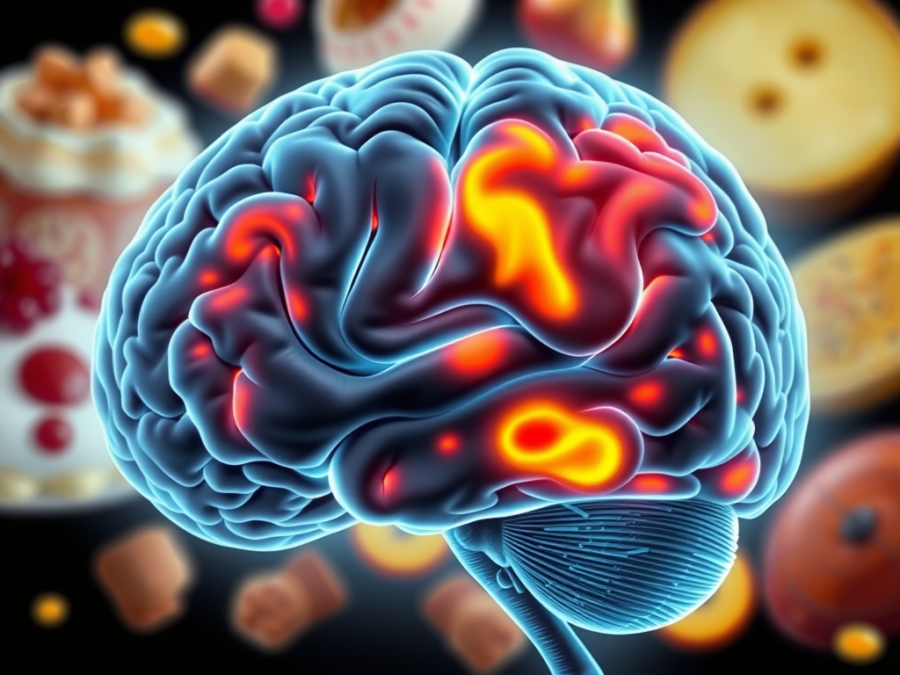
The gut-fat-brain conversation sits at the center. Leptin, ghrelin, insulin, GLP-1, and PYY all shape hunger and satiety, and fMRI shows how those signals land. High-calorie food cues light up the amygdala, striatum, medial orbitofrontal cortex, and ventral tegmental area, all reward and craving territory (Schur et al., Int J Obes, 2009; Melhorn et al., Am J Clin Nutr, 2018). After weight loss, that reward response doesn’t fade, which is a large part of why relapse is the rule. Interventions do move it. Leptin replacement, intranasal insulin, GLP-1 agonists, and bariatric surgery all reduce this activation (Holsen et al., Int J Obes, 2018; van Bloemendaal et al., Diabetes, 2014).

One finding deserves more attention than it gets: looking at pictures of calorie-dense food predicts what people actually eat. In studies where participants later chose from a buffet, those with higher reward activation to food images selected more high-fat, high-calorie items. The brain response translated into behavior at the table.

That has treatment implications. Patients with persistent reward-driven responses may get the most from GLP-1 agonists like semaglutide. For others, agents acting on central insulin or leptin signaling may fit better. Bupropion-naltrexone targets reward pathways directly and may suit patients where hedonic eating is the main driver. Obesity is a brain-based condition, and it needs brain-aware treatment.

Inflammation belongs in this picture too. Valdearcos and colleagues showed that rodents on a high-fat diet developed hypothalamic gliosis, an inflammatory response in the brain, before they gained significant weight (Valdearcos et al., Cell Metab, 2017). Human MRI findings line up. Individuals with obesity are more likely to show signs of hypothalamic gliosis (Schur et al., Obesity, 2015; Kreutzer et al., Diabetes, 2017). Inflammation may disrupt appetite regulation early, helping drive the defense of elevated fat mass.

For clinicians, this changes the posture. Blaming patients for “failing” when weight returns misreads the physiology. Their biology is built to resist fat loss. Medications acting on appetite centers belong in long-term care rather than short courses. Diet quality may matter for brain inflammation as well as calorie balance. And as with any other chronic disease, the expectation should be continuous management rather than a one-time fix.

Framing obesity as a chronic brain and inflammatory disease does something useful for the room. It takes stigma out of it. Patients are living with a condition in which the brain defends fat mass through powerful signals, and that framing replaces shame with something we can actually treat.

Scott Rennie, D.O.

References:

1. Schwartz MW, Seeley RJ, Zeltser LM, et al. Obesity Pathogenesis: An Endocrine Society Scientific Statement. Endocr Rev. 2017;38(4):267-296. https://pubmed.ncbi.nlm.nih.gov/28898979/

2. Schur EA, et al. Activation in brain energy regulation and reward centers by food cues varies with choice of visual stimulus. Int J Obes (Lond). 2009;33(6):653-661. https://pubmed.ncbi.nlm.nih.gov/19365394/

3. Melhorn SJ, et al. Am J Clin Nutr. 2018;107(4):574-582.

4. Holsen LM, et al. Int J Obes (Lond). 2018;42(4):785-793.

5. van Bloemendaal L, et al. GLP-1 receptor activation modulates appetite- and reward-related brain areas in humans. Diabetes. 2014;63(12):4186-4196. https://pubmed.ncbi.nlm.nih.gov/25071023/

6. Valdearcos M, et al. Microglial Inflammatory Signaling Orchestrates the Hypothalamic Immune Response to Dietary Excess and Mediates Obesity Susceptibility. Cell Metab. 2017;26(1):185-197.e3. https://pubmed.ncbi.nlm.nih.gov/28683286/

7. Kreutzer C, et al. Hypothalamic Inflammation in Human Obesity Is Mediated by Environmental and Genetic Factors. Diabetes. 2017;66(9):2407-2415. https://pubmed.ncbi.nlm.nih.gov/28576837/

8. Schur EA, et al. Radiologic evidence that hypothalamic gliosis is associated with obesity and insulin resistance in humans. Obesity (Silver Spring). 2015;23(11):2142-2148. https://pubmed.ncbi.nlm.nih.gov/26530930/

Board Certified in Obesity Medicine and Family Medicine

This blog is for educational purposes only and does not constitute individual medical advice. Always consult your own physician before making changes to your health, medications, or treatment plan.