 I frequently have patients come into the office and ask for STI (sexually transmitted infections) screening. This is often done when they start a new relationship, when they find out that a partner has been unfaithful or if they have unprotected sex with someone that they don’t know well. Patients often have no understanding of which sexually transmitted infections (formerly referred to as sexually transmitted diseases) they should be checked for and rely on their health care providers to order the proper tests and discuss the results with them. Patient’s often will refer to being “clean” or “clear” when referring to their screening results. When I ask them which infections they would like to be screened for, I usually hear something like “check me for everything.”
I think it’s important for patients to know which infections are most common, what the symptoms might be and know what to ask for when going to your doctor to be checked for sexually transmitted infections. It’s also important to understand that some infections can be cured (with antibiotics), some infections can be controlled but never eradicated completely, and some infections can be present and not have any symptoms for years before becoming apparent. Checking for “everything” might mean different things to different patients or medical providers, so my advice is to be very specific with what tests you request your medical provider order and keep track of the results so that when you think about “being clean” or “clear” of infection, you know exactly which infections you are clear of.
Types of infections:
1) Chlamydia: The most common sexually transmitted infection in the U.S. This infection can cause pain and inflammation of the urethra (opening where urine comes out), the testicular area, the cervix and anus. If untreated chlamydia can lead to infertility, chronic pelvic pain, prostatitis, and even severe infections of the fallopian tubes or tubal pregnancy. Most men and women who are infected with chlamydia do not have symptoms. Testing can be done with a urine sample from the patient or a swab.
2) Herpes simplex virus: It is estimated that about ¼ of the US population has herpes type 1 or 2 and many infected patients are unaware that they have the virus. Skin ulcers are a result of the infection and increase the risk spreading or acquiring HIV. Many patients with herpes are not screened because unless patient’s give a description of an ulcer in the genital area, a blood test for the antibodies to the viruses is usually not ordered. If an ulcer is present, a swab may be collected by touching an open ulceration and sent for viral culture. If you are concerned that you may have genital herpes, make sure you tell your medical provider and discuss testing with them because routine testing for herpes is usually not done unless there is some suspicion of infection.
3) Gonorrhea: The highest rates of infection are in sexually active 15-19yo women and 20-24yo men. Rates are 20x higher in African-Americans than in whites. Infection can lead to pain and inflammation of the urethra (opening where the urine comes out), sore throat and anal infection. If untreated it can lead to serious complications in women including pelvic inflammatory disease and infertility. Testing is frequently done from a urine sample or a swab. Because of high rates of reinfection, patients diagnosed with gonorrhea should be advised to retest in 3 months.
4) Trichomoniasis: Infection with trichomonas produces symptoms similar to a urinary tract infection including pain and inflammation of the urethra (where the urine comes out), and/or vaginal discharge. It can be present and men or women. Most men who are infected do not have symptoms. Testing is done by examination of a urine specimen. Testing for trichomonas is not generally done on routine screening for STDs unless the patient asks for it or has symptoms.
5) Syphilis: Testing for syphilis is done with a standard blood test normally. Symptoms of syphilis vary depending on the stage of infection. Initially there is the appearance of a single sore mark, but there may be multiple sores. The sore is usually firm, round and painless. Because the sore is painless, it can easily go unnoticed. It lasts 3-6 weeks and heals regardless of whether or not the person is treated. If the infected person does not get treatment, the infection will progress to the second stage. Skin rashes and/or sores in the mouth, vagina and anus (also called mucous membrane lesions) are typical of the second stage of symptoms. The rash usually does not cause itching and may appear as rough, red or reddish brown spots both on the palms of the hands and/or the bottoms of the feet. Sometimes rashes associated with secondary syphilis are so faint that they are not noticed. Other symptoms of secondary syphilis include fever, swollen lymph glands, sore throat, patchy hair loss, headaches, weight loss, muscle aches, and fatigue. The symptoms of secondary syphilis will go away with or without treatment. Without appropriate treatment, the infection will progress to the latent and possibly late stages of disease. The latent (hidden) stage can last for years. About 15% of people who have not been treated for syphilis develop the late stage of the disease. This stage can occur 10-30 years after the infection began and symptoms can include difficulty coordinating muscle movements, paralysis, numbness, gradual blindness, and dementia. Damage to the internal organs, including the brain, nerves, eyes, heart, liver, bone and joints can occur and result in death.
6) Hepatitis A, B and C: Hepatitis that is transmitted by sexual contact is caused one of several different viruses (A, B or C). All types of hepatitis virus infections can cause liver inflammation. Hepatitis B and C can cause severe infection and lead to liver failure and death. Hepatitis A is more commonly a cause of food-borne outbreaks. Because there are vaccinations available for hepatitis A and B, we are seeing more patients recently developing hepatitis C because we currently do not have a protective immunization. Hepatitis testing can be done through a simple blood test similar to HIV testing. The initial test for hepatitis is usually done by trying to detect the antibody to the virus. It can take your body several months after being infected with the hepatitis virus to develop the antibody and therefore there is a period of time called the “window period” when the test result may be negative even though the infection is present. A repeat test is usually offered 3-6 months after the initial negative test for confirmation that the patient is negative after “high risk sexual contact.”
7) Human Immunodeficiency virus (HIV): It is important to recognize that patients who have been infected with other sexually transmitted infections may also be infected with HIV. Recent recommendations from the Centers for Disease Control (CDC) recommend opt-out screening and annual screening for those at high risk for HIV infection. The test for HIV is an antibody test. Similar to hepatitis, it can take your body several months after being infected with HIV to develop the antibodies, and therefore there is a period of time called the “window period” when the test result may be negative even though infection is present. Repeat testing 3-6 months after a previously negative result after “high risk sexual contact” is recommended. HIV causes suppression of your natural immune system and can lead to a constellation of problems associated with immune suppression (infections, cancer) and AIDS related syndrome.
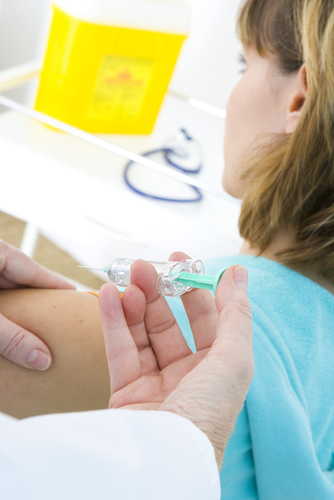
8) Human papillomavirus (HPV): This virus is the main cause of cervical cancer. There are routine screening guidelines that have been established for pap smears which are the main way of detecting this virus and treating it before the development of cervical cancer. All sexually active women should have a screening pap test by age 21. Women between the ages of 9 and 26 years old are recommended to receive the HPV vaccine to prevent cervical dysplasia and cervical cancer. Routine vaccination is recommended for female between 11 and 12 years, but the vaccination series may be started as early as 9 years and females aged 13-26 years can benefit as well. The quadrivalent HPV vaccine can also be used in males and females aged 9-26 years of age to prevent genital warts and anogenital cancers.
Recommendations for screening for sexually transmitted infections in pregnant women, men who have sex with men, women who have sex with women and HIV infected patients vary depending on the risk group.
State health department notification: Medical providers are required to notify the local and state public health departments in the case of chancroid, chlamydia, gonorrhea, acute hepatitis b, acute hepatitis c, HIV and syphilis.
Partner notification: In the event that a patient has been diagnosed with a sexually transmitted infection, partners should be notified, examined and treated. In some cases, the patient directly provides their sexual contact with medications and prescriptions to be filled (Partner Delivered Patient Medication (PDPM) although this is not legal in all states. Patients and their partners should not have sexual relations until seven days after a single dose treatment or upon completion of a seven day regimen in cases of bacterial infections. Discussion with sexual partners can be difficult but is very important for the partner’s safety and to prevent re-infection of the patient who tested positive initially.
2010 treatment/screening guidelines as outlined by the Centers for Disease Control in 2010:
- All patients being evaluated for STIs should be offered counseling and testing for HIV.
- Hepatitis B screening should be offered to men who have sex with men (MSM), injection drug users (IDU), persons attending an STI clinic or seeking STI treatment, and persons with history of multiple sex partners. Patients who are not immune should be offered vaccination.
- Hepatitis A screening should be offered to MSM and injection drug users. Those who are not immune should be offered vaccination.
- Asymptomatic women with risk factors for STIs should be screened for gonorrhea and chlamydia infection each year.
- Males and female between the ages of 9 and 26 years old should be offered the human papillomavirus vaccination (HPV vaccination).
- The following screening tests for active MSM are recommended on at least an annual basis: HIV, gonorrhea, chlamydia, and syphilis.
- Syphilis screening is recommended for commercial sex workers, persons who exchange sex for drugs and persons in correctional facilities.
- Pregnant women should be screened for gonorrhea, chlamydia, HIV, hepatitis B, and syphilis infections.
- HIV-infected patients should be screened annually for gonorrhea, chlamydia, syphilis, hepatitis B and hepatitis C. Vaccination against hepatitis A and B is recommended for nonimmune patients. HIV-infected patients who actively use injection drugs or intranasal cocaine, engage in unprotected sex, are men who have sex with men, or are undergoing dialysis should have ongoing screening for hepatitis C.
- Local and state public health departments should be kept informed of notifiable infections, which include chancroid, chlamydia, gonorrhea, acute hepatitis A and acute hepatitis B, acute hepatitis C, HIV and syphilis.
- Partners should be notified, examined, and treated for the STI identified in the index patient. Patients and their sex partners should abstain from sexual intercourse until therapy is completed.
References:
http://www.cdc.gov/std/treatment/2010/default/htm
Centers for Disease Control and Prevention. Sexually Transmitted Disease Surveillance, 2008. US Department of Health and Human Services, Atlanta, GA 2009
US Preventative Services Task Force. Screening for gonorrhea. Agency for Healthcare Research and Quality, Rockville, MD. Revised January 2006.
US Preventative Services Task Force. Screening for syphilis. Agency for Healthcare Research and Quality, Rockville, MD. Revised January 2006.
US Preventative Services Task Force. Screening for herpes. Agency for Healthcare Research and Quality, Rockville, MD. Revised January 2005.
I hope that you have found this information useful. Wishing you the best of health,
Scott Rennie, D.O.
Board Certified in Obesity Medicine and Family Medicine
This blog is for educational purposes only and does not constitute individual medical advice. Always consult your own physician before making changes to your health, medications, or treatment plan.

 Doctor Rennie's Blog