
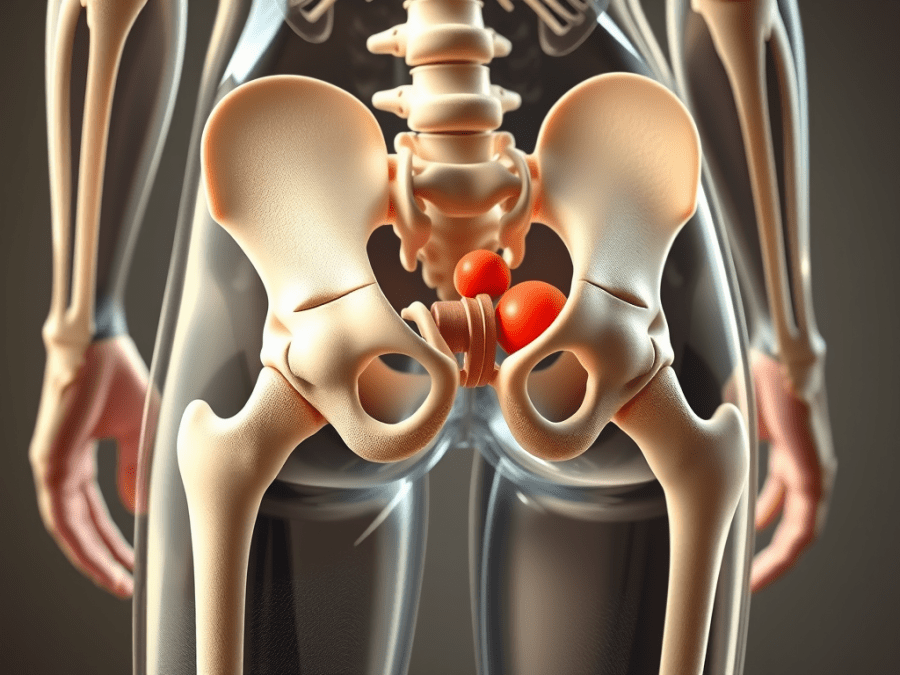
Lateral hip pain that lingers and gets in the way of ordinary activity comes up constantly in my practice. One of the usual culprits is greater trochanteric bursitis, or GTB. It frustrates patients, partly because it takes a while to get named correctly. It gets called arthritis. It gets called a back problem. Catching it early changes how the whole thing goes.
The greater trochanter is the bony bump on the outside of the hip, the one you can find with your fingers. Bursae sit around it, small fluid-filled sacs that keep bone, muscle, and tendon from grinding against each other. Inflame one and you get pain along the outer hip.
Symptoms
Patients describe an ache or a burn over the side of the hip. It can run down the outside of the thigh, though it rarely travels past the knee. Activity makes it worse: stairs, long walks, and lying on that side at night, which is the complaint that finally brings people in. The area is almost always tender to pressure. Some patients mention stiffness after sitting a while, or difficulty getting the hip moving again.
The symptom picture overlaps with lumbar radiculopathy and osteoarthritis, which is exactly why it’s so often mislabeled.
Diagnosis
History does most of the work. When did it start, what makes it worse, was there a fall, and did anything change recently in activity or training. That last question earns its keep more often than people expect.
Point tenderness directly over the greater trochanter is the classic finding. A positive Trendelenburg sign, which reflects gluteal weakness, points toward associated tendon involvement rather than isolated bursitis.
Imaging isn’t always needed. X-rays rule out arthritis. Ultrasound or MRI can show bursal inflammation or gluteal tendinopathy when the case isn’t behaving.
Treatment
Most patients get better with conservative care, and I want to be clear that conservative here doesn’t mean passive. Rest from whatever’s aggravating it, ice over the outer hip, and an NSAID like ibuprofen or naproxen for pain and swelling will settle the acute phase.
Physical therapy is the piece that actually changes the trajectory. Strengthening the gluteal muscles and improving hip stability relieves current symptoms and makes recurrence less likely. I’ve had patients who could barely sleep on their side due to the pain, and after a few weeks of targeted therapy, they were back to normal activities.
When conservative care runs out of road, a corticosteroid injection into the bursa can help, and ultrasound guidance improves accuracy enough to be worth asking for. Platelet-rich plasma and shockwave therapy are still being studied in resistant cases. Surgical bursectomy is rare and belongs to the severe cases that have failed everything else.
Prevention and Long-Term Outlook
Preventing recurrence means dealing with what caused it. Weight management reduces load through the hip. Footwear matters, particularly for anyone on their feet all day on hard floors. Regular hip strengthening and flexibility work keeps the area stable, and patients who avoid long stretches of unbroken sitting or standing tend to hold their gains.
Working Together
For colleagues: keep the differential wide on lateral hip pain, and get physical therapy involved early rather than after the third failed round of anti-inflammatories. A multidisciplinary approach is what produces durable outcomes here.
For patients: this hurts, it can drag on, and it’s genuinely treatable. Most people get their mobility back and return to normal routines.
Sources
- Segal NA, Felson DT, Torner JC, et al. Greater trochanteric pain syndrome: epidemiology and associated factors. Arch Phys Med Rehabil. 2007;88(8):988-992.
- Strauss EJ, Nho SJ, Kelly BT. Greater trochanteric pain syndrome. Sports Med Arthrosc Rev. 2010;18(2):113-119.
- Bird PA, Oakley SP, Shnier R, Kirkham BW. Prospective evaluation of magnetic resonance imaging and physical examination findings in patients with greater trochanteric pain syndrome. Arthritis Rheum. 2001;44(9):2138-2145.
Board Certified in Obesity Medicine and Family Medicine
This blog is for educational purposes only and does not constitute individual medical advice. Always consult your own physician before making changes to your health, medications, or treatment plan.

 Doctor Rennie's Blog