Personal Disaster Preparedness
presented by John Covington, W4CC
This discussion has been presented at club meetings, civic groups and even over the Tarheel Emergency Net. As I mentioned then, the purpose of this discussion is to encourage you to think about how you should prepare for a disaster. There is no “one-size-fits-all” formula for disaster preparedness. Consider some of the points mentioned below and decide what preparations are best for
you.
What is Disaster Preparedness?
Disaster Preparedness means taking steps necessary to make sure you and your family are safe and as comfortable as possible in the aftermath of a disaster.
Main Types of Disasters
It’s not possible to prepare for every conceivable disaster, so think carefully about what hazards are most likely to affect you. These will vary greatly depending on exactly where you live.
- Natural – in North Carolina, hurricanes and winter weather are the most disruptive, but can usually be predicted a few days in advance. Flooding due to severe thunderstorms and tornadoes are not very predictable.
- Technological (man-made accidental) – radiological, chemical releases; fires. Not predictable, but many hazards are identifiable in advance.
- Terrorist (man-made – deliberate) radiological, chemical, explosions, etc. Not predictable.
Your Personal Preparations – Stay Put or Evacuate?
You need to consider both possibilities – sometimes the decision will be made by circumstances beyond your control. Staying put requires more preparation, but you retain your privacy. Evacuation places most of the burden of preparation on someone else. Evacuating to someone’s home is nice, but not always possible. If you evacuate to a disaster shelter, you will be dry, well-fed and have no privacy.
For disasters not requiring immediate evacuation, prepare for a 72-hour “stay put” scenario. 72 hours is long enough for the worst part of the disaster to pass, or for you to make a smart decision about what to do next if it hasn’t.
For disasters requiring immediate evacuation, have necessities (such as medicine) where you can get to them quickly. A
ready kit is a good thing to have so you can be as self-sufficient as possible until you get established somewhere else.
Don’t wait too long to make the decision to evacuate. Many flood deaths in this state have resulted from people waiting too long, then their evacuation route disappears.
Consider carefully the psychological impact of a disaster on your family. Some people can just handle survival situations better than others. Even if your home is intact, evacuation may end up being the best thing to do.
Family Communications Plan
You and your family should plan how you will contact each other if you are not together when disaster strikes. Don’t rely exclusively on cellular telephones since they usually work intermittently following a disaster.
Your plan should include designating an emergency contact person who lives out of town. Sometimes a long-distance call is actually easier to make than a local call during a disaster. Someone out of town may be more easily able to communicate among separated family members.
Make sure each member of your family has the number of this emergency contact
in writing.
Staying Put
Ask yourself if you can survive 72 hours in your home without utilities (electricity, gas, water, phone)? You will most likely lose electricity and telephone service during a disaster. Natural gas and city water usually continue to be available (but not well water).
- Be prepared for both summer and winter weather since the survival conditions are very different.
- Always store several gallons of drinking water. You need drinking water more than anything else except air! You can use dirty water to flush your toilets, but drinking water must be clean.
- It is easy to test your preparedness for staying put (although your family may not think so). Turn the main circuit breaker off for a weekend and see how you do. If you can go the whole weekend without turning it back on, you are well prepared.
- Some people use generators to provide electricity. If you do, make sure you know how to connect your generator so it is not connected to the electrical grid!
- Natural gas or propane is usually available even after a disaster. Find out if you can use your gas appliances without any electricity. Gas stoves, water heaters and logs can probably be used without power, but ovens and furnaces usually can not.
- Neither landline nor cellular phones will work dependably after disasters. For landlines, have at least one phone available that does not require separate electricity to use. For cellular, have a power cord that allows you to use or charge the phone from your car battery.
- Have sufficient batteries on hand to power essential equipment, including flashlights and AM/FM/WX radios. The radios will be your source of news about the disaster, as well as entertainment.
- Have sufficient light sources (flashlights, candles, cyalume sticks). Be careful with any source of ignition, such as candles.
Evacuation
If you must leave your home, make sure you have thought about what you need to take with you. For example, medicine will probably be hard to obtain after a disaster.
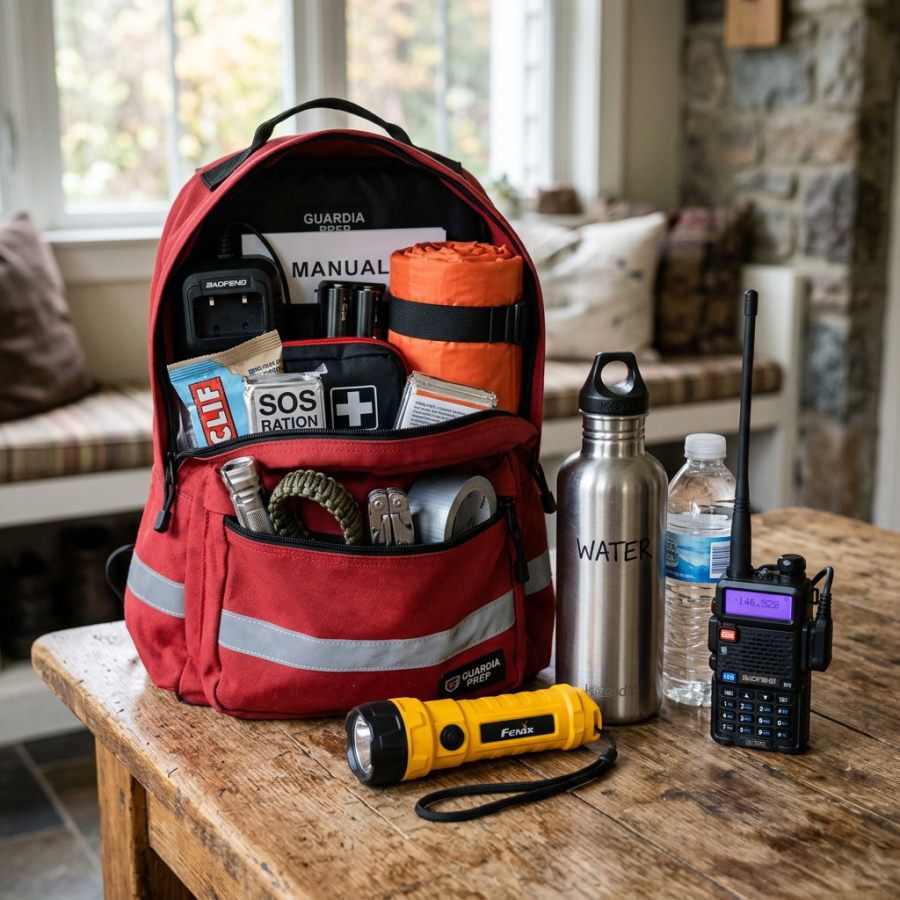
It’s best if you can take all essentials with you so you can be as self-sufficient as possible until you get established somewhere else. Depending on the type of disaster, evacuation might be a slow process, and stopping along the way for supplies won’t be possible. A 72-hour ready kit is the best way to make sure you have what you need, and is useful even if you stay put. You can make your own or purchase them already made (from suppliers such as
www.nitro-pak.com). Ready-made kits are generic and will probably have a couple of items you don’t need and will be missing an item or two you do need.
Some other things you must consider about evacuating:
- Have plenty of fuel in all of your vehicles — your preferred vehicle might end up being unavailable.
- Have cash on hand. Credit cards and ATMs will not be useful while power is out.
- Have a map of the area. Familiar routes can be blocked by floods and storm damage, so you may end up taking unfamiliar roads.
- Find out — in advance — where disaster shelters in your community are established, and mark them on the map.
- Having a plan for getting your family back together in case you are not able to evacuate together.
- Establish a family communications plan. Designate someone outside the disaster area you will contact.
Items for a Basic 72-Hour Kit
This list is suggested by
www.ready.gov and includes basic items you should have on hand for a disaster. Keep these items in a container that you can take with you if you need to evacuate, or locate them easily if you are staying put. This is not a “one size fits all” list, you should modify it to suit your circumstances. For example, you might want to add insect repellent and toothbrushes for personal comfort.
- Water, one gallon of water per person per day, for drinking and sanitation
- Food, at least a three-day supply of non-perishable food
- Battery-powered radio and extra batteries
- Flashlight and extra batteries
- First Aid kit
- Whistle to signal for help
- Dust mask or cotton t-shirt, to help filter the air
- Moist towelettes for sanitation
- Wrench or pliers to turn off utilities
- Can opener for food (if kit contains canned food)
- Plastic sheeting and duct tape to shelter-in-place
- Unique family needs, such as daily prescription medications, infant formula or diapers, and important family documents
- Garbage bags and plastic ties for personal sanitation
Conclusion
If you aren’t motivated to spend any time on disaster preparedness, at the bare minimum, do the following:
- Talk to your family about this subject.
- Keep sufficient drinking water on hand.
- Write down important phone numbers.
- Keep your cars at least half full of fuel.
- Keep cash on hand.
Scott Rennie, D.O.
Board Certified in Obesity Medicine and Family Medicine
This blog is for educational purposes only and does not constitute individual medical advice. Always consult your own physician before making changes to your health, medications, or treatment plan.


 Doctor Rennie's Blog