
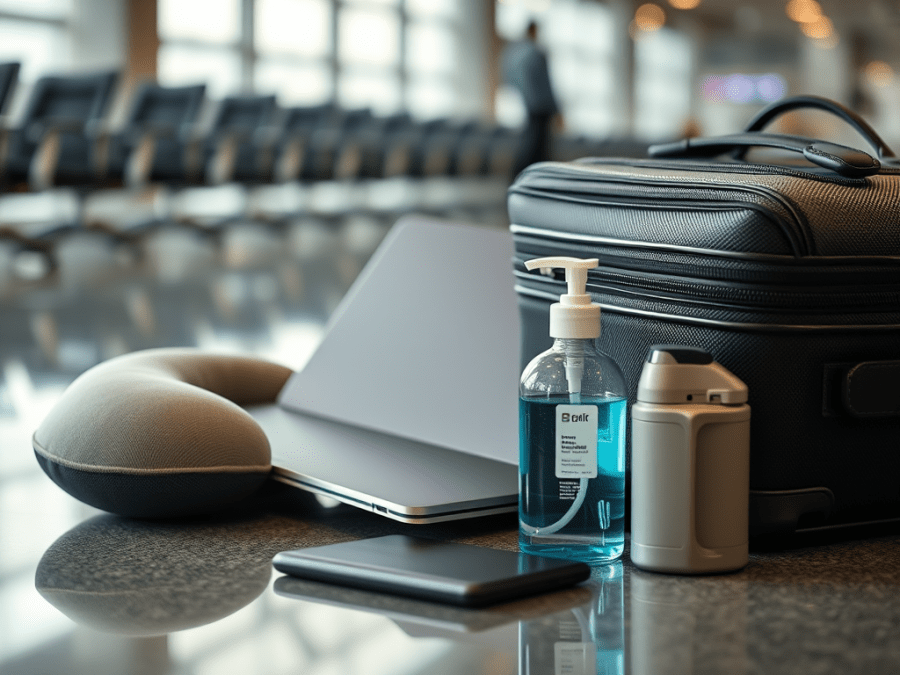
A large part of my patient panel spends more time in airports than at home. Many fly a few times a month, sometimes every week. I came across a series of travel tips from Dan Pink, who’s been posting short video advice for almost two years. He recently added his tenth tip, and I thought they were worth sharing because I plan to use them myself on an upcoming trip to Scandinavia.
He starts with germs. Airplanes are crowded, enclosed spaces where bacteria and viruses spread easily. Dan recommends carrying a small bottle of hand sanitizer and a tube of Bacitracin. Clean your hands, then put a little Bacitracin on your fingertip and coat the inside of each nostril. It’s a small step that can lower the odds of picking up something during the flight.
Noise is another issue. Instead of spending money on bulky noise-canceling headphones, Dan suggests soft disposable earplugs. They’re cheaper, lighter to carry, and you can wear them through takeoff and landing without worrying about electronics. They also make it easier to fall asleep since you don’t have large headphones pressing against your head.
Food choices can make or break a trip. Dan offers four simple rules he follows at airports. First, eat where the pilots and flight crews are eating. They’ve usually figured out the best options. Second, go for protein instead of carbs since it lasts longer. Third, stick with bottled water instead of soda, which can upset digestion. And if you’re completely unsure, the fallback is a chicken quesadilla, which tends to be a safe bet.
Family travel gets its own acronym: HAHU. Hustle, anticipate, and heads up. It’s a reminder that moving quickly, planning ahead, and staying alert can make group travel smoother.
One thing few people think about is the tray table. It’s one of the dirtiest surfaces on a plane since it rarely gets cleaned. Dan carries antibacterial wipes and uses them before setting anything down. He warns that the wipe will probably look unpleasant after you use it, but that’s the point.
For people who work on the road, staying connected matters. At the time Dan was filming, he recommended wireless broadband USB modems. While mobile hotspots and international SIM cards are more common now, the idea is the same—find a way to simplify internet access so you’re not juggling multiple logins and fees. Convenience often outweighs cost.
Security lines are their own challenge. Dan noticed that certain lines tend to move faster. If you qualify for premier status, it’s worth trying that line. If not, ask the agent which line seems to be moving quickest. Solo male business travelers usually move quickly because they carry fewer items and treat the line like a race. On the other hand, lines with vacationing couples tend to slow things down.
Once you’ve checked in to your hotel, the temptation is to turn on the TV. Dan’s advice is not to. He says it’s too easy to waste an hour and a half. Instead, use the time to call a loved one, get some exercise, or read.
Jet lag is another big challenge for frequent flyers. Dan focuses on three things: time, food, and light. Reset your watch to the destination’s time zone as soon as you board and try to sleep according to that schedule. Eat less on the plane and save your main meal for when you arrive. And most importantly, align your sleep with local light. If it’s daytime, stay awake even if you’re tired. If it’s night, go to bed even if you’re not tired. For those who can’t fall asleep easily, Dan’s trick is simple—take one Benadryl and read The Economist.
Finally, he suggests buying a local newspaper when you arrive in another country. Carrying a paper makes you blend in a little more, which can reduce attention in big cities. Even if you can’t read the language, you can still learn from the pictures, and the paper makes good wrapping material for souvenirs.
These are straightforward tips, and I wouldn’t have thought of most of them myself. With upcoming travel, I plan to try them all.
This article is for information only and isn’t medical advice. If you have health concerns, please talk with your healthcare provider.
Scott Rennie, D.O.
Board Certified in Obesity Medicine and Family Medicine
This blog is for educational purposes only and does not constitute individual medical advice. Always consult your own physician before making changes to your health, medications, or treatment plan.
Sources:
-
Pink, Dan. “Dan Pink’s Travel Tips” [Video series, 2006–2008].
-
Centers for Disease Control and Prevention (CDC). “Traveling Safely with Chronic Conditions.” CDC, 2023.
-
Federal Aviation Administration (FAA). “Traveler Health and Safety Tips.” FAA, 2023.
 Doctor Rennie's Blog