
 I often get questions from patients asking how to treat their heartburn also called gastroesophageal reflux disease or GERD. It is sometimes confusing to diagnose and can also cause dangerous complications if not treated.
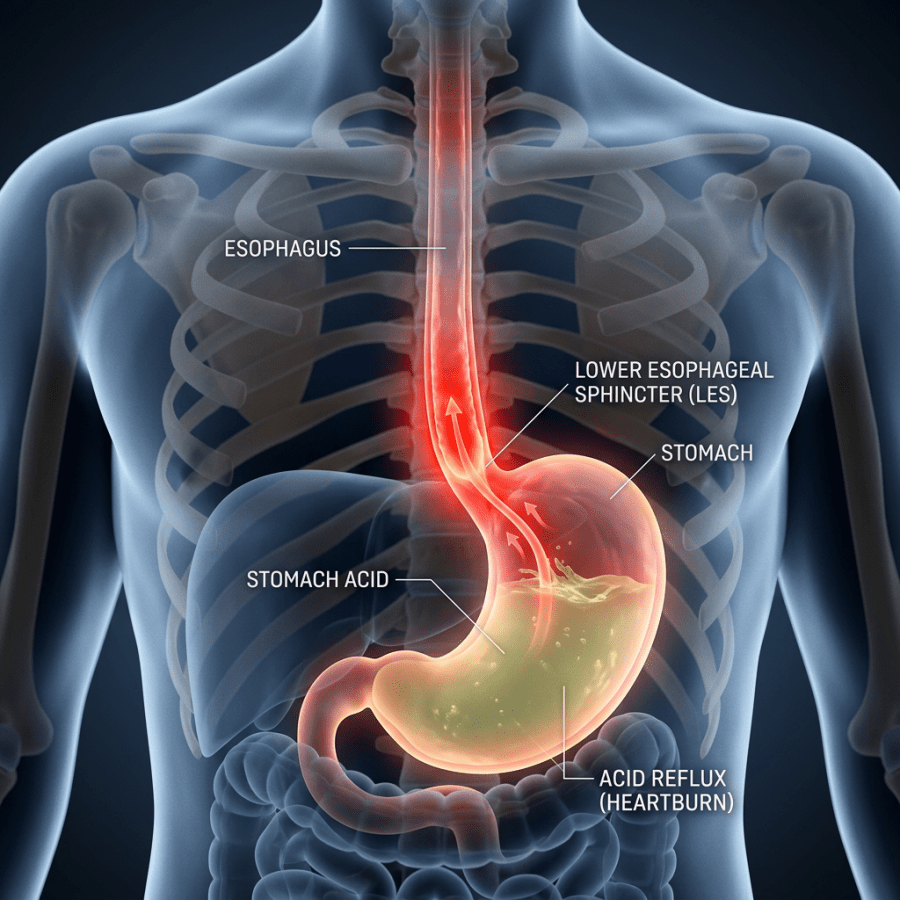
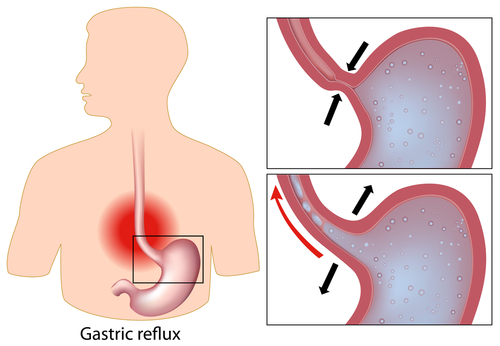
GERD is a common condition where acid contents from the stomach go backwards up the esophagus (food tube between your mouth and stomach). This can irritate and inflame the esophagus causing a burning sensation and other problems. There is a sphincter/valve at the top of the stomach that helps keep the stomach contents from going backwards, but if the spincter (called the lower esophageal sphincter or LES) doesn’t fully close, liquid contents of the stomach which contain acid can leak back into the esophagus.
Risk factors: Obesity, pregnancy, smoking, hiatal hernia (a problem where part of the stomach moves above the diaphragm), alcohol and medications. The medication list is extensive and includes:
1) Non-steroidal anti-inflammatory medications such as ibuprofen, aspirin or aleve
2) Beta-blockers which are used for high blood pressure
3) Bronchodilators such as prednisone used for asthma
4) Calcium channel blockers used for high blood pressure
5) Dopamine-active medications used for Parkinson’s disease
6) Sedative medications which are used for insomnia/anxiety
7) Tri-cyclic anti depressant medications – used for pain/IBS
Symptoms of GERD: Nausea after eating, hiccups, feeling that food is stuck behind breastbone, burning pain in the chest which is increased by bending, stooping, lying down or eating, usually worse at night and relieved by antacids.
How do I find out if I have GERD/Heartburn? There are many different tests that can be used to help diagnose esophageal reflux such as: a trial of a medication for heartburn such as a GI cocktail (a mixture of Mylanta, viscous lidocaine and donnatol), esophagogastroduodenoscopy(EGD) – which is when a doctor inserts a camera that looks down the esophagus when you are under anesthesia, barium swallow, esophageal pH monitoring, and esophageal manometry. Sometimes a stool blood test is used to diagnose bleeding that might be coming from the esophagus, stomach or intestines.
Helicobacter Pylori, also known as H. pylori is a bacterium that is commonly found in the stomach. About half of the world’s population has this bacteria and they have no symptoms and will never develop problems. However, H. pylori can cause stomach ulcers, and much less commonly, stomach cancer. We really don’t know why some people with H. pylori get these symptoms and others do not.
Stomach ulcers can cause symptoms such as pain or discomfort in the upper abdomen, bloating, feel full after eating only a small amount of food, lack of appetite, nausea and vomiting, black or tar-colored stools, and even low blood count and fatigue.
Treatment: Treatment is tailored toward the individual patient and might include some of the following options:
1) Treat H. pylori with antibiotics if it is present
2) Diet modification – avoid a core group of reflux-inducing foods (fatty foods, chocolate, peppermint, excessive alcohol) and spicy foods like citrus fruits, coffee, tomatoes/marinara sauce (found in spaghetti and pizza), garlic, onions, peppers, chili, carbonated beverages
3) Stop smoking or chewing tobacco
4) Reduce or stop medicines which can make GERD worse such as NSAIDs (aspirin, ibuprofen, Aleve, Excedrine etc. – see list above)
5) Refrain from laying in a supine (on your back) after meals and avoid meals right before bedtime
6) Lose weight – obesity is a risk factor for GERD, erosive esophagitis, and esophageal adenocarcinoma (cancer).
7) Promotion of salivation by chewing gun, or oral lozenges might be helpful for mild heartburn as saliva neutralizes refluxed acid.
8) Acid-suppressive medications:
I often get questions from patients asking how to treat their heartburn also called gastroesophageal reflux disease or GERD. It is sometimes confusing to diagnose and can also cause dangerous complications if not treated.
GERD is a common condition where acid contents from the stomach go backwards up the esophagus (food tube between your mouth and stomach). This can irritate and inflame the esophagus causing a burning sensation and other problems. There is a sphincter/valve at the top of the stomach that helps keep the stomach contents from going backwards, but if the spincter (called the lower esophageal sphincter or LES) doesn’t fully close, liquid contents of the stomach which contain acid can leak back into the esophagus.
Risk factors: Obesity, pregnancy, smoking, hiatal hernia (a problem where part of the stomach moves above the diaphragm), alcohol and medications. The medication list is extensive and includes:
1) Non-steroidal anti-inflammatory medications such as ibuprofen, aspirin or aleve
2) Beta-blockers which are used for high blood pressure
3) Bronchodilators such as prednisone used for asthma
4) Calcium channel blockers used for high blood pressure
5) Dopamine-active medications used for Parkinson’s disease
6) Sedative medications which are used for insomnia/anxiety
7) Tri-cyclic anti depressant medications – used for pain/IBS
Symptoms of GERD: Nausea after eating, hiccups, feeling that food is stuck behind breastbone, burning pain in the chest which is increased by bending, stooping, lying down or eating, usually worse at night and relieved by antacids.
How do I find out if I have GERD/Heartburn? There are many different tests that can be used to help diagnose esophageal reflux such as: a trial of a medication for heartburn such as a GI cocktail (a mixture of Mylanta, viscous lidocaine and donnatol), esophagogastroduodenoscopy(EGD) – which is when a doctor inserts a camera that looks down the esophagus when you are under anesthesia, barium swallow, esophageal pH monitoring, and esophageal manometry. Sometimes a stool blood test is used to diagnose bleeding that might be coming from the esophagus, stomach or intestines.
Helicobacter Pylori, also known as H. pylori is a bacterium that is commonly found in the stomach. About half of the world’s population has this bacteria and they have no symptoms and will never develop problems. However, H. pylori can cause stomach ulcers, and much less commonly, stomach cancer. We really don’t know why some people with H. pylori get these symptoms and others do not.
Stomach ulcers can cause symptoms such as pain or discomfort in the upper abdomen, bloating, feel full after eating only a small amount of food, lack of appetite, nausea and vomiting, black or tar-colored stools, and even low blood count and fatigue.
Treatment: Treatment is tailored toward the individual patient and might include some of the following options:
1) Treat H. pylori with antibiotics if it is present
2) Diet modification – avoid a core group of reflux-inducing foods (fatty foods, chocolate, peppermint, excessive alcohol) and spicy foods like citrus fruits, coffee, tomatoes/marinara sauce (found in spaghetti and pizza), garlic, onions, peppers, chili, carbonated beverages
3) Stop smoking or chewing tobacco
4) Reduce or stop medicines which can make GERD worse such as NSAIDs (aspirin, ibuprofen, Aleve, Excedrine etc. – see list above)
5) Refrain from laying in a supine (on your back) after meals and avoid meals right before bedtime
6) Lose weight – obesity is a risk factor for GERD, erosive esophagitis, and esophageal adenocarcinoma (cancer).
7) Promotion of salivation by chewing gun, or oral lozenges might be helpful for mild heartburn as saliva neutralizes refluxed acid.
8) Acid-suppressive medications:
- Antacids such as tums
- Prescription H2 (such as Zantac) blockers twice a day for mild GERD
- Prescription PPI (such as Prilosec) – for more severe GERD
Scott Rennie, D.O.
Board Certified in Obesity Medicine and Family Medicine
This blog is for educational purposes only and does not constitute individual medical advice. Always consult your own physician before making changes to your health, medications, or treatment plan.
 Doctor Rennie's Blog