
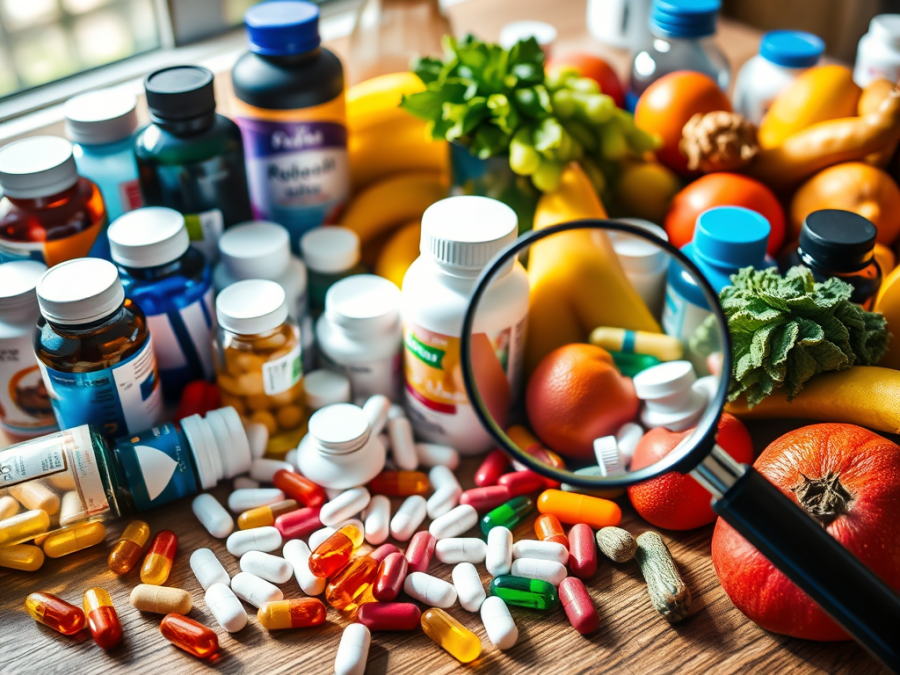
Do Weight Loss Supplements Work? What Research Shows

Patients ask me about supplements constantly. They have seen an ad promising fast results from something natural and want to know whether it is worth a try. The answer is duller than the advertising. The evidence behind most weight loss supplements is thin, and the safety problems are not.

Paul R. Thomas at Columbia University’s Institute of Human Nutrition has reviewed this literature. What he and others find is that these products mostly do not work. The studies that exist tend to be small, short, and funded by the companies selling the product. Where a benefit shows up, it is small. Garcinia cambogia came in at under a kilogram of difference against placebo. That is not what patients are hoping for when they buy it, and it is not remotely close to what lifestyle change or an FDA-approved medication will do (Thomas, 2022).

The marketing claims sort into a few categories. Appetite suppression is credited to hoodia, glucomannan, and saffron. Metabolic or energy boosting gets attributed to caffeine, green tea extract, and bitter orange. Fat absorption blocking is the pitch for chitosan, and reduced fat synthesis for CLA and garcinia cambogia. The proposed mechanisms sound reasonable. The measured effects are close to nothing.

Safety is the more serious issue. Supplements do not have to be proven safe or effective before they are sold, because they are regulated closer to food than to drugs. The FDA can generally act only after harm is documented, which leaves a wide window. Independent testing has repeatedly turned up quality failures, including heavy metal contamination and doses that do not match the label. Some products have been found to contain banned or genuinely dangerous drugs, among them sibutramine, pulled from the market over cardiovascular risk, and phenolphthalein, a carcinogen (Tucker et al., 2018).

The harm is documented rather than theoretical. Roughly 23,000 emergency department visits a year in the United States are attributed to supplements, and weight loss and energy products account for most of them. The usual presentations are palpitations, chest pain, and tachycardia, and the patients are disproportionately young adults in their twenties and early thirties (Geller et al., 2015).

When patients ask what to do, I tell them to be careful. If they are going to use something, single-ingredient products from established national brands are the safer end of the pool, ideally with third-party verification such as USP or NSF. Avoid proprietary blends that will not disclose what is in them. Be suspicious of anything promising to melt fat. If they have a reaction, stop the product, keep the bottle, and report it to Poison Control and the FDA’s MedWatch program.

Supplements are everywhere and the evidence does not support them. Nutrition, physical activity, behavioral support, and where appropriate FDA-approved medication remain both more effective and considerably safer than whatever is currently being advertised.

Scott Rennie, D.O.

References

Thomas PR. Weight Loss Supplements. Columbia University Institute of Human Nutrition, 2022.

Geller AI et al. Emergency Department Visits for Adverse Events Related to Dietary Supplements. NEJM. 2015;373:1531-1540.

Tucker J et al. Unapproved Pharmaceutical Ingredients Included in Dietary Supplements Associated With US Food and Drug Administration Warnings. JAMA Network Open. 2018;1(6):e183337.

Board Certified in Obesity Medicine and Family Medicine

This blog is for educational purposes only and does not constitute individual medical advice. Always consult your own physician before making changes to your health, medications, or treatment plan.


Weight Loss After 65: Treating Obesity in Older Adults

Obesity in older adults is a clinical problem about mobility, independence, and quality of life, and the number on the scale is the least interesting part of it. The problem is growing as the population ages. In the NHANES data, 38.9% of adults 60 and over meet criteria for obesity (Emmerich SD, NCHS 2024).

Between 2010 and 2050 the U.S. population over 65 will nearly double, from 40 million to more than 80 million (U.S. Census Bureau). Aging brings multimorbidity, frailty, and loss of independence with it, and excess adiposity adds a layer on top. Older adults with obesity are more likely to experience disability, reduced gait speed, and earlier institutionalization (Batsis JA, Eur J Intern Med 2014; Elkins JS, Obesity 2006). Body composition also shifts with age, with sarcopenia and visceral adiposity together making BMI a much less trustworthy measure than it looks (Batsis JA, Int J Obes 2016).

So the question is not really whether weight loss is safe in older adults. It is how it gets done. Intentional, structured weight loss helps when it is handled carefully. Randomized trials show that combining diet with exercise improves physical performance even when the weight loss itself is modest (Villareal DT, NEJM 2011; Batsis JA, J Am Geriatr Soc 2016). The danger sits with weight loss that is unintentional or too aggressive, which costs lean mass and bone density and raises fracture risk (Ensrud KE, J Clin Endocrinol Metab 2005). That is why the intervention has to protect muscle: resistance training, and protein intake of at least 1.0 to 1.2 g/kg/day, with leucine-rich sources where possible (Porter Starr K, J Gerontol Med Sci 2016).

Function is the goal, not the scale. Better mobility, more independence, better quality of life. Which means starting with an assessment of baseline function and cognition before recommending weight loss at all, and factoring in food security, transportation, and whether the patient is also caring for someone else. Physical therapists, dietitians, and care managers earn their place in this (Batsis JA, JAMDA 2011).

Medications are an option and they need care here. GLP-1 receptor agonists like semaglutide and liraglutide, and combinations like bupropion/naltrexone, are promising, but older adults have been poorly represented in the trials (Hollander P, Diabetes Care 2013; Grunvald E, Gastroenterology 2022). In practice hypotension, hypoglycemia, GI intolerance, and lean mass loss all carry more weight in a frail patient than they would in a younger one (Volpe S, Nutrients 2023; Batsis JA, Nat Rev Endocrinol 2018). I go slower on titration with these patients than the labeling suggests, and I ask about falls before I ask about weight.

What works is tailored and multidisciplinary. DASH or Mediterranean patterns are reasonable starting points. Activity should be gradual, supervised, and matched to ability, along the lines of the LIFE trial (Pahor M, JAMA 2015). Behavioral support delivered through community programs or telemedicine works in this population, which matters given how much harder it is for older patients to get to an office (Alberts SM, Gerontologist 2021; Batsis JA, BMC Geriatrics 2021). And sarcopenia, osteoporosis, and medication side effects all need watching throughout.

Treating obesity in older adults means preserving mobility, strength, and vitality rather than chasing an ideal weight. Done carefully, it buys people independence and dignity, which is what they came in for.

Scott Rennie, D.O.

Board Certified in Obesity Medicine and Family Medicine

This blog is for educational purposes only and does not constitute individual medical advice. Always consult your own physician before making changes to your health, medications, or treatment plan.

Doctor Supervised Weight Loss: What Works Long Term

Telling patients to eat less and move more doesn’t cut it. Obesity is a chronic disease, and progress requires structured, ongoing, individualized care. The hardest part clinically is making sure the weight that comes off is fat rather than muscle.

Losing muscle costs more than strength. It costs independence, recovery capacity, and eventually survival. Older adults and patients with low baseline activity are the most exposed. Poorly managed weight loss produces sarcopenia, the loss of muscle mass and function. Layer excess fat on top and you get sarcopenic obesity, where a patient looks heavy and is functionally weak and metabolically compromised at the same time.

The European Working Group on Sarcopenia in Older People sets out how to catch it early. It starts with loss of strength, measured by grip strength or a chair-stand test. DXA or BIA can confirm low muscle mass. Poor strength plus low mass plus reduced physical performance defines severe sarcopenia. These definitions give us a framework to act before decline becomes permanent (Cruz-Jentoft et al., Age Ageing, 2019).

Muscle mass predicts survival on its own. Appendicular Lean Mass Index, lean tissue in the arms and legs divided by height squared, is a reliable measure, and people in the top quartile carry substantially lower all-cause mortality than those in the lowest, even after adjusting for BMI and comorbidities (Srikanthan & Karlamangla, Am J Med, 2014). Put plainly, a patient with stronger arms and legs has better odds of living longer regardless of what the scale says.

Strength testing matters as much as mass. Low grip strength tracks with higher mortality from cardiovascular disease, cancer, and respiratory illness. Poor lower-body strength, showing up as slower gait speed or difficulty rising from a chair, tracks with frailty, hospitalization, and long-term disability.

Both measures are cheap and fast, and both are underused. Grip strength needs a dynamometer and a hand to put it in, which rules it out of any remote encounter. The 30-second sit-to-stand doesn’t. A hard chair, arms crossed over the chest, as many stands as the patient can complete in thirty seconds, counted by whoever is watching. It works over video as well as it works in a room, and it yields a number worth tracking across visits. One usable functional measure beats a chart full of weights.

Nutrition is the cornerstone of preserving muscle during weight loss. The baseline protein RDA of 0.8 g/kg/day is inadequate for many adults, particularly older patients and anyone in a calorie deficit. The evidence supports closer to 1.2 to 1.6 g/kg/day, and up to 2.0 g/kg/day in some medically supervised cases (Paddon-Jones et al., Am J Clin Nutr, 2015; Bauer et al., J Am Med Dir Assoc, 2013). Spacing intake across meals rather than loading it at dinner sustains muscle protein synthesis better. Whey and casein, soy, eggs, and blended plant sources all work.

Calculating a target in patients with obesity is genuinely awkward. Actual body weight overshoots. Ideal body weight undershoots. Adjusted body weight is the usual compromise, and reasonable clinicians disagree about which to use. For a 5’6″ patient, a target weight around 73 kg at 1.5 g/kg puts the daily goal near 110 grams, which is a number a patient can actually work with.

Exercise has to include both resistance and aerobic work. Resistance training protects and builds lean mass. Aerobic activity improves cardiovascular and metabolic health. A 2022 systematic review and meta-analysis found the combination conferred the greatest mortality risk reduction, and notably found that weight training alone wasn’t associated with lower mortality among people doing no aerobic exercise (Shailendra et al., Am J Prev Med, 2022). For a patient that translates to brisk walking or cycling most days plus two or three weekly strength sessions using bands, weights, or bodyweight.

Think of muscle like a retirement account. Build it and hold it early, so it is there when it is needed. A patient in their seventies who lands in the hospital with pneumonia can lose a large fraction of their reserve to a few days of immobility and poor intake. If the reserve was thin going in, the decline may be permanent, and it shows up later as falls, fractures, and lost independence. Investing ahead of time changes that trajectory.

Medication is a real adjunct, and it has to be paired with strategies that protect lean tissue. GLP-1 receptor agonists produce substantial weight loss, and a meaningful fraction of that loss is lean mass. Adequate protein and resistance training are the mitigation strategies with actual evidence behind them, and body composition deserves monitoring wherever it is available rather than weight alone.

As clinicians, we need to screen past BMI. Ask about physical activity. Get a functional measure. Consider dietary adequacy. Refer to dietitians, physical therapists, or trainers where it helps, and even a single session with a trainer improves safety and confidence with resistance work. Set goals patients can hold: one to two pounds a week of fat loss while protecting muscle.

Obesity treatment is chronic care. The point is helping patients hold strength, mobility, and independence while metabolic health improves, and preserving muscle sits at the center of that.

Scott Rennie, D.O.

References:

1. Cruz-Jentoft AJ, et al. Sarcopenia: revised European consensus on definition and diagnosis. Age Ageing. 2019;48(1):16-31. https://pubmed.ncbi.nlm.nih.gov/30312372/

2. Srikanthan P, Karlamangla AS. Muscle mass index as a predictor of longevity in older adults. Am J Med. 2014;127(6):547-553. https://pubmed.ncbi.nlm.nih.gov/24561114/

3. Paddon-Jones D, et al. Protein and healthy aging. Am J Clin Nutr. 2015;101(6):1339S-1345S. https://pubmed.ncbi.nlm.nih.gov/25926511/

4. Bauer J, et al. Evidence-based recommendations for optimal dietary protein intake in older people: a position paper from the PROT-AGE Study Group. J Am Med Dir Assoc. 2013;14(8):542-559. https://pubmed.ncbi.nlm.nih.gov/23867520/

5. Shailendra P, et al. Resistance Training and Mortality Risk: A Systematic Review and Meta-Analysis. Am J Prev Med. 2022;63(2):277-285. https://pubmed.ncbi.nlm.nih.gov/35599175/

Board Certified in Obesity Medicine and Family Medicine

This blog is for educational purposes only and does not constitute individual medical advice. Always consult your own physician before making changes to your health, medications, or treatment plan.