
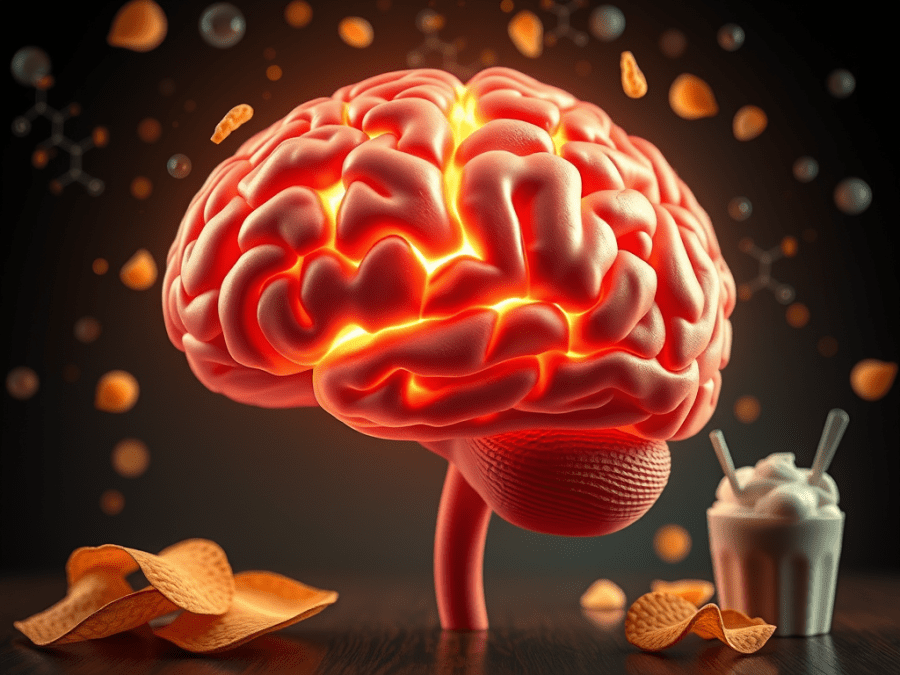
Does Chronic Stress Cause Weight Gain? A Doctor Explains

Obesity gets described as a balance of diet and exercise, and stress plays a far larger role in it than most people are told. I have seen patients who eat well and stay active and still lose ground the moment their stress rises. Research from Dr. Rajita Sinha at Yale explains a good deal of why. Chronic stress produces measurable biological change, well past anything you would call a mood.

Stress acts on the brain circuits governing emotion, motivation, and self-control. Those circuits overlap with the ones handling food reward and craving, particularly for calorie-dense processed food (Sinha et al., 2022). Cortisol climbs under chronic stress. Ghrelin rises with it while leptin falls. What you end up with is a body primed to eat more, in an environment where high-calorie food is always within reach.

Calling that emotional eating undersells it. In Sinha’s lab work, people exposed to stress through guided imagery ate more snack food afterward, and participants who were already overweight were the most affected. Their cravings and calorie intake tracked with measured increases in cortisol and ghrelin. The stress reached past how they felt and changed how their brains and bodies handled food.

The pandemic ran this experiment at national scale. Nearly half of U.S. adults gained weight over that period, with worse effects among people who already had higher BMIs (Khubchandani et al., 2022). Children were not spared; CDC data showed the rate of BMI increase doubling against pre-pandemic years (Lange et al., 2021). The predictors of gain were emotional distress, having children at home, and how long it had been since someone last weighed themselves.

Work outside the pandemic points the same way. In one community study, people with higher baseline cortisol and greater insulin resistance were more likely to gain weight over the following six months (Chao et al., 2017). Those markers did more than correlate with obesity. They predicted it.

That has pushed researchers past the eat-less-move-more framing toward treatments aimed at the stress itself. Mindfulness-based stress reduction lowers food cravings, perceived stress, and blood pressure in people with obesity (Tuit et al., 2011). There is even evidence in parenting: a small study of low-income mothers found mindful parenting reduced parental stress and was associated with healthier BMI outcomes in their children (Jastreboff et al., 2018).

Medical and surgical treatment still matter, and the evidence suggests they perform best alongside strategies that reduce stress reactivity and support executive function. Stress management belongs in the treatment plan rather than tacked onto the end of it.

I have seen patients who feel defeated because they are certain the weight they gained under stress was a personal failure. The science says otherwise. Stress reshapes brain pathways, moves hormone levels, and changes eating behavior in ways we can measure. None of that makes change impossible. It does mean compassion is not optional in this conversation, and that treating stress as part of the disease moves the discussion off blame and onto something we can actually act on.

Scott Rennie, D.O.

References

Sinha R. Chronic Stress and Obesity. Yale School of Medicine, Columbia Obesity ABOM Virtual Course, 2022.

Chao A et al. High Cortisol and Insulin Resistance Predict Weight Gain. Obesity. 2017.

Khubchandani J et al. Depression and Anxiety Predict Weight Gain During the COVID-19 Pandemic. Diabetes & Metabolic Syndrome. 2022.

Lange SJ et al. Body Mass Index Increase in Children During COVID-19. MMWR Morb Mortal Wkly Rep. 2021.

Tuit K et al. Mindfulness and Stress Reduction in Obesity. Appetite. 2011.

Jastreboff AM et al. Mindful Parenting and Childhood Obesity Prevention. Journal of Pediatrics. 2018.

Board Certified in Obesity Medicine and Family Medicine

This blog is for educational purposes only and does not constitute individual medical advice. Always consult your own physician before making changes to your health, medications, or treatment plan.

Nutrition and Vitamins After Weight Loss Surgery

Obesity is a chronic metabolic disease, and it disrupts nutrient handling long before surgery enters the conversation. Insulin resistance, chronic low-grade inflammation, altered gut hormones, and environmental exposures all change how nutrients are absorbed and used. Which is why so many patients arrive at a bariatric evaluation already deficient. Iron, vitamin D, B12, and folate are the gaps that show up most often on pre-op screening.

That baseline matters, because surgery does more than shrink the stomach or limit intake. It rewires physiology in ways that improve metabolism and open the door to new deficiencies at the same time.

Take Roux-en-Y gastric bypass. Skipping the proximal small intestine reduces absorption of iron, calcium, and several vitamins. Sleeve gastrectomy cuts ghrelin, the hunger hormone, and also changes how bile acids and gut microbiota handle nutrients. Across procedures, GLP-1 and PYY rise, boosting satiety and improving glucose metabolism, while also setting up the risk of postprandial hypoglycemia down the line. The same shifts that explain the weight loss explain why monitoring isn’t optional.

The nutritional risks are substantial. The 2019 multisociety perioperative guideline, cosponsored by AACE, The Obesity Society, ASMBS, the Obesity Medicine Association, and the American Society of Anesthesiologists, lays out 85 recommendations covering exactly this territory (Mechanick et al., 2019). Vitamin D and calcium deficiency approach universality without supplementation. Thiamine deficiency is easy to miss and clinically urgent when it appears. Iron, folate, zinc, and copper run low frequently, particularly after bypass and biliopancreatic diversion.

Protein deserves its own attention. Guidelines recommend 60 to 100 g/day, and real-world intake falls short of that repeatedly. A systematic review found protein intake below 60 g/day in the majority of studies examined, alongside significant lean mass loss (Ito et al., Obes Surg, 2017). That is the road to sarcopenia after weight loss, which undercuts the metabolic gains the surgery was supposed to deliver. Supplementation trials have tested doses in the 15 to 30 g/day range with mixed results, and a systematic review of the whole literature concluded the evidence for lean body mass preservation remains inconclusive (Nuijten et al., Nutr J, 2021). Worth saying plainly rather than overselling the shake.

For clinicians the plan is simple and demands discipline. Protein first. Multivitamins, calcium citrate with vitamin D, B12, and iron are required rather than suggested. Folate belongs in the plan, particularly for menstruating women and anyone with pre-op anemia. Transdermal patches are emerging for patients who can’t tolerate or adhere to oral supplements, though long-term data are thin.

Follow-up is more than labs. Education, repeated counseling, and multidisciplinary care are what make the difference. Dietitians, endocrinologists, and surgeons all have a role. Telehealth has opened real doors here, and models mixing remote contact with targeted in-person visits appear to improve long-term adherence. Prescriptions alone don’t carry patients through this. Structured support does.

One complication turning up more often is post-bariatric hypoglycemia, especially after Roux-en-Y. These patients present with symptomatic drops in blood sugar after meals, sometimes years out from surgery, driven by exaggerated GLP-1 and insulin secretion. Management usually comes down to lowering dietary glycemic load, cutting concentrated sugars, and spreading carbohydrate evenly through the day. Recognizing it early matters, because it gets misattributed constantly when nobody is thinking about it.

The larger point: bariatric surgery is a powerful intervention and it isn’t a cure. The operation is one part of it. Lifelong nutritional surveillance and metabolic management are the other. Prioritize protein, close the micronutrient gaps, keep follow-up consistent, and outcomes are both safer and more durable.

Scott Rennie, D.O.

References:

1. Mechanick JI, et al. Clinical Practice Guidelines for the Perioperative Nutrition, Metabolic, and Nonsurgical Support of Patients Undergoing Bariatric Procedures: 2019 Update. Endocr Pract. 2019;25(12):1346-1359. Cosponsored by AACE/ACE, TOS, ASMBS, OMA, and ASA. https://pubmed.ncbi.nlm.nih.gov/31682518/

2. Parrott J, et al. American Society for Metabolic and Bariatric Surgery Integrated Health Nutritional Guidelines for the Surgical Weight Loss Patient 2016 Update: Micronutrients. Surg Obes Relat Dis. 2017;13(5):727-741. https://pubmed.ncbi.nlm.nih.gov/28392254/

3. Ito MK, et al. Effect of Protein Intake on the Protein Status and Lean Mass of Post-Bariatric Surgery Patients: a Systematic Review. Obes Surg. 2017;27(2):502-512. https://pubmed.ncbi.nlm.nih.gov/27844254/

4. Nuijten MAH, et al. The effect of additional protein on lean body mass preservation in post-bariatric surgery patients: a systematic review. Nutr J. 2021;20(1):27. https://pubmed.ncbi.nlm.nih.gov/33750392/

Board Certified in Obesity Medicine and Family Medicine

This blog is for educational purposes only and does not constitute individual medical advice. Always consult your own physician before making changes to your health, medications, or treatment plan.