
 Photo credit: http://www.everester.org/BlogViewer.aspx?Id=DCD57FDDA64B2206
Much of the information presented here comes from Peter Hackett, MD who is an expert in Wilderness Medicine and especially mountain and high altitude medical illness and care.
Frostbite: A severe, localized cold-induced injury. Tissue destruction of frostbite is due to both immediate cold-induced cell death and more gradual development of localized inflammatory process and tissue ischemia. Following exposure to subfreezing temperatures, ice crystals form outside the tissue cells. If freezing is rapid, ice crystals may also form inside cells. The initial cellular damage and subsequent inflammatory process are made worse in the setting of thawing followed by refreezing of the area.
Areas most often affected: Ears, nose, cheeks, chin, fingers and toes
Causes: Anything that increases localized heat loss or decreases heat production. Exposure to wind, or conductive heat loss due to contact with metal or water
1) Inadequate insulation
2) Circulatory compromise
3) Dehydration
4) Moisture
Behavioral risk factors:
1) Mental illness
2) Alcohol and drugs
3) Fear, apathy, panic
Vascular Stage- Post thaw: Recovery of circulation and then thrombosis, ischemia, necrosis and even gangrene can result. Intracellular ice and tissue death occurs if there is refreezing.
Classification of frostbite injuries:
1) Mild or Superficial (no tissue loss)
2) Severe or Deep (with tissue loss)
3) Historical classification 1st to 4th degree had no clinical usefulness
Treatment (Pre-Hospital):
1) Supportive care for trauma, and dehydration (splint/pad affected area)
2) Avoid additional heat loss – remove wet clothing
3) If frozen and rescue is near keep frozen unless you can do a warm water thaw and there is no danger of refreezing.
4) Do not rub frost bitten areas as this can cause further tissue damage
5) If already thawed, avoid refreezing
6) Avoid using stoves or fires to rewarm frostbitten tissue
Treatment (Hospital):
1) Hydration
2) Wound care – early debridement or amputation of dead or dying areas while preserving viable tissue
3) Pharmacology – Dextran, NSAIDs, Nifedipine
4) Imaging studies (X-rays may show coincidental trauma related fractures or cold-induced soft tissue swelling), Technetium (Tc)-99 scintigraphy is commonly used to predict long-term tissue viability.
5) Sympathetic block or surgery if needed
Methods of Thawing:
1) Rapid rewarming in warm water (37-41 degrees C) is optimum
2) Gradual thawing – often unavoidable
3) Harmful methods – delayed thawing with ice or snow or excessive heat
Non-freezing Cold Injury: Frostnip, Chilblain/Pernio, Trenchfoot, Raynaud’s
Frostnip: Cold-induced, localized parasthesias that resolve with warming and there is no permanent tissue damage.
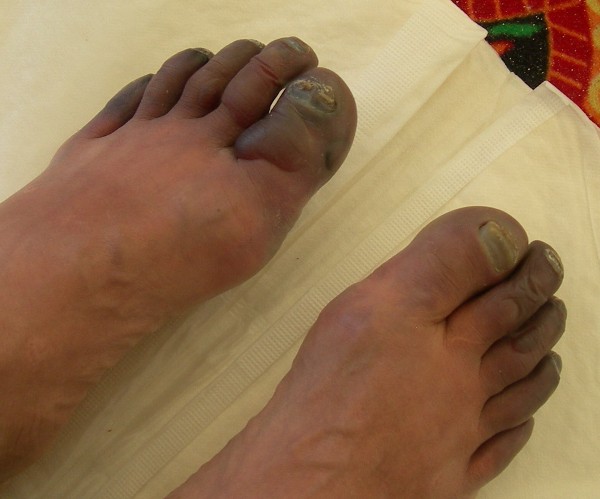
Pernio/chilblain: Localized inflammatory lesions that can result from acute or repetitive exposure to damp coldness above the freezing point. Lesions are swollen, often reddish or purple and may be painful or itchy. Pernio is most common in young women but both sexes and all age ranges may be affected.
Trenchfoot (immersion foot): Injury to the sympathetic nerves and small blood vessels of the feet. First described in 1914 during WWI during trench warfare. It results from prolonged exposure of the feet to a combination of dampness and cold. Tight-fitting boots exacerbate the condition. Feet, and sometimes hands are red, swollen and can be extremely painful and often are covered with bloody blisters. Tissue loss can occur.
Prevention:
1) Pay attention to weather forecasts (predicted high and low temperatures, forecasted precipitation and wind chill index)
2) Dress appropriately for the weather
3) Have an emergency plan when going into remote areas
4) Avoid alcohol consumption and smoking
5) Avoid exposure to metal surfaces
6) Maintain adequate calorie intake
7) There is inadequate evidence to support the use of applying emollients to exposed skin to prevent frostbite and it is not suggested
8) Carry emergency supplies in the backcountry or in remote areas in case your group becomes stranded
9) Use a buddy system for monitoring
10) Perform an equipment and clothing check
11) Keep hydrated
12) Carefully wash and dry feet
13) Do not sleep in wet socks
14) Avoid tight socks and shoes
15) Do not add socks for warmth, get a larger shoe
16) Rewarm gently, do not use a strong heat source
17) Do not rub the skin, use passive skin-to-skin contact
18) Elevate the feet above the level of the heart
19) Consider antiperspirant with aluminum hydroxide for a week before exposure
Raynaud’s Vasodilation Training: (Physician Sports Med, March 1990; vol18 no3)
1) Immerse hands in hot tap water
2) Stay indoors for 5 minutes, then in the cold for 10 minutes, then back indoors for 5 minutes (one cycle)
3) Do 3-6 cycles per day every other day
4) 50 cycles established effect, but variable
Tips to control moisture and cold:
1) Wear socks with moisture-wicking capabilities
2) Change socks and dry them frequently
3) Use foot powders that control fungus and absorb moisture
4) Wear shoes with adequate draining capabilities or make holes
5) Consider waterproof socks, either SealSkinz, Waterproof MVT, Seirus Neo-Sock or Stormsock
6) When resting or sleeping, take off wet shoes and socks to allow feet to breath and socks to dry against your body in your sleeping bag
If you are interested in learning more about wilderness medicine, a great resource for information is the wilderness medicine society: http://www.wms.org/
I hope that you have found this information useful. Wishing you the best of health,
Photo credit: http://www.everester.org/BlogViewer.aspx?Id=DCD57FDDA64B2206
Much of the information presented here comes from Peter Hackett, MD who is an expert in Wilderness Medicine and especially mountain and high altitude medical illness and care.
Frostbite: A severe, localized cold-induced injury. Tissue destruction of frostbite is due to both immediate cold-induced cell death and more gradual development of localized inflammatory process and tissue ischemia. Following exposure to subfreezing temperatures, ice crystals form outside the tissue cells. If freezing is rapid, ice crystals may also form inside cells. The initial cellular damage and subsequent inflammatory process are made worse in the setting of thawing followed by refreezing of the area.
Areas most often affected: Ears, nose, cheeks, chin, fingers and toes
Causes: Anything that increases localized heat loss or decreases heat production. Exposure to wind, or conductive heat loss due to contact with metal or water
1) Inadequate insulation
2) Circulatory compromise
3) Dehydration
4) Moisture
Behavioral risk factors:
1) Mental illness
2) Alcohol and drugs
3) Fear, apathy, panic
Vascular Stage- Post thaw: Recovery of circulation and then thrombosis, ischemia, necrosis and even gangrene can result. Intracellular ice and tissue death occurs if there is refreezing.
Classification of frostbite injuries:
1) Mild or Superficial (no tissue loss)
2) Severe or Deep (with tissue loss)
3) Historical classification 1st to 4th degree had no clinical usefulness
Treatment (Pre-Hospital):
1) Supportive care for trauma, and dehydration (splint/pad affected area)
2) Avoid additional heat loss – remove wet clothing
3) If frozen and rescue is near keep frozen unless you can do a warm water thaw and there is no danger of refreezing.
4) Do not rub frost bitten areas as this can cause further tissue damage
5) If already thawed, avoid refreezing
6) Avoid using stoves or fires to rewarm frostbitten tissue
Treatment (Hospital):
1) Hydration
2) Wound care – early debridement or amputation of dead or dying areas while preserving viable tissue
3) Pharmacology – Dextran, NSAIDs, Nifedipine
4) Imaging studies (X-rays may show coincidental trauma related fractures or cold-induced soft tissue swelling), Technetium (Tc)-99 scintigraphy is commonly used to predict long-term tissue viability.
5) Sympathetic block or surgery if needed
Methods of Thawing:
1) Rapid rewarming in warm water (37-41 degrees C) is optimum
2) Gradual thawing – often unavoidable
3) Harmful methods – delayed thawing with ice or snow or excessive heat
Non-freezing Cold Injury: Frostnip, Chilblain/Pernio, Trenchfoot, Raynaud’s
Frostnip: Cold-induced, localized parasthesias that resolve with warming and there is no permanent tissue damage.
Pernio/chilblain: Localized inflammatory lesions that can result from acute or repetitive exposure to damp coldness above the freezing point. Lesions are swollen, often reddish or purple and may be painful or itchy. Pernio is most common in young women but both sexes and all age ranges may be affected.
Trenchfoot (immersion foot): Injury to the sympathetic nerves and small blood vessels of the feet. First described in 1914 during WWI during trench warfare. It results from prolonged exposure of the feet to a combination of dampness and cold. Tight-fitting boots exacerbate the condition. Feet, and sometimes hands are red, swollen and can be extremely painful and often are covered with bloody blisters. Tissue loss can occur.
Prevention:
1) Pay attention to weather forecasts (predicted high and low temperatures, forecasted precipitation and wind chill index)
2) Dress appropriately for the weather
3) Have an emergency plan when going into remote areas
4) Avoid alcohol consumption and smoking
5) Avoid exposure to metal surfaces
6) Maintain adequate calorie intake
7) There is inadequate evidence to support the use of applying emollients to exposed skin to prevent frostbite and it is not suggested
8) Carry emergency supplies in the backcountry or in remote areas in case your group becomes stranded
9) Use a buddy system for monitoring
10) Perform an equipment and clothing check
11) Keep hydrated
12) Carefully wash and dry feet
13) Do not sleep in wet socks
14) Avoid tight socks and shoes
15) Do not add socks for warmth, get a larger shoe
16) Rewarm gently, do not use a strong heat source
17) Do not rub the skin, use passive skin-to-skin contact
18) Elevate the feet above the level of the heart
19) Consider antiperspirant with aluminum hydroxide for a week before exposure
Raynaud’s Vasodilation Training: (Physician Sports Med, March 1990; vol18 no3)
1) Immerse hands in hot tap water
2) Stay indoors for 5 minutes, then in the cold for 10 minutes, then back indoors for 5 minutes (one cycle)
3) Do 3-6 cycles per day every other day
4) 50 cycles established effect, but variable
Tips to control moisture and cold:
1) Wear socks with moisture-wicking capabilities
2) Change socks and dry them frequently
3) Use foot powders that control fungus and absorb moisture
4) Wear shoes with adequate draining capabilities or make holes
5) Consider waterproof socks, either SealSkinz, Waterproof MVT, Seirus Neo-Sock or Stormsock
6) When resting or sleeping, take off wet shoes and socks to allow feet to breath and socks to dry against your body in your sleeping bag
If you are interested in learning more about wilderness medicine, a great resource for information is the wilderness medicine society: http://www.wms.org/
I hope that you have found this information useful. Wishing you the best of health,
Scott Rennie, D.O.
Board Certified in Obesity Medicine and Family Medicine
This blog is for educational purposes only and does not constitute individual medical advice. Always consult your own physician before making changes to your health, medications, or treatment plan.
 Doctor Rennie's Blog