
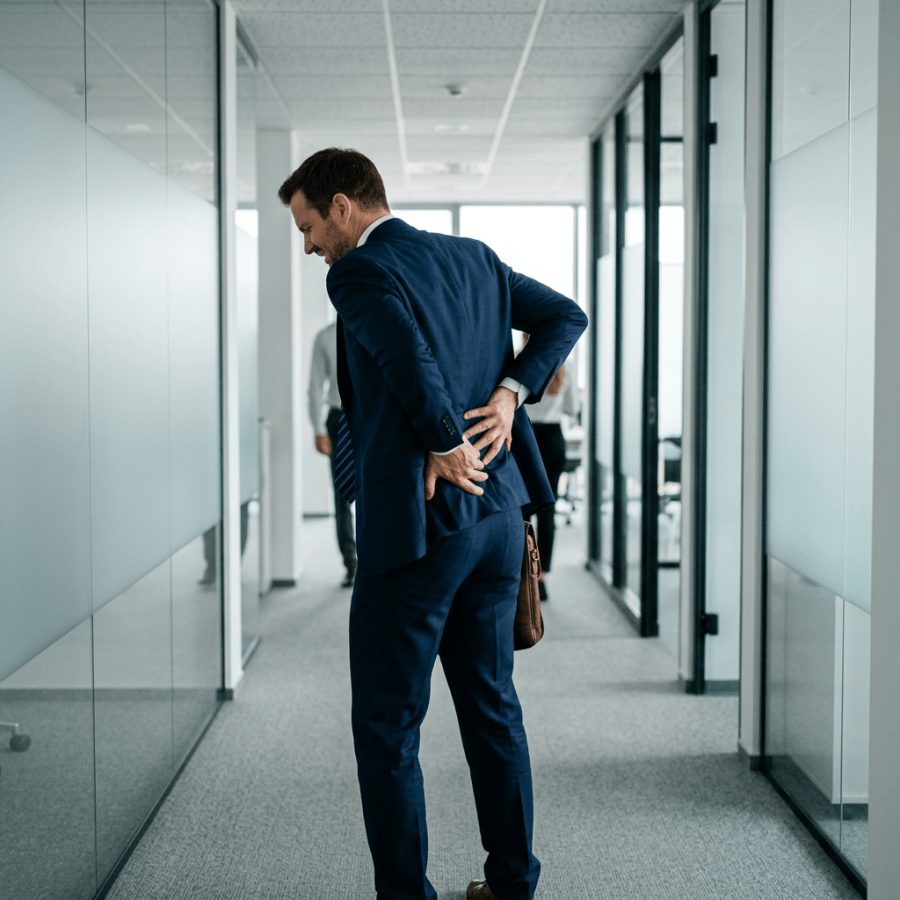
Man in navy suit holding his lower back in pain in office hallway

Low Back Pain: What Can Actually Help You Find Relief?

shutterstock_115219366

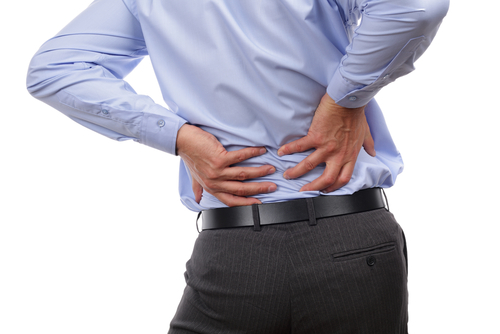
Low back pain is one of the most common reasons people see a doctor. About 8 out of 10 adults will have at least one episode at some point in their lives. The pain is usually felt along the lumbar spine and can worsen with bending, twisting, or even just sitting down. In many cases the muscles that support the back are the main source of the pain. Sometimes arthritis or a bulging disk irritates the nerve roots and that’s when patients notice symptoms like numbness, tingling, or weakness in the legs.

Sciatica is a well-known example. That’s when one of the nerve roots of the sciatic nerve is irritated, sending sharp, burning pain down the back or side of the thigh and often all the way to the ankle or foot. It may also come with numbness or tingling.

Most back pain gets better with conservative care, but there are times when patients should see a doctor right away. If someone over 70 suddenly develops back pain, if the pain persists at night even while lying down, or if it comes with weakness in the legs, loss of bladder or bowel control, unexplained fever, or weight loss, those are red flags. A history of cancer, osteoporosis, or a significant fall also raises concern. And if pain hasn’t improved at all after four weeks, it’s worth reevaluating.

Doctors usually start with a history and physical exam. Imaging tests like x-rays can pick up things such as compression fractures or alignment issues. CT or MRI scans are used when more detail is needed, especially to look at soft tissues, disks, or nerves. A bulging disk will often improve on its own over time as the body reabsorbs it, so surgery isn’t the first step unless there are severe symptoms.

Activity is important. Studies show patients recover faster when they keep moving. Staying in bed too long can actually make pain worse. Heat can ease stiffness in the first couple of weeks, and alternating ice and heat sometimes helps too. I usually encourage people to keep working if possible, but to avoid heavy lifting, prolonged standing, or twisting motions.

Medications have a role. Over-the-counter options like acetaminophen, ibuprofen, or naproxen can reduce pain and inflammation. Muscle relaxants such as cyclobenzaprine or baclofen may help in the short term, but they can cause drowsiness, so patients need to be cautious with driving or operating machinery. Narcotics are occasionally used but carry more risks and aren’t typically needed for most back pain.

Exercise is helpful once the pain begins to settle. Early stretching can sometimes aggravate symptoms, but as recovery progresses, a structured program that builds flexibility and strengthens core muscles supports long-term improvement. If pain lingers beyond four to six weeks, physical therapy is often recommended. Therapists focus on strengthening, posture, and mobility to reduce recurrences.

As an osteopathic physician, I sometimes use hands-on manipulation. By improving range of motion in restricted areas, it’s possible to break the cycle of stiffness and pain. Other approaches that can help certain patients include massage, yoga, acupuncture, injections, or even traction. Braces may be useful in select cases. Surgery is an option, but usually only when there’s severe nerve involvement or persistent symptoms that don’t respond to other treatments.

Prevention is key. Staying active, exercising regularly, and keeping the core muscles strong all help protect the back. Avoiding repetitive heavy lifting or twisting motions reduces strain. When lifting can’t be avoided, bending at the knees rather than the waist protects the spine. Stretching the hamstrings, quadriceps, piriformis, and gluteal muscles also supports spinal health.

Scott Rennie, D.O.
Board Certified in Obesity Medicine and Family Medicine

This blog is for educational purposes only and does not constitute individual medical advice. Always consult your own physician before making changes to your health, medications, or treatment plan.

Flowing spine lines with botanical elements still life

Osteopathic Medicine: An Interesting Article Worth Reading

Alternative medicine and osteopathic medical education

by Tayson DeLengocky, DO There has been a growing public interest in complementary and alternative medicine (CAM) in recent years. Osteopathic manipulative therapy, a form of physical manipulation of the body for improvement of health and body function, has been designated as complementary and alternative medicine (CAM) by the National Institutes of Health (NIH). According to data reported in 2007 by the National Institutes of Health’s National Center for Complementary and Alternative Medicine, 38% of adults and 12% of children in the United States used some form of CAM that year. According to a 2007 report from the National Center for Statistics, Americans spent $33.9 billion out-of-pocket on CAM; of this figure, consumers spent $11.9 billion on an estimated 354.2 million visits to CAM practitioners. Most allopathic medical schools have responded to this public interest by offering some elective instructions in CAM. Even a tentative proposal of core competencies in integrative medicine in undergraduate medical curriculum in allopathic schools was advanced in hope of instilling in graduating physicians the values, knowledge, attitudes and skills to improve physician-patient communication. DOs are better positioned to respond to this public interest thanks to osteopathic medicine’s long tradition of a holistic and preventive philosophy to patient care. Musculoskeletal conditions and injuries are among the most common reasons for visits to physicians in the United States. They accounted for more than 131 million patient visits in 1995 and cost $215 billion annually. According to the National Center for Health Statistics in 2003 and 2004, 21% of individuals aged 18 to 44, 59% of those aged 45 to 54 years, and 98% of those aged 55 to 64 years reported limitation of activity due to musculoskeletal conditions. According to a 1999 survey of the Steering Committee on Collaboration among Physician Providers Involved in Musculoskeletal Care, the percentages MDs who felt adequately prepared to physically assess problems of low back pain and foot pain were, respectively, 31% and 10%. By contrast, the percentages of DOs who felt adequately prepared to assess low back pain and hand problems were, respectively, 84% and 41%. Thus, osteopathic training appears to be at the forefront of addressing major healthcare issues and fulfilling public demands for patient-focused care. Physicians who are exposed to osteopathic medicine are well-positioned to treat musculoskeletal injuries, an area that is often underemphasized in MD training programs. In the late 1990s, nine physician organizations (including the American Academy of Pediatrics, American Geriatrics Society, and the American Academy of Orthopaedic Surgeons, among others) decided to work together to improve the diagnosis and treatment of musculoskeletal injuries in a cost-effective way by sharing knowledge. As part of their research, they surveyed physicians entering their residencies to see how these new physicians felt about their training in diagnosing musculoskeletal conditions. Thirty-one percent of MDs felt that their training to diagnose lower back pain was excellent or very good (compared to 82% of DOs). Fewer DOs than MDs reported that they felt “poorly” or “very poorly” prepared to address foot pain and other categories of pain. The authors observed, “The fact that the osteopathic medical school graduates felt quite well prepared to assess these types of musculoskeletal problems indicates to us that it is possible to provide a musculoskeletal education in medical school that would improve the students’ confidence to assess musculoskeletal problems regardless of what specialties they intend to practice.” The physicians’ organizations concluded that medical schools “should place more emphasis on these conditions so that young physicians entering their residencies will feel as well prepared to deal with such conditions as they are prepared to deal with problems found in other body systems… With appropriate reforms, all physicians who treat patients with musculoskeletal problems will know the appropriate diagnostic and treatment interventions and how to deliver them in a cost-effective manner. Their patients will benefit, and their health care burdens on society will decrease.” A similar study (in 2005-06) among Harvard Medical School students found that musculoskeletal education was important (rated a 3.8 on a 5-point scale, with 1 meaning “no importance” and 5 meaning “critical importance”). At the same time, though, the students rated the amount of time spent on musculoskeletal education as poor (rated 2.1 on a 5-point scale, with 1 meaning “inadequate” and 5 meaning “excellent.”). On an exam of cognitive mastery of musculoskeletal medicine, fourth-year medical students had a passing rate of only 26%; the pass rate for third-year students (7%) was even worse. According to the study’s authors, “[R]ecent studies suggest that the discrepancy between the magnitude of musculoskeletal problems and physician competency in musculoskeletal medicine likely stems from educational deficiencies at the medical school level.” Osteopathic medical education programs, are addressing this need every day. Tayson DeLengocky is a vitreo-retinal surgeon who blogs at Eye Dr DeLengocky.

Scott Rennie, D.O.
Board Certified in Obesity Medicine and Family Medicine

This blog is for educational purposes only and does not constitute individual medical advice. Always consult your own physician before making changes to your health, medications, or treatment plan.