
When a patient came in with abdominal pain or blood in their stool, one of the conditions we considered was diverticulitis. You may not have heard much about diverticulitis, so this post will try to answer some common questions about diverticular disease.
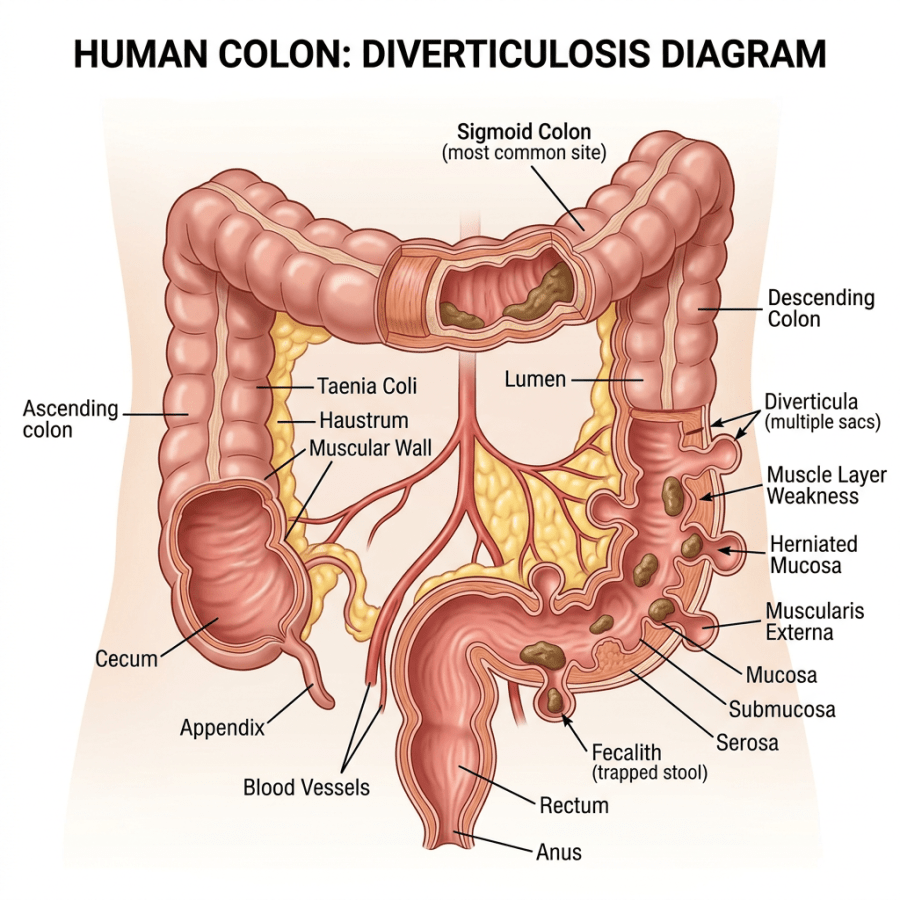
A diverticulum is a small pouch-like structure that sometimes forms in the muscular wall of the colon. These little pouches often cause no pain, and we usually become aware of them only after a procedure such as a colonoscopy, flexible sigmoidoscopy, a barium enema or a CT scan.
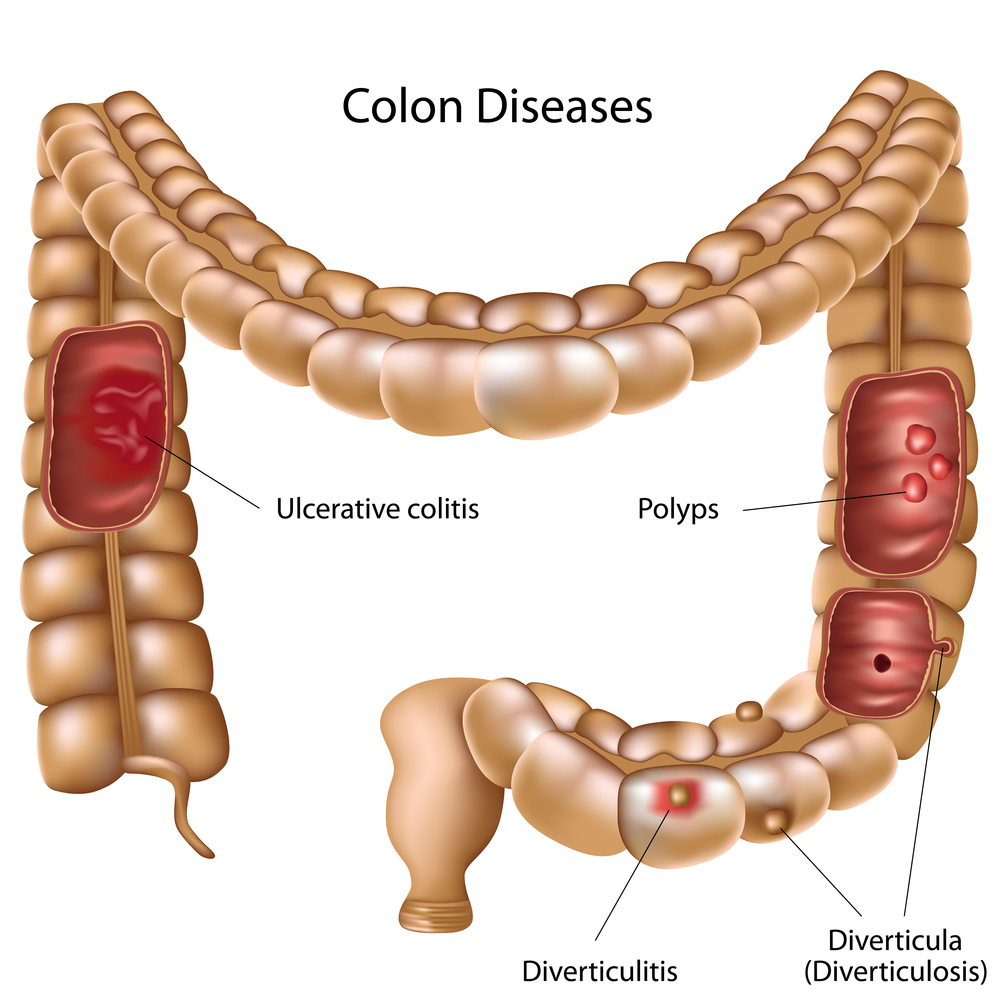
What is diverticulosis? Diverticulosis simply means that diverticula are present. Most people have no symptoms and will remain free of symptoms throughout their lives. (Roughly 15 to 25 percent go on to develop diverticulitis, which is more severe.) I usually think of a diverticulum as a small area where the colon balloons out. These are potentially weak spots that might become inflamed or may rupture under pressure.
What is diverticulitis? Diverticulitis is inflammation of a diverticulum, which occurs when there is thinning or breakdown of the wall of the colon. It is more severe than diverticulosis because the pouches have become irritated, inflamed or stretched, either from pressure within the colon or from hard particles of stool lodged inside them. The diverticulum becomes painful and may rupture, meaning the wall of the colon breaks down and allows stool and bacteria to enter the abdomen. Diverticulitis may also cause bleeding within the colon, because blood vessels often run through the area where diverticula form and they can bleed when the area gets inflamed.
Symptoms of diverticulitis: The symptoms depend on how severe the inflammation inside the colon is. The most common symptom is pain in the left lower abdomen. Patients may also have blood in the stool, nausea, vomiting, constipation, or diarrhea.
Classification of diverticulitis: Simple diverticulitis is more common and usually responds well to medical treatment without surgery. Complicated diverticulitis, about 25 percent of cases, usually requires surgery to remove the section of colon that has become inflamed or ruptured.
Treatment: Diverticulosis itself usually needs no treatment, since diverticula that are not inflamed are generally painless and cause no problems. Many providers do recommend increasing dietary fiber to reduce the chance of constipation, since constipation raises pressure within the colon, which can in turn lead to diverticulitis. Increasing fruits, vegetables, hydration and fiber has not been proven to prevent diverticulitis, however. We used to tell patients with diverticulosis to avoid seeds and nuts, on the theory that they increased the risk of diverticulitis. Research has since shown that advice to be wrong.
Diverticulitis does require treatment, and what you receive depends on the severity of your symptoms. Mild abdominal pain from diverticulitis can usually be managed at home with a clear liquid diet and oral antibiotics. If a patient develops a fever greater than 100.4 degrees F, worsening or severe abdominal pain, or an inability to keep fluids down, hospital treatment is usually recommended.
Hospitalization: If you need to be in the hospital for diverticulitis, you usually will not be allowed to eat or drink until you start feeling better, and antibiotics and IV fluids are given. If an abscess forms, a surgeon may need to drain it by placing a tube through the abdominal wall.
Complications: Peritonitis is a generalized infection within the abdomen that occurs if the colon ruptures. An emergency operation is often required in these cases to remove the diseased section of colon and reconnect the unaffected ends. Sometimes those two steps are done at separate times, with the removal first, so the colon is allowed to heal before the pieces are reattached.
Surgical treatment: Patients who don’t respond well to medical treatment, or who have repeated attacks of diverticulitis, may benefit from surgery to remove the diseased section of colon.
Bleeding from diverticulitis: Most of the time the bleeding stops on its own, but sometimes a colonoscopy or another procedure is necessary to get it under control.
Board Certified in Obesity Medicine and Family Medicine
This blog is for educational purposes only and does not constitute individual medical advice. Always consult your own physician before making changes to your health, medications, or treatment plan.
 Doctor Rennie's Blog