
 Patients who have diabetes need to pay extra attention to their foot care to help prevent infections. I’ve had numerous patients with diabetes need foot or toe amputations that could have been prevented with excellent foot hygiene. Small scrapes in the skin or ingrown nails can become extremely bad very quickly with diabetes because patients who have diabetes often don’t have as much sensation (due to damage to the nerve endings and blood vessels in your feet). This can make it difficult to detect sores and once an infection is present it can be very difficult to treat. I thought I’d put together some tips to help you keep your feet healthy and decrease the risk for infections.
- Stop smoking: If you smoke, this can decrease the blood flowing to your feet and make foot problems worse.
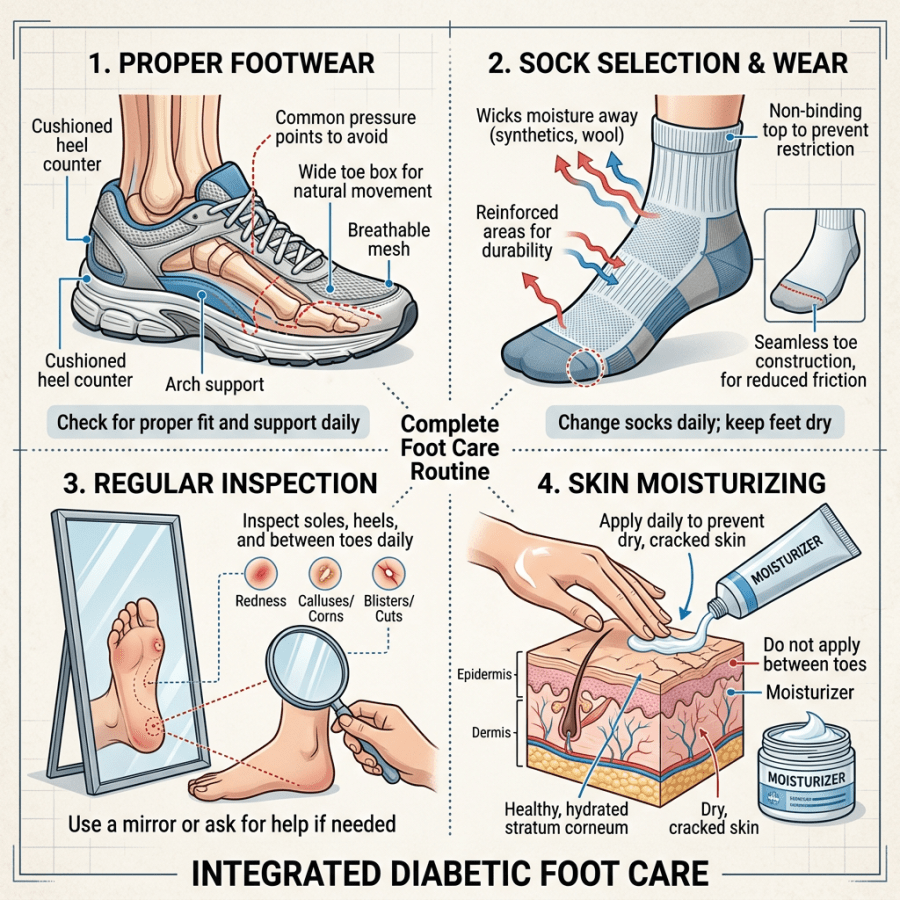
- Inspect your feet everyday: Look for blisters, cuts, cracks or sores. If you cannot see your feet well then use a mirror or have a family member help you.
- Wash your feet everyday: Use warm (not hot) water – be sure to check the temperature with your hands rather than your feet.
- Dry your feet well: Pat them dry and do not rub the skin on your feet too hard. Dry between each toe. If the skin on your feet stays moist, bacteria or fungus can grow and that might lead to a foot infection.
- Keep your feet soft: Use a skin moisturizer such as Aveeno, Dove or Cetaphil on your feet to keep your skin soft and prevent calluses and cracks. Don’t put the cream between your toes unless you are treating athlete’s foot with a fungal cream. Make sure to wear socks or traction on your feet after applying the cream so you don’t slip and fall.
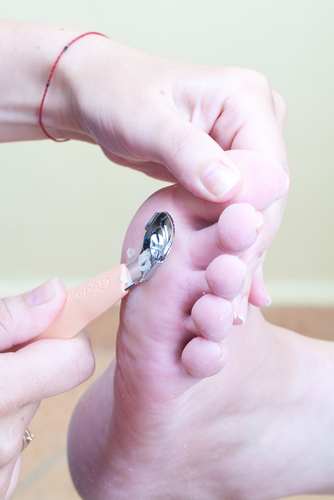
- Clean under your toenails carefully: Don’t use sharp objects under your toenails. Instead use the blunt end of a nail file or other rounded tool to decrease the chance of piercing the skin.
- Trim and file your toenails straight across: This helps prevent ingrown nails. Use a nail clipper instead of scissors. Then use an emery board to smooth the edges. If you need help trimming your nails, schedule an appointment with your medical provider.
- Change your socks everyday: Socks should have a thick cushion and fit loosely around your feet. Socks without seams are best because seams often rub the feet. Do not wear stockings, socks, or garters that come up to the thigh or knees unless your medical provider advises you to do so because they can decrease the blood flow to your feet.
- Look inside your shoes before putting them on: Check them every day for gravel, torn linings, or thorns that can cause blisters or sores.
- Do not go barefoot: Don’t wear sandals or shoes with thin soles because these types of shoes are easy to puncture. They also do not protect your feet from hot pavement or cold weather.
- Have your medical provider check your feet during each visit: If you notice a problem with your feet, see your medical provider right away rather than trying to treat it with a home remedy. Some home remedies or treatments that you can buy without a prescription (such as corn removers) can be harmful.
- Keep your blood sugar down: Watch what and how you eat, monitor your blood sugar, take your medications and get regular exercise.
When to seek medical help:
A) If you cannot do proper foot care
B) If you have a foot sore or ulcer that is not healing after 3 days (including corns, calluses or ingrown nails)
C) If you have black and blue areas in your toes or feet
D) If you have peeling skin or blisters between your toes
E) If you have a fever for more than 24 hours and a foot sore
F) If you have new numbness or tingling in your feet that does not go away after you move your feet or change positions
G) If you have unexplained or unusual swelling of your foot or ankle
H) Anytime you have questions about your feet or concerns it is best to contact your medical provider
I hope that you have found this information useful. Wishing you the best of health,
Scott Rennie, D.O.
Board Certified in Obesity Medicine and Family Medicine
This blog is for educational purposes only and does not constitute individual medical advice. Always consult your own physician before making changes to your health, medications, or treatment plan.
 Doctor Rennie's Blog