
 I saw a patient the other day who was in her 30’s and was brought in the other day because she suddenly stopped speaking (we call this aphasia) and became weak and confused. Patient’s sometimes come to the urgent care with symptoms of stroke or meningitis and these symptoms can be extremely anxiety provoking.
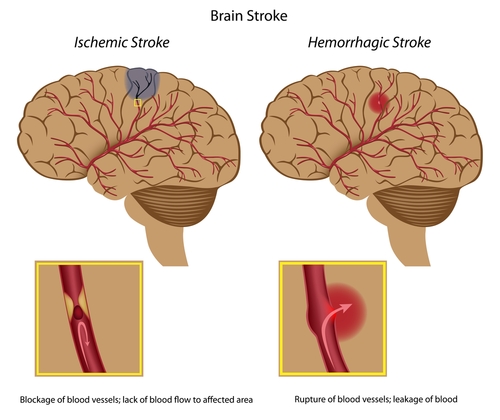
Stroke or CVA (Cerebral Vascular Accident) is the term that medical providers use to describe an event where part of the brain goes without blood for too long. There may be permanent damage to the brain as a result. The blood supply to the brain can get cut off if an artery in the brain or neck gets clogged or closes off or if there is an artery in the brain that starts bleeding.
Sometimes a patient may have a stroke and there are no permanent effects, while other people may lose important functions in their brain permanently. The individual that I saw the other day became unable to speak and it was unclear if she was able to understand what was being said.
Symptoms: The symptoms of a stroke depend on which area of the brain is affected. Some symptoms of stroke may be recognized by the acronym FAST –
Face – Does the person’s face look uneven or droop on one side?
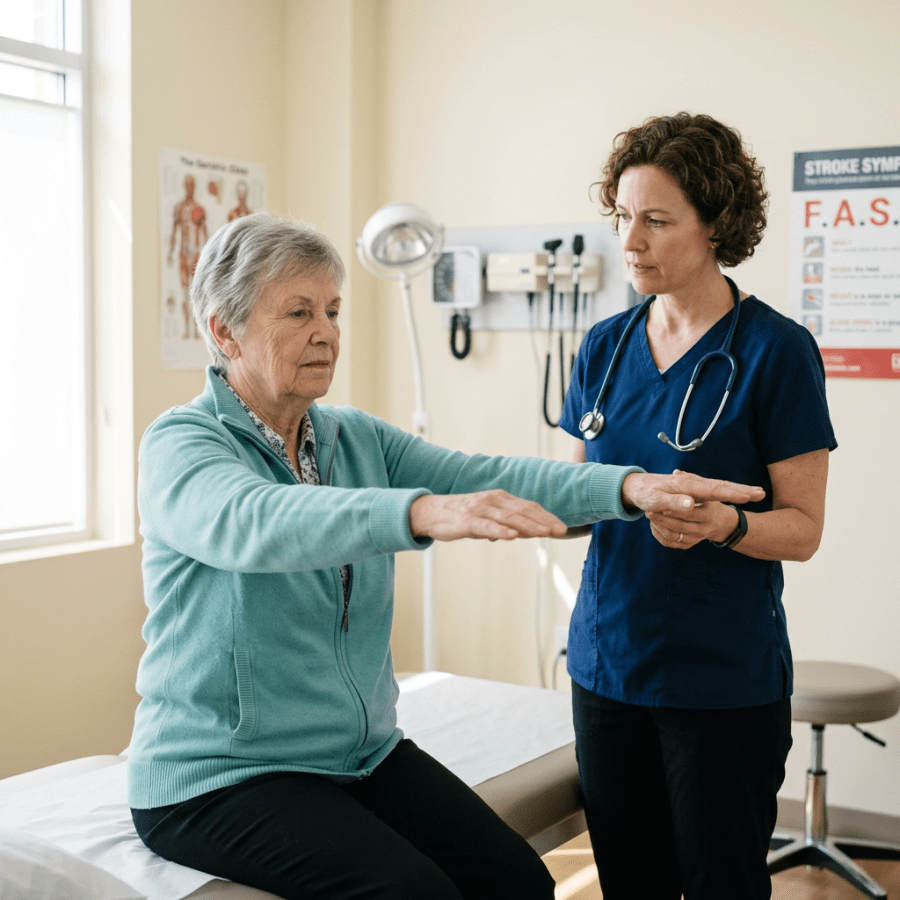
Arm – Does the person have weakness or numbness in one or both arms? Does one arm drift down if the person tries to hold both arms out?
Speech – Is the person having trouble speaking? Does his or her speech sound strange?
Time – If you notice ANY of these signs of stroke, call 9-1-1. You need to act FAST because the sooner the treatment begins, the better the chances of recovery
Diagnosis: Stroke is usually diagnosed based on the patient’s symptoms and specialized studies such as a CT scan (Cat Scan) of the brain, or perhaps an MRI of the brain. Other tests might include ultrasound of the arteries in the neck and echocardiogram (ultrasound of the heart).
Treatment: The type of treatment depends on the cause of the stroke. For patients who are having a stroke due to clogged arteries to the brain, they might receive medication to break up the clot or have a procedure to remove the blood clot. They might also start medications to prevent future clogged blood vessels such as aspirin, Coumadin or Plavix. Patients who have damage in the brain that make it difficult for them to walk might be treated with physical therapy to help them regain mobility. Sometimes it’s necessary for these patients to spend some time in an assisted care facility where there are nurses, physical therapists, occupational therapists and speech therapists available to help in the recovery process. An assessment may be done at the patient’s house to look for possible safety problem areas and give the patient devices and tools to help the patient be able to retain independence in their home.
Prevention: You can lower your risk of stroke by:
1) If you have high blood pressure, keep your blood pressure in the normal range
2) If you have diabetes, keep your blood sugar under good control
3) Check your cholesterol and make sure your bad cholesterol and triglycerides are not elevated
4) Avoid smoking
5) Exercise for 30 minutes a day or longer on most days
6) If you are overweight – work on weight loss
7) Do not drink more than one alcoholic drink/day if you are female or more than two if you are a male
8) Make sure you take your medications as directed by your physician
I hope that you have found this information useful. Wishing you the best of health,
I saw a patient the other day who was in her 30’s and was brought in the other day because she suddenly stopped speaking (we call this aphasia) and became weak and confused. Patient’s sometimes come to the urgent care with symptoms of stroke or meningitis and these symptoms can be extremely anxiety provoking.
Stroke or CVA (Cerebral Vascular Accident) is the term that medical providers use to describe an event where part of the brain goes without blood for too long. There may be permanent damage to the brain as a result. The blood supply to the brain can get cut off if an artery in the brain or neck gets clogged or closes off or if there is an artery in the brain that starts bleeding.
Sometimes a patient may have a stroke and there are no permanent effects, while other people may lose important functions in their brain permanently. The individual that I saw the other day became unable to speak and it was unclear if she was able to understand what was being said.
Symptoms: The symptoms of a stroke depend on which area of the brain is affected. Some symptoms of stroke may be recognized by the acronym FAST –
Face – Does the person’s face look uneven or droop on one side?
Arm – Does the person have weakness or numbness in one or both arms? Does one arm drift down if the person tries to hold both arms out?
Speech – Is the person having trouble speaking? Does his or her speech sound strange?
Time – If you notice ANY of these signs of stroke, call 9-1-1. You need to act FAST because the sooner the treatment begins, the better the chances of recovery
Diagnosis: Stroke is usually diagnosed based on the patient’s symptoms and specialized studies such as a CT scan (Cat Scan) of the brain, or perhaps an MRI of the brain. Other tests might include ultrasound of the arteries in the neck and echocardiogram (ultrasound of the heart).
Treatment: The type of treatment depends on the cause of the stroke. For patients who are having a stroke due to clogged arteries to the brain, they might receive medication to break up the clot or have a procedure to remove the blood clot. They might also start medications to prevent future clogged blood vessels such as aspirin, Coumadin or Plavix. Patients who have damage in the brain that make it difficult for them to walk might be treated with physical therapy to help them regain mobility. Sometimes it’s necessary for these patients to spend some time in an assisted care facility where there are nurses, physical therapists, occupational therapists and speech therapists available to help in the recovery process. An assessment may be done at the patient’s house to look for possible safety problem areas and give the patient devices and tools to help the patient be able to retain independence in their home.
Prevention: You can lower your risk of stroke by:
1) If you have high blood pressure, keep your blood pressure in the normal range
2) If you have diabetes, keep your blood sugar under good control
3) Check your cholesterol and make sure your bad cholesterol and triglycerides are not elevated
4) Avoid smoking
5) Exercise for 30 minutes a day or longer on most days
6) If you are overweight – work on weight loss
7) Do not drink more than one alcoholic drink/day if you are female or more than two if you are a male
8) Make sure you take your medications as directed by your physician
I hope that you have found this information useful. Wishing you the best of health,
Scott Rennie, D.O.
Board Certified in Obesity Medicine and Family Medicine
This blog is for educational purposes only and does not constitute individual medical advice. Always consult your own physician before making changes to your health, medications, or treatment plan.


 Doctor Rennie's Blog